THE NIBBLE BLOG: Products, Recipes & Trends In Specialty Foods


Also visit our main website, TheNibble.com.

Homemade Tempura Recipe For National Tempura Day


[1] Shrimp tempura from CBCrabcakes.com (photo © CB Crabcakes).

Vegetable Tempura
[2] People who resist eating veggies may be instantly converted to vegetable tempura. Here’s the recipe (photo © American Diabetes Association).

Squash Tempura
[3] Kabocha squash tempura is a winner. Here’s the recipe (photo © Refugee Kitchen).


[4] Mixed vegetable tempura. Here’s the recipe (photo © Heather Christo Deliciously Allergen Free Recipes).

  If you like tempura, there’s no need to head to a Japanese restaurant. Make it at home! It’s another way to get the family to eat more vegetables. Pack the tempura with a high ratio of veggies to proteins (3:1 or 4:1), and make it fun with as wide an assortment of vegetables as you can manage (aim for five).

> The history of tempura follows.

> The recipes are below.

> The year’s 11 Japanese food holidays (plus 6 sushi holidays).

> The year’s 56 fish and seafood holidays.
 
 
TEMPURA HISTORY

While we think of tempura as a quintessential Japanese food, it was introduced to Japan in the mid-16th century by Portuguese missionaries and traders. Prior to then, the concept of deep fat batter-frying was not part of Japanese cuisine.

Culinary historians say that the word “tempura” appears to come from the Latin word “tempora,” a Portuguese reference to Lent, Fridays and other Catholic holy days when meat was avoided and fish and vegetables were consumed. (The Latin phrase tempora cuaresme, which means “in the time of Lent.”)

The dish that inspired the word was a meal for Lent, when the Catholic Portuguese could not eat meat. Presumably, the Japanese mistook “tempora” as the dish’s name and called the frying technique tempura.

The types of tempura that are popular today—fried seafood and vegetables—gained popularity in the mid-18th century and became firmly established in Japanese cuisine. Tempura continues to evolve in style, most recently into sushi “tempura rolls.”

In the U.S., tempura even has its own holiday: January 7th is National Tempura Day.
 
 
TEMPURA TIP: THE RIGHT BATTER MAKES TEMPURA LESS OILY

Tempura batter is traditionally made with eggs, ice water, and low-protein wheat flour. You can also buy tempura batter mix in the Asian products section of the supermarket or in Asian food stores.

According to Nisshin Seifun, makers of a tempura batter mix used by fine restaurants, some brands do a greater job of limiting oil absorption (as does a cold batter, which is why ice water is used).

In the absence of a package of tempura mix, made with low-protein wheat flour, try this recipe:
 
 
RECIPE #1: TEMPURA BATTER

Ingredients For Batter

  • 1 egg
  • 1 cup ice water
  • 1 cup all-purpose flour, sifted (use low-protein wheat flour, if you can get it)
  • Optional: salt and cayenne pepper, to taste
  •  
    Vegetable & Seafood Options

  • Proteins: boned fish, shrimp, scallops, squid, or almost any seafood; chicken or tofu strips or squares
  • Vegetables: Bell pepper strips, eggplant, carrots, green beans, mushrooms, onion, potato, sweet potato, summer squash (zucchini, yellow squash), winter squash (anything from acorn to pumpkin); Japanese ingredients such as renkon (lotus root) and shiso (beefsteak plant leaf)
  •  
    Plus:

  • Cooking oil: grapeseed oil or other high-smoke-point oil such as canola, safflower or sunflower oil
     
    Preparation

    It is important that the batter is cold, so make it immediately before using it. If frying is delayed, refrigerate it for up to 1 hour.

    1. CLEAN and slice the vegetables. Clean the shrimp; leave the tails on.

    2. HEAT the oil as you whisk the batter ingredients together.

  •  

    3. MAKE the batter: Beat the egg in a bowl. Add the ice water and flour; mix lightly. Be careful not to overmix the batter or you’ll get tough, chewy dough. Japanese chefs make the batter by swirling the ingredients a couple of times with chopsticks. It’s O.K. to leave lumps in the batter.

    4. HEAT the oil to 340°F. If you don’t have a kitchen thermometer, drop a small amount of batter into the oil. If it sinks halfway down and then comes to the surface, the oil is about 340°F. If it doesn’t sink, it’s about 360°F or more.

    5. FRY the vegetables first so as not to impart a seafood flavor to the oil.
     
     
    RECIPE #2: TEMPURA DIPPING SAUCE (PONZU SAUCE)

    Ingredients

  • 1/2 cup low-sodium soy sauce
  • 1/8 cup rice wine vinegar
  • 1 tablespoons finely grated ginger
  • 1 tablespoon chopped green onion or chive
  • 1 medium clove garlic, minced
  •  
    Preparation

    1. MIX the ingredients well. If you only have soy sauce and vinegar, it will do in a pinch.

    Learn more about our favorite international foods by checking out the pull-down bar at the right.


    CHECK OUT WHAT’S HAPPENING ON OUR HOME PAGE, THENIBBLE.COM.


    Comments off

    FOOD HOLIDAY: Gourmet Fig Recipes For National Fig Week


    Fresh black mission figs with foie gras and a
    frisée salad. Photo courtesy BLT Steak Atlanta.
      National Fig Week is the first week in November. How about some gourmet fig recipes? We’ll start with one below, Fig Panna Cotta.

    One of the simplest desserts, enjoyed since early times, is figs with honey. It couldn’t be easier: just decide how many figs you want to serve to each person (we serve three or four, depending on size), and plate them with a drizzle of honey. Other decisions:

  • One variety of figs or three? Enhance the dessert with three different types of fig for each person—a black Mission fig, a green Adriatic fig, and a brown turkey fig, for example. You can garnish one with chopped hazelnuts, one with pistachios, and one with almonds. If you have rectangular or even square plates, it makes a lovely presentation (see photo and recipe).
  • With or without cheese? Figs, honey, and nuts—the components of the recipe above—are all excellent complements to cheese plates.
  •  
    So why not pass a cheese plate with figs, nuts, and honeycomb? It’s one of the world’s great desserts, and you don’t have to cook a thing! Check out this simple recipe for Figs With Honey.

  • Not serving a separate cheese course? You can add an optional scoop of soft cheese to the center of a fresh fig, or a slice of goat cheese log or wedge of Brie next to it. Drizzle honey across the plate before plating the figs and cheese.
  • Dessert or Snack? Ripe, luscious figs can be served like other fresh fruit: at breakfast, lunch, or dinner, or at midday tea/break.
  •  

    Here’s something you don’t see every day: fig panna cotta. The recipe is from Vic Rallo, host of the television show, Eat!Drink!Italy! With Vic Rallo.
     
     
    RECIPE: FIG PANNA COTTA

    Ingredients For 4 Servings

  • 2 cups of heavy cream
  • 1/4 cup of fig purée
  • 2 tablespoons of sugar
  • 1 vanilla bean
  • 1 teaspoon vanilla extract
  • 1 one-ounce packet of gelatin dissolved
  • 3 tablespoons of cold water
  •  
    A seasonal surprise: fig panna cotta. Photo courtesy Vic Rallo.

    Preparation

    1. DISSOLVE the gelatin in 3 tablespoons of cold water, for about 10 minutes.

    2. PLACE the cream, vanilla bean, vanilla extract, fig purée, and sugar in a saucepan and bring to a simmer. Remove from the heat. Add the gelatin to the pan, stirring constantly for about 30 seconds, or until the gelatin is well blended with the cream.

    3. POUR the cream mixture into molds, cover, and refrigerate for 3 hours or until set.
     
     
    A BRIEF FIG HISTORY

    By the time of the Bible, figs had been cultivated for thousands of years. They may have been the first crop* cultivated—perhaps first in Egypt. From there they spread to Crete and around the 9th century B.C.E., to Greece, where they became a staple.

    The ancient Greeks loved figs so much that they enacted a law forbidding the export of the best quality figs (in the ancient world, at least 29 varieties of figs were cultivated).

    Figs spread throughout the Mediterranean. They arrived in the New World in the early 16th century, with Spaniards explorers. When Spanish missions were established in what is now southern California, the monks cultivated planted fig trees. Today, California is one of the largest producers of figs, along with Greece, Portugal, Spain and Turkey.
     
     
    ______________

    *Agricultural historians believe the order of cultivation to be figs, wheat and barley, grapes, olives, sugar, tea, rice and sesame. Different historians have different orders, and archeological digs regularly reveal new information.


    CHECK OUT WHAT’S HAPPENING ON OUR HOME PAGE, THENIBBLE.COM.


    Comments off

    PRODUCT: Yummy Yammy Sweet Potato Salsa


    Yummy Yammy sweet potato salsa: healthful
    dip, spread, topping and stocking stuffer.
    Photo by Elvira Kalviste | THE NIBBLE.
     

    When you say “Norwich, Vermont,” sweet potatoes don’t come to mind.

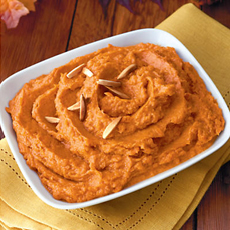
    But they may when more people discover Yummy Yammy sweet potato-salsa—actually more of a smooth dip or spread than what most people think of as salsa.

    But like a Mexican-style salsa, Yummy Yammy is packed with nutrition and a guilt-free snack, when combined with crudités or a some rice crackers. The whole jar has just 250 calories.

    Yummy Yammy also works as a dip with any crunchy snack (chips, pretzels, bagel chips, pita chips); as spread for burgers, burritos, and sandwiches; as a condiment with eggs, rice or vegetables; even atop nachos.

    There’s no tomato here in this salsa; just 100% pure flame-roasted sweet potato and deft seasonings. There is no added sugar, it’s naturally fat-free and loaded with natural nutrition.

     
    Flavors include:

  • Mexican Sweet Potato Salsa with corn, black beans and chipotle
  • Moroccan Sweet Potato Salsa with curry, lentil and kale
  • Tuscan Sweet Potato Salsa with roasted red pepper, white bean and basil
  •  
    There’s a store locator on the website, and the products can be purchased on Amazon.com ($9.99 per 12-ounce jar).

    Try some: You, too, may become a “yambassador.”

    And by all means, “spread” the word. Give a jar as a stocking stuffer, Thanksgiving host/hostess gift or party favor.


    Comments off


    © Copyright 2005-2026 Lifestyle Direct, Inc. All rights reserved. All images are copyrighted to their respective owners.