|
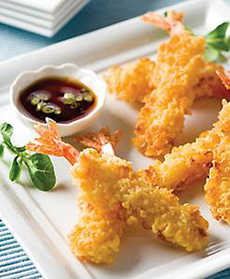
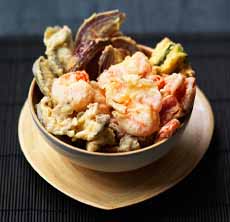
[1] Shrimp tempura from CBCrabcakes.com (photo © CB Crabcakes).

[2] People who resist eating veggies may be instantly converted to vegetable tempura. Here’s the recipe (photo © American Diabetes Association).
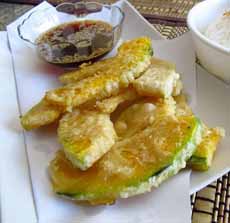
[3] Kabocha squash tempura is a winner. Here’s the recipe (photo © Refugee Kitchen).
[4] Mixed vegetable tempura. Here’s the recipe (photo © Heather Christo Deliciously Allergen Free Recipes). |
|
If you like tempura, there’s no need to head to a Japanese restaurant. Make it at home! It’s another way to get the family to eat more vegetables. Pack the tempura with a high ratio of veggies to proteins (3:1 or 4:1), and make it fun with as wide an assortment of vegetables as you can manage (aim for five).
> The history of tempura follows.
> The recipes are below.
> The year’s 11 Japanese food holidays (plus 6 sushi holidays).
> The year’s 56 fish and seafood holidays.
TEMPURA HISTORY
While we think of tempura as a quintessential Japanese food, it was introduced to Japan in the mid-16th century by Portuguese missionaries and traders. Prior to then, the concept of deep fat batter-frying was not part of Japanese cuisine.
Culinary historians say that the word “tempura” appears to come from the Latin word “tempora,” a Portuguese reference to Lent, Fridays and other Catholic holy days when meat was avoided and fish and vegetables were consumed. (The Latin phrase tempora cuaresme, which means “in the time of Lent.”)
The dish that inspired the word was a meal for Lent, when the Catholic Portuguese could not eat meat. Presumably, the Japanese mistook “tempora” as the dish’s name and called the frying technique tempura.
The types of tempura that are popular today—fried seafood and vegetables—gained popularity in the mid-18th century and became firmly established in Japanese cuisine. Tempura continues to evolve in style, most recently into sushi “tempura rolls.”
In the U.S., tempura even has its own holiday: January 7th is National Tempura Day.
TEMPURA TIP: THE RIGHT BATTER MAKES TEMPURA LESS OILY
Tempura batter is traditionally made with eggs, ice water, and low-protein wheat flour. You can also buy tempura batter mix in the Asian products section of the supermarket or in Asian food stores.
According to Nisshin Seifun, makers of a tempura batter mix used by fine restaurants, some brands do a greater job of limiting oil absorption (as does a cold batter, which is why ice water is used).
In the absence of a package of tempura mix, made with low-protein wheat flour, try this recipe:
RECIPE #1: TEMPURA BATTER
Ingredients For Batter
1 egg
1 cup ice water
1 cup all-purpose flour, sifted (use low-protein wheat flour, if you can get it)
Optional: salt and cayenne pepper, to taste
Vegetable & Seafood Options
Proteins: boned fish, shrimp, scallops, squid, or almost any seafood; chicken or tofu strips or squares
Vegetables: Bell pepper strips, eggplant, carrots, green beans, mushrooms, onion, potato, sweet potato, summer squash (zucchini, yellow squash), winter squash (anything from acorn to pumpkin); Japanese ingredients such as renkon (lotus root) and shiso (beefsteak plant leaf)
Plus:
Cooking oil: grapeseed oil or other high-smoke-point oil such as canola, safflower or sunflower oil
Preparation
It is important that the batter is cold, so make it immediately before using it. If frying is delayed, refrigerate it for up to 1 hour.
1. CLEAN and slice the vegetables. Clean the shrimp; leave the tails on.
2. HEAT the oil as you whisk the batter ingredients together.
|
|
3. MAKE the batter: Beat the egg in a bowl. Add the ice water and flour; mix lightly. Be careful not to overmix the batter or you’ll get tough, chewy dough. Japanese chefs make the batter by swirling the ingredients a couple of times with chopsticks. It’s O.K. to leave lumps in the batter.
4. HEAT the oil to 340°F. If you don’t have a kitchen thermometer, drop a small amount of batter into the oil. If it sinks halfway down and then comes to the surface, the oil is about 340°F. If it doesn’t sink, it’s about 360°F or more.
5. FRY the vegetables first so as not to impart a seafood flavor to the oil.
RECIPE #2: TEMPURA DIPPING SAUCE (PONZU SAUCE)
Ingredients
1/2 cup low-sodium soy sauce
1/8 cup rice wine vinegar
1 tablespoons finely grated ginger
1 tablespoon chopped green onion or chive
1 medium clove garlic, minced
Preparation
1. MIX the ingredients well. If you only have soy sauce and vinegar, it will do in a pinch.
Learn more about our favorite international foods by checking out the pull-down bar at the right.
CHECK OUT WHAT’S HAPPENING ON OUR HOME PAGE, THENIBBLE.COM.
|