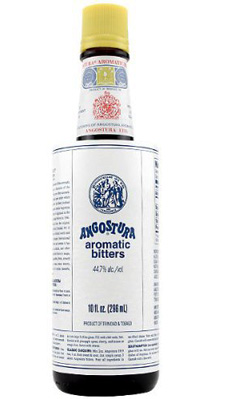
The familiar bottle of Angostura Bitters.
Photo courtesy C.L. World Brands. |
|
You’ve probably heard of Angostura Aromatic Bitters, but do you know what bitters are?
THE HISTORY OF BITTERS
According to Wikipedia, the origins of bitters can be traced back to the ancient Egyptians, who infused medicinal herbs in jars of wine. In the Middle Ages, the availability of distilled alcohol for the base led to much more concentrated preparations.
But fast forward to the cocktail. By 1806, American publications referenced the popularity of a new alcoholic drink, the “cocktail…a stimulating liquor, composed of spirits of any kind, sugar, water, and bitters.”
Bitters are used in the Manhattan, Old Fashioned and Whiskey Sour, among other cocktails. We enjoy them every day in a mocktail: a glass of club soda with lime. It has all the satisfaction of a cocktail, without the alcohol.
Bitters fell out of favor along with classic cocktails in the 1960s and 1970s. They were were supplanted by wine, which became the alcohol of favor following the growth and promotion of California wines. But a few years ago, as cocktail culture became stylish again, there evolved a comeback in bitters.
|
Like alcohol itself, bitters began as medicinal tonics; today they are still used as digestifs (drinks consumed at the end of a meal, in order to aid digestion). Each producer had a “secret formula” of herbs, fruits, roots and spices, distilled in a base liquor. The flavor is bitter or bittersweet flavor and the aroma is pronounced; hence the term “aromatic bitters.”
The flavor of bitters is highly concentrated, and just a few dashes are enough to flavor foods and beverage. Beyond drinks, you’ll find them as an ingredient in fruit pies, marinades, seafood recipes, soups, salad dressings and so forth.
ANGOSTURA BITTERS
Angostura, the best-known brand, was invented in 1824 by a German physician, Johann Gottlieb Benjamin Siegert, in Angostura, Venezuela. He created a blend of tropical herbs and plants as a remedy for a variety of illnesses, especially sea sickness and stomach maladies.
He subsequently formed the House of Angostura, and sailors were major customers. The oversized label, which covers the entire body of the bottle, is said to be a mistake—someone ordered the wrong size and no one took responsibility to correct it (hmm…some things never change).
Today the brand is produced in Trinidad by CL World Brands.
To us, the flavor is ginger-like: We call our club soda-Angostura drink “unsweetened ginger ale” (although ginger is also an edible root, it is no relation to gentian). The trick is to add enough bitters, until the drink becomes a deep rosy color. Keep tasting until you find your preferred intensity.
*Gentian is made from the root of a flowering plant. More information.
|
|
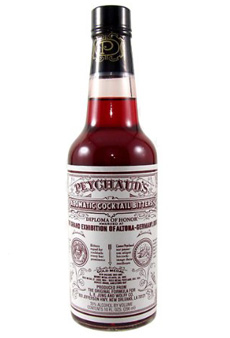
Peychaud’s Bitters, another 19th century brand, was developed by a New Orleans apothecary, Antoine Amédée Peychaud, a Creole from the French colony of Saint-Domingue (now Haiti) who settled in New Orleans in 1795. It became well known for its use in the Sazerac, the official cocktail of New Orleans (a combination of Cognac or rye whiskey, absinthe and bitters, which originated before the Civil War and was named after the brand of Cognac used in it).
The gentian*-based bitters, comparable to Angostura bitters, but with a lighter body, sweeter taste and more floral aroma.
Most American bitters producers went out of business during Prohibition; Peychaud’s is one of only two companies that managed to survive, according to the company. If you can’t find it locally, you can buy it online. Today it’s produced in Kentucky, by The Sazerac Company.
THE BITTERS RENAISSANCE
A popular style of bitters that emerged from the early “cocktail era” were Orange bitters, typically made from the rinds of Seville oranges plus spices. Orange bitters are commonly called for in older cocktail recipes and delicious in modern drinks. The style can range from dryly aromatic to fruity; Regan’s Orange Bitters (see below) were developed by a mixologist who wanted his own version of perfection.
|
|
Peychaud’s Bitters. Photo courtesy The Sazerac Company.
|
But orange is just the beginning. We gave up counting the different flavors of bitters on Amazon.com alone, which offers dozens of brands. Just a sampling:
Amargo Chuncho Bitters, made in Peru from a blend of more than 30 barks, flowers, herbs, peels and roots from the Peruvian forest, is the “official bitters” for the Pisco Sour.
Bittermens Xocolatl Mole Bitters is a distillation of chocolate, cinnamon and other spices that pairs well with rum and tequila drinks. Founded in San Francisco in 2007, the company now produces in New Orleans. The company also makes Hopped Grapefruit, Burlesque Bitters (hibiscus, açai, quassia), ‘Elemakule Tiki Bitters (clove, allspice, cinnamon, citrus) and Boston “Bittahs” (citrus and chamomile).
Dr. Adam Elmegirab’s Aphrodite Bitters are crafted in Scotland from chocolate, cacao nibs, ginger root, red chile, Arabica coffee and ginseng. The company also makes Boker’s Bitters, created in 1828 by Johann Gottlieb Boker, and reformulated it for modern drinks in 2009. It’s made with seven botanicals including cardamom, catechu, mallow flowers, orange peel and quassia bark; and Dr. Heather Duncan’s Christmas Cocktail Bitters, with a nose of freshly baked gingerbread, clove and spiced fruit.
El Guapo Bitters are made with chicory and pecans and recommended for Bourbon, dark rum and Tiki-style drinks.
Fee Brothers makes bitters in Grapefruit, Lemon, Mint, Old Fashioned Aromatic (Angostura-type bitters), Orange and Peach that can get a sampler of all flavors; as well as individual bottles in those flavors plus Aztec Chocolate, Black Walnut, Cranberry, Plum and Rhubarb, among others. The family-owned company, based in Rochester, New York, has been around since 1863.
Regan’s Orange Bitters were developed in 2005 by Gary Regan, a mixologist and columnist who wanted a better orange bitters than what he found in the market.
Scrappy’s Bitters are made in aromatic, celery, lavender and orange, plus cardamom bitters for toddy drinks.
Woodford Reserve Spiced Cherry Bourbon Barrel Aged Cocktail Bitters, made from gentian root, cherry and spices, are barrel-aged in Woodford Reserve bourbon barrels. Get some for your favorite Bourbon fans.
So don’t be shy: Buy bitters and see where they take you.
FOOD 101: WHAT’S A DASH?
Recipes often call for a “dash” of bitters. According to Scrappy’s, 6-8 drops equals 1 dash.
|
|