|

[1] Crunchy Triscuit cups (photo © Nabisco).
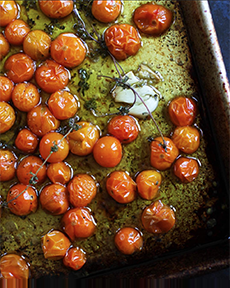
[2] Roasted cherry tomatoes (photo © Botanica Restaurant | Los Angeles).
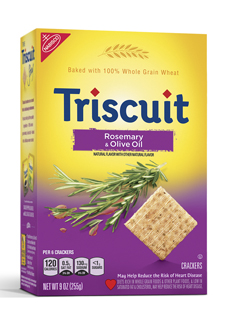
[3] How many different varieties of Triscuit are there? The answer is below (photo © Nabisco).
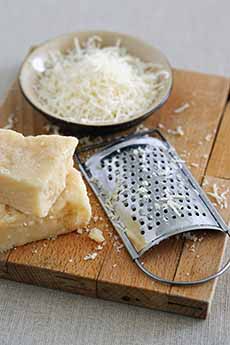
[4] It’s easy to grate the cheese as-needed (photo © London Deposit | Panther Media).
[5] Fresh thyme sprigs (photo © Karolina Grabowska | Pexels).
[6] Pyrex, ceramic, and enameled bakeware don’t react with acidic foods like tomatoes (photo of Pyrex bakeware set © Williams Sonoma).
|
|
Just in time for Labor Day lounging, the folks at Triscuit sent us this fun appetizer idea for Roasted Cherry Tomato Bites. Who’d have thought of soaking Triscuits to form crunchy cups?
You can fill the cups with anything, from hummus to artichoke dip; but start with colorful cherry tomatoes and enjoy with a glass of wine or beer.
Prep time is 25 minutes, total time is 45 minutes. You can find more recipes on the Triscuit website.
RECIPE #1: ROASTED CHERRY TOMATO CUPS
Ingredients For 24 Pieces
24 Triscuit Rosemary and Olive Oil Crackers
1 tablespoon extra virgin olive oil
3 tablespoons freshly grated Parmesan cheese
Roasted cherry tomatoes (recipe follows)
24 tiny sprigs fresh thyme, optional for serving
Preparation
1. PREHEAT the oven to 400°F.
2. FILL a 9-by-13-inch pan halfway with warm water. Add the Triscuit crackers in 2 batches and soak, turning twice until just soft, about 2 minutes, no more than 3 minutes.
3. OIL two 12-cup or one 24-cup mini muffin tins. Press a softened Triscuit into each cup, pressing and molding any cracks together. Sprinkle each with cheese. Bake until firm and slightly more golden, about 25 minutes. When ready to serve…
4. FILL each cup with a roasted cherry tomato, and drizzle a little sauce over top of each one. Garnish with thyme and serve immediately.
RECIPE #2: ROASTED CHERRY TOMATO SAUCE
Prep time is 5 minutes, cook time is 40-45 minutes.
Ingredients For 1 Cup
24 cherry tomatoes
2 cloves garlic smashed
2 tablespoons olive oil
1½ teaspoon balsamic vinegar
1 teaspoon fresh thyme leaves
½ teaspoon brown sugar
¼ teaspoon coarse salt
Preparation
1. PREHEAT the oven to 325°F. Arrange tomatoes and garlic in a non-reactive 9×5-inch baking dish/loaf pan (see note below on non-reactive cookware).
2. WHISK together the olive oil, vinegar, thyme, sugar, and salt. Drizzle over the tomatoes and garlic.
3. BAKE until the tomatoes are wilted and caramelized, about 40-45 minutes. Let cool. You can pre-make and store the cooled tomatoes and juices in an airtight container in the refrigerator for up to 5 days.
WHAT IS A NON-REACTIVE PAN?
Cookware can be made of reactive or non-reactive materials. Reactive materials can interact negatively with acidic foods and light-colored foods, and should be avoided in preparing them.
Reactive Pans: Aluminum and copper are two popular cookware metals that conduct heat extremely well, but react chemically with acidic foods, imparting a metallic taste. They also can discolor light-colored foods like soups and sauces. (Metal utensils—spoons or whisks, for example—can also react with these foods, so opt for silicone or silicone-coated.)
Most copper pots and pans are lined with tin to prevent any reaction, but the tin can scratch easily and expose the food to the copper underneath. Similarly, anodized aluminum provides some protection; but it’s best to choose a different vessel. Note that while cast-iron is considered reactive, we and our colleagues have cooked tomato-sauce based recipes for years in a heavy cast iron pot, with no problem whatsoever.
Non-Reactive Pans: Non-reactive cookware is made from clay (terracotta), enamel, glass, plastic and stainless steel. While they don’t react with food, these materials don’t conduct or retain heat as well as the reactive metals. Stainless steel cookware can be made with an aluminum or copper bottom to better conduct the heat. Glass cookware retains heat well but conducts it poorly. Enamelware is non-reactive but can easily scratch and chip.
TRISCUIT TRIVIA
When you think Triscuit, do you think “shredded wheat?” That’s what they’re made from!
Now made by Nabisco, Triscuit snack crackers were invented in 1900 at the Shredded Wheat Company of Niagara Falls, New York. They were awarded a patent in 1902, and commercial production began in 1903.
For their first 20 years, Triscuits were not today’s two-inch squares, but 2-1/4 by 4-inch rectangles. In 1935, the manufacturer began spraying the crackers with oil and adding salt.
In 1984, new flavors were introduced, and the crackers were made even crisper. We counted 21 varieties:
Whole Grain Wheat Line: Cracked Pepper & Olive Oil, Dill & Olive Oil, Fire Roasted Tomato & Olive Oil, Garden Herb, Hint of Salt, Original, Original Minis, Reduced Fat, Rosemary & Olive Oil, Roasted Garlic, Wheat Rye With Caraway Seeds.
Brown Rice & Wheat Line: Cinnamon Sugar, Roasted Red Pepper, Roasted Sweet Onion, Sea Salt & Black Pepper, Sour Cream & Chives, Sweet Potato & Sea Salt, Tomato & Sweet Basil, BWasabi & Soy Sauce.
Thin Crisps Line: Original, Parmesan Garlic.
In terms of where you find the supermarket shelf with all of these tempting choices, we know not!
|