THE NIBBLE BLOG: Products, Recipes & Trends In Specialty Foods


Also visit our main website, TheNibble.com.

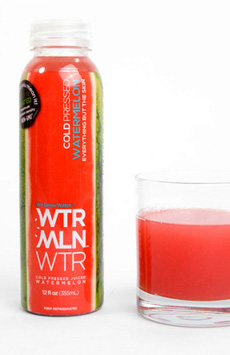
PRODUCT: WTRMLN WTR

Back in 2006, we reviewed a wonderful product called Sundia Watermelon Juice. It was celestial, tasting like fresh-squeezed watermelon.

Alas, the company discontinued the product, and it took until 2014 for another commercial brand to come our way.

World Waters debuted its WTRMLN WTR (someone’s idea—not ours—of a clever way to spell “Watermelon Water”). The product was named “Best Juice” at the recent BevNET Best of 2014 Awards.

WTRMLN WTR is an all natural cold-pressed watermelon water that is more than refreshing: It’s packed with electrolytes (the same amount as coconut water and six times the electrolytes of sports drinks) and L-citrulline, a powerful amino acid that aids in workout performance and muscle recovery. Vitamin C and lycopene contribute antioxidant and anti-inflammatory health benefits.

There’s no added sugar. The product is certified kosher by OU.

WTRMLN WTR is a pleasant departure from the never-ending stream of coconut waters we are pitched.

The line debuted New York, New Jersey, Connecticut and Los Angeles, expanding to San Francisco and other areas this year.

  wtrmln-wtr-bottle-glass-arizona-230
Drink your watermelon. Photo courtesy World Waters.
 
A 12-ounce bottle is $4.99 at Whole Foods Markets and other fine retailers. You can buy it online at WtrmlnWtr.com, 12 bottles for $72.

So is it as heavenly as Sundia’s version? Not to us: It tastes more “green,” which may or may not be due to the varying sweetness levels of watermelon, or the fact that watermelon rind is pressed along with the flesh.

But it’s still grab-and-go watermelon juice. If your only other option is to juice your own, WTRMLN WTR is a great choice.

Discover more at WTRMLNWTR.com.
  

Comments off

TIP OF THE DAY: How To Make Cream From Milk

cream-cartons-wmmb-230
[1] No cream? No problem! Make it from milk and butter (photo © Wisconsin Milk Marketing Board).

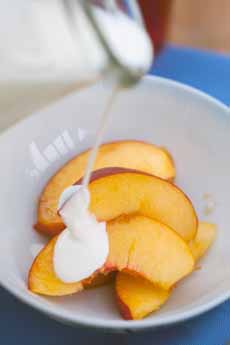
A Dish Of Sliced Peaches and Cream
[2] How about some dessert? Just pour cream over any sliced fruit or berries—or on cooked fruit like baked apples and compote (photo © Spache The Spatula).

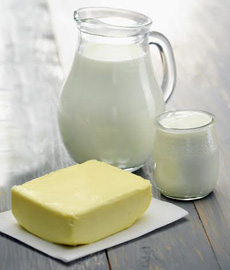
Dairy Products; milk,cheese,ricotta, yogurt and butter
[3] Butter + Milk = Heavy Cream (photo © Siberkorn | Dreamstime).

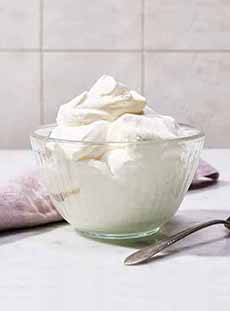
A Bowl Of Whipped Cream
[4] Whip it into a dessert topping (photo © King Arthur Baking).

Salted Caramel Hot Chocolate
[5] Salted caramel hot chocolate with lots of whipped cream (photo © Starbucks).


Here’s a fun kitchen trick. Say you need some heavy cream for a recipe (or even a cup of coffee), but have none.

If you have whole milk and unsalted butter, you can combine them to make cream. The difference between milk and cream is the amount of butterfat. The butter, which is at least butterfat, supplies what the milk lacks.

This recipe makes heavy cream, approximately 36% butterfat.

> The butterfat content of all dairy products is below.

> The history of cream and the different types of cream: a photo glossary.

> The year’s 16+ milk and cream holidays.
 
 
HOW TO MAKE HEAVY CREAM AT HOME

Ingredients For 1 Cup

  • 1/3 cup unsalted butter
  • 3/4 cup whole milk
  •  
    Preparation

    1. MELT the butter in the microwave or on the stove top.

    2. PLACE in a mixing bowl with the milk.

    3. BLEND with electric beaters or an immersion blender.

    It’s that simple!
     
     
    BUTTERFAT CONTENT

    Butterfat, also called milkfat, is the fatty portion of milk. The components of milk include:

  • Carbohydrate, 4.9% (this is lactose, or milk sugar)
  • Fat, 3.4% (approximately 65% saturated fat, 29% monounsaturated fat and 6% polyunsaturated fat)
  • Protein, 3.3% (82% casein and 18% whey)
  • Water, 87%
  • Vitamins (cobalamin [vitamin B12], folate, niacin [vitamin B3], pantothenic acid [vitamin B5], pyridoxine [vitamin B6], thiamin [vitamin B1], riboflavin [vitamin B2, vitamins C, D, E and K)
  • Minerals (calcium, copper, iron, magnesium, manganese, phosphorus, potassium, selenium, sodium, zinc)
  • Minor biological proteins and enzymes (lactoferrin, lactoperoxidase, lipases, lactase) [Source]
  •  
    The USDA imposes federal standards for the minimum butterfat content of commercial dairy products. Here are the standards:
     
     
    BUTTERFAT CONTENT OF BUTTER

  • Butter, including whipped butter, must contain at least 80% butterfat.
  •  
    BUTTERFAT CONTENT OF CREAM

  • Half and half contains 10.5%–18% butterfat (average 12%).
  • Light cream and sour cream contain 18%–30% butterfat (average 20%).
  • Light whipping cream* (often called simply “whipping cream”) contains 30%–36% butterfat (average 35%).
  • Heavy cream* contains a minimum of 36% butterfat, up to 38%.
  •  
    BUTTERFAT CONTENT OF MILK

  • Skim milk contains less than 0.5% butterfat, typically 0.1%.
  • Lowfat milk (1% and 2% varieties) contain between .5% and 2% butterfat.
  • Whole milk contains at least 3.25% butterfat.
  •  
    BUTTERFAT CONTENT OF CHEESE

  • Dry curd and nonfat cottage cheese contain less than 0.5% butterfat.
  • Lowfat cottage cheese contains .5%–2% butterfat.
  • Cottage cheese contains at least 4% butterfat.
  • Swiss cheese contains at least 43% butterfat relative to the total solids.
  • Cheddar cheese contains at least 50% butterfat relative to the total solids.
  •  
    BUTTERFAT CONTENT OF FROZEN DESSERTS

  • Sherbet contains 1%–2% butterfat.
  • Lowfat ice cream, also called ice milk, contains no more than 2.6% butterfat.
  • Ice cream contains at least 10% butterfat.
  • Frozen custard contains at least 10% butterfat, but it also must contain at least 1.4% egg yolk solids.
  •  
     
     
    ________________

    *For whipped cream, the higher the fat content, the thicker the cream is, and the easier it is to whip into stiff peaks. Higher fat cream is also more resistant to curdling, and thus a better choice for soups and sauces.


    CHECK OUT WHAT’S HAPPENING ON OUR HOME PAGE, THENIBBLE.COM.


    Comments off

    RECIPE: Savory Squash Cobbler With Cheddar Chive Biscuits

    squash-cobbler-goboldwbutter-230r
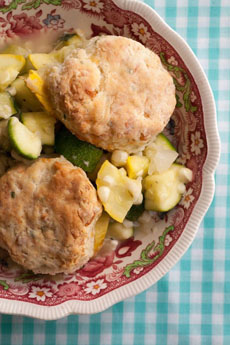
    [1] The cobbler biscuits look familiar, but underneath is a savory vegetable blend instead of sweet fruit (photo © Go Bold With Butter).

    Mixed Zucchini & Yellow Summer Squash, Cut Up
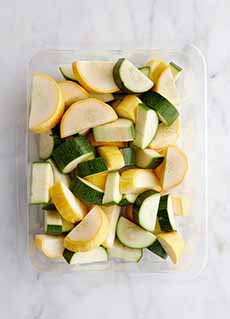
    [2] Zucchini and yellow squash, summer delights (photo © Good Eggs).

    Removing Corn Kernels From The Cob
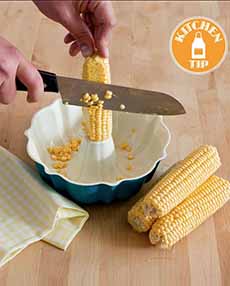
    [3] A trick to remove fresh corn kernels from the cob: Stick the cob in a Bundt pan (photo © Hidden Valley).

    Sliced Vidalia Onions
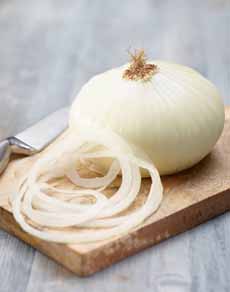
    [4] Vidalia onions are naturally sweet. Here’s more about them (photo © Vidalia Onions | Facebook).

    Grated Parmigiano Reggiano Cheese & Grater
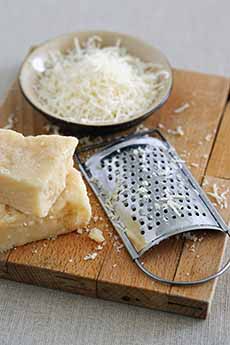
    [5] Whether it’s generic Parmesan or Italian Parmigiano-Reggiano (the differences), the cheese tastes so much better when it’s freshly-grated (photo © London Deposit | Panther Media).

    We never even thought of a savory cobbler before seeing this recipe from Taylor Takes a Taste on GoBoldWith Butter.com.A cobbler is a fruit dish cooked in a casserole. Shortcake batter or biscuit dough is dropped onto the fruit before baking. The dish got its name because the lumps of cooked dough resembled cobblestones.

    So it’s a short leap to substitute vegetables for the fruit and have a delicious savory cobbler.

    You don’t have to wait for the warm weather to make this Summer Squash Cobbler. It makes a great side dish for a weekday family meal or a large gathering. You can add optional chicken, ham, tofu, or other protein cubes.

    In the original recipe, zucchini, yellow squash, and sweet summer corn are sautéed with onions and tossed with Parmesan cheese. You can substitute winter vegetables in the off-season.

    This delicious filling is then topped with a layer of buttery cheddar and chive biscuits. Any leftovers are delicious the next day.

    For this recipe, prep time is 30 minutes, and cook time is 1 hour, 10 minutes.

    > The history of squash.

    > The history of zucchini.

    > The history of cobbler.

    > The history of biscuits.

    > Crisp, crumble, cobbler, betty, buckle, and more: the difference.

    RECIPE: SUMMER SQUASH COBBLER

    Ingredients For 8 Servings

    For The Squash Mixture

    • 5 cups chopped zucchini (bite size pieces)
    • 5 cups chopped yellow squash (bite size pieces)
    • 2 cups fresh corn kernels (you can substitute something else when corn is not in season—edamame, lima beans, peas, etc.)
    • 3/4 cups chopped Vidalia or other sweet onion
    • 4 tablespoons unsalted butter, plus extra for casserole pan
    • 2 tablespoons chicken stock
    • 1 tablespoon fresh lemon juice
    • 3/4 teaspoon salt
    • 1/4 teaspoon coarse ground pepper
    • 1/2 cup grated Parmesan cheese
    • 2 tablespoons all-purpose flour
    • Optional: 2 cups cubed ham or other protein

    For The Biscuits

    • 4 cups self-rising flour
    • 1/8 teaspoon cayenne pepper
    • 2 cups grated white cheddar cheese
    • 8 tablespoons unsalted butter, cold
    • 2 tablespoons chopped fresh chives
    • 1-1/2 to 1-3/4 cups buttermilk

    Preparation

    1. PREHEAT oven to 400°degrees. Butter a 9×13 casserole dish. Set aside.

    2. MELT melt 4 tablespoons of butter in a large nonstick skillet over medium heat. Add onions and cook, stirring frequently, until onions are soft. Raise heat to medium-high and add zucchini and yellow squash. Stirring constantly, cook the squash for 5 minutes.

    2. ADD corn, chicken stock, lemon juice, salt, and pepper. Reduce heat to medium and cook vegetables, stirring frequently for 5 minutes. Remove vegetables from heat and let them cool to room temperature. While vegetables are cooling…

    3. MAKE the biscuit dough. Place the self-rising flour in a large bowl. Add the cayenne pepper. Stir until the flour mixture is well blended. Cut cold butter into 16 pieces and add to the flour mixture. Using a pastry blender or two forks, cut the butter into the flour until it resembles a coarse meal. Add the grated cheese and chives to the flour mixture and stir until well-mixed.

    4. MAKE a well in the center of the flour. Add 1-1/2 cups of buttermilk and pull the flour from the sides of the bowl toward the center. Stir until the dough starts to form. If the mixture seems too dry, add additional buttermilk.

    5. KNEAD the dough in the bowl for 2 or 3 turns until a ball forms. Remove dough from the bowl and place on a floured surface. Pat dough out into a rectangle that is about 1/2-inch thick. Let the dough rest for a moment while preparing cobbler filling.

    6. MIX the Parmesan cheese and flour together in a small bowl. Add the Parmesan mixture to the cooled squash mixture and stir to blend. Empty the squash filling into the prepared casserole pan, smoothing it into even layer.

    7. CUT the biscuit dough into circles. Place the biscuits on the surface of the squash so that the edges of the biscuits are just touching each other.

    8. BAKE the cobbler at 400°F for 15 minutes. Reduce the heat to 350°F and continue baking for 20 to 30 minutes, until the squash is soft. Cover the top of the cobbler with foil if the biscuits begin to brown too much.

    9. REMOVE the casserole from the oven and let cool for 10 minutes. Serve.


    CHECK OUT WHAT’S HAPPENING ON OUR HOME PAGE, THENIBBLE.COM.


    Comments off


    © Copyright 2005-2026 Lifestyle Direct, Inc. All rights reserved. All images are copyrighted to their respective owners.