THE NIBBLE BLOG: Products, Recipes & Trends In Specialty Foods


Also visit our main website, TheNibble.com.

RECIPE: Asian Fusion Brisket Sandwich


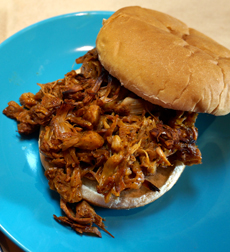
Brisket, anyone? Photo courtesy Fatty ‘Cue
Restaurant | NYC.
  Here’s a fun idea for brisket lovers: An Asian fusion brisket sandwich.

Fatty ‘Cue restaurants in New York City combine traditional smoky southern barbecue with spicy Southeast Asian flavorings.

Each Fatty ‘Cue location has a variation on the smoked beef brisket recipe, including:

  • Brisket with smoked melted cheddar, purple pickled onions, aïoli (garlic mayonnaise), chili jam and cilantro, on toasted baguette slices
  • Brisket with smoked onion marmalade, green papaya slaw and bao (Chinese steamed buns)
  • Brisket with rhubarb kimchee and bao (you can use any type of kimchee)
  •  
    Fancy some fusion?

     
    You can add the Asian fixings to a roast beef sandwich, or for that matter, chicken, turkey, lamb, ham or roast pork. If you have a bottle of Southeast Asian fish-sauce, shake it on!

    WHAT IS BRISKET?


    Comments off

    TIP OF THE DAY: Cooking Eggplant

    Today’s tip comes from Cordon Bleu Cooking School. The famed school in Paris, attended by Americans from Julia Child to Giada De Laurentiis, Cordon Bleu now has Bleu Ribbon Kitchen cooking classes in 17 U.S. cities from coast to coast.

    Check out the company website to find classes near you.

    No matter how you prepare it, eggplant works well with just about everything. Its ability to balance multiple flavors makes it an excellent component in any dish involving several ingredients.

    It is a delight in a simple sauté with with mushrooms, onions and tomatoes (delicious as a side or a main course over rice with some added protein such as chicken or tofu).

    Hot or cold, roasted or grilled, stuffed, marinated or fried, eggplant’s slightly bitter taste and spongy texture make it a go-to ingredient for casseroles, stews and brochettes (skewers).

    It works well with spices including basil, garlic, oregano, parsley, sage and thyme.

    It can be curried or spiced with hot chiles. It is a key ingredient in the famous Greek dish moussaka and the French ratatouille.


    Different types of eggplant: Italian eggplant, Sicilian eggplant (variegated), Chinese eggplant (long), Thai long green eggplant, Black Beauty eggplant (purple globe) and applegreen eggplant (photo © Cordon Bleu Kitchen).

     
    And it’s very low in calories: just 20 calories per cup. Eggplant is fat free, high in potassium and an excellent source of dietary fiber. Some varieties are high in chlorogenic acid, a polyphenol and potent antioxidant. (Look for the Black Magic variety, which has nearly three times the amount of polyphenols as other cultivars that were studied.)

    In America, eggplants are known as oblong with deep purple color (an Italian cultivar), but they can also be lavender, green, orange and yellow-white. They come in a variety of sizes and shapes, from round to oblong. Take a look at these unusual types of eggplant—some the size of strawberries!
     
     
    EGGPLANT COOKING TIPS

  • Eggplant flesh will start to turn brown once peeled. As with apples and bananas, wait to cut the eggplant until just before cooking.
  • To reduce the bitter* taste of eggplant, try salting it. Once it’s cut to the desired shape and size, sprinkle the eggplant with salt and let it rest for about 30 minutes. The eggplant will lose some of its water content and will be less porous. This not only minimizes bitterness, but helps to minimize soaking up fats used in cooking. After the 30 minute period, rinse the salt off the eggplant.
  • For frying, coat each slice with breadcrumbs or batter so the spongy eggplant won’t absorb too much oil.
  • Avoid cooking eggplant in an aluminum pan, as the aluminum will discolor the flesh.
  •  


    Now you know how the fruit got its name (photo of white eggplant © Burpee Home Gardens).
      From eggplant parmigiana to kabobs to caponata and ratatouille, the latter two of which can be used to top hot pasta. You can even make eggplant french fries. Or, try it in:

  • Pasta salads or with rice and other grains
  • Eggplant Lasagne
  • Eggplant Rollatini, strips of eggplant filled with ricotta and topped with tomato sauce and mozzarella
  • Stir-frys or grilled
  • Eggplant Caviar, one of our grandmother’s favorite appetizers
  •  
     
    EGGPLANT TRIVIA

  • The name “eggplant” derives from some 18th-century European cultivars, which were white or yellow and resembled hen and goose eggs, as you can see in the photo above.
  •  

  • In France and the U.K., eggplant is known as aubergine.
  • Although eggplants are prepared like vegetables, they are botanically a fruit—a type of berry—and a member of the Nightshade family, which includes potatoes, tomatoes and peppers.
  • _________________

    *The bitterness comes from the chlorogenic acid in the seeds—the same chemical that gives bitterness to coffee. The seeds also contain nicotinoid alkaloids. Nicotine? Yes, botanically, eggplant is a close relative of tobacco, which is also a member of the Nightshade family.
      

    Comments off

    TIP OF THE DAY: Marinated Cheese

    One of our particular passions is fresh goat cheese. Whenever we put together a cheese plate, we always include one or more chèvres.

    But for people who don’t like chèvre and want something more unusual than a plate of cheeses, here’s a good-looking option for buffets and parties. This recipe uses cheddar and cream cheese, but you can use any block cheese (which is easy to slice into uniform pieces). We used a flavored cheddar from Cabot Creamery, which makes traditional cheddars and reduced-fat cheddars, plus flavored varieties in Chipotle, Garlic & Herb, Horseradish, Hand-Rubbed Tuscan, Hot Buffalo Wing, Hot Habanero, Smoky Bacon and Tomato Basil.

    This recipe is from Comfort And Joy Food of Zeigler, Illinois. Comfort And Joy Food ships frozen cobblers, casseroles pot pies and other top-quality comfort food anywhere in the continental United States. The recipe was adapted from a recipe originally in Southern Living magazine. It can be prepared a day in advance.


    Party perfect: two different marinated cheeses. Photo courtesy ComfortAndJoy.com.

     
    The marinade creates a bright garnish on the bites of cheese.

    RECIPE: MARINATED CHEESE

    Ingredients

  • 1/2 cup quality olive oil
  • 1/2 cup white wine vinegar
  • 3 tablespoons chopped fresh parsley
  • 3 tablespoons minced green onions
  • 3 tablespoons chopped fresh basil
  • 2 teaspoons sugar
  • 1/2 teaspoon dried Italian seasoning
  • 1/2 teaspoon salt
  • 1/2 teaspoon pepper
  • 1/4 teaspoon red pepper flakes
  • 3 garlic cloves, minced
  • 1 jar (2 ounces) diced pimiento, drained
  • 1 block (8 ounces) sharp cheddar cheese, chilled
  • 1 package (8 ounces) cream cheese, chilled (slightly frozen is better)
  •  
    Plus

  • Optional garnish: chiffonade of basil, parsley sprigs
  • Crackers and/or toasts (we especially like to make “croutons,” toasted baguette slices—you can spread them with a bit of garlic butter for even more flavor)
  •  


    Festive food for any season. Photo courtesy
    ComfortAndJoy.com.
      Preparation

    1. PREPARE the marinade by combining the first 12 ingredients in a tightly covered jar; vigorously shake and set aside.

    2. CUT the block of cheddar in half lengthwise, then cut crosswise into 1/4 inch slices (basically little squares). Do the same with the cream cheese. The chef used a special butter slicing tool that works just as well to slice cheese (and costs just $5.00). It’s a real time saver. Otherwise, a knife is fine.

    3. STAND the cheese slices on edge in a shallow dish, alternating the cheeses. Shake the marinade and pour it over the cheese. Cover, refrigerate, and allow to marinate for at least 8 hours.

    4. GARNISH with a chiffonade of basil and parsley sprigs, if you like. It’s so pretty with all the chopped herbs and pimientos there really is no need to garnish, in my opinion. Serve with crackers or toasts.


    For more photos of the process, check out ComfortAndJoyFood.com.

    Variations

    Use the marinade on a log of goat cheese, sliced feta or mozzarella or other fresh cheese.


    Comments off

    RECIPE: Zucchini, Mushrooms & Onions Side Dish

    We’ve been seeing good deals on zucchini in our markets, so tried this recipe for zucchini, mushrooms, and onions, from Pom Wonderful.

    If you don’t have pomegranate juice to deglaze the pan, you can simply use the sherry or Marsala. We left off the arils this time around, but their bright color creates a really good-looking side dish for the holiday season.
     
     
    RECIPE: ZUCCHINI, MUSHROOMS & ONIONS
    WITH TOASTED BREAD CRUMBS

    Ingredients

  • 2 tablespoons pomegranate juice
  • ¼ cup pomegranate arils
  • 12 tablespoons olive oil
  • 1 cup onion slices
  • 2 cups zucchini slices
  • 1 cup sliced fresh mushrooms
  • Salt and pepper to taste
  • 2 tablespoons sherry or Marsala
  • 3 tablespoons fresh bread crumbs
  • 1 tablespoon Parmesan cheese
  •  
    A delicious combination of veggies—and colorful, too. Photo courtesy Pom Wonderful.
     
    Preparation

    1. SCORE 1 fresh pomegranate and place it in a bowl of water. Break open the pomegranate under water to free the arils (seed sacs). The arils will sink to the bottom of the bowl and the membrane will float to the top. Sieve and put the arils in a separate bowl. Reserve a cup of the arils from fruit and set it aside. Refrigerate or freeze remaining arils for another use. If you’re not using bottled juice, prepare fresh pomegranate juice.*

    2. HEAT oil in a large frying pan. Add onions and cook over high heat until slightly brown and softened. Add zucchini and mushrooms. Stir and cook quickly. Add salt and pepper to taste.

    3. REMOVE vegetables from the pan; set aside and keep warm. Add sherry or Marsala and pomegranate juice to deglaze the pan. Return vegetables to the pan.

    4. TOAST bread crumbs on a baking sheet at 425°F until brown; mix with cheese.

    5. TOSS bread crumbs with vegetables and add arils. Serve hot.

    Nutrients Per Serving (1 cup): 119 calories, 3g protein, 18g carbohydrate, 4g total fat (1g saturated), 0mg cholesterol, 67mg sodium, 2g dietary fiber, 15mcg vitamin A RE, 13mg vitamin C.

     
    *One large pomegranate will yield 2 tablespoons of juice. Cut the pomegranate in half and juice with a citrus reamer or juicer. Pour the mixture through a cheesecloth-lined strainer or sieve. Set the juice aside.


    CHECK OUT WHAT’S HAPPENING ON OUR HOME PAGE, THENIBBLE.COM.


    Comments off

    TIP OF THE DAY: Mold In Jelly & Jam


    Invader alert: white mold growing in jelly.
    Photo by Elvira Kalviste | THE NIBBLE.
     

    A couple of months ago, we noticed two cottony puffs of white mold growing in a jar of Smucker’s Concord Grape Fruit Spread. We wrote to Smucker’s asking if it was safe to eat, and what caused the mold. We got a response back, but it wasn’t to the questions we asked:

    Thank you for contacting The J.M. Smucker Company with your inquiry regarding Smucker’s® Concord Grape Jam. We greatly appreciate and value the input we receive from our consumers and take very seriously any comments pertaining to product quality.

    Your experience has been brought to the attention of our quality assurance department. We want to assure you that our products are made with the best quality ingredients available and by the most carefully controlled procedures known in the food industry.

    We appreciate the time required to share your comments with us. As a thank you, we are in the process of sending you coupons which you should receive in the mail within two to three business weeks. We hope you will use the coupons to again try our products.

    If you should have further questions or need additional information, please visit us at www.smuckers.com or contact us at 888-550-9555, Monday through Friday, 9:00 a.m. to 7:00 p.m. eastern time.

    Sincerely,

    Susan
    Consumer Relations Representative
    Ref # 10145794

     
    We responded to Susan’s email with a second request to answer the questions and never heard back (nor, for the record, did we received any coupons).

    This week, mold appeared in a second jar of Smucker’s, the Red Raspberry Spread. So rather than try to re-contact the unhelpful customer service department at Smucker’s, we went online to search for the answers. Here’s an answer from the National Center For Home Food Preservation:
    Q. What do I do if there’s mold on my jellied fruit product?

    A. Discard jams and jellies with mold on them. The mold could be producing a mycotoxin (a poisonous substance that can make you ill). The USDA and microbiologists recommend against scooping out the mold and using the remaining jam or jelly.

    Gee, you’d think Smucker’s might have warned customers against eating jelly with white mold—especially because it may well not have been their “fault” (see the next section). Perhaps they can take the information we found and paste it into a helpful customer service response.

    Aside from the mold—and the lack of help from Smucker’s—the spreads were delish.


    HOW TO PREVENT MOLD FROM GROWING ON JELLY
    AND JAM

    Typically, jelly and jam don’t develop mold on their own, because of the high acid of the fruit and the preservative action of the sugar. But mold spores can sometimes enter a jelly jar via contamination from a utensil that was previously used on another foodstuff—the bread for example. A microscopic piece of bread with a mold spore can adhere to the spoon or knife when you spread the jelly on the bread.

    We refrigerate open jars, and we’re especially cautious of cross-contamination, using a separate spoon for the jelly. But it is possible that when we spread the first spoonful of jelly on the bread, it picked up a microscopic mold spore that got introduced to the jar when we went for a second spoonful.

     
    A jar can get mold contamination from a spore of bread. Photo courtesy Peanut Butter & Co.
     

    So today’s tip is: Don’t double dip that spoon or knife. And toss out a jar with mold.

    WHEN YOU CAN KEEP FOODS WITH MOLD

    There are thousands, if not millions, of different types of mold, from beneficial ones like penicillium (which is used to make the mold in blue cheeses) to toxic ones. Experts warn that scooping out the visible mold is not a solution, since the mold shoots microscopic tendrils deep into the foodstuff.

    According to the U.S. Department of Agriculture, you can save hard cheeses, firm fruits and vegetables by cutting out at least an inch around and underneath the mold spot. But the organization advises you to toss baked goods, bread, casseroles, grain, jams and jellies, legumes, meat, nuts, pasta, peanut butter, soft cheeses, soft fruits and vegetables, sour cream, yogurt and other foods.

    The list of what you can keep is easy to remember because it’s so brief: hard cheeses, fruits and vegetables. Bid adios to everything else.


    Comments off

    The Nibble Webzine Of Food Adventures


    © Copyright 2005-2026 Lifestyle Direct, Inc. All rights reserved. All images are copyrighted to their respective owners.