THE NIBBLE BLOG: Products, Recipes & Trends In Specialty Foods


Also visit our main website, TheNibble.com.

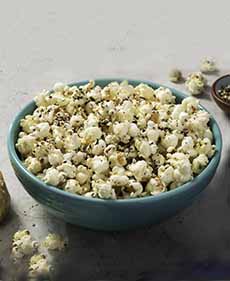
Everything Bagel Popcorn Recipe For National Bagel Day

January 15th is National Bagel Day, the first bagel holiday of the year* and we’ve got a fun recipe for you: Everything Bagel Popcorn.

The recipe follows, but first:

> Check out more bagel recipes below.

> More foods waiting for “everything” topping.

> The history of the bagel.

> The history of the everything bagel.

> The history of popcorn.

> Check out all of the popcorn holidays below.
 
 
RECIPE: EVERYTHING BAGEL POPCORN WITH
HOMEMADE EVERYTHING SEASONING

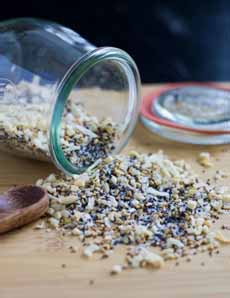
While it’s easy to purchase an “everything bagel” seasoning mix, this recipe shows how easy it is to make your own.

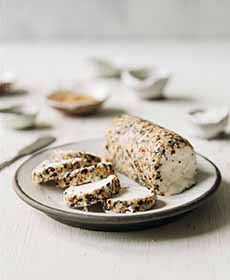
Make extra to keep in the pantry. Use it in salad dressings, on cole slaw and potato salad, eggs, green salads, grilled chicken and fish, yogurt and cottage cheese, and of course, on soft cheeses like cream cheese and goat cheese (photo #3).

Thanks to the National Popcorn Board for the recipe.
 
Ingredients For 4 Servings

  • 8 cups popped popcorn
  • 2 tablespoons butter, melted
  • 2 tablespoons poppy seeds
  • 2 tablespoons black sesame seeds
  • 1 tablespoon garlic flakes
  • 1 tablespoon onion flakes
  • 1/2 teaspoon salt
  • 1/2 teaspoon black pepper
  •  
    Preparation

    1. MIX together the seeds and seasonings in a small bowl.

    2. PLACE the popcorn in a large bowl. Drizzle with the melted butter and sprinkle with seasoning mix. Toss until well-coated. Eat.

    3. STORE any leftover seasoning mix in airtight container.
     
     
    MORE BAGEL RECIPES

  • Bagel Buffet
  • Beautiful Bagel Toppings
  • Healthier Bagels
  • Homemade Bagels
  • Pumpkin Cream Cheese
  • Red Caviar Bagel
  • Strawberry Cream Cheese
  • Sweet & Crunchy Cream Cheese Spread
  • Weekend Bagel Brunch Platter
  •  
     
    POPCORN HOLIDAYS

  • January 19: National Popcorn Day
  • February, 2nd Saturday: Global Movie Day
  • March, 2nd Thursday: National Popcorn Lovers’ Day
  • April 6: National Caramel Popcorn Day
  • May 20: National Streaming Day
  • June, 2nd Friday: National Movie Night
  • July 12: National Paper Bag Day
  • September: Whole Grains Month
  • September 25: Binge Day (for movies)
  • October: National Popcorn Poppin’ Month
  • December 2: Business of Popping Corn Day†
  • December 13: National Popcorn String Day
  • December 15: National Chocolate-Covered Anything Day‡
  •  

    A bowl of popcorn with Everything Bagel seasoning
    [1] Everything Bagel popcorn (photo © National Popcorn Board).

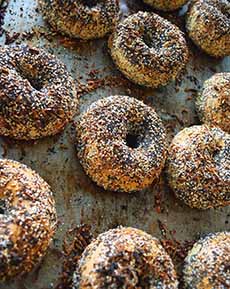
    A tray of Everything Bagels
    [2] The “real” Everything Bagel (photo © Siegel’s Bagelmania | Facebook).

    A Goat Cheese Log rolled in Everything Bagel spices
    [3] You can used the Everything Bagel seasoning on just about anything, including a goat cheese log (photo © Vermont Creamery).

    Everything Bagel Topping
    [4] Make extra Everything Bagel topping and keep it stored in an airtight jar (photo © Take Two Tapas).

     
    ________________
     
    *Bagel Holidays: National Bagel Day is January 15th. National Bagels & Lox Day is February 9th. National Bagelfest Day is July 26th. In 2018, the Thomas’ English Muffin division of Bimbo Bakeries USA decided to move the date from February 9th to January 15th to avoid competing with National Pizza Day. This was a marketing decision of a single company, but today January 15th is the date that appears first in an online search, while February 9th got lox added to the bagels.

    †Business of Popping Corn Day commemorates the invention of the first large-scale commercial oil popcorn popper by Charles Cretors in 1885.

    ‡Here’s a recipe for chocolate-covered popcorn.


    CHECK OUT WHAT’S HAPPENING ON OUR HOME PAGE, THENIBBLE.COM.


    Comments off

    Dutch Crunch Bread: What It Is & Recipes To Bake Your Own

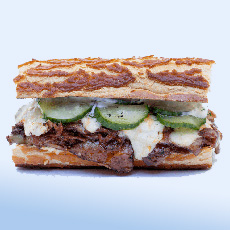
    A pastrami sandwich on San Francisco's Dutch Crunch bread
    [1] Hot Johnnie’s Dutch Crunch Pastrami Sandwich, made on Dutch Crunch bread. On this loaf, the rice paste forms “tiger stripes” (photo © Flavor & The Menu).

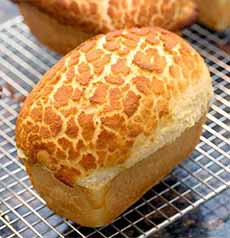
    Dutch Crunch Bread Mini-Loaf on a cooling rack
    [2] In these and the remainder of the Dutch Crunch photos, the pattern is giraffe-like. Here’s the recipe (photo © Honeyville).

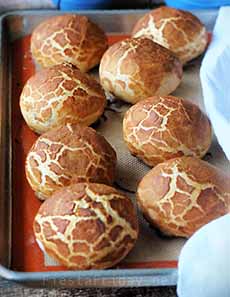
    Rolls of Dutch Crunch Bread, a.k.a. Giraffe Bread
    [3] Another example of why it’s also called giraffe bread. In addition to loaves, round and oblong rolls are made for sandwiches. Here’s the recipe (photos #3 and #4 © Fiesta Friday).

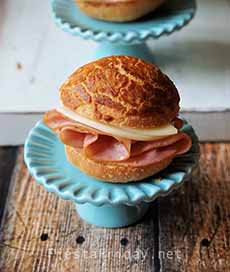
    Ham & Cheese Slider on a blue plate
    [4] Enjoy a ham and cheese on a Dutch Crunch roll.

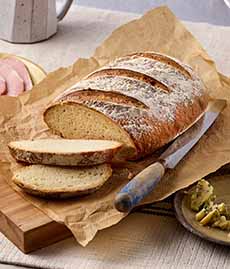
    A loaf of Bloomer Bread
    [5] A loaf of bloomer bread. Here’s a recipe (photo © Doves Farm).

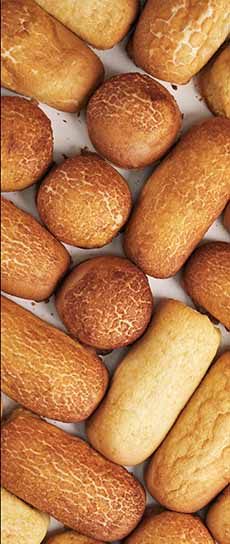
    Round and oblong Dutch Crunch rolls
    [6] Round and oblong Dutch Crunch rolls (photo © Max’s Dutch Crunch).


    January 14th is National Pastrami Day. We’d tucked a link from Flavor & The Menu about a pastrami sandwich onto our calendar, and when we checked it out we found something we knew nothing about: Dutch Crunch bread.

    First, about the pastrami sandwich in photo #1, which happens to be made on Dutch Crunch bread:

    Pastrami is beef brisket that has been cured, coated in spices (crushed black pepper, coriander, mustard seeds, garlic, and others), cold smoked, and then steamed.

    Hot Johnnie’s Dutch Crunch Pastrami Sandwich is the creation of Jonathan Young, chef/owner of pastrami smokehouse Hot Johnnie’s in San Francisco.

    Instead of the classic pastrami on rye, Hot Johnnie’s Dutch Crunch layers house-smoked pastrami and creamy, and melted Muenster cheese on Dutch Crunch bread, spread with house-made pepperoncini aïoli. Fresh dill and house-made pickles tie the flavors together.

    “Dutch Crunch is one of the most beloved types of breads in the Bay Area,” says Chef Young. “This sandwich is simple yet packed with flavor and incredible texture” [source].
     
     
    SO WHAT IS DUTCH CRUNCH BREAD?

    It turns out that this white bread with a crunchy top descends from tiger bread, which originated in The Netherlands.

    In Dutch, the bread is called tijgerbrood (tiger bread) and tijgerbol (tiger roll).

    The earliest mention of a bread with a crispy, rice flour topping comes from the Netherlands in the early part of the 20th century [source].

    Over time, it spread beyond The Netherlands and became especially popular the U.K., at both artisan bakeries and supermarket chains.

    In 2012, the giant grocery chain Sainsbury’s renamed the tiger bread to “giraffe bread” at the suggestion of a 3-year-old girl.

    Via letter to management and subsequent online petition, she astutely pointed out that the mottled pattern of the crust is much closer to a giraffe’s coat [source 1] [source 2].

    (However, you can see from photo #1 that it is possible to create tiger’s stripes.)

    Tiger bread is begins with soft and fluffy white bloomer bread loaf (photo #5).

    But it gets its “tiger” pattern (or giraffe pattern, depending on your point-of-view) from a rice flour paste which is brushed on time and bakes to a distinctive crunch.
     
     
    Tiger Bread Becomes Dutch Crunch Bread

    Dutch Crust is the San Francisco incarnation of Tiger Bread—named because the original name (and concept) was Dutch.

    It’s an oblong or rectangular loaf with a crinkled, golden-brown crust that crackles when you bite it (photo #2).

    The crumb (the inside) is soft, molding to whatever is placed between the slices.

    The golden brown color is the result of a Maillard reaction* (the same browning that colors toast).

    The crust is made up of of rice flour, sugar, oil, water, and yeast, blended into a paste and brushed on top of the bread. When heat is applied (i.e., baking), these ingredients create a much crunchier crust.

    Because rice flour is free of gluten and has more and different starches than wheat flour, this paste creates the crinkle topping.

    Because of the absence of gluten, the top coat does not spread. Thus, while the wheat bread beneath is expanding from the heat of the oven, the rice flour paste on top dries, cracks, and crisps up to create the patterned look [source].

    The appeal is not only visual, but also textural and aural (you can hear it crunch).
     
     
    WHERE TO BUY DUTCH CRUNCH BREAD

    Unless you live in the San Francisco Bay area, it’s tough to find Dutch Crunch bread. It can sometimes be found in the Pacific Northwest.

    On the East Coast, Wegmans grocery once sold something similar under the name “Marco Polo” bread, but it is not currently on the website. Here’s a photo from 2009—close but no cigar.

    We hope that bakers nationwide get hip to the opportunities Dutch Crunch—or Tiger—or Giraffe—or What Will You—presents.

    In the interim, we found two resources online. While we haven’t tried them, here are two options if you don’t want to bake:

  • Max’s Dutch Crunch
  • Boudin Bakery
  •  
     
    MORE TO DISCOVER

    > The history of pastrami.

    > The different types of sandwich: a photo glossary.

    > The history of the sandwich.

    > The different types of bread: a photo glossary.

    > The history of bread.
     
     
    ________________
     
    *If you’re into science, the color comes from a reaction between the sugar and an amino acid in the bread or other food. Called the Maillard (my-YARD) reaction after the French physician and chemist Louis Camille Maillard, it’s a form of non-enzymatic browning that usually requires heat. Each type of food has a very distinctive set of flavor compounds that are formed during the Maillard reaction. The color and flavor of toasted bread and nuts; barbecued, roasted and seared meats; and roasted coffee (and many others—the browning on fried dumplings, cookies and other kinds of biscuits, breads, toasted marshmallows, and many more) are the result of Maillard reactions. Thus caramel candy is the result of a Maillard reaction. However, the process called caramelization—the caramelization of sugar, as opposed to the creation of the candy—is not a Maillard reaction but a different type of non-enzymatic browning, not involving amino acids. Instead, the sugar is oxidized.


    CHECK OUT WHAT’S HAPPENING ON OUR HOME PAGE, THENIBBLE.COM.


    Comments off

    The Flavor Of The Year For 2024 Is Ube. What Is Ube?

    Experts at one of the world’s top food and beverage flavor companies have officially identified the official 2024 Flavor of the Year. It’s Ube (OO-beh).

    The “Flavor of the Year” was recently introduced in the 2024 Food and Beverage Flavor Trends Report, an annual publication by California-based T. Hasegawa USA, one of the world’s top 10 flavor manufacturers, based in California.

    Each year, T. Hasegawa leverages its industry expertise, working with many of the world’s top food and beverage brands, to compile this trend report highlighting up-and-coming ingredients, culinary techniques and more.

    The report notes that over the next four years:

  • Ube growth is predicted to outperform 88% of all other foods, beverages and ingredients.
  • It’s projected to grow more than 48% on U.S. menus (according to Datassential).
  • Sixty-seven percent of consumers say they are likely to purchase an ube-flavored beverage or dessert (according to Monin research) [source].
  •  
     
    WHAT IS UBE? 

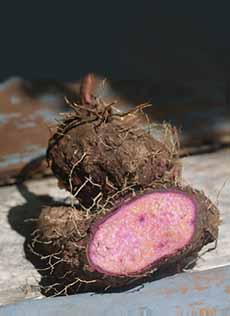
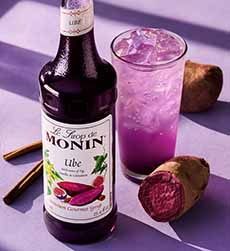
    Ube (photo #1), also known as purple yam (that’s not the same as purple sweet potato) is a starchy tuberous root that’s native to Southeast Asia and predominantly used in Filipino cuisine.

    It has been a cultural staple in Filipino cuisine for more than 400 years.

    The first printed reference is in Tagalog and Spanish dictionary published in 1613, although it no doubt [source].

    The word means “yam” or “tuber” in Tagalog, a native language in the Philippines.

    From a health and nutrition standpoint, ube is high in the photochemical anthocyanin, a strong antioxidant, which engenders its purple hue.

    It’s also a good source of fiber and vitamin C.

    In terms of history, appears to have originated in Bohol, an island province in the Philippines, specifically in the areas of Panglao Island and Guindulman.
     
     
    How Does Ube Taste? 

    It’s noted for its vibrant violet and lavender hues, ube has a distinctive nutty and sweet flavor profile, with hints of vanilla.

    The color as well as the creamy sweetness make it popular for in desserts in Filipino cuisine; and in the era of social media, the color makes it popular for posts!

    It’s also used in savory and recipes. ube is even sweeter than its distant relative, the purple sweet potato (photo #9).

    It’s ubiquitous in sweets, from cakes to ice creams, other baked goods and desserts, candies and drinks.

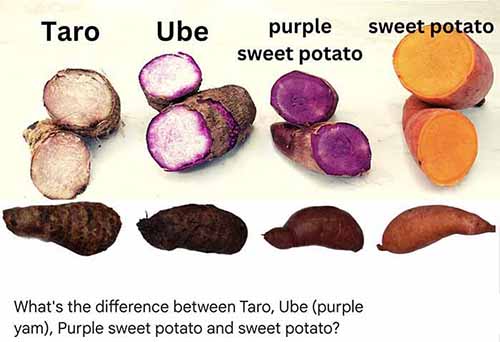
    And we can’t say it often enough: Ube, the purple yam, is not the same as the purple sweet potato (see the side-by-side comparison in photo #9).
     
     
    Ube Vs. Sweet Potato

    Ube (purple yam) and purple sweet potatoes are members of different botanical families, which makes them very distant cousins.

    They have different skin types, and different flesh.

    It can be easy to confuse ube purple yams and purple Okinawan sweet potatoes, and there is so much misinformation online. Often, ube is referred to as a purple sweet potato.

    But make no mistake, they are two different tubers.

    Remember high school biology? The plant kingdom breaks down into kingdom, phylum, class, order, family, genus, and species (plus subspecies, when applicable).

  • Ube are Dioscorea alata (genus and species), in the the family Dioscoreaeae, the yam family. Ube is also called violet yam, water yam, and winged yam.
  • Purple sweet potatoes, also called Okinawan sweet potatoes, are Ipomoea batatas L. Lam, in the family Convolvulaceae, the morning glory family. They are also called beni imo and Hawaiian sweet potato. They have a light brown skin (like a “white” potato) and a deep purple interior, and are a subspecies of…
  • Orange sweet potatoes, Ipomoea batatas, in the family Convolvulaceae They are commonly mislabeled as yams, even by produce professionals. Here’s the difference between sweet potatoes and yams.
  •  
    Nutritionally, ube is similar to a traditional orange sweet potato: 120 calories, 27g carbohydrate, 4g fiber, and 1g protein.

    The flavor is similar, but ube is a bit creamier because it has more moisture. It’s also sweeter.
     
     
    Ube vs. Taro 

    Taro is a starchy tuber like ube, and is often confused with ube. Both can be used in sweet and savory recipes.

  • Their rough, brown skins are similar, although taro has a more scaly exterior that is a darker brown.
  • Taro has white flesh with flecks of purple, as opposed to ube’s deep purple to light lavender flesh, depending on the cultivar.
  • Flavor-wise, ube has a natural sweetness while taro has a more earthy and nutty.
  •  
     
    Watch this excellent video on the difference between regular sweet potato, purple sweet potato, ube (purple yam), and taro.
     
    An illustration comparing ube, taro, sweet potato, and purple sweet potato

    [9] Many thanks to Juanjuan Taste, whose YouTube video (link above0 is the best explanation of these different roots that you can find.
     
     
    HOW TO USE UBE 

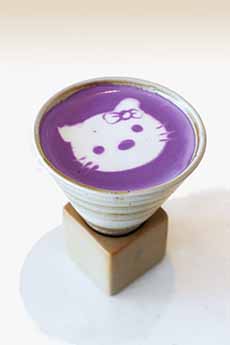
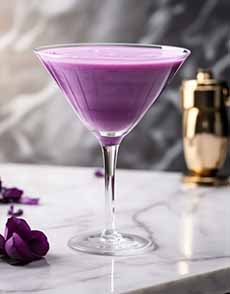
    In beverages: With its brilliant purple color, creative chefs, baristas, and mixologists are using frozen ube, ube extract or powder (from dried ube) to make trendy, photogenic cocktails, bubble tea, lattes, and other drinks (photos #2, #3, and #4.

    Just search for #ube on Instagram!

    In sweets: In the Philippines, ube is usually boiled, mashed, and used to make desserts. There are ube candies and puddings like ube halaya, a classic Filipino dessert.

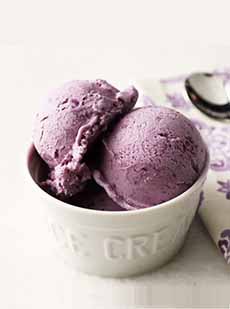
    And the most delicious, perhaps: ube ice cream. It has found its way to the U.S. at specialty stores (and even Trader Joe’s).

    In addition to extract, frozen, and powdered ube, there is also ube jam, called ube halaya (you can find it at Asian grocers and online).

    You can make just about any food to which

  • Ube mashed potatoes (actually, they’re yam)
  • Purple savory and sweet sauces
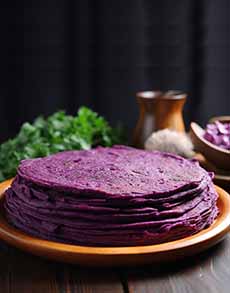
  • Purple pancakes and waffles
  • Purple gnocchi and other pastas
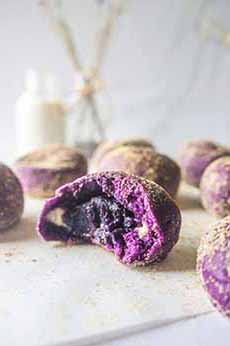
  • Anything dough-based, like dumplings and pierogi
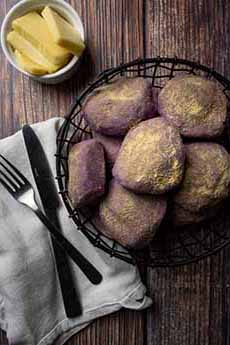
  • Purple bread and rolls
  • Purple fritters
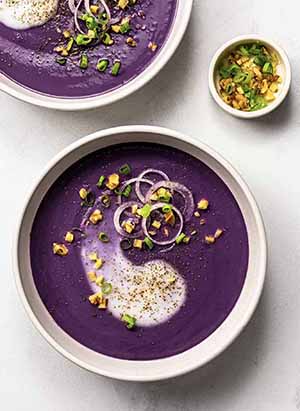
  • Purple yam soup (recipe)
  • Purple dips, like ube hummus (recipe)
  • Ube and cheese combinations, sweet and savory, from rolls (pandesal recipe) to cheesecake (recipe)
  •  
    For an authentic taste of the prepared tuber without having to cook ube, try picking up a jar of ube halaya to spread on toast, top ice cream, make halo-halo (shaved ice), or eat on its own.
     
     
    HOW TO FIND UBE 

    Unfortunately, it’s not yet easy to find fresh ube in the U.S. We tried to track some down as of this writing, and couldn’t.

    In the Philippines, there are two harvest seasons for ube, in June and December. It has just begun to be grown in Florida, where the warm and humid climate is just right [source].

  • Check at your local Asian grocery store or online purveyors. Otherwise, do what everyone else in the U.S. does…
  • Buy it puréed and frozen, in powder form, or as an extract. Check Asian markets and online.
  •  
    Warning note: If you do find fresh ube, there’s a fair chance that it’s a mislabeled purple sweet potato (a.k.a. Okinawan sweet potato). Even produce managers often confuse the two.

    And if you purchase ube in another form (extract, frozen, powder), be certain it is purple yam and not purple sweet potato.

    But since ube is our Top Pick Of The Week, do try it at your earliest convenience, either by purchasing something made with real ube, or making something yourself.

    There are recipes galore online for anything you could desire, from appetizers through to desserts and snacks.

    > Find more of our Top Picks Of The Week.

    > There’s a food holiday for every day of the year. Check them out!

    > October is Filipino American History Month, a month-long commemoration and appreciation for the Filipino experience throughout American history (which stretches as far back as 1587).

    > Philippine National Day, the independence day of the Philippines, is June 12th.


    Ube root, whole and halved
    [1] Ube root. Some roots are a much deeper purple (photo © Dinusha Rajapaksha | iStock Photo).

    Bottle of Monin Ube Syrup
    [2] In a selection of drinks. Here, an ube spritz in sparkling water, ginger ale, or lemon-lime soda like Sprite (photo © Monin).

    Ube Latte with Hello Kitty design
    [3] A latte, with ube-colored milk that’s made purple with food color, ube extract, powder, or syrup (photo © Eiliv Aceron | Unsplash).

    Ube Cocktail in a Martini Glass
    [3] You can do the same with a cocktail (photos #3, #5, and #7 © T. Hasegawa).

    A dish of ube ice cream. The dish is white, the ice cream is purple.
    [4] Ube ice cream. Here’s the recipe (photo © Better Homes & Gardens).

    Purple pancakes made with ube
    [5] Purple pancakes, anyone? Here’s a recipe.

    Dinner rolls made purple with ube
    [6] Dinner rolls made purple with ube (photo © Miguel Lorenzo | Unsplash).

    A purple ube donut filled with ube jelly
    [7] You can make sweet rolls or jelly donuts filled with ube jam.

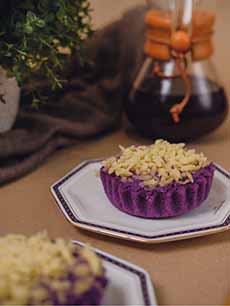
    An ube pastry topped with shredded coconut
    [8] An ube pastry topped with toasted coconut (photo © McHail Hernandez | Pexels).

    Ube, purple yam soup made with coconut milk and ginger.
    [8] Purple yam soup made with rich coconut milk and fresh ginger. Here’s the recipe (photo © Foodaciously).


    CHECK OUT WHAT’S HAPPENING ON OUR HOME PAGE, THENIBBLE.COM.


    Comments off


    © Copyright 2005-2026 Lifestyle Direct, Inc. All rights reserved. All images are copyrighted to their respective owners.