|
August 16th is National Rum Day.
Rum can be a confusing spirit for the everyday consumer. What’s silver versus white rum? What’s silver versus gold rum? Which one should you use for a rum cocktail?
Below:
>The different types of rum.
> The difference between rum and cachaca.
> A brief history of rum.
> Rum brands to knowl
Elsewhere on The Nibble:
Rum cocktails
THE DIFFERENT TYPES OF RUM
There are several types of rum, known as grades of rum, in the industry.
he different types are based on factors such as distillation technique, blending technique, alcoholic content, and style preferences of the country or the individual distiller. One of the easiest differentiators to understand is aging. Also, the better rums are made with high-quality molasses, which contains a higher percentage of fermentable sugars and a lower percentage of chemicals.*
With rum, it’s important to note that unlike Cognac or whisky, rum doesn’t have universally enforced aging regulations across all producing countries. Some Caribbean nations have their own standards.
Aged Rum. Aged rum is a broad term referring to any rum that has spent time in barrels. This can range from minimally aged (1 year) to very old expressions (20+ years). It’s important to note that the term focuses specifically on the time spent maturing rather than overall quality. Not all aged rums are premium, and aging duration doesn’t automatically guarantee quality. Aged rums will differ based on the type of barrel and length of time in the barrel. Añejo means old in Spanish; Extra-Añejo is the most aged rum you can buy.
Añejo (Aged Rum) and Extra Añejo (Extra Aged Rum). “Añejo” means “aged” or “vintage” in Spanish. Añejo is typically aged for a minimum of 1-3 years in oak barrels, where it develops golden to amber colors and begins to show oak influence with vanilla, caramel, and spice notes. Extra Añejo generally refers to rums aged for 3 years or more, and some premium extra añejos are aged 7, 12, 15, or even 20+ years‡‡. These develop deeper amber to mahogany colors and the extended aging creates more complex flavors: dried fruits, tobacco, leather, chocolate, and sophisticated oak character.
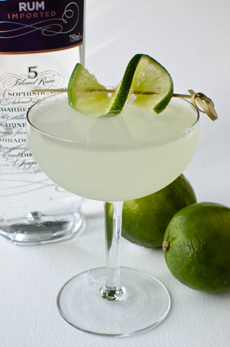
Light Rum or Silver Rum or White Rum or Crystal Rum. This is “entry-level rum,” offering alcohol and a little sweetness, but not much flavor. Light rums can have a very light color, or can be filtered after aging to be totally colorless. It is aged briefly or not at all. It can be filtered to remove any color, earning it the names “crystal” and “white.” Light rum is typically used for mixed drinks.
Gold Rum, Oro rum, or Amber Rum. Medium-bodied rum, midway between light rum and dark rum, gold rum is typically aged in wooden barrels. Use it when you want more flavor than light rum provides, for example in a simple cocktail like a Daiquiri or a Mojito.
Dark Rum. The rums in this group are also called by their particular color: brown, black, or red rum. This category is a grade darker than gold rum, due to longer aging in heavily charred barrels. As a result, dark rum delivers stronger flavors, more richness and a full body. There are strong molasses or caramel overtones with hints of spices. Dark rum is used to provide a deep flavor in cocktails and is typically used in baking and cooking (it’s the rum used in rum cake).
Flavored Rum. Following the growth of the flavored vodka market, you can now find light rum that is flavored with apple. banana, black cherry, citrus, coconut, cranberry, grape, guava, mango, melon, passionfruit, peach, pineapple, raspberry, strawberry, spiced…and on and on. They have a base of light rum, are mostly used to make cocktails, but are also enjoyable drunk neat or on the rocks.
Spiced Rum. Spiced rum is infused with spices—aniseed, cinnamon, pepper, and rosemary, for example—and botanicals such as orange peel. The better brands use gold rum and are darker in color, but cheaper brands made from inexpensive light rum will darken their products with caramel color.
Single Barrel Rum. This is the finest rum for sipping. The term “single barrel” refers to the process: After its initial aging, the rum is handpicked and blended before it is barreled for a second time in new American oak barrels, which impart flavors. It is slowly aged again, and finally bottled.
Overproof Rum. For serious tipplers, these rums are much higher than the standard 40% ABV (80 proof). Many are as high as 75% ABV (150 proof) to 80% ABV (160 proof). Bacardi 151, for example, is 151 proof.
Premium Rum or Viejo Rum. This long-aged spirit is like Cognac and fine Scotch: meant for serious sipping (viejo means old, añejo means aged—it’s semantic). The term generally indicates aging of 3+ years, although exact length varies by producer; the rum can be aged 7 years or more.
Premium rum is produced by artisan distillers dedicated to craftsmanship. Premium rum has far more character and flavor than “mixing rum” (i.e., used to make cocktails)—it’s a different experience entirely, enjoyed for its complex layering of flavors.
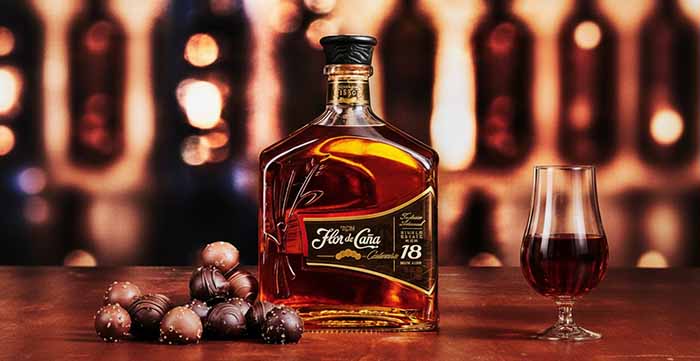
The 18-year-old Centenario Gold from Flor de Caña (photo #6) is a wonderful sipping experience, but also is priced at $65 or so. You can find a nice 12-year-old in the $25 range.
Viejo.
Spanish for “old,” theThe category sits between añejo (1-3 years) and extra añejo (longer aging) in many classification systems. See Añejo and Extra Añejo, above.
WHAT ABOUT CACHAÇA?
Cachaça (ka-SHA-suh) is a sugar cane distillate made in Brazil, in the style of gold or dark rum. It is the ingredient used in the popular Caipirinha (kai-puh-REEN-ya), Brazil’s national cocktail.
Cachaça is often called “Brazilian rum,” but the Brazilians take exception to that. They consider their national drink to stand in a category of its own.
The actual difference between rum and cachaça, which taste very similar, is that rum is typically made from molasses, a by-product after the cane juice has been boiled to extract as much sugar crystal as possible.
Cachaça is made from the fresh sugar cane juice (but so are some Caribbean rums, particularly from the French islands). Both are then fermented and distilled. The style is usually like that of light rum, but some cachaça brands are in a style similar to gold rums.
Cachaça has its own holiday: International Cachaça Day is June 12th.
> Here’s more about cachaça.
A BRIEF HISTORY OF RUM
Sugar cane grew wild in parts of Southeast Asia. It was first domesticated sometime around 8,000 B.C.E., probably in New Guinea. It arrived in India, where better extraction and purifying techniques were developed to refine the cane juice into granulated crystals.
Sugar then spread quickly. By the sixth century C.E., sugar cultivation had reached Persia; and, from there to elsewhere in the Mediterranean, brought by Arab expansion and travel.
In 1425, sugar arrived in Madiera and the Canary Islands. In 1493, his second voyage to the New World, Christopher Columbus brought sugar cane seedlings. They were grown, first in Hispaniola and then on other islands. The main sugar-exporting countries in the Caribbean today are Barbados, Belize, Cuba, Guyana and Jamaica.
In the 17th century, Caribbean sugar cane planters produced sugar by crushing sugar cane, extracting and boiling the cane juice, then leaving the boiled syrup to cure in clay pots. A viscous liquid would seep out of the pots, leaving the sugar in the pot.
The seepage was molasses—and no one wanted the thick, cloying by-product. It was fed to slaves and livestock, but a monumental amount of molasses was still left over. Sugar was a great cash crop for European planters, but two pounds of sugar yielded a pound of molasses!
There were no customers or known uses for molasses, so the planters dumped it into the ocean: very sweet industrial waste.
Finally, slaves figured out a use, and a great one at that. They fermented the molasses and distilled it into alcohol, to yield what became known as rum (source).
Then, playing around with the now-valued molasses, it was discovered to be as good as sugar in baked goods, and more flavorful.
How Did Rum Get Its Name?
No one knows. The origin of the name rum (ron in Spanish, rhum in French) is unclear. Historians have offered these possibilities:
A derivation of rumbullion, meaning a great tumult or uproar.
The large drinking glasses known as drummers, used by Dutch seamen
Contractions of the word saccharum, Latin for sugar, or the word arôme, French for aroma
Our vote is for saccharum (saccha-rum), sugar, since rum is made from sugar cane.
|
|

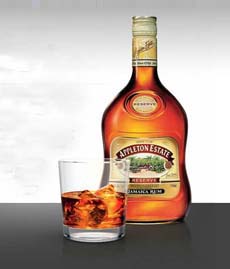
[1] Enjoy aged rum on the rocks (photos #1, #2, and #4 © Appleton Estates rum).
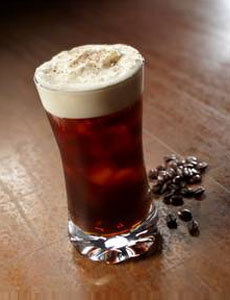
[2] Add the basic grade, known a light, silver, white and other names, to an iced coffee for Jamaican Iced Coffee.
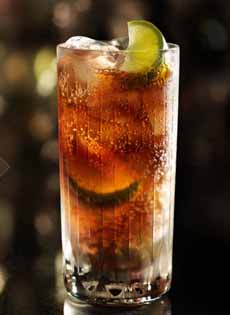
[3] A Cuba Libre, known by many Americans as a Rum & Coke (photo © Bacardi).
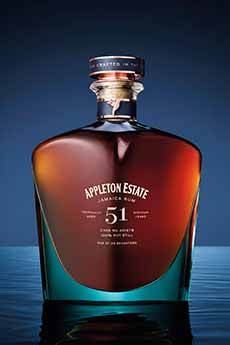
[4] For the rum connoisseur, nothing beats aged rum, Añejo or Extra Añejo. Most premium producers offer a variety of ages. Appleton’s expressions include 12, 17, 18, 21, 25, 50 and 51 years.
|