THE NIBBLE BLOG: Products, Recipes & Trends In Specialty Foods


Also visit our main website, TheNibble.com.

TIP OF THE DAY: Freeze-Dried Herbs In Everything

The trick to adding more flavor to everything you eat, with negligible calories—and the ability to cut back on salt—are spices and herbs.

THE DIFFERENCE BETWEEN HERBS & SPICES

  • Spices are the dried seeds, buds, fruit or flower parts, bark or roots of plants. They are usually of tropical origin.
  • Herbs are the leaves and sometimes the flowers of plants, usually grown in a climate similar to the Mediterranean.
  • Aromatics: In culinary terms, both herbs and spices fall into the category of aromatics. (Now you know what those Top Chef contestants were referring to!)
     
    Today we’re focusing on herbs.

    A few months ago we received a shipment of Instantly Fresh freeze-dried herbs from Litehouse, and have been happily adding them to just about everything.

  •  

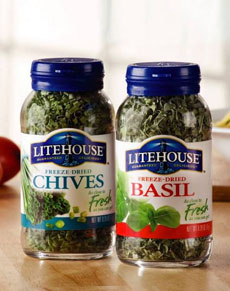
    litehouse-herbs-chive-basil-230

    Two of the numerous freeze-dried, “Instantly Fresh” herbs from Litehouse.

     
    Litehouse freeze-dries every herb you could need for daily cooking: basil, chives, cilantro, dill, garlic, ginger, Italian herb blend, jalapeños, lemongrass, oregano, parsley, poultry herb blend, red onion, sage, salad herb blend, spring onion and thyme.

    What does all this choice mean? That you have some “herbing” to do!

    Whether you’re cooking breakfast eggs, making soup, mashing potatoes, broiling, roasting, sautéing or simply reheating or microwaving—think of what herb would brighten the dish.

    You don’t have to go exotic. A basic complement of basil, chives, garlic, oregano and parsley will do.


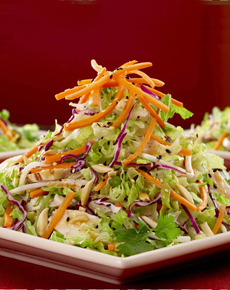
    slaw-cheesecake-factory-230sq
    Cole slaw, potato salad and protein salads
    (chicken, egg, tuna, etc.) all benefit from
    added dill, plus parsley. Photo courtesy
    Cheesecake Factory.
      WHAT ARE FREEZE-DRIED HERBS

    Freeze-drying is a dehydration process used to preserve perishables. The food is quickly frozen and the surrounding air pressure is then reduced. This allows the frozen water in the product to go directly from the solid phase to the gas phase, avoiding the liquid phase.

    The process delivers more of the taste, aroma and nutrition of fresh herbs, compared to conventional drying.

    And the unopened food can be stored at room temperature without refrigeration for years. The greatly reduced water content inhibits the action of microorganisms and enzymes that would otherwise spoil or degrade the substance.

    When freeze-dried herbs are rehydrated by contact with moisture (the liquid in the recipe itself or other ingredients in the recipe), they reconstitute into a close approximation of their former fresh selves.


    So your task this week is to look at everything you serve and match at least one herb to it (don’t hesitate to use two or more):

  • Bread: create your own bread dippers by adding herbs to olive oil and add a green herb to garlic bread
  • Main Dish: anything goes
  • Pasta: beyond the Italian basics—basil, oregano and parsley—try other herbs like dill, rosemary, thyme and sage
  • Pizza: ditto!
  • Sandwich/Wrap have fun with it!
  • Sauce/Condiment ditto!
  • Side Dish: once you sprinkle herbs onto potatoes, rice and vegetables, you’ll be hooked
  • Soup: what looks like a nice garnish really adds a flavor boost
  •  
    When you come across dynamite pairings, share them with us!
     
    FOOD TRIVIA

    Some plants yield both an herb and a spice.

  • Cilantro is the leafy herb of the same plant that gives us the popular spice coriander seed.
  • Dill weed (an herb) and dill seed (a spice) also come from the same plant.
  •   

    Comments off

    What Is Snow Ice & How Does It Differ From Shave Ice

    One of our favorite writers, bakers and photographers—that’s all one person, Hannah Kaminsky of Bittersweet Blog—is on sabbatical in Hawaii. The photos she’s been posting are such a treat.

    One of her favorite discoveries is snow ice. “A distinct and entirely different dessert than shave ice,” she writes, “snow ice is also a sweet frozen snack, but made of paper-thin ribbons of ice flakes already infused with flavor. Thus, no syrup is required.”

    [There’s more about the differences below.]

    “This creates a sensational, light texture that’s incredibly easy to eat, even after a big meal. The technique actually comes from Taiwan but has taken root in Hawaii, particularly in downtown Honolulu.”

    Hannah has been hanging out at Frostcity, a small chain with lot of flavors. The base can be milk- or water-based.

    There you’ll find an abundance of flavors, some milk-based and some water-based (vegan):


    watermelon-snow-ice-hannahkaminsky-230
    [1] A mountain of snow ice (photo © Hannah Kaminsky | Bittersweet Blog).

  • Classic flavors: almond, chocolate, coffee, cookies & cream, green tea & azuki, mint, nutella, peanut and vanilla
  • Conventional fruits: assorted Berry and melon flavors, banana, lemonade, limeade, mango, pineapple
  • Exotic flavors: avocado, black sesame, calamansi*, haupia†, purple sweet potato
  • Combinations: caramel apple, choco hazelberry (strawberry and Nutella), piña colada, strawberry cheesecake toffee-choco mac
  • Seasonal flavors: egg nog, gingerbread, nectarine
  • Savory flavors: natto, pickle, sriracha, watercress
  •  
    Colorful garnishes include azuki beans, jellies, mochi balls, tapioca pearls and a sauce of sweetened condensed milk.


    Blueberry Snow Ice
    [2] Blueberry shaved ice, garnished with “the works” (photo © Frostcity | Honolulu).

    Three Flavors Of Snow Cones: Blueberry, Cherry, Lemon
    [3] Snow cones are made from crushed, not shaved, ice and are crunchier than shave ice (photo © McCormick).

      SNOW ICE & SHAVE ICE: THE DIFFERENCE

    While both are frozen treats, snow ice is an entirely different dessert than shave ice.

    Snow ice, made in a special machine, consists of paper-thin ribbons of ice flakes that are already infused with flavor. There’s no syrup—which is how shave ice gets its flavor.

    The machine creates a sensational, light texture that’s incredibly easy to eat. The technique actually comes from Taiwan but has taken root in Hawaii, particularly in downtown Honolulu.

    Shave ice or Hawaiian shave ice is made by shaving a block of ice. (That’s “shave ice,” not “shaved ice”—a fact more grammar-conscious people may stumble over. On the Big Island it is also referred to as “ice shave.”)

    Shaving produces a very fine, snow-like ice that easily absorbs the flavored syrup poured over it. Shave ice resembles a snow cone; but there’s a significant difference. Snow cones are made with crushed, rather than shaved, ice and have a rougher texture.

    Which would you prefer? You may have to buy a ticket to Honolulu to begin your voyage of discovery.
     
     
    The Difference Between Shave Ice & A Snow Cone

    The primary difference lies in texture and production: snow cones use crushed ice, resulting in a crunchy, coarse texture, whereas shave ice uses a machine to shave blocks of ice into fine, fluffy, snow-like flakes that absorb syrup better.

    Snow cones are typically served in a cone-shaped cup, while shave ice is often served in a bowl or cup with a spoon. Shave ice is often served with toppings like condensed milk.

    > The difference between snow ice and shave ice.

    > The history of shave ice.

    > The different types of ice cream and other frozen desserts.

    > The history of ice cream.

    > The year’s 50+ ice cream holidays.

    > Here’s how ice cream was made, 4,000 years ago.

    > Make snow cones at home with the Little Snowie machine.

     
    ________________

    *Calamondin, a rarity in the continental U.S. but common in Hawaii (also called calamansi) is a Pacific Rim lime that looks like an orange. It was grown in Florida and California until the easier-to-cultivate Bearss/Persian/Tahitian lime became the standard supermarket lime. Some heirloom fruit can still be found in farmers markets. Learn more about the calamondin in our Lime Glossary.
     
    Haupia is a traditional coconut milk-based Hawaiian dessert often found at luaus and other local gatherings. Made from coconut milk, heated with a thickening agent, it is also a popular topping for white cake, including wedding cake. Although technically a pudding, the consistency approximates a gelatin dessert and it is usually served in blocks like gelatin.


    Comments off

    RECIPE: Layered Rice Pudding Bars

    Here’s something new for rice pudding lovers: Rice pudding is combined with a cheesecake-like layer with a pecan shortbread-type crust. What temptation!

    Thanks to RiceSelect for the recipe. The recipe uses Jasmati rice, a Texas-grown jasmine rice that has the same fragrant aroma as Thai jasmine rice (which you can substitute).

    Jasmine is the go-to rice for any Asian cuisine or rice dessert. Check out the different types of rice.

    Prep time is 20 minutes, cooking time is 20 minutes; the yield is 18 bars.

    RECIPE: LAYERED RICE PUDDING DESSERT

    Ingredients for Crust

  • ½ cup butter
  • 1 cup flour
  • 2 tablespoons powdered sugar
  • ½ cup chopped pecans
  •  
    Preparation

    1. PREHEAT oven to 350°F.


    layered-rice-pudding-riceselectFB-230

    Another way to enjoy rice pudding! Photo courtesy RiceSelect.

     
    2. COMBINE all ingredients in mixing bowl. Mix well with fork; press into bottom of a 13 x 9 x 2-inch baking pan. Bake for 20 minutes or until lightly browned. Cool.
     
    Ingredients For Cream Cheese Layer

  • 1 package (8 ounces) cream cheese (you can use lowfat)
  • 1½ cups powdered sugar
  •  
    Preparation

    1. COMBINE all ingredients, beating until smooth. Spread over cooled crust.


    Texmati Ricetec
    Jasmine rice, grown in the U.S. by
    RiceSelect, is branded as Jasmati. Photo
    courtesy RiceSelect.
     

    Ingredients For Rice Pudding

  • 3½ cups milk
  • 1 egg, beaten
  • 1 package (3 ounces) vanilla pudding mix (not instant)
  • 2 cups cooked Jasmati or jasmine rice
  • ¼ cup raisins
  • ¼ teaspoon cinnamon
  • 1/8 teaspoon nutmeg (or to taste)
  • 1 container (8 ounces) frozen whipped topping*, unthawed
  • ½ cup chopped pecans, toasted (optional)
  •  
    *Substitution: We’re not keen on frozen whipped topping—Cool Whip Original includes hydrogenated vegetable oil and high fructose corn syrup, among other ingredients. So we made fresh whipped cream instead. The substitution only works if you’ll be serving the bars immediately. On leftovers, it will go flat in the fridge; but you can revive the bars with more whipped cream.

     
    Preparation

    1. COMBINE egg and milk in a 2-quart saucepan. Whisk to combine.

    2. ADD pudding mix; continue whisking until dissolved. Stir in rice, raisins, cinnamon and nutmeg. Cook and stir over medium heat until mixture comes to a boil and thickens. Cool pudding.

    3. POUR cooled pudding over cream cheese layer. Top with whipped topping; sprinkle with toasted pecans if desired. Chill until ready to serve.
     
    A TWIST ON RICE PUDDING

  • Tofu Rice Pudding
  • Adult Rice Pudding
  •   

    Comments off

    TIP OF THE DAY: Garlic Oil

    Boyajian was a pioneer in infused oils and vinegars, introducing its delicious condiments to the marketplace some 25 years ago. From the beginning, their basil oil, chile oil, garlic oil, oregano oil and rosemary oil added zing to our everyday cooking—pure olive oil infused with fresh herbs.

    Moving with the times, Boyajian has added chipotle, habanero, jalapeño, roasted chili and scallion oils. (Alas, our beloved wasabi oil, the easiest way to make wasabi mashed potatoes, has been discontinued.)

    Not everyone has an ongoing need for oregano oil or chipotle oil, but one that you can count on using every day is garlic oil. For some people, it’s a pantry essential.
     
    Appetizers & Snacks

  • Bread: Add herbs to create a dipping oil for baguette or pita slices or crudités
  • Dips: Add a dash to guacamole, hummus, or yogurt dip
  •  

    garlic-oil-beauty-kingarthurflour-230

    You can use garlic oil in just about every savory dish. Photo courtesy King Arthur Flour.

     
    Mains

  • Fish & Seafood: As a seasoning, cooking oil or garnishing oil, garlic oil goes great with grilled salmon, swordfish, shrimp and other favorites.
  • Meats: Rub on beef, lamb, pork or poultry before roasting or grilling.
  • Main Salads: Top a salad of raw and roasted veggies and lean protein with an egg fried in garlic oil.
  • Pizza: Drizzle on pizza, hot from the oven.
  •  

    garlic-rosemary-mashed-potatoes-mccormick-230
    For simply smashing mashed potatoes, mash
    with garlic oil, then add minced chives or
    rosemary. Photo courtesy McCormick.
     

    Sides

  • Flatbread & Garlic Bread: Drizzle or brush on
  • Grains: Use garlic oil as a dressing for whole grains, like farro or quinoa
  • Starches: Use garlic oil in place of butter in mashed potatoes or drizzle over rice instead of a pat of butter
  • Vegetables: Drizzle over roasted cauliflower, sauteed kale or other veggies
  •  

    Find many more recipes at Boyajian.com.


    Comments off

    RECIPE: Caesar Salad With A Twist

    This idea from Posana Café in Asheville, North Carolina can turn what is typically a side salad into a main course salad. Hard boiled eggs and crispy prosciutto or bacon are added for protein.

    The romaine, Parmigiano-Reggiano cheese and dressing remain, except that the lettuce is not torn, the raw egg in the dressing becomes a hard-boiled egg, and the Parmigiano is shaved instead of grated.

    If you love citrus, add lemon or lime zest to the Caesar dressing.
     
    HOW TO MAKE CRISPY PROSCIUTTO

    1. PREHEAT oven to 375°F. Line two rimmed baking sheets with parchment paper.

    2. DIVIDE 12 slices prosciutto (about 6 ounces) between baking sheets, laying them flat. Bake until fat turns golden and meat is darker, about 15 minutes (rotating baking sheets from top to bottom halfway through baking time).

    3. TRANSFER prosciutto using tongs to paper towels to drain. It will crisp as it cools. Serve in whole pieces or crumbled.

      caesar-salad-posanacafe
    Caesar salad with a twist. Serve a large portion as a main course with your favorite soup. Photo courtesy Posana Café | Asheville.
     

    HAIL, CAESAR SALAD!

  • Caesar Salad History
  • The Original Caesar Salad Recipe
  • Creamy Caesar Dressing (not the original, but a contemporary favorite)
  • Caesar Salad Pizza Recipe
  • Caesar Salad Stuffed Cheese
  • Deconstructed Caesar Salad
  • Grilled Caesar Salad
  • Lobster Caesar Salad
  •   

    Comments off

    The Nibble Webzine Of Food Adventures
    RSS
    Follow by Email


    © Copyright 2005-2026 Lifestyle Direct, Inc. All rights reserved. All images are copyrighted to their respective owners.