THE NIBBLE BLOG: Products, Recipes & Trends In Specialty Foods


Also visit our main website, TheNibble.com.

Types Of Blood Oranges & Blood Orange Recipes

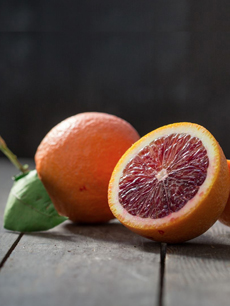
blood-orange-beauty-goodeggs-230
A blood orange can be thing of beauty. Photo
of the Moro variety courtesy GoodEggs.com.
 

Blood orange season is upon us. Blood oranges can be a thrill (sweet and luscious) or a disappointment (bland), depending on the grower’s rootstock, the climate and the season. You never know what you’re going to get, but the upside is so wonderful that you’ve got to try.

The hue of a blood orange can range from pink to rose red to deep purple. The most dramatic have “blood”-colored crimson and purple flesh. (There are even “blonde” blood oranges which have orange flesh like regular oranges, but a have blood orange flavor.)

The peel may look like a regular orange or feature telltale washes of red. The skin may be smooth or pitted. While it looks like the more acidic Valencia orange on the outside, the blood orange flesh is sweet with less acid, like a navel orange.

Each variety has a different climate preference, and produces different hues, sizes and flavors based on the climate, temperature and other factors that impact the coloration and flavor intensity. California blood oranges have more pigmentation, Texas blood oranges tend to have less pigmentation, as do those from Florida, where the humidity limits the development of the pigment.

 
The color is the result of the antioxidant anthocyanin,* not typically found in citrus, but common to other red fruits and flowers (it’s the same natural chemical that gives the color to pomegranates and roses).

The flavor of a good blood orange will be “an orange kissed by a raspberry.”
 
 
THE HISTORY OF BLOOD ORANGES

Blood oranges are believed to be a mutation of the sweet orange, that occurred in southern Italy around 1850.

The blood orange was brought to the U.S. in the 1930s in the wave of Italian immigration. It now grows in California (November to May), Florida (October to January) and Texas (December to March).
 
_______________

*Anthocyanin neutralizes the effects of free-radical chemicals that are believed to cause cancer and other ailments (diabetes, epilepsy, heart disease, liver disease and ulcers) plus the general impact of aging. Research shows that it fights and prevents cancerous tumors and ulcers, and improves vision. Blood oranges are also packed with high levels of carotene, dietary fiber, potassium and vitamin C.


TYPES OF BLOOD ORANGES

The three most popular cultivars (varieties) of blood orange the Moro, Sanguiello and Tarocco. If you can get information from your vendor, go for the Moro or the Tarocco.

  • The Moro blood orange, a recent introduction into the blood orange family, is grown in California and in Texas. It is the most colorful of the three types, with a deep purple flesh and reddish orange rind (see photo above). It has a sweet flavor with notes of raspberry that makes this variety sing—whether in recipes or as an eating fruit. It is well worth seeking out.
  • The Sanguinello blood orange, discovered in Spain in 1929, has a reddish skin, few seeds and a sweet and tender flesh.
  • The Tarocco blood orange, native to Italy, is a medium-sized fruit and is perhaps the sweetest and most flavorful of the three types. However, its internal reddish color varies widely and is unreliably red.
  • Ruby and Palestine Jaffa blood oranges can also be found in the U.S. Here are more details on blood orange varieties.
  •   blood-orange-freeze-therosegroup-230
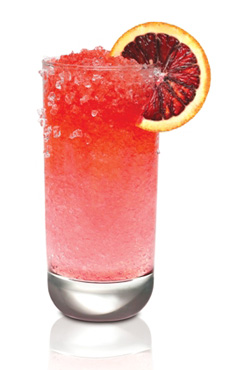
    A cocktail with blood orange juice. Photo courtesy The Rose Group.
     
    BLOOD ORANGE RECIPES

    Our favorite way to enjoy blood oranges is as a hand fruit or a simple sorbet or granita. A glass of blood orange juice is also wonderful. When you have such a subtle, special flavor, you might not want to cover it up.

    However, here are a few recipes for those blessed with an abundance of blood oranges.

  • Blood Orange Cocktails
  • Roasted Beets And Goat Cheese
  • Blood Orange Chocolate Chunk Soufflé
  • Blood Orange Dessert Spaghetti
  • Blood Orange Dessert Sauce (great with cheesecake)
  • Blood Orange Granita Or Sorbet
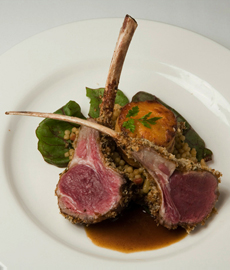
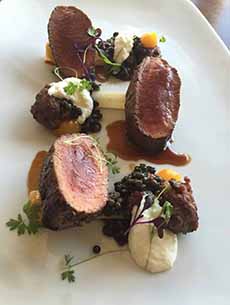
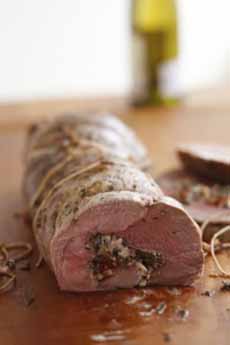
  • Lamb Loin With Blood Orange Sauce
  • Blood Orange Vinaigrette
  • Pepita-Crusted Halibut With Blood Orange Jicama Chutney
  •   

    Comments off

    RECIPE: Ladybugs On A Stick

    Lady-Bugs-on-a-Stick-calavocomm-230L
    Crunchy, fun and good for you. Photo
    courtesy California Avocado Commission.
     

    Move over, Ants On A Log, the childhood classic made from celery-stuffed cream cheese topped with raisins.

    Ladybugs On A Stick have no cholesterol, the fat from avocado oil is super-healthy, and the tomatoes are lower in calories and more nutritious than raisins.

    You can make or buy guacamole, or combine the mashed avocado and salsa as shown below. Thanks to the California Avocado Commission for the nifty idea.

    RECIPE: LADYBUGS ON A STICK

    Ingredients For 8 Sticks

  • 1 ripe avocado*, seeded, peeled and mashed
  • ¼ cup prepared salsa, or to taste
  • 8 celery stalks, washed and trimmed
  • 12 small grape tomatoes, cut in half lengthwise
  •  
    *Large avocados are recommended for this recipe. A large avocado averages about 8 ounces. If using smaller or larger size avocados, adjust the quantity accordingly.

    Preparation

    1. COMBINE the salsa and the mashed avocado.

    2. FILL the hollow in each celery stalk with the guacamole, taking care to keep it in the groove and not on the rims. For precision, you can use a piping bag or a plastic food storage bag with a corner cut off.

    3. NESTLE 3 grape tomato halves atop the guacamole on each celery stalk.


    Comments off

    FOOD FUN: Corned Beef & Cabbage Tacos & More Fusion Tacos

    Who thought that inspiration for St. Patrick’s Day would come from La Tortilla Factory?

    Corned beef and cabbage tacos!

    We love fusion food, but these tacos do present a challenge:

    Should we serve them with mustard, or with tomatillo salsa?
     
     
    EVERYTHING YOU WANT TO KNOW ABOUT MAKING TACOS

    The answer to this question and others concerning nouvelle tacos can be found in the new book, The Taco Revolution by Brandon Schultz.

    The book covers both traditional and new recipes, with chapters for beef, chicken, fish, pork, vegetable, breakfast and specialty tacos, plus sides, sauces, and taco party advice.

    On the nonconventional list, there are fusion tacos galore, including:

  • Avocado and tofu taco
  • BLT taco
  • California roll taco with wasabi sauce and soy sauce for dipping
  • Caprese taco with mozzarella, tomato and basil
  • Chicken salad taco and tuna salad taco, both with mayo
  • Chicken tikka taco (say that three times fast)
  • Falafel tahini taco
  • Hawaiian pizza taco
  • Korean taco of rice and kimchi
  • Orange chicken taco
  • Reuben tacos with sauerkraut and thousand island dressing
  • Smoked salmon and cream cheese taco
  • Spam taco with iceberg lettuce and sweet or red onions
  • Steamed broccoli taco
  • Thanksgiving taco with turkey, stuffing, and cranberry sauce
  •  
    Are you salivating or simply intrigued? Get your copy at Amazon.com in hardcover or Kindle editions.


    Corned Beef & Cabbage Tacos
    [1] Corned beef and cabbage tacos. Here, the creamy cabbage slaw stands in for the traditional boiled cabbage. Here’s the recipe (photo © Chili Pepper Madness).

    corned-beef-cabbage-tortillas-tortillafactory-230sq
    [2] Tacos for St. Patrick’s Day layer traditional corned beef and boiled cabbage (photo © La Tortilla Factory).


    CHECK OUT WHAT’S HAPPENING ON OUR HOME PAGE, THENIBBLE.COM.


    Comments off

    RECIPE: Asian Grilled Salmon With Edamame

    miso-glazed-salmon-edamame-chefRitaFrenchProvincePhoenix-230
    Delicious for dinner: glazed salmon and
    edamame. Photo courtesy Chef Rita French |
    Province Phoenix.
     

    Having just presented different ways to serve edamame as a snack or side, it’s time to move on to mains. Here’s a delicious grilled salmon dish, courtesy Euro USA.

    RECIPE: HONEY SOY GRILLED SALMON WITH EDAMAME

    Ingredients For 4 Servings

  • 1/4 cup packed cilantro leaves
  • 2 scallions (green onions)
  • 2 teaspoons vegetable oil
  • 1 teaspoon grated ginger
  • Kosher salt and freshly ground pepper
  • 4 center cut skin-on salmon fillets, about 6 ounces each
  • 2 teaspoons fresh lime juice
  • 2 teaspoons low-sodium soy sauce
  • 2 teaspoons honey
  • 1/4 teaspoon black sesame seeds
  • 1-1/3 cup cooked edamame
  • Optional garnish: snipped chives or parsley, lime wedges
  •  

    Preparation

    1. PREHEAT the grill over medium-high direct heat. Oil the grill grates. Finely chop the cilantro and scallion and mix in the oil and ginger. Season with salt and pepper.

    2. CUT two 3-inch long slits through the skin lengthwise on the bottom of each salmon fillet, going about halfway into the salmon. Stuff the slits with the herb mixture. Season with salt and pepper.

    3. STIR together the lime juice, soy and honey.

    4. PLACE the salmon, skin side up, on the grill and cook until well marked, 3 to 4 minutes. Turn the salmon and continue cooking, brushing the tops with the sauce, until the fish is cooked through, about another 3 to 4 minutes. Transfer to a serving plate and sprinkle with the sesame seeds. Serve with edamame and lime wedges.


    Comments off

    TIP OF THE DAY: Edamame Teriyaki

    We enjoy both the flavor and the nutritional benefits of edamame. We always order a bowl at Japanese restaurants, and have bags of frozen, shelled edamame in the freezer at home.

    The bright green color of the boiled soybeans adds perkiness to anything from scrambled eggs to salads to mashed potatoes.

    You can ready almost any savory dish for St. Patrick’s Day by mixing in, scattering or garnishing it with edamame.

    Hannah Kaminsky reports from a trip to Hawaii that the local restaurants serve a much more inspired dish of edamame than most of us know from Japanese restaurants on the mainland. She writes:

    “A popular pupu (appetizer) at dives and fine dining establishments alike, edamame seasonings start with the most basic sprinkle of sea salt. But these humble soy bean pods are rarely ordered in that plain state.

    “Garlic edamame, studded with plentiful chunks of coarsely minced garlic, guarantee you the most powerful but worthwhile dragon breath* you’ve ever experienced.

    (Editor’s Note: To counter the effects, sauté the garlic to take the edge off, and add fresh minced parsley.)

    “Spicy edamame (or sweet-and-spicy, with added honey) adds either crushed red pepper flakes or a drizzle of sriracha into the mix.

    “It’s a real treat when you can find edamame dressed up poke-style, in sesame oil, soy sauce, scallions, and sliced sweet onions.

    “The beans pictured here are a specialty from the newly opened Izakaya Torae Torae in Honolulu: Teriyaki truffle edamame. Just toss the edamame in truffle oil before drizzling with teriyaki sauce.”

    And while you’re at it, you can make homemade teriyaki sauce. The recipe follows.
     
     
    WHAT IS TERIYAKI SAUCE

    Teriyaki is actually a Japanese cooking technique, in which foods are broiled or grilled with a glaze of soy sauce, mirin (rice wine) and sugar.

    According to Wikipedia, in Japan the cooking style is mainly used for a variety of fish, while in America, salmon teriyaki and chicken teriyaki are typically found on menus.

    The word derives from the noun teri, which refers to a shine or luster given by the sugar content of the tare, a term for dipping sauces used in grilling; and yaki, the cooking method of grilling or broiling.
     

    RECIPE: HOMEMADE TERIYAKI SAUCE

    Ingredients For 1 Cup

  • 1/2 cup soy sauce
  • 1/4 cup water
  • 2 tablespoons sweet rice wine
  • 1 tablespoon, plus 2 teaspoons brown sugar
    or honey
  • 1/4 cup sugar
  • 1-1/2 teaspoons minced garlic†
  • 1-1/2 teaspoons minced ginger†
  • 1/2 tablespoon cornstarch
  • 1 tablespoon water
  •  


    edamame-sauce-hannahkaminsky-230
    [1] Edamame and soybean poke (photo © Hannah Kaminsky | Bittersweet Blog).

    Teriyaki-Sauce-olivethis.com-230
    [2] Homemade teriyaki sauce. Photo courtesy OliveThis.com. Check out their recipe for Grilled Chicken with Honey
    Ginger Balsamic Teriyaki Sauce.

    Chicken Teriyaki
    [3] Teriyaki chicken (photo © McCormick).

     
    Preparation

    1. MIX all but last two ingredients in a sauce pan and heat over a medium flame.

    2. MIX cornstarch and cold water in a cup and dissolve. Add to pan. Heat until sauce thickens. If the sauce is too thick for you, you can thin it with water.

    ________________

    *What causes garlic breath: The sulphuric compounds that give garlic their desirable taste and health benefits and also create that unpleasant odor. Here’s more information, including how to fight garlic breath.

    †You can substitute garlic powder ground ginger, but fresh tastes better. Reduce the amounts of dried herbs, as they are more concentrated.


    Comments off

    The Nibble Webzine Of Food Adventures
    RSS
    Follow by Email


    © Copyright 2005-2026 Lifestyle Direct, Inc. All rights reserved. All images are copyrighted to their respective owners.