|

[1] Decorate with mini cookies and you’ve got a two-in-one dessert—plus a pretty pie garnish (photos # 1, #2, #3 and #7 © Williams Sonoma).
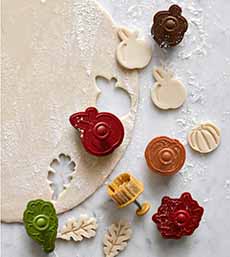
[2] These “punches” produce mini cookies from conventional pie or cookie dough. They are available seasonally at Williams Sonoma and elsewhere.
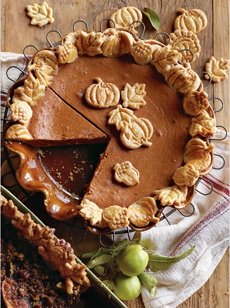
[3] Here, the cutouts are used to decorate the rim of the pie, as well as the center.
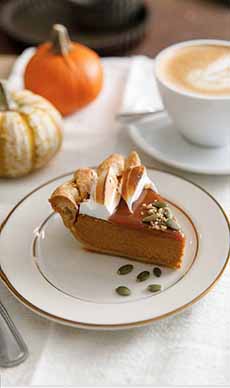
[4] Pumpkin pie garnished with meringue, pumpkin seeds, and a bit of streusel (photo © Bien Cuit | Brooklyn).

[5] A cutout design on the rim of the pie (photo © Dilyara Garifullina | Unsplash).

[6] If you have mini cookie cutters, you don’t need a pie punch (photo © Joanna Lopez | Unsplash).

[7] You also can use the pie punches to decorate other types of pie tops.
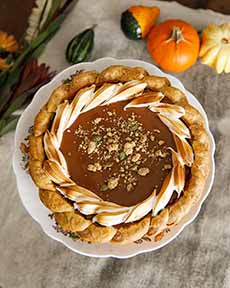
[8] A different pumpkin pie garnish: meringue, pumpkin seeds and streusel (photo © Bien Cuit Bakery | Brooklyn).
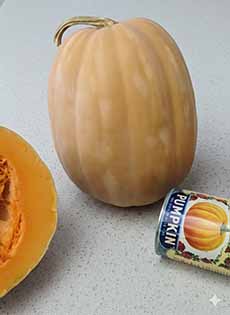
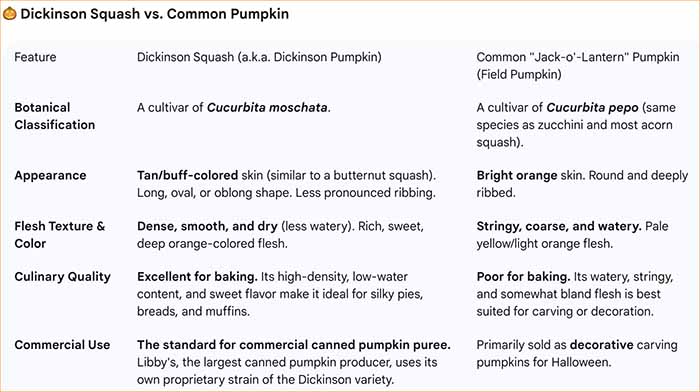
[9] What is sold as canned pumpkin is actually the Dickinson squash. See why in the chart below (Gemini photo).
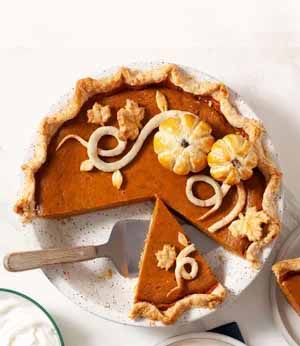
[10] Decorations made from leftover pie dough (photos #11 and #12 © Taste Of Home).
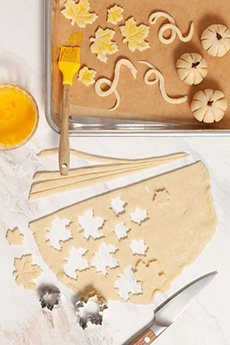
[11] Just roll out the leftover dough and bring out your inner artist.
|
|
Here’s a two-in-one dessert for Thanksgiving and anytime you serve a pumpkin pie.
Because pumpkin pie falls into the category of custard pie—no top crust and a smooth surface—it lends itself to decoration.
How about decorating it with mini, seasonal cookies?
You can purchase seasonal “pie punches,” small cutters which stamp out shapes in pie or cookie dough (photo #2). Fall shapes include acorns, leaves, pumpkins, and turkeys. Here’s a selection from Williams Sonoma.
If you have mini cookie cutters, those work, too (photo #5).
Most people punch out shapes from pie dough. It’s easier, because you already have leftover dough from the pie crust.
But we like to use cookie dough, for better flavor. This can be almost as easy: Just buy a tube of sugar cookie dough and roll the slices thinly.
But it’s not just cookies. Here are an additional 25 pumpkin pie garnishes that you can add to homemade or store-bought pumpkin pie.
> There are more pumpkin pie recipes below, plus other yummy pumpkin desserts.
> The history of pumpkin pie is also below.
> The year’s 8 pumpkin holidays.
> The history of pumpkin.
> The history of pumpkin pie.
The history follows, but first:
DO YOU NEED AN OCCASION TO ENJOY PUMPKIN PIE BEYOND THANKSGIVING & CHRISTMAS?
We never need a reason. It’s North America’s second-favorite pie, right behind apple pie, according to Taste Atlas.
But here are more official pumpkin pie celebration days:
National Pumpkin Spice Day is October 1st.
National Pumpkin Day is October 26th.
National Pumpkin Pie Day is December 25th.
National Pie Day is January 23rd.
National Pie Month is February, and as a bonus…
National Pi Day (after the mathematical symbol) is March 14th; many of us use it as an occasion to eat more pie).
THE HISTORY OF PUMPKIN PIE
Pumpkins are a new world fruit, first cultivated in Central America around 5,500 B.C.E. Spanish explorers brought them back to Spain in the early 16th century. The first known mention in Europe dates to 1536.
Within a few decades pumpkins were grown all around England, where they were called “pumpions,” after the French “pompon,” a reference to their round form. The name originated from the Greek word for large melon: “pepon.” The French changed “pepon” to “pompon.” The English further changed it to “pumpion” or “pompion.”
So English people knew about pumpkins before some of them voyaged to the New World.
Northeastern Native American tribes grew squash and pumpkins. The Native Americans brought pumpkins as gifts to the first settlers, and taught them many uses for pumpkin.
The Mayflower colonists received pumpkins, as they came to call them, as gifts from the Wampanoag Native Americans, who knew them as savory preparations. They were made into pie and bread, as well, by the colonists.
As wheat supplies were limited, they made a version of crustless pumpkin pie by stewing pumpkins or filling a hollowed-out pumpkin with milk, honey and spices, then baking it in hot ashes.
A year later, when the 50 surviving colonists were joined by a group of 90 Wampanoag for a three-day harvest celebration, it’s likely that pumpkin was on the table in some form [source].
In Europe and America, pumpkin pie existed in numerous forms, only a few of which we would recognize today—pumpkin custard in a bottom crust.
In France: In 1651 the famous French chef, François Pierre la Varenne, published his seminal cookbook, “Le Vrai Cuisinier François” (translated in 1653 as “The True French Cook”). It contained a recipe for “Tourte of Pumpkin” that featured a pastry shell.
Varenne instructed his readers to “Boile it [the pumpkin meat] with good milk, pass it through a straining pan very thick, and mix it with sugar, butter, a little salt and if you will, a few stamped almonds; let all be very thin. Put it in your sheet of paste; bake it. After it is baked, besprinkle it with sugar and serve.”
England: English writer Hannah Woolley’s 1670 “Gentlewoman’s Companion” advocated a pie filled with alternating layers of pumpkin and apple, spiced rosemary, sweet marjoram, and a handful of thyme.
By the 1670s, recipes for “pumpion pie” began to appear in other English cookbooks. The pumpkin pie recipes began to sound more familiar to our modern pies, including cinnamon, nutmeg and cloves. Often the recipes added apples, raisins, or currants to the filling.
America: An early New England recipe used no crust but instead used a hollowed-out pumpkin as a base. It had spiced sweetened milk and was cooked in a fire. In 1796 the first American cookbook with pumpkin pie recipe was published. “American Cookery,” by Amelia Simmons, was the first with recipes for foods native to America. Simmons’ pumpkin puddings were baked in a crust, similar to the custard filling of present-day pumpkin pies. It was called “pompkin pudding.”
The popularity of pumpkin pie rose began to grow in the early 18th century, coinciding with the rise in the popularity of Thanksgiving. The holiday and the pie were both popular in New England (pumpkin was mainly a local food until after the Civil War). After Lincoln proclaimed Thanksgiving as an official national holiday in 1863, and the recipe traveled across the land.
In 1929, Libby’s, a canned meat company, began to can pumpkin so it was easy to make pumpkin pies. As is true today, that canned squash actually wasn’t pumpkin but Dickinson squash—same taste, easier to process. See the chart below for a comparison.
Pumpkin pie inspired other pumpkin pie-flavored foods, from ice cream and flavored coffee to the more.
What is pumpkin spice? (photo #2). It was first used as a seasoning for pumpkin pie. While for many years the baker of a pumpkin pie measured each particular spice from its jar, enough pies were being baked to warrant a blend.
While “pumpkin pie spice” is mentioned in cookbooks dating to the 1890s, blended pumpkin pie spice was introduced commercially by McCormick & Company in 1934. A blend of ground cinnamon, clove, ginger, nutmeg, and sometimes allspice, here’s the recipe if you want to blend your own.
The use of pumpkin spice-flavored-everything grew after the success of Starbucks’ Pumpkin Spice Latte, introduced in January 2003. Today you’ll find everything from pumpkin spice chocolate, coffee, and caramels to granola and yogurt.
MORE PUMPKIN PIE RECIPES
Bourbon Pecan Pumpkin Pie
Ginger Pumpkin Pie With Pumpkin Seed Crust
Graham Cracker & Pumpkin Seed Crust
Pumpkin Cheesecake Pie
Pumpkin Chiffon Pie
Pumpkin Ice Cream Pie
Translucent Pumpkin Pie (you can see through it!)
PLUS: The Best Squash For Pumpkin Pie
MORE PUMPKIN DESSERT & SNACK RECIPES
Apricot Pumpkin Bread
Candied Pumpkin Seeds
Chocolate Chip Pumpkin Bread
Chocolate Pumpkin Tart
Frozen Pumpkin Tiramisu
Mocha Pumpkin Cheesecake/li>
No-Bake Pumpkin Cheesecake
Pumpkin Chocolate Chip Cookies With Spelt
Pumpkin Cream Cheese Danish
Pumpkin Cheese Danish
Pumpkin Cheesecake Ice Cream
Pumpkin Cheesecake Pie
Pumpkin Cheesecake With A Gingersnap & Nut Crust
Pumpkin Cheesecake With A Pecan Crust
Pumpkin Chocolate Swirl Bread
Pumpkin Cinnamon Streusel Bundt Cake
Pumpkin Cupcakes With Pumpkin Cheesecake Frosting
Pumpkin Dessert Waffles
Pumpkin Gummy Candy
Pumpkin Layer Cake
Pumpkin Mousse
Pumpkin Mousse Cheesecake With A Gingersnap Crust
Pumpkin Pecan Coffee Cake
Pumpkin Pudding Parfait
Pumpkin Seed Toffee
Pumpkin Spice Brownies
Pumpkin Spice Fudge
Pumpkin Spice Latte Ice Cream Pops
Pumpkin Spice Mousse
Pumpkin Spice Popcorn
Pumpkin Whoopie Pies
White Chocolate Pumpkin Fondue
DRINKS RECIPES
Homemade Pumpkin Liqueur
Pumpkin Eggnog
Pumpkin Pie-Tini
Tipsy Turkey Pumpkin Cocktail
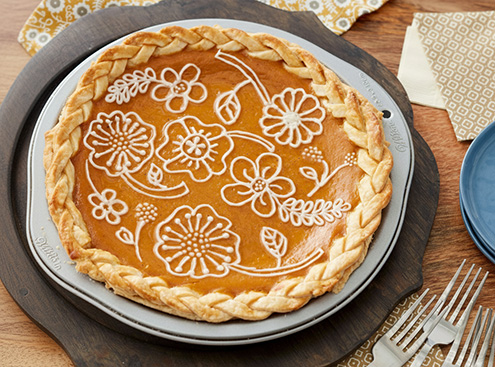
[12] Get out your piping bag and pipe your design. Idea: flavor the icing with maple (photo © Wilton).
|