THE NIBBLE BLOG: Products, Recipes & Trends In Specialty Foods


Also visit our main website, TheNibble.com.

HOLIDAY GIFT: Baileys Red Velvet Irish Cream Liqueur

Baileys Irish Cream Liqueur had us at “hello.”

Over the years, the liqueur’s portfolio has expanded far beyond Original Irish Cream liqueur, to Chocolate Cherry, Espresso Crème, Salted Caramel, Vanilla Cinnamon and limited-edition flavors for the holidays (Pumpkin Spice, Baileys Strawberries & Cream).

Each flavor is an indulgent drinking experience…a substitute for ice cream…a treat whenever you need one…a way to wow guests.

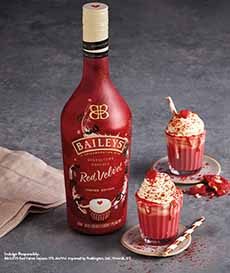
And now, for Holiday 2019, there’s a new way to wow: Baileys Red Velvet Irish Cream (photo #1).

The flavor was created in collaboration with Georgetown Cupcake, a cupcake bakery that originated in D.C. Their best cupcake seller is (drum roll…) the Red Velvet cupcake.

But the liqueur it is oh, so much better than any red velvet cupcake or layer cake.

Baileys Red Velvet liqueur has rich cocoa flavor that classic red velvet cake should have, but most rarely do (that’s our humble opinion).

It smells like cocoa, tastes like cocoa made with heavy cream, and for eye appeal, it’s a dusty rose color.

TIP: Before it sells out, buy more for Valentine gifts and Mother’s Day. Freshness is guaranteed for two years.

The 750mL bottle lists for $23.99. For more information visit Baileys.com.
 
 
USES FOR BAILEYS RED VELVET IRISH CREAM LIQUEUR

Sip it straight! This stuff is just too good to mix into cocktails, to bake into brownies or red velvet cake, or to swirl into cheesecake.

But you can:

  • Drizzle it over cheesecake and ice cream.
  • Add it to hot whole milk or half-and-half and drink it as “hot red velvet chocolate.”
  • Make a float, as in photo #1: Fill a small glass halfway with Baileys Red Velvet, add vanilla or chocolate ice cream, and top with whipped cream.
  •  
     
    THE HISTORY OF BAILEYS IRISH CREAM

    Baileys Irish Cream was created almost 50 years ago by Gilbeys of Ireland, part of International Distillers & Vintners (which is now part of Diageo), as it searched for something new to introduce to the international market.

    Research began in 1971, and the liqueur was formulated by an internal team plus consultants.

    The formulation of Baileys was created with a surfeit of alcohol from a distillery and a desire to use surplus cream from an Irish dairy business, both owned by by the parent company, Grand Metropolitan (Irish cows are known for quality of their milk).

    The first trial formulation included alcohol, cream and Nesquik, the classic chocolate milk powdered drink made by Nestlé.

    Finally, the approved formulation: a delectable concoction of the cream from the cows, Irish whiskey, cocoa extract, both beet and cane sugar, and some proprietary ingredients we can’t suss out (Vanilla extract? Sweetened condensed milk? A hint of coffee? None of these?).

    When it was time for branding, the name was inspired by the Bailey’s Hotel in London, although the liqueur’s registered trademark omits the apostrophe. R.A. Bailey, whose signature adorns the label of the Original bottle, is a fictional character.

    The liqueur was launched in Ireland in 1974, the first Irish cream liqueur on the market [source].
     
     
    ABOUT BAILEYS

    The Bailey’s brand is now owned by Diageo, the alcoholic beverages giant.

    It’s available in 180 markets worldwide. It’s the number one selling liqueur in the world, and is currently ranked 7th among all distilled spirits sold worldwide!


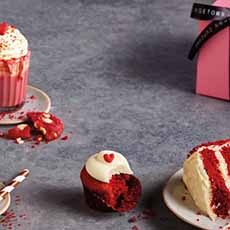
    [1] Sip the pink elixir from a liqueur glass, or turn it into an ice cream float (photos #1, #3 ad #4 © Diageo).


    [2] Have some as a chaser after a piece of red velvet cake. Here’s the recipe from McCormick.


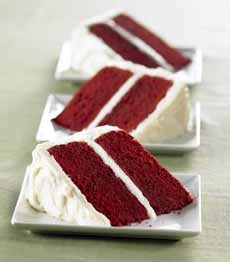
    [3] Red Velvet: Baileys float, cookies, cupcakes, layer cake.


    [4] Before it sells out, buy it now for Christmas and Valentine gifts.


    Comments off

    CANDY GIFT: Eat Your Drink Gummies (Jellies) With Alcohol


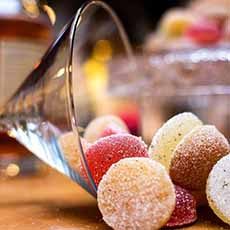
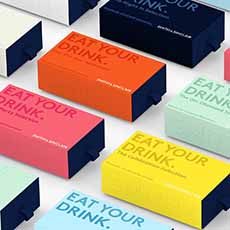
    [1] These jellies taste like real cocktails (all photos © Eat Your Drink).


    [2] A lineup of food fun.

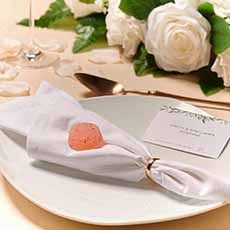
    [3] So much better than a mint on your pillow.


    [4] Naughty Or Nice, the limited-edition holiday collection.


    We have a new candy love: alcoholic cocktail gummies from Smith & Sinclair

    The London-based confectioner creates alcoholic drinks you can eat. Really.

    These delicious gummy mounds—actually pâte de fruits (think Chuckles, one of our childhood favorites)—hold a subtle kick at 5% ABV (the equivalent of ½ shot of alcohol). Yes, you really taste the rum or tequila.

    Can you get smashed by eating them? Not in our experience—and we ate four pieces at once!

    Individually wrapped, the bites of heaven are gluten-free and vegan.

    Each two-bite gummy has a spirit base (gin, prosecco, rum, vodka or whiskey) that is blended with fresh fruit, herbs, syrups. You can taste the high quality of the ingredients.

    They’re coated with garnish infused sugars (photo #1) that add to the cocktail flavor.

    The company suggests that you allow the gummy to rest on the palate, but we found it difficult to wait.

    The different assortments each feature 4 flavors of “expertly mixed cocktail gummies”—two pieces of each flavor.

    The After Dinner Box we received as a gift contained:

  • Gin and Tonic (40% gin)
  • Mocha Espresso Martini (40% vodka)
  • Hibiscus Negroni (40% gin)
  • Passion Fruit Mojito (40% white rum)
  •  
    The Celebration Box includes:

  • Berry Daiquiri (40% dark rum)
  • Elderflower Gin Spritz (40% gin)
  • Passion Fruit Mojito (40% white rum)
  • Pineapple Bellini (40% vodka)
  •  
    The Gin Obsessed Box features:

  • Gin and Tonic (40% gin)
  • Cherry and Hibiscus Bramble (40% gin)
  • Elderflower Gin Spritz (40% gin)
  • Hibiscus Negroni (40% gin)
  •  
    There’s a limited edition Naughty Or Nice Box for 2019, with:

  • Amaretto Sour (40% whiskey)
  • Cherry and Hibiscus Bramble (40% gin)
  • Mandarin Spritz (40% vodka)
  • Mocha Espresso Martini (40% vodka)
  •  
     
    GUMMIES VS. JELLIES VS. FRUIT PASTES VS. PÂTE DE FRUITS

    The magnificent-sounding French term, pâte de fruits (pot-duh-froo-EE), describes what Eat Your Drink calls gummies.

    Pâte de fruits translates as the rather frowsy-sounding fruit pastes. Jellies is better. Pâtes de fruits are gourmet fruit jellies.

    They are gourmet fruits jellies, made of fruit purée, sugar and pectin. A great pâte de fruit is like eating a wonderful piece of fruit in a different form (similar to a great fruit sorbet).

    If you’re old enough to remember Chuckles candy (hard to find these days), they are “jelly candies coated with a light layer of sugar.”

    Bingo! That’s much like Eat Your Drink, although the latter ups the ante with top quality ingredients and—oh yes—alcohol.

    Calling the candies “fruit jellies” has its own challenges, as in confusing “jelly” or “fruit jelly” with the bread spread.

    What About “Gummies?”

    Gummy candy may mean something different in the U.K., where Eat My Drink originated.

    Both are made with gelatin, sugar and flavoring.

    But in its homeland, Germany, and in the U.S., “gummy” or “gummi” refers a different texture—it’s solid, whereas jellies are covered with sugar, more flexible, and made in domes or squares.

    Gummies also typically have a less-intense flavor than jellies. (Here’s the scoop on gummies).

    Hey, we’re just a food educator, trying to provide the bigger picture.


    Comments off

    Divina Fig Spreads, Uses For Fig Spread & The History Of Figs

    If you’ve never had a deliciously ripe fig (photo #6), you’re missing out. A superfood rich in fiber, iron, manganese, potassium, and plant calcium*, figs can be enjoyed in many ways (and have medical uses as well).

    Figs have been a mainstay in the Mediterranean since ancient times. They were a significant part of the basic diet of the ancient Greeks.

    Greece remains one of the largest producers of figs worldwide.

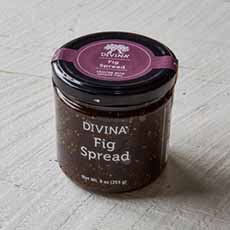
    Our Top Pick Of The Week showcases Greek figs as a spread; specifically, the Divina fig spreads (photo #1).

    And what fig spreads they are! We have long purchased fig spreads, but none as good as these.

    The Divina review follows. Also below:

    > The history of figs.

    > How to use fig spreads.

    > The year’s 2 fig holidays

    Elsewhere on The Nibble:

    > Delicious fig recipes, part 1: breakfast, mains, sides, desserts, and cocktails.

    > Delicious fig recipes, part 2.

    > Types of figs, and ways to use figs at every meal.

    > Ways to use dried figs.

    > Ways to use fresh figs.
     
     
    DIVINA FIG SPREAD

    First: What is a spread?

    Jam, jelly, marmalade, preserves, and the other types of spreadable condiments, both sweet and savory, can all be called “spreads.”

    However, in the U.S. manufacturers have co-opted the term “fruit spread” to mean sugar-free/reduced calorie spreads.

    Blame the FDA for the confusion: In 1940, the Food and Drug Administration created “Standards of Identity” describing what constitutes a jam, jelly, preserve, spread, etc.

    Here are the different definitions of jam, jelly, preserves, etc.

    Ignore the U.S. definition for “spread” as you contemplate Divina fig spreads.

    Divina fig spreads are deeply fruity and complex with notes of caramel and honey. They taste like ripe figs were mashed inside the jar. They’re as close to eating a piece of fruit as we’ve ever experienced in a spread.

    Even if there were only the “original” fig spread, these delectable condiments have so many uses beyond toast (see them below).

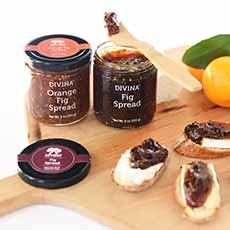
    Beyond the original, Divina fig spreads are accented with other sweet and savory flavors. Choose among:

  • Black Olive Fig Spread
  • Chili Fig Spread
  • Cocoa Fig Spread
  • Kalamata Fig Spread With Almonds
  • Orange Fig Spread
  •  
    Depending on your palate, each of them is a heavenly experience.

    All the spreads use non-GMO Greek Aegean figs and are all-natural and gluten-free.

    A bit of an extra commercial for Divina: Everything we have tasted from this brand has been top drawer. You’ll never be disappointed with Divina.
     
     
    HOW TO USE THE FIG SPREADS

    Here’s a roundup of how we use fig spread:

  • As a breakfast bread spread, on French toast and on porridge.
  • As a condiment with charcuterie, cheese plates and Baked Brie, and omelets.
  • As a garnish on ice cream and sorbet, or a spoonful from the jar.
  • As a dessert sauce or garnish, blended with mascarpone.
  • In a sauce or paste for pork and poultry, with balsamic vinegar, as a glaze or to deglaze a pan.
  • In tartlet shells or phyllo cups, topped with a dab of crème fraîche or mascarpone; or in hand pies.
  • In crêpe filling mixed with cream cheese or goat cheese, or in the center of baked apples.
  • In thumbprint cookies, rugelach, fig jam bars or homemade Fig Newtons.
  • Mixed into yogurt.
  • Mixed into a balsamic vinaigrette or barbecue sauce.
  • On crostini with goat cheese or chicken liver mousse/pâté, plus a balsamic drizzle.
  • On sandwiches and panini, especially beef, cheese, grilled cheese, ham, turkey and grilled vegetable.
  • On white pizza, topped with fresh figs, artichokes, arugula, caramelized onions or sweet onions, fennel, goat cheese, prosciutto, sundried tomatoes, sweet sausage, zucchini, whatever.
  • Shaken with tequila or vodka for a fig cocktail.
  • Swirled into cheesecake or ice cream.
  • Thinned with water to make fig ice pops.
  • With a chunk of parmesan cheese, in a classic Italian cheese course pairing with a Barbera, Brunello, or a Cabernet Sauvignon.
  •  
    We use them as gifts for our food-loving friends, a jar alone or with a Baby Brie or blue cheese.

    Produced by FoodMatch, a company whose main business is as producer and importer of Mediterranean specialty foods for the wholesale market, the spreads are available at fine retailers plus:

  • Amazon
  • Murray’s Cheese
  •  


    [1] Divina Fig Spread is made in Original plus flavors: Black Olive, Chile, Cocoa, Kalamata Fig & Almonds, and Orange (photo © Murray’s Cheese).


    [2] Fig Spread and Orange Fig Spread crostini with goat cheese (photo © FoodMatch).


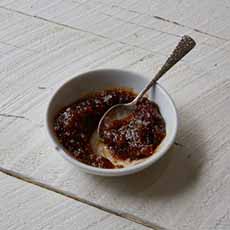
    [3] Divina ready to spoon from a bowl (photo © Murray’s Cheese).


    [4] Pizza With Fig Preserves & Chicken Sausage. Here’s the recipe (photo © Bev Cooks).


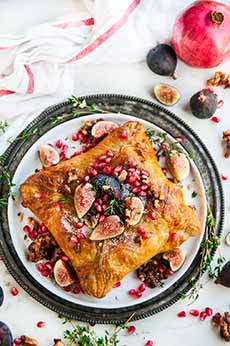
    [5] Baked Brie and Fig Jam in Puff Pastry, garnished with pomegranate arils and candied walnuts. Here’s the recipe (photo © Aberdeen’s Kitchen).


    [6] Fresh figs: from top, Brown Turkey, Calimyrna, Mission and Kadota (photo © California Figs).


    THE HISTORY OF FIGS

    The common fig (Ficus carica) is one of the first plants cultivated by mankind, in the Fertile Crescent.

    Fossils dating to about 9400 B.C.E. have been found in an early Neolithic village near Jericho, in the West Bank.

    Based on this find, fig cultivation precedes the domestication of barley, legumes and wheat, and may thus be the first known instance of agriculture!

    In the millennia before Europe and the Middle East had access to cane sugar or beet sugar, figs were used, in addition to honey, as sweet snacks and in cakes, puddings and other desserts.

    Figs were brought from Asia Minor to Greece and Rome, then throughout the Mediterranean, and east to India.

    Figs, which can produce two crops a year, became common food. In 160 B.C.E., Cato the Elder wrote of several different varieties that were grown in his area.

    A fun fact for foie gras lovers: The Romans used figs to fatten geese for an early version of foie gras.

    From the 15th century onwards, figs were growing in Northern Europe.

    The word fig, first found recorded in English in the 13th century, derives from the Old French figue, from the Occitan (Provençal) figa, from the Classical Latin ficus (fig or fig-tree).
     
     
    Figs In The New World

    Figs first came to America in 1520 with Franciscan missionaries, who brought a variety of fig from southern Spain to southern California.

    Since they were grown on the property of missions, the variety became known as the Mission fig.

    In the 1850s, settlers brought other varieties from the East Coast and Europe to California, which became America’s primary fig-growing region [source].

    There are thousands of fig varieties in the world but today, California specializes in six fresh and two dried types: Golden and Mission dried figs, and Brown Turkey, Kadota, Mission, Sierra and Tiger fresh figs (photo #6).

    Learn more about them and find many recipes from the California Fig Commission.
     
     
    THE YEAR’S 2 FIG HOLIDAYS

  • National Fig Week: November 1-7
  • National Fig Newton Day: January 16
  •  
    While there are not yet designated holidays for jam, preserves, or spreads, there are:

  • National Peanut Butter & Jelly Day: April 2
  • National Jelly-Filled Doughnut Day: June 8
  •  
    Someone: Please create National Fig Spread Day.
     
    ________________

    *There are numerous plant-based sources of calcium, including almonds, baked beans, black beans, blackstrap molasses, broccoli, collards, kale, oranges, seeds, spinach, tahini, tempeh and tofu [source].


    CHECK OUT WHAT’S HAPPENING ON OUR HOME PAGE, THENIBBLE.COM.


    Comments off


    © Copyright 2005-2026 Lifestyle Direct, Inc. All rights reserved. All images are copyrighted to their respective owners.