THE NIBBLE BLOG: Products, Recipes & Trends In Specialty Foods


Also visit our main website, TheNibble.com.

TIP OF THE DAY: International Sauces On Everyday Favorites ~ Part 3 Of 3

March is National Sauce Month. Here’s the finale to our three-part review of international sauce options that will shower new flavors upon your everyday chicken, fish and other main courses.

Thanks again to Flavor & The Menu, a resource for restaurant chefs nationwide, offers 12 global sauces for you to try.

They range from mild to spicy—and of course, you control the level of heat in your own kitchen.

Some are thin like marinade, others are pastes that can be thinned with broth, oil or water.
 
THE 12 SAUCES

  • Part 1: Chermoula, Makhani, Fruit Sauce, Mediterranean Hot Sauce
  • Part 2: Nuoc Cham, Nut-Based Sauces, Peri Peri, Sambal
  • Part 3: (below) Savory Caramel, Tahini, Tamarind, Yogurt-Based Sauces
  •  
     
    9. SAVORY CARAMEL

    Of the 12 flavors in this article, savory caramel was the newest concept to us. We’ve always known caramel as a very sweet dessert sauce or candy.

    But there’s more than one kind of caramel, we discovered, depending on how long it is cooked and how much sugar is added.

    In fact, salted caramel, which has become a standard sauce and candy flavor over the last decade, has led to the fusion of savory Asian caramel: both miso caramel and soy caramel.

    Adding umami flavor to the savory caramel, both of these can be used in savory preparations as a dip, glaze and sauce.

    They can be added to sweet preparations as well—cookies, cakes and other desserts—to add a toasty, nutty flavor.

    An addition you might like in your savory caramel: chile heat.

    Flavor & The Menu spotted these preparations:

  • Miso Caramel Crab Roll with cream cheese and tempura at Lime House in Buffalo, New York.
  • Crispy Spiced Summer Squash with local tofu, wild rice, soy caramel at The Tides Inn in Irvington, Virginia.
  •  
    Here’s more about using savory caramel.

    And try this Savory Citrus-Caramel Sauce recipe.
     
     
    10. TAHINI

    Familiar to every hummus lover, tahini, made from toasted, ground sesame seeds, is moving beyond hummus and other Eastern Mediterranean dishes.

    Tahini is plant-based and nut-free, making it attractive to use in these trending cuisines. Think creatively, and use tahini like these chefs do:

  • Miso-glazed Eggplant with edamame, spicy greens, toasted peanuts and tahini yogurt at Trade in Boston
  • Grilled Romaine Salad with tahini-Caesar dressing, capers, chives and sourdough breadcrumbs at Bagel Uprising in Alexandria, Virginia.
  •  
    We’ve also spotted:

  • Tahini and maple syrup glaze on doughnuts
  • Tahini marinades for chicken
  • Tahini in pumpkin bundts, spice cakes and cookies
  • Tahini in vinaigrettes and yogurt sauce (see #12, below)
  •  
    You can even drizzle tahini on avocado toast!

    Beyond hummus: Check out these 18 modern recipes with tahini.
     
     
    11. TAMARIND SAUCE

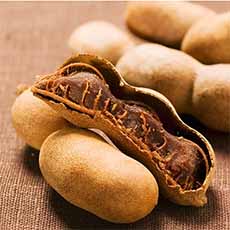
    The tamarind tree produces pod-like fruit that contains a brown, edible pulp used in cuisines around the world (photo # 11b).

    Its flavors are pungent, sour and sweet: a complex layering with an exotic touch. Tamarind paste is used broadly, in beverages, chutneys, curries, dips, rice dishes, stews and more.

    Cooking tip: Tamarind paste is and often combined with dried fruits to achieve a sweet-sour tang.

    In the U.S., tamarind is most frequently found in Indian and Thai cuisines.

    Tamarind sauce, made from tamarind paste* is being used by U.S. chefs here as a high-impact ingredient for global mash-up versions of applications like glazes for chicken wings or ribs, drizzles for tacos and sauces for seafood dishes.

    Flavor & The Menu spotted:

  • Coconut Shrimp Toast drizzled with housemade tamarind sauce at The Bamboo Club in Long Beach, California.
  • Baby Back Pork Ribs with soy-tamarind glaze and sesame seeds at Wayan in New York City.
  •  
     
    12. YOGURT-BASED SAUCES

    And now, the conclusion to our 12-sauce global adventure.

    Yogurt-based sauces have been common in the U.S. for decades: in Greek, Indian and Middle Eastern cuisines, and more recently into vegetarian preparations and cuisine moderne.

    Think of tzatziki and raita, two simple-to-make, low-calorie sauces and dips.

    Yogurt-based sauces was included in the article because Flavor & The Menu noticed an increase of preparations by chefs nationwide.

    Chefs are putting new spins on classic yogurt sauces, adding heat with sriracha or harissa, adding heat and smoke with chipotle or guajillo chiles.

    They’ve found dishes like:

  • Char-Grilled Broccoli with yogurt-based teklai garlic sauce, pickled shallots and nigella seed, at Lyra, Nashville.
  • Fried Cauliflower with caper-yogurt sauce at Kismet in Los Angeles.
  • Spanakopita stuffed with spinach, artichokes, dill and feta cheese with ouzo yogurt sauce, at Nerai in New York City.
  •  
    The message is that you can mix just about any condiment into yogurt to make a sauce, from sweet or savory chutney to fruit, mustard, relish and any herb or spice you like.

    Just look in your fridge or pantry for inspiration.
     
     
    ________________

    *Tamarind sauce is typically a blend of tamarind pulp or paste with fresh ginger, garlic, sugar, sambal, Thai fish sauce and soy sauce.


    [9a] Chicken drumsticks with savory caramel glaze. Here’s the recipe from Bon Appetit (photo © Bon Appetit).


    [9b] Candy Pork, Vietnamese-style with savory caramel. Here’s the recipe from Epicurious (photo © Epicurious).


    [10a] Chicken Fingers With Tahini Dipping Sauce. You can use the sauce to dip anything, including French fries. Here’s the recipe from Cooking Light (photo © Hector Manuel Sanchez | Cooking Light).

    Peanut Butter Soup
    [10b] Tahini-Carrot Soup With Pistachios. Here’s the recipe from Cooking Light (photo © Cooking Light).


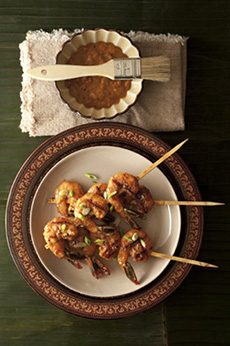
    [11a] Tamarind grilled shrimp. Use the sauce as a glaze and a dipping sauce (photo © Maya Kaimal).


    [11b] Tamarind pods (photo © The Indian Vegan).


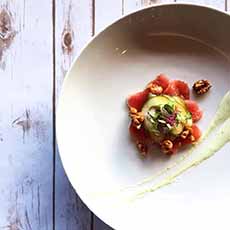
    [12] Bluefin tuna crudo with cucumber and spicy candied walnuts, accented with yogurt mint sauce, from Chef Adrianne (photo © Chef Adrianne’s Vineyard Restaurant & Bar).


    CHECK OUT WHAT’S HAPPENING ON OUR HOME PAGE, THENIBBLE.COM.


    Comments off

    TIP OF THE DAY: Ways To Use Celery & The Celery Holidays


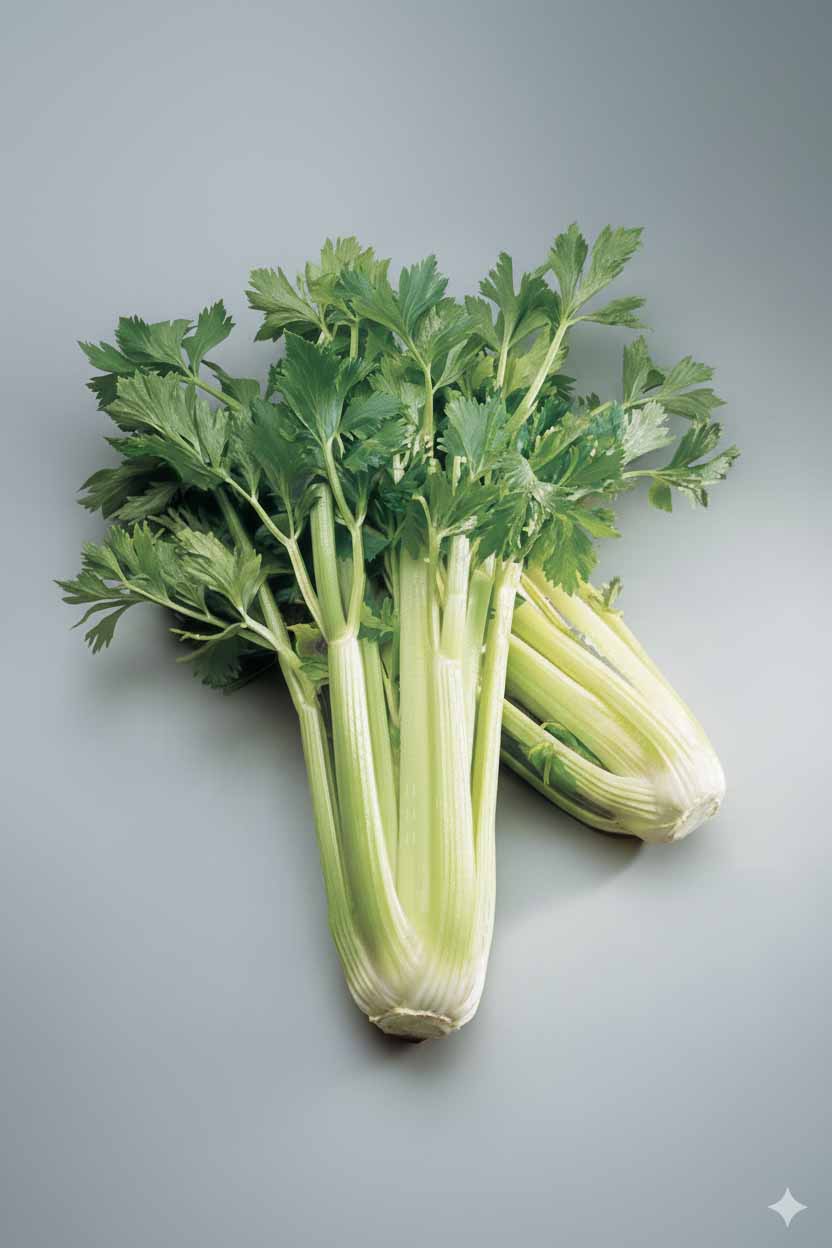
    [1] It may be familiar, but a stalk of celery can be an inspiration (photo © Good Eggs).


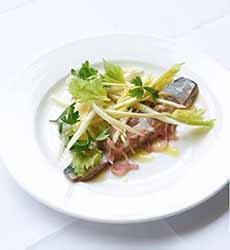
    [2] Celery salad tops a piece of grilled fish (photo © King Restaurant | New York City).


    [3] A Japanese take on raw celery sticks. Here’s the recipe from Bon Appetit (photo © Bon Appétit).


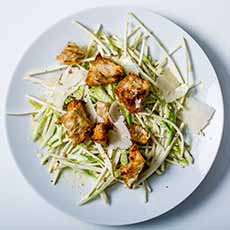
    [4] Celery Caesar Salad. Here’s the recipe, which includes both celery and celeriac, also called celery root, photo #6 (photo © Alex Lau | Bon Appétit).

    Golden Self-Blanching Celery
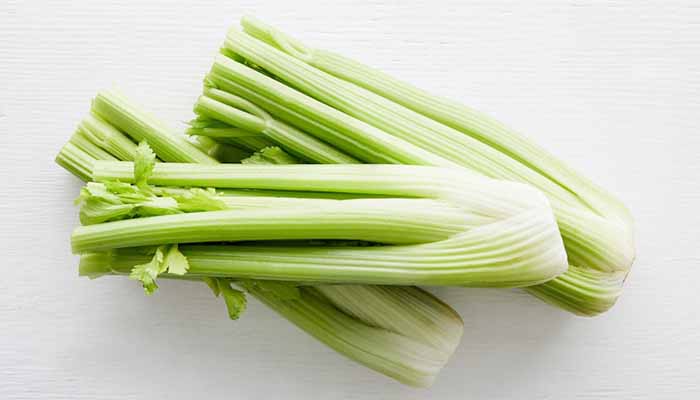
    [5] Golden or self-blanching celery is an old English variety, tastier and milder than the classic American Pascal green celery and the flesh is tender without strings. You can buy the seeds (photo © R. H. Shumway).

    Celery Root

    [6] Celeriac, celery root, doesn’t look like celery, but they are closely related (photo © Good Eggs).


    March is National Celery Month and April is National Fresh Celery Month.

    Below:

    > The history of celery.

    > The two types of stalk celery.

    > The year’s 7 celery holidays.
     
     
    WAYS TO USE CELERY

    When you think of celery—most of us don’t spend much time on it—you likely think of “the usual”:

  • Bloody Mary Garnish
  • Crudités
  • Mirepoix (the French cooking staple of celery, carrots and onions)
  • Omelets & Frittatas
  • Salads
  • Soups, Stocks & Stews
  • Stir-Frys
  • Stuffed Snack (ants on a log, cream cheese, crab salad, peanut butter, etc.)
  • Stuffing
  •  
    Here are more ways to enjoy the chewy green stalks:

  • Add-Ins To Other Vegetable Recipes (caponata, ratatouille, etc.)
  • Braised, Roasted or Stewed (alone or with other vegetables)
  • Global Fusions (check out the kombu celery sticks in photo #3)
  • Gratins
  • Juice & Juice Blends
  • Pickles (how to pickle)
  • Relish & Salsa
  • Riffs On Classic Dishes (like the Celery Caesar Salad in photo #4)
  • Roasted (alone or with other vegetables)
  • Slaws
  •  
    Don’t throw away the leaves! They taste like a spicier, stronger version of the stalks.

  • Add them to salads
  • Use them as garnishes.
  • Toss the fresh leaves into whatever you’re cooking, as an herb: eggs, fish, meats soups and stews.
  • Dried as a cabinet herb.
  •  
    > Check out these 35 celery recipes from Bon Appetit.

    FOOD TRIVIA: The whole head of celery is also called a bunch or a stalk. The individual pieces are called ribs, although there is confusion with some professionals referring to the individual ribs as stalks.
     
     
    THE HISTORY OF CELERY

    Celery is a marshland plant that has been cultivated as a vegetable since antiquity. Believed to have originated in the Mediterranean basin, it has a long fibrous stalk that tapers into leaves.

    Ancient literature documents that celery, or a similar plant, was cultivated for medicinal purposes before 850 B.C.E. Woven garlands of wild celery have been found in early Egyptian tombs.

    Celery is a member of the Apiaceae family, commonly known as the celery, carrot or parsley family. Common celery is Apium graveolens.

    In ancient times, Ayurvedic physicians used celery seed to treat quite a few conditions: arthritis, colds, digestion, flu, liver and spleen ailments, even water retention.

    Celery was considered a holy plant in classical Greece, and was used to crown the winners of the Nemean Games, similar to the use of bay leaf crown at the Olympic Games.

    The Romans valued celery more for cooking than for religion.

    Early stalk celery often produced hollow stalks. The plant was bred over many centuries, and by the 17th century, Italian farmers had created a variety with solid stalks that we know today.

    Breeding also eliminated the plant’s natural bitterness and strong flavors.
     
     
    THE TWO TYPES OF CELERY

    There are two types of stalk celery varieties: self-blanching or yellow (photo #4), and green or Pascal celery (photo #7), the type typically found in the U.S.

    Blanching is the process of covering the growing celery stalks to reduce bitterness and lighten the stalk color to a pale yellow-green. Blanching also produces a sweeter celery stalk.

    Thus, golden celery is called “self-blanching” because it naturally produces pale, cream-colored stalks without the need for covering the head with earth (“earthing up”), which is typically required for other varieties to achieve a pale stalk and less bitter taste.

    Plus, it’s easier to grow, especially in smaller gardens. In Europe and the rest of the world, self-blanching varieties are preferred.

    In North America, green Pascal stalk celery is preferred. It is grown in a wide variety of zones, ships well, can be stored for weeks under cold conditions, and stands straight.
     
    Celery seeds—actually very small fruits—are used as a spice, either as whole seeds or ground. The ground seeds are mixed with salt to produce celery salt.

    The seeds provide a valuable essential oil that is used in the perfume industry.

    Is celeriac related to celery? Yes: very closely!

    Celeriac, a knobby root vegetable also known as celery root, is a sibling of stalk celery: Apium graveolens var. rapaceum. While it’s found at French restaurants and other fine restaurants in the U.S., it hasn’t caught on in a big way.

    Celeriac is very popular in Europe, where it is eaten cooked or raw.

     
    WHERE OUR CELERY COMES FROM

    Currently, California harvests about 23,500 acres of celery per year, Florida harvests 3,500, Michigan 3,000 acres, and Texas 1,200 acres.

    California harvests year-round, Florida harvest from December to May, Texas from December to April, Michigan through September. Per capita consumption of celery is about 9 to 10 pounds per person annually.

    Source: California Celery Research Advisory Board.
     
    3 Heads of Celery
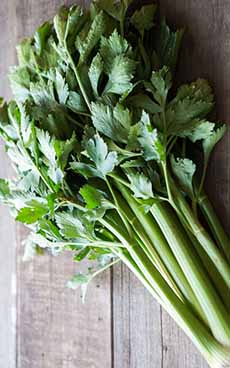
    [7] Pascal celery, the most common type grown in the U.S. (photo © Good Eggs).
     
     
    THE YEAR’S 7 CELERY HOLIDAYS

  • January 1: National Bloody Mary Day*
  • February: National Snack Food Month
  • March: National Celery Month
  • April: National Fresh Celery Month
  • July 29: National Chicken Wing Day*
  • September, 2nd Tuesday: National Ants On A Log Day
  • October 12: National Gumbo Day*
  •  
    ________________
     
    *We include these days to reference recipes that require celery (for Chicken Wing Day, that would be Buffalo wings).

    Gumbo requires the “Holy Trinity” of Cajun/Creole cuisine, a base ofs diced celery, onions, and green bell peppers. It is also essential in jambalaya and étouffée. The French mirepoix differs slightly, with the substitution of carrots for the bell peppers.


    CHECK OUT WHAT’S HAPPENING ON OUR HOME PAGE, THENIBBLE.COM.


    Comments off

    LEAP YEAR FOOD HOLIDAY: National Frog’s Legs Day

    February 29th occurs only once every four years: It’s the leap year day.

    There are actually two food holidays on Leap Day:

  • National Surf & Turf Day
  • National Frogs Legs Day
  •  
    We love Surf & Turf. In addition to the classic Surf and Turf, we’ve created a list of modern approaches to “one from the land, one from the sea.”
     

  • Modern Surf & Turf for example, grilled salmon and a poached egg)
  • More Modern Surf & Turf for example, a lobster sushi roll topped with seared beef tenderloin
  • The New Surf & Turf: for example, grilled lamb or pork chops and scallops
  • Surf & Turf Eggs Benedict
  • More Creative Surf & Turf Recipes, including a raw combo, ceviche and steak tartare
  •  
    There’s even Surf & Turf Poutine, Surf & Turf Fondue and a Surf & Turf Cocktail.
     
    Today, it’s frog’s legs.
     
     
    WHAT YOU SHOULD KNOW ABOUT FROG’S LEGS

    Frog’s legs are one of the better-known delicacies of French and Chinese cuisine.

    Other area keen on the delicacy include Albania, the Alentejo region of Portugal, Cambodia, Indonesia, Northern Italy, Northwestern Greece, Romania, Spain, Slovenia, Thailand, the Southern U.S. and Vietnam.

    Frog legs are rich in protein, omega-3 fatty acids, vitamin A, and potassium. But what do they taste like?

    “They taste like chicken,” the cliché used to describe the flavor of an unusual food.

    Frogs legs have mild flavor and a texture most similar to chicken wings. Some have called the taste and texture of frog meat a cross between chicken and fish.

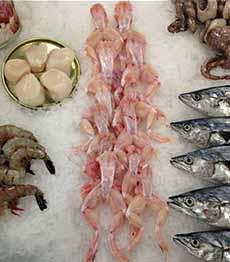
    In fact, only the upper joint of the hind leg is served in the dish, which has a bone similar to the joint of a chicken wing (photo #1).

    Frog legs are a traditional item on classic French cuisine menus, where they are prepared with butter, garlic and sometimes parsley sauce and served only with salad or steamed rice.

    The dish is popular in French speaking parts of Louisiana, particularly the Cajun areas of Southern Louisiana as well as New Orleans.


    MOST OF OUR FROGS’ LEGS ARE IMPORTED

    Frog legs were also introduced to the U.S. in the 1880s by a gourmet chef in New Orleans, Donat Pucheu.

    He sold juicy bullfrogs to New Orleans restaurants. The delectable dishes became popular immediately in the French speaking parts of Louisiana: not just New Orleans but also the Cajun areas of Southern Louisiana.

    The sales of frog’s legs attracted the Weill Brothers from France, who started a lucrative business exporting frogs from Rayne, Louisiana in Acadia Parish, to restaurants in Louisiana and beyond.

    Rayne became known as the capital of frog’s legs. For years, world-renowned restaurants like Sardi’s in New York boasted of offering frog legs from Rayne, Louisiana [source].

    Today, our frog’s legs come from abroad.

    As of 2014, the world’s largest exporter of edible frogs was Indonesia. Japan is another large exporter of commercially farmed frog’s legs.

    In Brazil, the Caribbean and Mexico and the Caribbean, many frogs are still caught wild as opposed to farms [source].

    But harvesting wild frogs has its share of environmental impact:

    Bangladesh at one time supplied most of the frogs-legs consumed in the U.S. But the Bangladesh government discovered that its fly and mosquito populations increased drastically, with fewer frogs to eat them.

    It was more expensive to control the flies with insecticides, so they banned the export of frogs.
     
     
    HOW TO SERVE FROG’S LEGS

    Serve them as you would any fish dish:

  • Baked
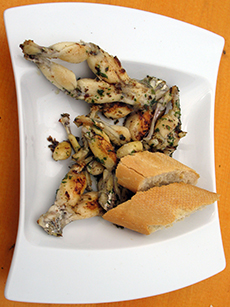
  • Grilled (photo #2)
  • Fried (photo #3)
  • Poached or steamed
  • Sautéed, as in the classic French preparation
  •  
    You can:

  • Add them to stews and stir-frys
  • Make a gourmet preparation (photo #4)
  • Include them in mixed grills, and of course…
  • Serve them as part of Surf & Turf!
  •  
    Then, you can celebrate both Leap Day holidays in one dish.


    [1] Raw frog’s legs (photo © Euro USA).


    [2] The most popular casual preparation: simply grilled frog’s legs (photo © Anagoria | Wikipedia).


    [3] Frog’s legs “drumettes” (photo © Chef David Burke).


    [4] A beautiful preparation by the gourmet chefs at The Chef’s Garden (photo © The Chef’s Garden).


    ABOUT LEAP DAY & LEAP YEAR

    There would be no need for February 29th if Earth’s orbit took exactly 365 days. But the solar year is actually 365.2422 days. Thus at the 365-day mark, Earth hasn’t quite circled all the way back to its starting point.

    If this discrepancy were to go unheeded, after three centuries January 1st would occur in autumn; after six centuries, it would occur in the summer (source).

    By the 1st century B.C.E., when the Roman calendar had slipped a full two months out of alignment with the seasons.

    So in 46 B.C.E., Emperor Julius Caesar instituted a new calendar (called the Julian calendar) that added a leap day to February once every four years.

    It was a good start, but not a perfect solution. The Julian calendar produced years that average 365.25 days long. By the 16th century, the error had added up to a 10-day discrepancy.

    So Pope Gregory XIII replaced the Julian calendar with the Gregorian calendar, which solved the problem by adding an extra day every four years.


    Comments off


    © Copyright 2005-2026 Lifestyle Direct, Inc. All rights reserved. All images are copyrighted to their respective owners.