THE NIBBLE BLOG: Products, Recipes & Trends In Specialty Foods


Also visit our main website, TheNibble.com.

TIP OF THE DAY: How To Ripen Fruit


[1] Just pop fruits that need to be ripened in a paper bag (photo © Good Eggs).


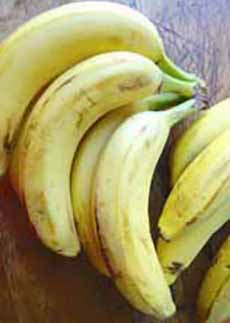
[2] The riper the banana, the faster it will help to ripen the other fruits (photo © King Arthur Flour).

Whole & Halved Avocados
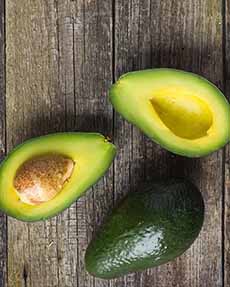
[3] Before you can dig into the creamy flesh, you need to ripen an avocado (photo © Aldi).


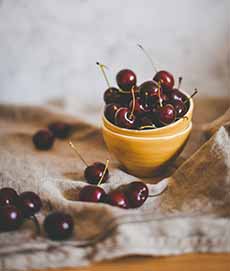
[4] Cherries are the one stone fruit that doesn’t ripen after picking. Stash them in the fridge (photo © Gaelle Marcel Wesual | Unsplash).


Some fruits, like berries, cherries, citrus and watermelon, don’t ripen further once picked (see the full list below).

So don’t wait for them to get better; they will only decline.

But other fruits need to ripen, no matter how much we’d like to bite into them.

Here are tricks to speed up the ripening.

What if the fruits are ripe but not sweet?

Add a bit of sweetener, caloric (sugar, honey, agave, etc.) or non-caloric (artificial sweeteners, stevia, etc.).

A restaurant trick for sprucing up boring berries is to place them in a strainer and dip them in a bowl of sugar water.
 
 
ALL FRUITS

For any fruit that needs to quickly ripen, paper bags are the go-to method.

These fruits include avocados, bananas, mangoes, melons (but not watermelon)*, pears, stone fruits† and tomatoes. They give off ethylene, a colorless gas.

The bag traps the ethylene inside, and the concentration of ethylene ripens the fruit quickly.

For extra help, add a banana to the bag. Bananas are a high producer of ethylene, so adding one to the other fruits will cause them to ripen faster than if it were in the bag by themselves.

The riper the banana, the faster it will help to ripen the other fruit.

Apples are another producer of ethylene, but less so than bananas.

Roll the top of the paper bag to close. Plastic bags are not recommended, because they concentrate moisture and heat that can encourage mold.
 
 
AVOCADOS & MANGOES

If you don’t have a paper bag but you do have rice, a rice bath is an option.

It can be used for fruits with inedible skins: avocados, bananas, mangoes, melons, papayas.

Uncooked rice—white or brown—traps ethylene gas effectively and ripens fruits with hard (inedible) skins.

Use a bowl or other container large enough to hold the fruit, and cover it completely with rice. You do not need to cover the rice itself.

If your fruit isn’t ripened within two days, check it once or twice on subsequent days, so it doesn’t over-ripen.

You can re-use the rice for cooking—or for more ripening.
 
 
STONE FRUITS

Our great-grandmother’s trick for ripening peaches, nectarines and apricots, was to spread them on a tea towel, topped with another tea towel.

The fruits should not be touching.

While the towels trap some ethylene, the paper bag method with an apple or banana works best.
 

FRUITS THAT DON’T RIPEN AFTER PICKING

These fruits may soften after picking, but don’t confuse that with ripening. The flavor doesn’t improve.

After they’re picked these fruits begin to break down, which ultimately leads to rot.

  • Berries, blackcurrants, cherries, gooseberries
  • Citrus, muskmelon, watermelon
  • Coconut, pineapple, pomegranate
  • Bell peppers, chiles, cucumber, eggplant, olives, summer squash, zucchini (while these are considered vegetables by consumers, they are botanically fruits)
  • Figs and grapes
  • Longan, loquat, lychee, prickly pear, rambutan, tamarillo
  •  
    ________________

    *Watermelons develop a creamy yellow splotch on the bottom, where they have rested on the ground. This means it’s ripe, and farmers tend to pick them when the splotch appears. You can also give the underbelly a thump with your hand. A ripe melon will have a deep, hollow sound.

    †Yes, avocados are a fruit—a tree fruit. Stone fruits include apricot, cherry, nectarine, peach, plum and hybrids like apriums, plumcots and pluots. However, cherries are picked when they are already ripe, and do not require further ripening—just stick them in the fridge. Here’s more about stone fruits.


    Comments off

    TIP OF THE DAY: No-Cook Tomato Sauce

    Lush summer tomatoes invite a no-cook tomato sauce that delivers fresh tomato flavor.

    Use homegrown or farmers market tomatoes for the most vibrant taste.

    This no-cook sauce is also delicious on:

  • Polenta
  • Hot cereals like cream of wheat or rice and grits
  • Breakfast eggs
  •  
    It couldn’t be easier or faster to whip up. Thanks to DeLallo for the recipe.
     
     
    RECIPE: PASTA WITH NO-COOK TOMATO SAUCE

    Ingredients

  • 4 large homegrown tomatoes, coarsely chopped
  • 3 cloves fresh garlic
  • 1/2 cup extra virgin olive oil
  • Handful of fresh basil, torn
  • 1-pound package spaghetti or linguine
  • 1/4 cup grated parmigiano-reggiano cheese
  • 1 tablespoon sea salt
  •  
    Preparation

    1. PLACE the chopped tomatoes in a large serving bowl. Using your hands, squeeze and smash the tomatoes to release all of their juices.

    2. COMBINE with the olive oil, garlic, basil and salt. Set aside to marinate for up to an hour.

    3. COOK the pasta according to package instructions. Drain.

    4. IMMEDIATELY ADD the hot pasta to the bowl with the tomatoes. Toss to combine.

    5. SERVE topped with freshly grated Parmigiano-Reggiano.
     
     
    > CHECK OUT THESE PASTA SAUCE SUBSTITUTES
     
     
    > THE HISTORY OF TOMATOES


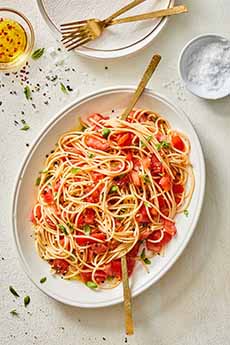
    [1] It takes less than 10 minutes to make this no-cook spaghetti sauce (photo © DeLallo).


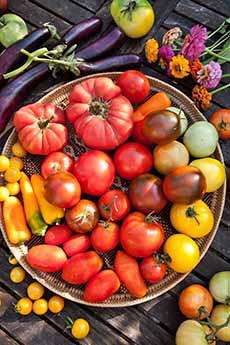
    [2] Does this inspire you to grow your own tomatoes (photo © Bonnie Plants)?


    Comments off

    FOOD FUN: Potato Ice Cream Recipe


    [1] Yukon Gold Potato Ice Cream (photo © Idaho Potato Commission).

    Yukon Gold Potatoes
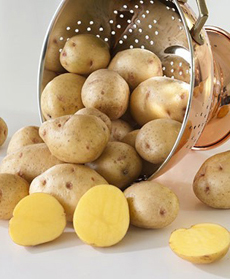
    [2] Yukon Gold potatoes (photo © Bonnie Plants).


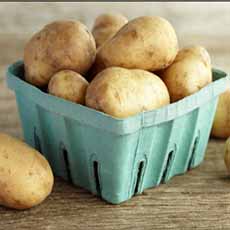
    [3] Yukon Gold potatoes (photo © Good Eggs).


    July is National Ice Cream Month; so pull out the ice cream maker (or consider buying one).

    There’s nothing better than freshly-churned ice cream, before it goes into the freezer. The flavor has a vitality that disappears once the ice cream hardens.

    While summer is the season to make fruit ice cream, here’s some food fun that uses a vegetable.

    Vegetable? Yes indeed. We’ve also made beet ice cream and truffle (the fungus) ice cream, both exquisite.

    You can amp up the potato ice cream recipe with mix-ins like chocolate chips and berries.

    A garnish? Chocolate-covered potato chips, of course.
     
     
    RECIPE: POTATO ICE CREAM

    Ingredients For 1 Quart

  • 3 small Idaho® Yukon potatoes
  • 2 teaspoons olive oil
  • Pinch of salt and black pepper
  • 2 cups whole milk
  • 3/4 cup heavy cream
  • 3/4 cup sugar
  • 2 tablespoons light corn syrup
  • 4 ounces cream cheese, room temp
  • 1/2 cup sour cream, room temp
  • 1/4 teaspoon salt
  •  
    Preparation

    1. PREHEAT the oven to 375°F. Wash the potatoes, leave on the peel and cut into 1/2″ cubes.

    2. TOSS the potatoes with olive oil, salt and pepper. Spread onto a baking sheet and roast until cooked through, about 20 minutes. Set aside.

    3. BRING the milk, cream, sugar and corn syrup to boil in a saucepan. Reduce the heat and simmer for 5 minutes.

    4. REMOVE from the heat and whisk in the cream cheese and salt, then the sour cream. Chill.

    5. MIX the ice cream base with the potatoes in a blender, until completely smooth. Strain through a fine mesh strainer, preferably a chinoise.

    6. PROCESS in an ice cream maker according to manufacturer’s directions. Place in the freezer for 6 hours or overnight.

     
    ABOUT YUKON GOLD POTATOES

    Yukon Gold is a cultivar of potato most distinctly characterized by its thin, smooth, eye-free skin and yellow-tinged flesh. This potato was developed in the 1960s by Garnet (“Gary”) Johnston in Guelph, Ontario, Canada. The cross was made in 1966 and Yukon Gold (after its yellow-gold flesh) was finally released into the market in 1980.

    Yukon Gold quickly became a favorite with fine-cuisine chefs. It can stand up to both dry-heat and wet-heat cooking methods.

    Its waxy, moist flesh and sweet flavor make it an ideal potato for boiling, baking and frying. You can also use them for grilling, pan frying, and roasting.

    Here’s more about the Yukon Gold potato.


    Comments off


    © Copyright 2005-2026 Lifestyle Direct, Inc. All rights reserved. All images are copyrighted to their respective owners.