THE NIBBLE BLOG: Products, Recipes & Trends In Specialty Foods
Also visit our main website, TheNibble.com.
|
June 26, 2009 at 6:59 am
· Filed under Entertaining, Ice Cream-Sorbet-Yogurt, Tip Of The Day
|
| |
Create an easy but elegant dessert by filling your champagne glasses (or wine goblets) with 3 or 4 different flavors and colors of sorbet. Even supermarket brands taste good, but if you can, buy specialty brands in flavors like apple mint or pear cognac. It’s all the more special for your guests. For something really special, get the real champagne and wine sorbets from Wine Cellar Sorbets—read our review. Serve with a fancy cookie and garnish with something interesting—a blackberry or a sprig of rosemary. Note: As you’re scooping sorbet for six or eight people, things can start to melt down. You can scoop balls in advance and keep them on covered plates or in containers in the freezer; then assemble quickly in the goblets and serve. Don’t pre-assemble and freeze in the goblets because moisture will condense on the glass when you remove them to room temperature.
See more sorbet and ice cream ideas.
|
|
|
Permalink
|
|
June 26, 2009 at 6:09 am
· Filed under Kitchenware-Tabletop
|
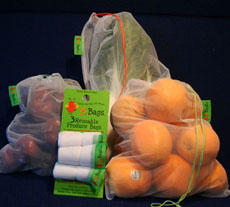
| Do you carry your own grocery tote to the supermarket instead of taking bags that just get thrown away? Good for you! Another way for environmentally-concerned people to save the environment: reusable produce bags let you BYO to the supermarket, so you aren’t throwing plastic into the landfill every time you buy lemons, apples and cucumbers.
The bags are made of fine mesh with a drawstring, are machine washable and virtually weightless. They’re see through, so cashiers can scan or input the code. Using these three bags just once a week can save as many as 150 plastic bags per year! |
|

Go green with reusable produce bags. |
| Sold in sets of three bags for $7.50, two of the bags measure 11.5 X 14.25 inches and one is 14 X 16.25 inches to hold large items. Get some for yourself and note them on your holiday list as a good, inexpensive green-conscious gift. At 3Bags.com. |
|
|
Permalink
|
|
June 25, 2009 at 7:02 am
· Filed under Cheese-Yogurt-Dairy, Cocktails & Spirits, Cookies-Cake-Pastry, Entertaining, Recipes, Spreads-Dips-Salsa
|
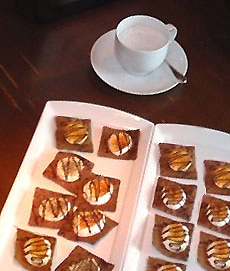
For a twist on the campfire classic, try these Cinnamon S’Mores. |
|
Good tortilla chips are always welcome at a party. But there is so much more to tortilla chips than salsa, guacamole and Margaritas. To celebrate their four new tortilla chip flavors, Food Should Taste Good, a company that specializes in gourmet flavored corn chips, (so good, they were a NIBBLE Top Pick of the Week—read our review), has glamorized chips and dips by hiring a top French chef, Florent Tourondel of New York City’s BLT Market, to create party fare. Tourondel and his team combined the flavored chips with gourmet dips and cocktail recipes. We attended a party with four “tasting stations”: Check out the recipe links below, and host your own pairing party. There’s every level of sophistication, from a cheese fondue with amber ale to cinnamon s’mores with a cappuccino cocktail.
Cheddar Chive Fondue & Microbrew Ale
Cinnamon S’Mores & Cappuccino Cocktail
Creamy Guacamole & Watermelon Basil Martini
Tomato Mango Chutney & Mango Rum Punch
|
|
|
|
Permalink
|
© Copyright 2005-2026 Lifestyle Direct, Inc. All rights reserved. All images are copyrighted to their respective owners.