THE NIBBLE BLOG: Products, Recipes & Trends In Specialty Foods


Also visit our main website, TheNibble.com.

Birthday Cake Cocktail Recipe (With Or Without The Cake)

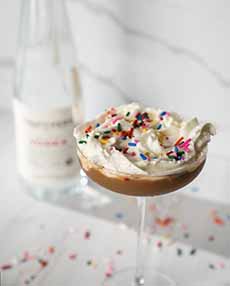
Birthday Cake Cocktail
[1] A birthday toast (photos #1 and #2 © Thatcher’s Organic).

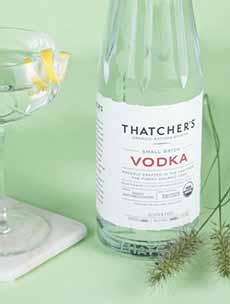
Bottle Of Thatcher's Organic Vodka
[2] Thatcher’s Organic is a gluten-free vodka, made from corn instead of wheat.

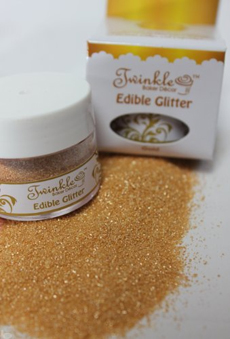
Edible Gold Glitter
[3] We used edible glitter instead of rainbow sprinkles, but you can use either or both (photo Gemini).

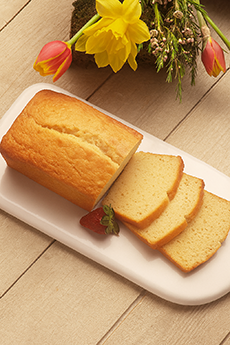
Pound Cake Loaf, Sliced
[4] It’s easy to buy a loaf of pound cake (photo © Incredible Egg).

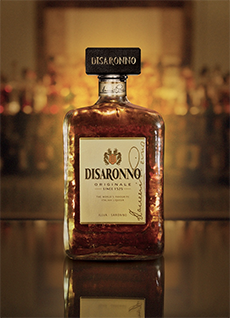
Bottle of Amaretto Liqueur
[5] Amaretto for the cocktail as well as the optional cake glaze (photo © Disaronno).

Joan Raff Hochman
[6] Happy 100th birthday!


The woman who inspired The Nibble has a 100th birthday today.

But you don’t have to turn 100 to enjoy this birthday cocktail.

Thanks to Thatcher’s Organic for turning the classic birthday cake into a vodka cocktail recipe.

If you’re looking for a gluten-free vodka, Thatcher’s is both gluten-free and made from organic corn. There’s more about the distillery below.

Yes, you can serve cake on the side. With the complex layering of spirits, we’d recommend slices of pound cake cake, un-iced or with an amaretto glaze (recipe below).

You can buy a loaf pound cake (photo #4) or bake a bundt.

The recipe follows, but first:

> The year’s 10+ vodka holidays are below.

> The history of birthday cake is below.

> The year’s 100+ cocktail and spirit holidays.

> The history of vodka.
 
 
RECIPE #1: BIRTHDAY CAKE COCKTAIL

We are a big fan of Baileys Irish Cream (actually, any Irish cream liqueur), so we made a version substituting it for the white chocolate liqueur as we didn’t have any of the latter. Baileys is a great substitute.

This cocktail is layered with flavors, but if you don’t like any (e.g. amaretto, coconut cream), substitute what you wish. For example, you can substitute heavy cream for coconut cream, and other liqueur for amaretto—or just use more of the chocolate liqueurs.
 
Ingredients Per Drink

  • 2 ounces Thatcher’s Organic Small Batch Vodka
  • .5 ounce white chocolate liqueur
  • 1 ounce coconut cream
  • 4 ounces creme de cacao liqueur
  • 4 ounces amaretto (photo #5)
  • Garnish: 1 ounce whipped cream
  • Garnish: maraschino cherry, edible glitter (photo #3) or other sprinkles, or both
  •  
    Plus

  • Cocktail shaker and ice
  • Optional cake: pound cake (photo #4) or cake of choice
  •  
    Preparation

    1. PREPARE the glasses. Dip the rim of a martini glass in a saucer of water and then twist it in a saucer or plate of sprinkles. Set aside.

    2. ADD the vodka, chocolate liqueur, coconut cream, creme de cacao, and amaretto to a cocktail shaker with ice, and shake vigorously.

    3. STRAIN the mixture into Martini glass. Garnish with the whipped cream, sprinkles, and cherry.
     
     
    RECIPE #2: AMARETTO GLAZE

    The cocktail is rich enough, but we made this optional amaretto glaze for the pound cake or bundt (of course, a bundt can also be a pound cake).
     
    Ingredients

  • 3/4 cup sugar
  • 6 tablespoons butter
  • 1/2 cup amaretto liqueur
  • 1/2 teaspoon vanilla
  • 2 tablespoons water
  • Pinch of salt
  • Optional: finely chopped almonds to top the cake
  •  
    Preparation

    1. MELT the butter and add the sugar.

    2. REMOVE from the heat and stir in the amaretto, vanilla, water, and salt.

    3. RETURN the pot to the stove on medium heat and boil about 3-4 minutes to reduce. Let cool somewhat, then glaze the cake.
     
     
    THE YEAR’S 10+ VODKA & VODKA COCKTAIL HOLIDAYS

  • January 1: National Bloody Mary Day
  • March 3: National Moscow Mule Day
  • May 7: National Cosmopolitan Day
  • March 15: National Espresso Martini Day
  • May 28: World Passion Fruit Martini Day
  • June 19: National Martini Day
  • October 4: National Vodka Day
  • November 8: National Harvey Wallbanger Day
  • December, 1st Saturday: National Rhubarb Vodka Day
  • December 14: National Screwdriver Day
  •  
    Plus For Martini Fans

  • June 1: National Olive Day
  • March 21: National Vermouth Day
  •  
    For Vodka Cranberry (Cape Codder)Fans

  • November 21: National Cranberry Day
  •  
    For White Russian Fans

  • While there isn’t a widely recognized National White Russian Day, the cocktail is often enjoyed on the Day of the Dude/Dudeism, March 6th, an homage to The Dude character from “The Big Lebowski.”
  •  
     
    THE HISTORY OF BIRTHDAY CAKE

    The earliest birthday cake celebrations trace back to ancient Greece, where people baked moon-shaped cakes to offer to Artemis, the goddess of the moon. They added candles to make the cakes glow like the moon.

    Ancient Romans also celebrated birthdays with cakes, although these were typically flat rounds made with flour, nuts, yeast, and honey, but they didn’t use candles or consider the cakes as offerings to Artemis (the Roman Diana) or any other god.

    In fact, the Romans initially celebrated birthdays just for men; women and children came later.

    The modern birthday cake began taking shape in medieval Germany with Kinderfeste (children’s festival or children’s party), a birthday celebration for kids. Germans created single-layer cakes sweetened with sugar, which was becoming more available, although still expensive (honey was the more affordable choice).

    These cakes were homemade, but by the 15th century, bakeries in Germany began selling one-layer birthday cakes.

    Our modern birthday cake tradition evolved in the 18th and 19th centuries, as sugar and other ingredients like chocolate became more affordable and the Industrial Revolution made refined sugar, flour, and baking tools accessible to ordinary families.

    This enabled the creation of elaborate, multi-layered frosted cakes to become the norm for most people, rather than a luxury only the wealthy could afford.

    The tradition of singing “Happy Birthday” while presenting the cake emerged in the late 1800s, and blowing out candles while making a wish became standardized in the early 20th century.

    Instead of the ancient symbolic use of candles to offer light to the gods, they transformed into a personal ritual of wish-making.

    Today, birthday cakes are a nearly universal celebration, with countless cultural variations from tres leches cake in Latin America to mooncakes in Chinese celebrations.

    (Information Claude.ai)
     
     
    ABOUT THATCHER’S ORGANIC

    Thatcher’s Organic Artisan Spirits is a craft spirits brand that focuses on organic, sustainable production. It’s products are Certified Organic, Non-GMO, gluten-free, and free of high-fructose corn syrup and artificial preservatives.

    The company was founded in 2009 to focus on all-natural artisan spirits made by hand using sustainably farmed ingredients for a better environment.

    Thatcher’s Organic Small Batch Vodka, which has an especially crisp and fresh flavor, is crafted from premium organic corn.

    Liqueurs include Blood Orange, Cucumber, Elderflower, Hibiscus, Mango, Peach, Prickly Pear and Watermelon.

    Treat yourself, and give them as gifts.


    CHECK OUT WHAT’S HAPPENING ON OUR HOME PAGE, THENIBBLE.COM.


    Comments off

    Sushi Waffles Recipe With Raw Or Smoked Salmon: Yummy & Fun!

    Before National Rice Month ended (September), we hastened to make a recipe that was wildly popular at a Sunday brunch: sushi waffles.

    When we first heard of them, we imagined a savory buckwheat waffle topped, chirashi-style, with bright slices of fish. While that sounds interesting, this was not that recipe, although we do have a version of the latter in Recipe #2 below.

    Instead, the waffle is not made of batter, but a square of sushi rice (recipe #1).

    And if you don’t want to make waffles from rice, recipe #2 places the fish atop conventional waffles.

    And the fish can be smoked salmon or your favorite sashimi (i.e., raw fish).

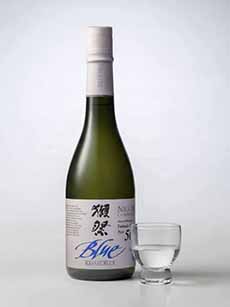
    We enjoyed both recipes with a lovely bottle of >Dassai Blue sake (photo #8) and a chaser of genmaicha, green tea blended with toasted rice (a must-try for green tea fans).

    The recipe follows, but first.
     
    > How to make sushi rice.

    > Below: How sushi rice is different.

    > The history of rice and the different types of rice.

    > The different types of sushi: a photo glossary.

    > The different types of smoked salmon.

    > The history of sushi.

    > The year’s 7 sushi holidays.

    > The history of waffles.

    > The different types of waffles: a photo glossary.

    > The year’s 8+ waffle holidays.

    > The different types of sake.

    > Dassai Blue sake, which we greatly enjoyed with the sushi waffles (photo #8).
     
     
    RECIPE #1: SUSHI RICE WAFFLES WITH SMOKED OR RAW SALMON
     
    So many people are making sushi at home, that even Whole Foods sells sushi rice under their 365 brand and it’s easy to find online.

    Our changes to the original recipe:

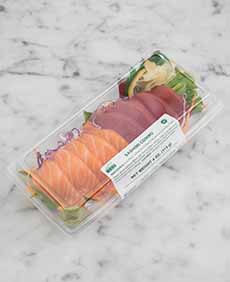
  • Smoked versus raw. Do you want to use raw fish or smoked salmon? The original was made with the latter, but we went straight for the raw fish. We purchased a container of takeout raw salmon sashimi and another of mixed sashimi.
  • Marinated cucumber. The original recipe used plain cucumber, which, to us, didn’t blend in. We marinated the sliced cucumber in rice wine vinegar for an hour before using.
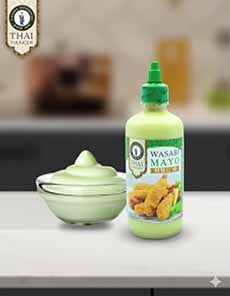
  • The video shows the waffles being garnished some type of pink mayonnaise or sauce, but provides no ingredients for it. So we made wasabi mayo, by mixing the wasabi from the takeout sashimi into mayonnaise. You can also purchase ready-made wasabi mayo (photo #6).
  •  
    The sushi waffle takes its inspiration from the crispy-rice sushi that was first created by Chef Katsuya Uechi, the CEO and owner of Katsuya Group†. The pad of crispy rice is used in the manner of a pad of regular nigiri sushi rice.

    Thanks to Alaska Seafood for the recipes, which they made using wild smoked Alaska red salmon.
     
    Ingredients For 4 Waffles

  • 1 cup sushi rice (see *footnote)
  • 2 tablespoons rice vinegar
  • 2 teaspoons sugar
  • Neutral oil to grease waffle iron
  • 4 slices Alaska smoked salmon or sashimi (photo #3), cut into pieces
  • ½ avocado, mashed with a splash of lemon juice
  • ½ red onion, chopped, or equivalent sliced scallions
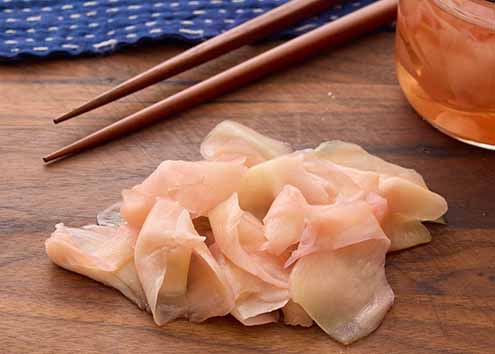
  • ½ English cucumber, thinly sliced and quick-pickled (substitute pickled ginger—photo #10)
  • ½ lemon, juiced
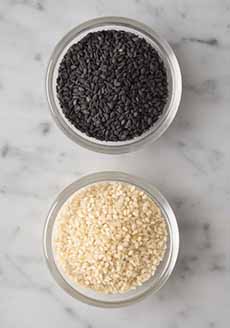
  • Optional garnishes: sesame seeds (photo #7), wasabi mayo (photo #6)
  •  
    Preparation

    1. PREPARE the sushi rice. Cook the rice rice according to package instructions. While it cooks, mix the rice vinegar and sugar in a small bowl until dissolved. Let the rice cool, then stir in the vinegar mixture.

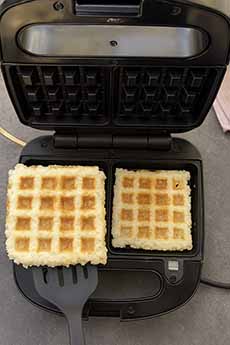
    2. GREASE a waffle iron and spread the sushi rice evenly. Cook for about 8 minutes, or until crispy and golden. Remove from the waffle iron

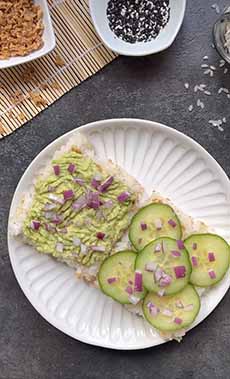
    3. TOP the crispy rice waffles with mashed avocado, then the red onion and cucumber, then the smoked salmon. Drizzle with lemon juice and garnish sesame seeds. Drizzle the spicy mayonnaise over the top or serve it on the side.
     
    Gari, Pickled Ginger For Sushi
    [10] Gari, pickled ginger for sushi. You can buy it or make it with this recipe (photo © All Recipes).


    HOW IS SUSHI RICE DIFFERENT?

    The differences between sushi rice and all-purpose, long-grain white rice are:

    Type of Rice

  • Sushi rice is made from short-grain or medium-grain Japonica rice, which has a higher starch content, making it stickier—ideal for holding its shape in sushi.
  • Regular white rice (like long-grain or Jasmine) has less starch and cooks up fluffier and less sticky.
  •  
    Seasonings

  • Sushi rice is seasoned after cooking with a mix of rice vinegar, sugar, and salt, giving it a slightly sweet, tangy flavor.
  • Regular white rice is typically lightly salted during cooking.
  •  
    There are many types of rice. Check them out here.
     
     
    RECIPE #2: REGULAR WAFFLES WITH SUSHI TOPPINGS

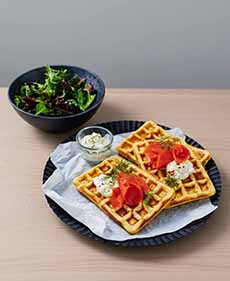
    If you use a prepared waffle mix, you can use that instead of making your own mix from scratch. We actually prefer this recipe on whole-grain waffles, although photo #9 shows regular wheat waffles. They are served with a yogurt-lime topping and a side salad.
     
    Ingredients

  • 2 cups flour
  • 1 teaspoon baking powder
  • 3 eggs
  • 7 tablespoons butter at room temperature plus extra for greasing the waffle iron
  • ¾ teaspoon each salt and pepper
  • 1 cup buttermilk
  • 2 sprigs fresh dill, stems removed, patted dry, finely chopped
  • 1 slice smoked salmon or sashimi
  •  
    For The Topping

  • 1 small lime, washed and patted dry
  • ⅔ cup plain Greek yogurt
  • Red chili flakes
  • Salt to taste
  •  
    For The Salad

    We used bag of Asian salad mix.

  • 3½ cups loosely packed lettuce mix of choice, washed and patted dry
  • 2 tablespoons olive oil
  • Juice of half a lemon
  • ½ teaspoon mustard
  • 1 teaspoon maple syrup
  • Salt and freshly ground black pepper to taste
  •  
    For Plating

  • 7 ounces smoked salmon or sashimi
  • Garnish: snipped chives or more dill
  •  
    Preparation

    1. MAKE the yogurt topping. Zest a little of the skin, cut it lime in half, and squeeze its juice. Mix the yogurt with the lime zest and juice, and season with salt and red chili flakes.

    2. MAKE the salad dressing. Combine the olive oil, lemon juice, mustard, and maple syrup; season with salt and pepper. Toss with the lettuce right before serving.

    3. MIX the flour, baking powder, eggs, butter, ¾ teaspoon salt, ¼ teaspoon pepper, and buttermilk until well combined.

    4. CUT a slice of smoked salmon into small cubes and add it to the batter along with the chopped dill. Cook the mixture in a pre-greased waffle iron until the waffles are golden brown.

    5. TOP the cooked waffles with the remaining salmon, the salad, and the lime dip. Garnish with dill or chives and enjoy.
     
     
    DASSAI BLUE SAKE


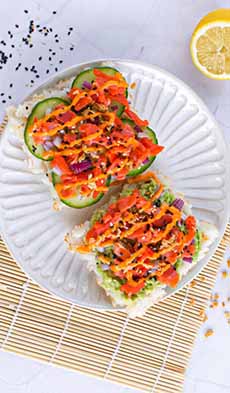
    A Plate Of Sushi Waffles
    [1] Sushi waffles: delicious, fun, and easy to make (photos #1, #4, #5 and #9 © Alaska Seafood.

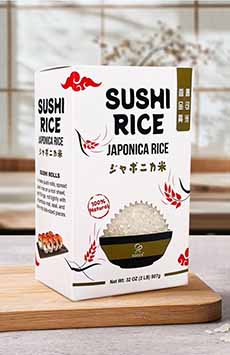
    A Box Of Sushi Rice
    [2] You need sushi rice, not regular rice. Here’s the difference (photo Soeos | Amazon).

    A plastic box of takeout sashimi.
    [3] We purchased a box of takeout sashimi instead of using smoked salmon (photo © Whole Foods Market).

    Sushi Waffles Made Of Rice
    [4] The cooked sushi rice goes into the waffle iron.

    Sushi Waffles With Garnish
    [5] The crisped rice is layered with toppings, until it looks like photo #1. At this stage, you can see the mashed avocado, red onion, and pickled cucumber. Next step is to add the fish and garnishes.

    A Bottle & Dish Of Wasabi Mayonnaise
    [6] We used wasabi mayonnaise instead of the pink spicy mayonnaise in photo #1 (photo © Thai Dancer | Food Specialize Co., Ltd | Facebook).

    Black & White Sesame Seeds In Glass Ramekins
    [7] Use black or white sesame seeds or a sprinkling of both. Black sesame has more flavor (Nano Banana photo).

    A Bottle Of Dassai Blue Nigori Type 50 Sake
    [8] We enjoyed the sushi waffles with a bottle of Dassai Blue nigori sake. Produced in the U.S.A., it is smooth with a tiny amount of sweetness that paired perfectly. See more about the sake below (photo © Dassai Blue).

    Sushi On Regular Wheat Waffles
    [9] Conventional waffles topped with smoked salmon (raw if you prefer) and yogurt-dill cream. We preferred the ones we made with whole-grain waffle mix compared to refined wheat.

     
    Each sake producer makes different varieties of sake (see our Sake Glossary). We are particularly fond of nigori, a cloudy sake with a slight touch of sweetness that pairs nicely with the saltiness of soy sauce.

    With our sushi waffles we enjoyed a bottle of Dassai Blue Nigori Type 50 (photo #8). The brand is made in the U.S. under the auspices of the renowned Japanese sake producer, Asahi Shuzo, which also makes the original Dassai brand sold in Japan. The American product is called Blue to differentiate it from that made in Japan.

    (And the company recently changed its name to Dassai Inc. because of the confusion with the Asahi beer company, which is no relation.)

    The “Blue” in the brand name was taken from an old Japanese proverb: “Although blue dye comes from the indigo plant, it is bluer than indigo.” This underscores the brewery’s ambition not to just copy the Japanese Dassai, but to even exceeed it and in the process make the finest sake in the U.S.

    The state-of-the-art Dassai Blue Sake Brewery is located in Hyde Park, a town in Dutchess County, New York (the hometown of Franklin D. Roosevelt). It offers tours (with a tasting for those of legal drinking age).

    Like the original Dassai, Dassai Blue focuses exclusively on brewing junmai daiginjo, the highest grade of sake. The name translates to “pure rice,” meaning that only rice, water, shobu (yeast starter), and koji (a mold with enzymes that break down rice starch into sugar) are used in its production. There is no added brewer’s alcohol, which creates that acrid taste in lesser grades of sake.

    Good sake, including the ginjo and daiginjo grades, should always be chilled in order to display their delicate, highly aromatic qualities. They can be enjoyed alone or with food.

    Nigori (meaning cloudy) is the unfiltered style of sake. In nigori, the fine rice sediment (called sake kasu or lees) is intentionally left in the bottle, giving the beverage a milky, hazy appearance and a slightly richer, often sweeter flavor with a creamy mouthfeel and supply texture.

    The number 50 in Type 50 refers to the rice polishing ratio (RPR) in the rice wine. In other words, the rice grains have been polished down to 50% of their original size before brewing. This results in a cleaner, fruitier, and more refined taste profile than lower grades of sake, and is the minimum threshhold for the Junmai Daiginjo classification.

    Dassai is made with Yamada Nishiki rice, a short-grain Japanese rice cultivar called the “King of Sake Rice.” It’s sourced from both Japan and a partner farm in Arkansas.

    We enjoy the balance of light sweetness (which comes from the rice) and the crisp, refreshing finish. Put your nose to work and you’ll find fruity aromas, with notes on the palate of green apple, melon, pineapple, even almond.

    Nigori can be enjoyed alone and is also the perfect complement to any meal. Sake is best served chilled, at 41°F (5°C) or below.

    So why is some sake served warm?

    The practice of warming sake, known as kanzake, dates back more than 1,000 years. Before modern refrigeration and sophisticated brewing, warming was the common way to enjoy sake, especially during the cold winter months.

    Today in the U.S., only futsushu‡, “table sake,” is warmed, usually to mask imperfections in the flavor.

    ________________
     
    *Raw rice triples in volume when cooked, you simply divide the desired cooked amount by 3. So ⅓ cup raw rice will give you approximately 1 cup of cooked rice. For 4 waffles, use 1/2 cup raw rice. Or, cook the whole cup; you’ll find numerous ways to use any uneaten rice.

    †Katsuya Restaurant Group operates Japanese restaurants primarily in Los Angeles, as well as locations in New York, Miami, and the Bahamas. His most iconic dish is spicy tuna on crispy rice, which has become widely popular and inspired many variations at other restaurants, including sushi pancakes.

    ‡Futushi, meaning table sake or regular sake, is the most popular and affordable category of sake in Japan, accounting for the majority of production. Unlike specially designated grades of sake, which have strict government quality standards, futsushu has fewer regulations. This enables a wide range of styles and qualities, some of which include additives like brewer’s alcohol, coloring, and/or sweeteners. It’s drunk both chilled and warm.


    CHECK OUT WHAT’S HAPPENING ON OUR HOME PAGE, THENIBBLE.COM.


    Comments off

    Pommes Soufflees For National Potato Souffle Day

    September 30th is National Soufflé Potato Day, called pommes souffleés in French. It’s a dish that connects us to our youth. We began our foodie life under our mother’s tutelage in grade school. In high school we found a boyfriend with similar interests, and every Saturday night we’d go to another great New York City restaurant.

    There was one called Charles a la Pomme Soufflé (“soufflé potato” in English). It closed in 1990, but for years we went there every chance we could get.

    > The history of potatoes.

    > The different types of potatoes: a photo glossary.

    > The year’s 30 potato holidays
     
     
    POMMES SOUFFLÉES HISTORY: AN ACCIDENT!

    Like chocolate ganache and Crêpes Suzette, pommes soufflées were one of France’s famous culinary accidents (the U.S. can count chocolate chip cookies, fudge, Popsicles, and potato chips, and the U.K has Worcestershire sauce).

    Pommes soufflées began with a royal origin story, dating to a 1837 inauguration of a railway line between Paris and Saint-Germain-en-Laye.

    Chef Jules Collinet, chef for King Louis-Philippe of France* (image #5), was preparing a meal for the king and dignitaries at the Saint-Germain station (some versions place the event at the château of Saint-Germain-en-Laye).

    The king’s train was delayed, so Collinet removed the potatoes that were frying in the pan to prevent overcooking in the hot oil. When the king arrived, he placed the partially cooked potatoes back into hot oil and to his (and everyone’s) amazement, the potato slices puffed up like a cross between golden tan pillows and airy, hollow balloons.

    It was a visual and gustatory sensation. The technique became a signature of fine French cuisine, spreading beyond the great restaurants of France to the rest of the world.

    However, to make pommes soufflées requires significant cooking chops. We tried it a few times, and gave up in favor of Charles’ perfect execution.
     
    Portrait King Louis Philippe I of France
    [5] Louis-Philippe I, King of the French from 1830 to 1848. An 1841 portrait by Franz Xaver Winterhalter (Public Domain).
     
    THE RECIPE: POMMES SOUFFLÉES

    Actually, we are referring you to this recipe from Eater (photo #1). It’s a not as simple as removing sliced potatoes fromt he pan and returning them to hot oil. Rather, it’s tricky, precise technique better studied on YouTube:

  • Video #1, classic oval shape
  • Video #2, fancy execution
  •  
    Here are the basics:

  • Potatoes are sliced lengthwise with a mandoline into uniform ovals about 1/8 inch thick.
  • The first fry is at a lower temperature (around 300°-325°F) for 5-8 minutes. They are removed from the pan to rest briefly.
  • The second fry is at a higher temperature (around 375°-400°F). This is where the moisture inside the potato turns to steam and causes the slices to dramatically inflate and puff up like balloons.
  • They are then drained and seasoned immediately.
  •  
    Not every slice will puff successfully. The challenges are uniform thickness, precise temperature control, the right potato variety, and finally, a bit of luck.

    One source we consulted relayed that even experienced chefs might only experience a 60%-80% success rate!

    So order them when you encounter them, and if you want to try making them, we wish you the very best luck.
     
    ________________
     
    *Nicknamed the Citizen King, Louis Philippe I was King of the French from 1830 to 1848, the penultimate monarch of France, and the last French monarch to bear the title “King.” He abdicated the throne during the French Revolution of 1848, which led to the foundation of the French Second Republic.


    Pommes Soufflees
    [1] Aren’t you dying for a bite? Here’s the recipe (photo Dina Avila | Eater).

    Pommes Soufflees With Filet Mignon
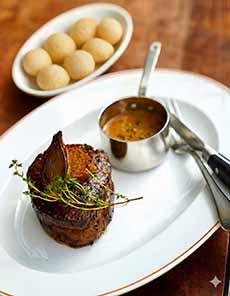
    [2] Pommes soufflées are a festive side, perfect with a top cut of beef (Gemini photo).

    A Dish Of Pommes Soufflees
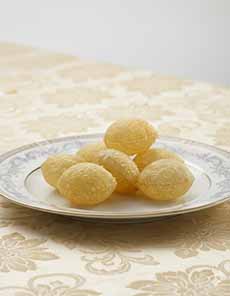
    [3] Personally we could skip the meat and just eat them from the plate (Gemini photo).

    Bag Of Russet Potatoes
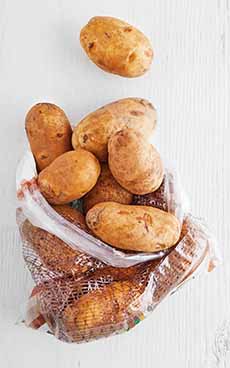
    [4] Russet potatoes are best for pommes soufflées because their high starch content and dryness are crucial to the technique. The process relies on rapidly sealing the potato surface during the first fry and trapping the internal moisture. The moisture turns to steam and causes the potato slice to puff up like a balloon during the second, higher-temperature fry. But some chefs prefer waxy potatoes. See the †footnote (photo © Good Eggs).

     
    †Waxy potatoes, which are higher in moisture and lower in starch than floury potatoes, naturally resist breaking down when cooked, maintaining their solid shape. This stability can make them seem unsuitable, but advocates for waxy potatoes use a technique that relies on a mechanical seal rather than the potato’s natural starch to create the air pocket.


    CHECK OUT WHAT’S HAPPENING ON OUR HOME PAGE, THENIBBLE.COM.


    Comments off


    © Copyright 2005-2026 Lifestyle Direct, Inc. All rights reserved. All images are copyrighted to their respective owners.