THE NIBBLE BLOG: Products, Recipes & Trends In Specialty Foods


Also visit our main website, TheNibble.com.

TIP OF THE DAY: Roasted Nut Oils For Cooking

We discovered wonderfully flavorful nut oils as a college student taking culinary trips to France. Our first experience was a mesclun and goat cheese salad with a walnut oil vinaigrette. The flavor was a revelation that inspired us to tote back numerous bottles of walnut oil, not knowing if we’d find it in the U.S.

Today, fine nut oils are readily available at specialty food stores, waiting for you to discover the glories of almond oil, hazelnut oil, pecan oil, pistachio oil and walnut oil.* There are nut oil recipes galore for appetizers, salads, mains and desserts (here’s a good starter collection of recipes from La Tourangelle, a California producer of the finest nut oils).

The production and use of nut oils is a time-honored tradition in France. Originally, each village had a mill that roasted and extracted the oil from nuts gathered by the area’s farmers. These exquisite oils were used in both the local, hearty, rustic fare and in the haute cuisine of the finest restaurants of Paris.

 
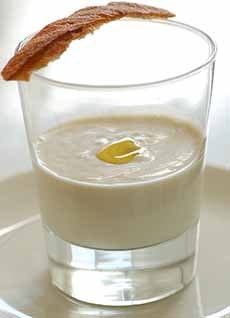
Not just for salad: Nut oils add deep flavor to desserts and other courses. Photo courtesy La Tourangelle.
 
*All nuts contain oil. Almond oil, beech nut oil, cashew oil, hazelnut oil, macadamia oil, pecan oil, pistachio oil and walnut oil are the most popular for culinary use. They are packed with omega 3, 6 and 9 essential fatty acids, which significantly reduce the risk of a cardiovascular related disease (olive oil is an excellent source of omega 9 but has no omega 3). Nut oil is also used in cosmetics, and was used by Renaissance painters to make their oil paints.
  

Following the industrialization of food production, just a handful of mills remain. The roasted artisan oils they make are very different from the far less expensive refined nut oils that are readily available in natural food stores and other markets (more about that below).
  
ROASTED NUT OILS VS. REFINED NUT OILS

Think of it as the difference between extra virgin olive oil and refined olive oil:

Roasted nut oils, which are artisan produced from the best quality nuts available, require much more effort to extract the oil. The nuts are hand roasted in cast iron kettles, then expeller-pressed, lightly filtered and bottled. The result is a rich color, aroma and taste. Roasted nut oil is costly; but you need only a small amount to add flavor.

Refined nut oils are made from what the industry calls nut oil stock: substandard nuts sold at discounted prices to oil manufacturers. The nuts are expeller-pressed in a screw press and then refined to remove impurities. Many of the antioxidants are removed during the refining process. The result is 100% pure nut oil but with no flavor, no aroma and pale color.
  
HOW TO STORE NUT OILS

Nut oils have a short shelf life. Buy a small bottle at a time, unless you find yourself using larger quantities.

A bottle of nut oil should be stored in a cool, dark place and used within four months. It can be kept fresh in the refrigerator for a year.

If refrigerated, the oil will become cloudy. This doesn’t affect its taste or use; and left at room temperature for 20 minutes, it will become clear again.


Discover more about nut oils in our review of La Tourangelle nut oils, a NIBBLE Top Pick Of The Week.

Find more of our favorite oils and recipes in our Gourmet Oil & Vinegar Section.


Comments off

TIP OF THE DAY: How To Keep Garlic Fresh


To keep garlic fresh, store it in dark, dry,
cool place. Photo by Zsuzsanna Kilian | SXC.
  Garlic powder is a pale substitute for fresh garlic. Some people use it because of the convenience: A jar of garlic powder is always on hand, whereas one can be out of fresh garlic—or worse, discover that the cloves have become dry, hard and unusable.

HOW TO STORE GARLIC

Garlic needs a cool, dry place, away from the light. Those ceramic garlic keepers with vent holes actually work. The vent holes enable proper air flow to keep the garlic cool and dry; glazed ceramic will not absorb moisture or odors; and the bulbs are protected from light.

For a quick fix, pop the garlic into a small brown paper bag or a cloth bag or pouch (we use a drawstring bag that originally held a gift item). If you don’t have a paper bag, create a makeshift pouch with a cloth napkin and an elastic band.

Keep fresh garlic out of the fridge. Garlic gets bitter when refrigerated.
What if the garlic sprouts? The shoots are delicious. Cut them off and use them in a salad, in scrambled eggs or as a garnish.

 
WHAT IF YOU HAVE TOO MUCH GARLIC?

Freeze It. Peel and slice the cloves in half and freeze them in a freezer-weight storage bag or other container. When you need garlic, just drop the frozen clove(s) into the pot or pan; the liquid ingredients will “defrost” it.

Dry It. Dry sliced garlic in a dehydrator and keep it in an airtight container in the pantry. The liquid in a recipe will reconstitute it. You also can grind your dried garlic into garlic powder that will taste much better than store-bought, which contains anti-caking agents and possibly other additives.

Chop or Purée It. Peel the cloves and chop or purée them. Acidify the peeled cloves in vinegar in the refrigerator for a day; then pour the vinegar off and use it for a salad dressing. Place the garlic in an airtight jar and cover with a small layer of olive oil, which further preserves the garlic by keeping air away. Or, you can store either in the freezer without the olive oil.

Make Pickled Garlic. It’s delicious in salads, relish trays, with sandwiches, as a garnish, with cocktails, on pizza, in pasta and more. Here’s a recipe.
  
Have garlic tips to add to this list? Let us know!


Comments off

FOOD HOLIDAY: Tequila Lemonade For National Lemonade Day

We recently published a recipe for lavender lemonade, a gourmet recipe you can use to celebrate National Lemonade Day, August 20th.

But perhaps you’d prefer to celebrate with a lemonade cocktail. Here’s a quick and easy recipe from Tequila Avión:
 
 
RECIPE FOR TEQUILA LEMONADE

Ingredients For One Drink

  • 2 parts silver/blanco Tequila
  • 4 parts fresh lemon juice
  • ½ part agave nectar
  • Ice/cocktail shaker
  • Garnish: lemon wheel
  •  
    Preparation

    1. Combine Tequila, lemon juice and agave nectar in a shaker; shake.

    2. Strain into a tall glass of ice. Garnish with a lemon wheel and celebrate!
     
     
    MORE LEMONADE RECIPES

    With Alcohol

  • Blueberry Lemonade recipe (with blueberry vodka).
  • London Lemonade recipe: with gin and triple sec.
  •  
    Adult lemonade for National Lemonade Day. Photo courtesy Tequila Avión.
     
    Alcohol Optional

  • Arnold Palmer/Shandy recipe: half lemonade, half iced tea.
  • Classic Homemade Lemonade recipe.
  • Cranberry-Lemonade Spritz recipe.
  • Homemade Flavored Lemonade recipes.
  • Mint Lemonade recipe.
  • Spicy Lemonade recipe.
  •   

    Comments off


    © Copyright 2005-2026 Lifestyle Direct, Inc. All rights reserved. All images are copyrighted to their respective owners.