THE NIBBLE BLOG: Products, Recipes & Trends In Specialty Foods
Also visit our main website, TheNibble.com.
|
April 22, 2013 at 8:03 am
· Filed under Earth Day & Environment, Food Holidays, NutriNibbles-Organic-Health, Organic, Tip Of The Day
|
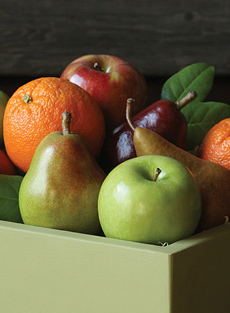
Fresh fruit is even better for you when you’re not consuming pesticides (photo © The Fruit Company). |
|
“Organic” doesn’t simply mean that the food is chemical-free; it’s also produced in ways that are good for the planet.
The USDA’s National Organic Program certifies products as organic based on farming, handling, manufacturing, distribution and labeling practices.
For crops, no synthetic pesticides or fertilizers containing synthetic chemicals are permitted, no sewage-sludge fertilizer, no bio-engineered foods or irradiation, and no GMOs (genetically modified organisms).
Farming practices should enhance and preserve soil and water. A government inspector must certify the farm after visiting it; farmers must keep detailed records on crops.
For animals, no antibiotics or growth hormones are permitted, animals must be raised on organic feed and have free range to graze.
Some products may be more expensive than conventional foods, but see how you can save money with bulk organic foods.
April 22nd is Earth Day. According to EarthDay.org, more than one billion people in 192 countries are taking some action to save our planet. Eating organic food is one of them.
|
HERE ARE 10 REASONS TO EAT MORE ORGANIC PRODUCTS—TODAY & EVERY DAY
1. Nutrition without chemical pesticides and fertilizers. While no studies have yet proven that organically-grown produce has more vitamins and minerals, we know one thing they don’t have: chemicals.
2. No GMOs. Organic products are governed by the USDA’s National Organic Program. When you buy organic, you’re guaranteed that no genetically modified organisms are in your food. Here’s the scoop about GMOs in food.
|
|
3. No antibiotics. Humans consume unwanted antibiotics in conventional meats.
Conventional cattle and poultry are shot with antibiotics as a matter of course, so animals in crowded feedlots don’t become ill.
Conventional milk is loaded with rBST, recombinant bovine growth hormone, banned by all but three nations.
If an animal in an organic herd becomes ill and needs antibiotics, it is removed from the organic herd to a conventional herd.
4. No chemical additives. Organic food is free of colorings, artificial flavorings and chemical preservatives. Natural, organically-certified flavors can be used, as well as natural preservatives such as ascorbic acid (vitamin C, from citrus).
5. No irradiation. Irradiation is used to color foods synthetically. Here’s more about food irradiation.
6. Government inspected. Organic farms and production facilities must be inspected by the USDA at least once a year.
|
|

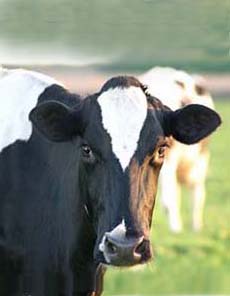
Organic milk is free of antibiotics and hormones. Photo by Rob Waterhouse | SXC.
|
7. Environmentally friendly. There are no chemical pesticides to not sink into the water table (from which we all drink); the land is farmed sustainably to prevent erosion and other degradation of the soil.
8. Good for animals. Animal welfare is a key component of organic meat production. Here‘s the scoop on organic meat.
9. Good for the climate. Organic production watches its carbon footprint and emits less carbon dioxide, a greenhouse gas that erodes the ozone layer.
10. Better taste. While there are no scientific studies on flavor, most fans agree that the pure taste of nature simply tastes better. Maybe it’s the halo factor of knowing that the food has been produced in ways that are better for us and our planet.
LEARN YOUR ORGANIC FOOD TERMS IN OUR ORGANIC FOODS GLOSSARY.
|
|
|
Permalink
|
|
April 22, 2013 at 6:09 am
· Filed under Beverages
|
|
Do your part to cut down on bottled water landfill.
|
|
If you regularly drink bottled water, today’s the day to consider alternatives. There are several types of water filtration units, each easy to switch to:
A portable refillable water bottle
A countertop filtration unit for your kitchen (no plumbing required)
A water filtration unit that fits in the fridge
A sink water filter for your home and workplace sinks (minor plumbing required); this one sits on the countertop)
These small moves can have a big impact on the environment, and make you feel good to be a part of the solution.
|
|
|
|
|
Permalink
|
|
April 21, 2013 at 6:31 pm
· Filed under Bread-Crackers-Sandwiches, Top Pick Of The Week
|
Bet you can‘t eat just one of King’s Hawaiian
sweet dinner rolls. Photo by Elvira Kalviste |
THE NIBBLE. |
|
Most Americans are not familiar with Portuguese sweet bread. But if the Taira family of Hawaii has its way, every home will be feasting on their version of it: King’s Hawaiian Original Sweet Bread.
A rave in Hawaii, where people line up around the block to purchase it and tourists send gift boxes of the bread back to the mainland, King’s Hawaiian is now produced on both coasts of the Continental U.S., ready to reach a grocer near you.
When you see it, grab it: the dinner rolls, hamburger rolls, hot dog rolls, sandwich rolls and the round loaves that are just perfect to slice into French toast or scoop out to turn into a bread bowl for dips.
Sweet and buttery, a fluffier cousin of brioche, we’re hooked.
Read the full review.
CHECK OUT THE MANY DIFFERENT TYPES OF BREADS IN OUR BREAD GLOSSARY.
|
FIND MORE OF OUR FAVORITE BREADS & BREAD PRODUCTS IN OUR GOURMET BREADS SECTION.
|
|
|
Permalink
|
© Copyright 2005-2026 Lifestyle Direct, Inc. All rights reserved. All images are copyrighted to their respective owners.