THE NIBBLE BLOG: Products, Recipes & Trends In Specialty Foods
Also visit our main website, TheNibble.com.
|
November 30, 2009 at 8:43 am
· Filed under Cheese-Yogurt-Dairy, Recipes
|
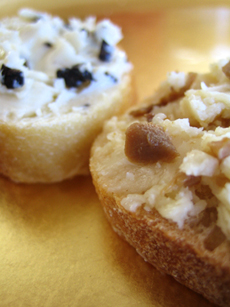
Black truffle butter and white truffle
butter on bread: a heavenly snack! Photo by
Melody Lan | THE NIBBLE. |
|
Another way to enjoy truffles for the holidays—and every day of the year—is with truffle butter.
D’Artagnan’s truffle butter is our favorite little indulgence. For the price of a cocktail, you can have a three-ounce tub of precious, sweet butter, chock-full of black or white truffle pieces. It’s as satisfying as a truffle dish.
We spread it on French rolls or a fresh baguette and are ecstatic. Try it as an hors d’oeuvre with wine.
Or, toss truffle butter with angel hair pasta, add it to a baked potato and butter your vegetables. Put a tablespoon in sauces and create masterpieces. You’ll be in truffle heaven for about $10.
|
|
|
|
Permalink
|
|
November 30, 2009 at 8:22 am
· Filed under Chocolate, Christmas, Giftable
|
You can give delicious chocolates and caramels on a budget. Our selection is so tempting, you should probably order some for yourself, too! We’ve got:
- Soft, buttery caramels from Indulge Caramels, in 13 flavors.
- Ghost chile chocolate bars from Lillie Belle Farms that are the hottest and best we’ve had.
- A set of three Angel Chocolate Bars, each wrapper with a different lovely angel painting by the chocolatier, Joy di Vita.
- And more.
Check out our “Under $15.00” Chocolate Gifts list. |
|

Fruit cups, filled with white chocolate ganache
in boysenberry, lemon and strawberry, from
Lillie Belle Farms. Photo courtesy of Foodzie.com. |
|
|
|
Permalink
|
|
November 29, 2009 at 8:49 am
· Filed under Chocolate, Christmas, Giftable
|
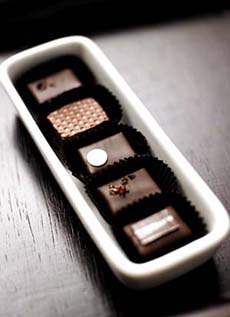
Theo Chocolates, one of our recommen-
dations, is both organic and Fair Trade
Certified. Photo courtesy Theo Chocolate. |
|
If your thoughts for gift-giving lean to fine chocolates, here is our “short list” for the holidays.
Prices range from $15.00 and up, but not that far up—we know it’s a tight economy!
- See our recommendations for a chocolate gift. In addition to modern classics from some of America’s most noteworthy artisans, there are confections that look like sushi!
- Browse THE NIBBLE’s entire Chocolate Section—reviews, articles, Chocolate Glossary and more!
|
|
|
|
Permalink
|
|
November 29, 2009 at 8:22 am
· Filed under Recipes, Vegetables-Salads-Herbs
|
| Truffle season is upon us, and black winter truffles will be coming into the market soon. If you’re jonesing for the heady aroma and taste of black truffles, but going out for a plate of truffled pasta isn’t an affordable fix, look for a jar of truffle peelings and make your own special dinner entrée or first course.
The peelings are the shaved outer layer of the whole truffle. They’re easy to find online; MarxFoods.com sells them. They may seem costly, but compare $85.00 or so for 8 ounces compared to more than $100 for one ounce of fresh black winter truffles.
1. Toss angel hair pasta with fine unsalted butter or truffle butter and the peelings—and use one of your nicest plates. A hearty red wine is a perfect companion.
2. You also can use the peelings in sauces, scrambled eggs and mashed potatoes or as garnishes.
Be careful—it could become a habit!
- Discover our favorite truffle butter, a NIBBLE Top Pick Of The Week, from D’Artagnan.
- Learn all about truffles.
|
|

Can’t afford the real thing (who can!)? Look
for jars of truffle peelings. Photo by Kelly
Cline | IST. |
|
|
|
Permalink
|
|
November 28, 2009 at 10:57 am
· Filed under Christmas, Giftable, Kitchenware-Tabletop
|
What items did we add to THE NIBBLE’s
kitchen this year? Check ‘em out! No, not
these! Photo by Luca Baroncini | SXC. |
|
Here’s the first of our kitchen gift lists: Kitchen Gifts Under $35. In fact, some are as inexpensive as under-$10 stocking stuffers!
These gifts aren’t necessarily glamorous, but they’re the most useful items we tested this year. In fact, 90% of the products we test are donated to good causes. We liked these on our “gift list” so much that we kept them as part of THE NIBBLE’s test kitchen.
- Take a look to see what we “gave ourselves” as gifts this year.
|
|
|
|
Permalink
|
The Nibble Webzine Of Food Adventures
© Copyright 2005-2026 Lifestyle Direct, Inc. All rights reserved. All images are copyrighted to their respective owners.



