THE NIBBLE BLOG: Products, Recipes & Trends In Specialty Foods


Also visit our main website, TheNibble.com.

TIP OF THE DAY: Baking With Honey

If you love to bake but want to use less refined sugar, consider honey as a substitute. Here are tips on cooking with honey from Honey.com, the website of the National Honey Board, where you can find every type of recipe plus beekeepers in your area:

SUBSTITUTING HONEY IN BAKING

Honey helps enhance browning, so it creates beautifully browned baked goods. The extra body provided by honey adds shape to cakes, pastries and other desserts. If you need to prepare baked goods in advance, honey gives them that “bakery fresh” taste, even days later.

  • Substitute honey for up to one-half of the sugar.
  • For easy removal when measuring honey, spray the measuring cup with cooking spray before adding honey.
  • Reduce the amount of liquid in the recipe by ¼ cup for each cup of honey used in baked goods.
  • Add about ½ teaspoon baking soda for each cup of honey used in baked goods.
  • You’ll need to increase beating time and speed, since it takes more vigorous beating to achieve the correct texture with honey.
  •  

    Reach for the honey instead of the sugar. Photo courtesy Michael S. Richter | Morguefile.

  • Reduce oven temperatures by 25°F to prevent over-browning of baked goods.
  •  
    SELECTING HONEY FOR BAKING & COOKING

  • Select a mild, paler honey, such as clover, when delicate flavors predominate—baked goods, glazed vegetables, and subtle fruits like bananas, for example.
  • Select stronger, amber-colored honeys to accompany stronger flavors, such as peanut butter, meats and strong cheeses.
  •  


    Seabass with Aji Chile Honey Marinade.
    Photo courtesy Honey.com. Here‘a the recipe.
      GREAT HONEY COMBINATIONS

  • FRUIT: The combination of sweet fruits and honey brings out the best flavors of each. Apple slices dipped in honey is a luscious snack. Try sliced bananas, hazelnut spread and honey on toast or graham crackers for a tasty blend of flavors and textures.
  • ICE CREAM: Honey acts as an anti-freeze, which makes the ice cream’s consistency smoother and protects against crystallization. Here’s a recipe for peach ice cream with honey.
  • SALTY SNACKS: The combination of salt and sweet is a palate pleaser. We love dipping pretzels into honey, and making honey Cornflakes clusters instead of Rice Krispies treats.
  • CANDIED BACON: This recent craze is a special treat, but here‘s a tip: When making honey-candied bacon, the honey should be added to the bacon strips only after they have been cooked part of the way through. If the honey is added too soon, the honey will caramelize too quickly and the bacon will burn.
  • BREAD: Honey is a delicious bread spread instead of jam. Honey with buttermilk biscuits can’t be beat.
  •  

  • SALAD DRESSING: If you like sweetness in your salad dressing, add a half teaspoon of honey. It acts as a stabilizer, too, so the vinaigrette won’t separate.
     
    MORE WAYS TO USE HONEY

    From appetizers and main dishes to sauces and sides, anywhere a sweetener is used you can substitute honey. We love it as a meat glaze and in marinades. Honey enhances browning and crisping, providing a more beautiful roast.

    Check out the honey-accented recipes at Honey.com.
      

  • Comments off

    RECIPE: Blackberry Cocktail & Brambleberries

    We recently saw “branbleberry tart” on a menu. It turned out to be a blackberry-raspberry combination.

    Brambleberry is a British term for blackberry (Rubus fruticosa). In the U.S., it includes other members of the thorny berry genus Rubus, such as the raspberry (Rubus idaeus).

    It’s easy to whip up an easy brambleberry tart: Just arrange the berries in a buttery pâte brisée crust (short crust—here’s the recipe), either:

  • top a layer of crème pâtissière (cream puff filling—recipe)
  • With a glaze of melted currant jelly (just pour over the fruit)
  •  
    Then, relax with a branbleberry cocktail. This recipe is courtesy TheBar.com and Tanqueray London Dry Gin.


    Bottoms up with a blackberry cocktail.
    Photo courtesy TheBar.com.


    Butte blackberries. Photo by Bob Nichols |
    U.S. Agricultural Research Service.
      BLACKBERRY COCKTAIL RECIPE

    Ingredients Per Cocktail

  • 1.25 ounces London Dry Gin
  • .5 ounce créme de cassis (blackcurrant) liqueur
  • .5 ounce lemon juice
  • .5 ounce simple syrup (buy or make with this recipe)
  • 5 blackberries
  • Ice
  • Garnish: lime wheel, a cocktail pick of raspberries
  •  

    Preparation

    1. COMBINE gin, liqueur, lemon juice and simple syrup in a shaker with ice; shake well.

    2. STRAIN into an ice-filled rocks glass.

    3. POUR the creme de cassis over the top. Garnish with a lime wheel and raspberries.

     
    WHAT IS DRY GIN?

    Gin has been made from juniper berries since the Middle Ages; as with most spirits, it was originally an herbal medicine. The Dutch physician Franciscus Sylvius (1614-1672) is credited with the invention of gin. The name comes from jenever, the Dutch word for juniper.

    Today there are numerous origins, styles, and flavor profiles that build on the juniper. London Dry Gin is the world’s most popular gin type.

    It‘s very different from jenever (also spelled genever). It is called dry gin because there’s no sugar to add sweetness.

    London dry gins also tend to be higher in alcohol: 90 proof as opposed to the more typical 80 proof. The flavor profile is characteristically citrussy, with lemon and/or orange peel among the numerous botanicals that provide the flavor. (Here are some of the different types of botanicals that can go into gin.)

    Beefeater, Bombay and Tanqueray are well-known brands of London Dry Gin. Gin trivia: While gin was distilled in London centuries ago, only one gin distiller remains there today.
     
    FIND MORE OF OUR FAVORITE COCKTAIL RECIPES.
      

    Comments off

    TOP PICK OF THE WEEK: Perky Jerky

    We receive lots of jerky samples. Most are tough and not anything we’d want to gnaw.

    Then there’s tender, delightful jerky, like Perky Jerky. In four varieties each of beef and turkey jerky, it has what marketers call “added value”:

    Perky Jerky is caffeinated with guarana (gwahr-uh-NAH), an Amazonian fruit whose seeds contain about twice the concentration of caffeine in coffee beans. It’s typically found in energy drinks.

    So look at Perky Jerky as an energy snack, or as a meaty snack that happens to provide an energy boost. The stylish packages are nice enough for gifting and party favors.

    Perky Jerky, beef or turkey, is available in plain as well as:

  • Hot & Bothered Perky Jerky
  • Sweet & Spicy Perky Jerky
  • Teriyaki Perky Jerky
  •  
    Perky Jerky, a grab-and-go snack, energzer. Photo by Elvira Kalviste | THE NIBBLE.
     

    Head to PerkyJerky.com to get yours, or read the full review.
      

    Comments off

    RECIPE: Jamaican Iced Coffee & Other Coffee Cocktails


    Jamaican Iced Coffee, made with rum,
    liqueur and brewed coffee. Photo courtesy
    Appleton Estates.
     

    Turn iced coffee into a cocktail for summer entertaining. Here’s a recipe from Appleton Estate rum, produced in the lush countryside of Jamaica.

    Jamaican Iced Coffee can be enjoyed with brunch, post-dinner or whenever you want your cocktail to provide a jolt of energy instead of putting you to sleep.

    JAMAICAN ICED COFFEE

    Ingredients Per Drink

  • 1½ ounces Appleton Estate Reserve Rum (or substitute)
  • ½ ounce Grand Marnier or other orange liqueur
  • 1 ounce vanilla syrup (see below)
  • 3 ounces cold brewed coffee
  • Fresh hand whipped cream (recipe)
  • Garnish: cinnamon
  •  
    WHAT IS VANILLA SYRUP?

    Vanilla syrup is simple syrup flavored with vanilla. You can purchase regular or sugar-free vanilla syrup, or make your own with this recipe.

    Preparation

    1. BUILD rum, Grand Marnier, vanilla syrup and coffee over ice into a highball glass.

    2. GARNISH with fresh whipped cream and dust with ground cinnamon.
     
    VARIATIONS

  • Substitute coffee liqueur or chocolate liqueur for the orange liqueur.
  • Garnish with nutmeg instead of cinnamon.
  •  
    FIND MORE OF OUR FAVORITE COCKTAIL RECIPES.
      

    Comments off

    Frozen Yogurt Sundae Bar & Other Ideas For National Frozen Yogurt Month

    June is National Frozen Yogurt Month (February 6th is National Frozen Yogurt Day), and our arms don’t have to be twisted to celebrate.

    Here are some ideas to make your indulgence a bit more special. But first:

    > The history of frozen yogurt is below.

    > The history of yogurt.

    > The different types of yogurt.

    > The different types of frozen desserts: a photo glossary.

    > Can you determine the number of live and active cultures in your yogurt?

    > The year’s 50+ ice cream and frozen dessert holidays.
     
     
    Sundae Toppings Bar
    [7] Set out popular toppings. You can even ask guests to bring their own favorite (photo © Infarrantly Creative.
     
     
    DIY FROZEN YOGURT SUNDAE BAR

    For family fun or a party, buy a few different flavors at the grocer’s or yogurt shop and set out bowls of toppings. Then set out bowls of fixings for a do-it-yourself sundae. Ideas for toppings:

  • Baked Goods: Cubed brownies and other cookie bars, cubed pound cake or other loaf cake, crumbled cookies, fan cookies, graham crackers, wafer cookies.
  • Candy: Brittle, Butterfinger, caramel corn, chocolate chips, chocolate-covered pretzels, gummies, Heath Bars/toffee (chopped/crushed), Junior Mints, M&Ms, Mini Peanut Butter Cups, Reese’s Pieces, sprinkles, plus pretzel pieces.
  • Cereal: Cocoa Pebbles, Corn Flakes, Frosted Flakes, Fruity Pebbles, granola.
  • Fruit: Apple chips, bananas, berries, coconut, dried cherries or cranberries, grapes, lychees, mango, melon, citrus sections, pineapple, pomegranate arils.
  • Nuts: Almonds, pistachios, walnuts or other favorites.
  •  
    TIPS:

  • We’ve found that the best way to serve the yogurt is to pre-scoop balls in advance into small paper cups. Put them back into the freezer to “deep freeze” until it’s time to bring them to the toppings table.
  • Consider if you want to serve caramel sauce and chocolate sauce. They’re popular but drippy.
  •  
     
    YOGURT PIE OR CAKE

    If you don’t want a sundae bar, here are simple ways to make a special frozen yogurt dessert.

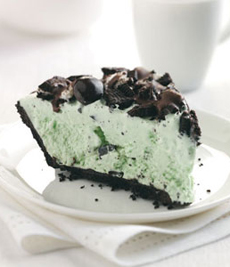
    Yogurt Pie: Spoon frozen yogurt into a graham cracker pie crust and decorate with favorites from the toppings list. Freeze until ready to serve.

    Yogurt Cake: Slice a plain cake into two or three layers. Use frozen yogurt as the filling and frosting; decorate with toppings. Freeze until ready to serve.
     
     
    FROZEN YOGURT ICE CREAM SANDWICHES

    Sandwich frozen yogurt between two cookies—chocolate, chocolate chip, raisin, snickerdoodle; you can even use a different type of cookie on the top and the bottom. Trim the edges of the yogurt with a knife or spatula. Dip the edges into a dish of mini chips, nuts or other topping, wrap in wax paper and freeze until ready to serve.
     
     
    FROZEN YOGURT POPS

    You can buy frozen yogurt pops in most supermarkets, or you can make your own in custom flavors from kiwi to lychee. Purée the fruit and blend with the frozen yogurt; you can stir in one or two of the toppings. Add to the ice pop molds and freeze.
     
     
    WANT YOUR OWN FROZEN YOGURT SHOP?

    There are turnkey packages, as well as custom solutions, for the yogurt shop of your dreams. Frozen Yogurt Solutions is one of the industry’s leading and frozen yogurt consultants, a one-stop-shop for frozen yogurt equipment and supplies. Call 1.888.350.8083 or visit FrozenYogurtSolutions.com.
     
     
    FROZEN YOGURT HISTORY


    Frozen Yogurt Scoops In Paper Cups
    [1] Scoop frozen yogurt into paper cups and put them into the freezer to harden. Then, bring them to the toppings table (photo © The Fro Yo Lab | Facebook).

    Frozen Yogurt With Fruity Pebbles
    [2] You can supply the basic toppings (chocolate chips, fruit, sprinkles) and ask guests if they’d like to bring their favorite. Here, it’s Fruity Pebbles (photo © Real California Milk).

    Polka Dot Ice Cream Cups
    [3] Get some inexpensive paper ice cream cups like these (photo © Matican | Amazon).


    [4] A rainbow frozen yogurt cake. Here’s the recipe from Tesco. You can make a simple version by cutting a store-bought pound cake in half and adding one layer of frozen yogurt (photo © Tesco).


    [5] Put your favorite frozen yogurt flavor into a graham cracker pie shell (photo © MikisRecipes.com [now closed].

     
    While frozen yogurt seems ubiquitous today, it is only some 50+ years old. The first brand, Frogurt, was invented as soft-serve in the early 1970s (often cited as 1970) by the H. P. Hood Company of Lynnfield, Massachusetts.

    It was developed to meet a request from Bloomingdale’s department stores for a healthier, low-fat alternative to ice cream, to serve at their in-store Forty Carrots cafés. It established the foundation for the modern frozen yogurt industry.

    Although some stories cite an “accident” that created frozen yogurt, it is not true. It was calculated product development to create a health-conscious dessert. It esssentially created the frozen yogurt category (today worth $6.49 billion and growing a 6.02% annually).

    The name is a portmanteau of “frozen yogurt” that became so catchy that it’s still used today as a nickname for the frozen yogurt (although the trademark is held by H. P. Hood).

    No doubt inspired by Frogurt, Brigham’s, a Boston-based ice cream and sandwich shop chain, introduced the first packaged frozen yogurt around 1978. It was called Humphreez (both the beloved chain and the yogurt brand are long gone).
     
     
    Dannon Creates The Frozen Yogurt Pop

    In 1979s, Dannon Yogurt introduced a packaged frozen yogurt on a stick, Danny. The first Danny product was dark chocolate-dipped raspberry yogurt. Other flavors and a soft-serve product followed. Danny became the first perishable frozen product to be distributed nationwide.

    These early products were marketed as a healthy alternative to ice cream, but too many people didn’t care for the tartness, which deliberately emulated the then-standard flavor profile of cups of packaged yogurts. This led manufacturers to further sweeten the product and make it ice cream-like, such that few people could tell if they had been handed a dish of ice cream or frozen yogurt.

    The 1970s and 1980s saw the establishment of national yogurt chains like Everything Yogurt (1976, New York), I Can’t Believe It’s Yogurt (1977, Dallas), and TCBY (The Country’s Best Yogurt, Little Rock).

    Supermarket sales took off in the 1980s thanks to these reformulations and the growth of the soft-serve chains, which made consumers want the convenience of frozen yogurt at home.

    However, by this time the original tart frozen yogurt had evolved to suit America’s taste for sweetness, and much of the frozen yogurt could be mistaken for ice cream.

  • Ice cream has a base, of cream, while frozen yogurt uses cultured milk (yogurt) that’s fermented with lactic acid bacteria like Lactobacillus bulgaricus and Streptococcus thermophilus, which gives yogurt its tangy or tart flavor.
  • Ice cream must contain at least 10% milk fat according to FDA regulations, and some can contain up to 25% milk! Full-fat frozen yogurt typically contains 3%-6% milk fat, while low-fat frozen yogurt contains 2%-4%.
  • While it may not taste sweeter, frozen yogurt often contains more sugar to balance out its naturally tangier taste from the cultured milk and its lower fat content. Read the label.
  • Frozen yogurt may contain live cultures (probiotics) that could offer digestive health benefits, which are not found in ice cream. But not all brands have live cultures. See the *footnote.
  •  
    It’s important to note that ice cream is regulated by the FDA and must meet specific standards, while frozen yogurt has no federal regulations or minimum fat percentage requirements

    (article continues below)
     
    Frozen Yogurt Bar
    [6] You can use your nice bowls, but we find it easier to pre-scoop the yogurt into paper cups and take them from the freezer as needed (photo © Whiskware).
     
     
    The Renaissance Of Tart Frozen Yogurt

    As everything old is new again, Pinkberry established in California in 2005, and Red Mango, which followed in 2007, revived the tart soft-serve. A new generation of yogurt eaters has embraced the tartness.

    The 2000’s also saw the founding of Menchie’s, Orange Leaf, sweetFrog, and Yogurtland.

    16 Handles, founded in 2008, is a self-serve yogurt shop that offers 16 different flavors at a time—regular, reduced fat, no sugar added, and vegan free. All are delicious, but 15 of the 16 are in the softserve ice cream style of sweetness.

    We prefer the 16th: original tart frozen yogurt.
     
     
    What About The Frozen Yogurt Holidays?

    In 1993, TCBY established National Frozen Yogurt Month, June; National Frozen Yogurt Week, the first week of June; and National Frozen Yogurt Day, the first Sunday in June.

    So why did National Frozen Yogurt Day move to February 6th?

    At some point an alternative National Frozen Yogurt Day appeared on February 6th—not exactly balmy weather to walk down the street with a cone or dish of frozen treat.

    While it’s unclear exactly who established this February version, it became quite popular (so we’re speculating it was some venue in a warm part of the country).

    The International Frozen Yogurt Association (established in 2013) chose the February 6th date as the more popular of the two to be National Frozen Yogurt Day (or perhaps they figured out that June had enough with National Yogurt Month and Week).

    They also suggested renaming it International Frozen Yogurt Day. But in practice, most people and businesses in the U.S. still call National Frozen Yogurt Day.
     
    Hot Fudge Sundae Ice Cream Pie
    [7] Or, make a frozen yogurt pie. This version is a hot fudge sundae in pie form. Here’s the recipe (photo © Taste Of Home).
     
    ________________
     
    *Some frozen yogurt brands have live and active cultures, but there’s no regulation around how much bacteria must be present in frozen yogurt. There may not be enough in the final product to offer any health benefits if the product was heat-treated after fermentation (which can kill cultures), contains very low or non-viable counts by the time you eat it (storage time/freezing can reduce viability a.k.a. active bacteria), or is made with yogurt flavoring or yogurt powder rather than a truly cultured base.

    Look for phrases like “live and active cultures,” “contains live cultures,” or a list of the strains such as L. bulgaricus, S. thermophilus, Lactobacillus acidophilus, Bifidobacterium, and other bacteria. However, as noted, even if they are live in the final product, cold storage over time can kill them. Some products use a “Live & Active Cultures” type seal or statement, created in 1993 by The National Yogurt Association (NYA) and now managed by the International Dairy Foods Association (IDFA). It requires frozen yogurt to contain at least 10 million cultures per gram at the time of manufacture, but again, that doesn’t guarantee they’ll be alive unless at the end of the “best buy” date.

    If purchasing at a soft-serve frozen yogurt shop, ask if the frozen yogurt is made from cultured yogurt with live cultures, and if it heat-treated/pasteurized after culturing. You can also ask if they have an ingredient sheet or allergen/nutrition sheet that mentions live cultures, or look on the brand’s website.

    Don’t rely on the designation “probiotic.”. It is not a regulated term and is used loosely. The more reliable indicator is a live cultures statement and/or listing the strains.


    CHECK OUT WHAT’S HAPPENING ON OUR HOME PAGE, THENIBBLE.COM.


    Comments off

    The Nibble Webzine Of Food Adventures


    © Copyright 2005-2026 Lifestyle Direct, Inc. All rights reserved. All images are copyrighted to their respective owners.