THE NIBBLE BLOG: Products, Recipes & Trends In Specialty Foods


Also visit our main website, TheNibble.com.

TIP OF THE DAY: Infuse Your Own Tea

There are so many flavored teas on the market. Many American consumers prefer them to plain teas.

But did you know that you can flavor your own, using plain black, green, white or rooibos teas? Just look around your kitchen for things to infuse:

  • Fruits: apple, citrus peel/zest, lemon, orange, pear or other fruit
  • Herbs: mint
  • Spices: allspice, anise/star anise, cardamom, cinnamon, fennel seeds, ginger/fresh ginger/crystallized ginger, nutmeg, vanilla bean, turmeric
  • Sweeteners:Agave, honey, flavored syrup
  •  


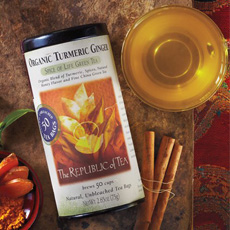
    You can buy flavored tea, or infuse different ingredients into plain tea. Photo courtesy Republic of Tea.

     
    HOW TO INFUSE TEA

    1. With a spice ball. We prefer the new twist-and-lock spice ball style.

    2. Loose. If you don’t have a spice ball, just infuse all of the ingredients in a large measuring cup, ideally one with a pouring spout. Then pour the tea through a strainer, into a cup.

     
    RECIPE #1: TURMERIC GINGER SPICED TEA

    Ingredients For 1 Cup Of Tea

  • 1 cup water
  • 1 ginger green tea bag or 1 teaspoon loose tea
  • 1 inch orange peel (no white pith)
  • 1/2 teaspoon cinnamon
  • 1/2 teaspoon turmeric
  • 1 slice fresh ginger or 1/4 teaspoon powdered ginger
  • 1 teaspoon lemon juice
  • 1 teaspoon agave nectar
  • Garnish: sliced lemon round
  •  

    Preparation

    1. HEAT water to a rolling boil. Place the tea bag, orange peel and spices in a glass measuring cup or other receptacle. Add water and orange peel.

    2. STEEP for 5-7 minutes. Remove tea bags and orange peel. Stir in lemon juice and agave nectar. Garnish with lemon round.

    Now for some gin in your tea! See yesterday’s tip.


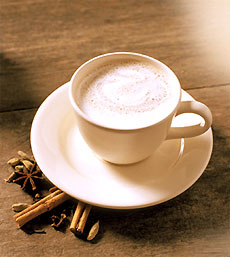
    Hot and spicy. Photo courtesy David Rio.
     

    RECIPE: MASALA CHAI

    Masala chai is Hindi for spiced milk tea (masala = spice, chai = tea). It’s a strong black Indian tea infused with milk, sugar and spices—commonly cardamom, cinnamon, ginger, peppercorn, clove and nutmeg (chocolate or licorice are sometimes included). While chai is traditionally made from black tea, green tea chai and rooibos chai have become popular in the West.

    There is no one “best chai recipe.” As with any other dish, the best version has the seasonings you prefer, in the strengths that you want.

    Here’s a basic masala chai recipe that makes eight cups of tea. Take it as a starting point and adjust the proportions next time.

    If eight cups is too much for you, cut back the recipe. Or, refrigerate the remainder, store it in the fridge and and heat it as needed. You can also drink it iced.

     
    TIP: If some people prefer unsweetened tea, or use a noncaloric sweetener, omit the sweetener and provide options at the table.
     
    Chai Ingredients

  • 4 cups water
  • 4 cups whole milk (or substitute a lower fat or nondairy version)
  • 1/2 teaspoon cardamom seeds
  • 1/2 teaspoon whole black peppercorns
  • 1/2 teaspoon whole cloves
  • 1/2 teaspoon crushed cinnamon stick
  • 1 star anise
  • 1 whole nutmeg
  • 1 teaspoon fresh ginger, peeled and minced
  • 1 vanilla bean, chopped fine
  • 4 teaspoons black tea leaves: Assam or other strong tea
  • 8 ounces honey or 4 ounces agave
  •  
    Preparation

    1. HEAT the water and milk to a boil in a sauce pan. Add the remaining ingredients except honey and simmer, covered, for 10 to 15 minutes.

    2. REMOVE from heat and strain into another pot or bowl. Add sweetener and blend thoroughly.

    3. SERVE from a conventional teapot or a pitcher; or bring pre-filled cups the table.

     
    TEA TALK

    Check out the different types of tea and tea terminology in our Tea Glossary.


    Comments off

    RECIPE: Best Chicken Wings & Sriracha Sauce

    “One day a year…for a year’s worth of bragging rights!” proclaim the organizers of The Wingfest Series, which currently runs competitions in New York City and Washington, D.C.

    The New York event took place this past weekend, with all-you-can-eat wings and all-you-can-drink beer.

    This year’s champion chicken wings were made by The Windsor, a high-end sports bar in Manhattan’s West Village. The winning recipe is below is courtesy of The Windsor’s chef, Kristine Mana-ay.

    The Windsor won over past Wingfest champions BBQue’s Smoke Shack and Duke’s New York. Participating restaurants and what they served:

  • BBQue’s Smoke Shack: Holy Habanero Challenge Wings
  • Bon Chon: soy ginger wings and hot and spicy wings
  • Duke’s New York: wings enveloped in sweet barbecue sauce
  • East End Bar & Grill: baked barbecue wings and Thai chili wings
  • Mason Jar: traditional Buffalo wings with a vinegar kick
  • Tribeca Tap House: Buffalo wings
  •  
    If you’re not familiar with Sriracha sauce, see below.


    The winner: Honey Sriracha Wings (photo © The Windsor | New York City).


    RECIPE: HONEY SRIRACHA WINGS

    Ingredients For 12 Wings

  • 1/2 cup all-purpose flour
  • 1/4 teaspoon onion powder
  • 1/4 teaspoon paprika
  • 1/4 teaspoon Old Bay seasoning
  • 1/4 teaspoon salt
  • 1/4 teaspoon garlic powder
  • 12 chicken wings
  • Oil for deep frying (we prefer heart-healthy canola oil)
  •  


    Sriracha sauce. The Rooster brand is
    commonly found in U.S. supermarkets.
    Look in the Asian foods section.
      Marinade

  • 2 cups buttermilk
  • 1 teaspoon black pepper, fresh-ground
  • 1 teaspoon salt
  • 1/4 teaspoon Old Bay seasoning
  •  
    Honey Siracha Sauce

  • 1 cup sriracha
  • 1/4 cup honey
  • 1-1/2 tablespoons chopped ginger
  • 2 tablespoons scallion
  •  
    Preparation

    1. PREPARE the sriracha sauce: Combine the siracha, honey, chopped ginger, and scallion. Set it aside.

    2. WHISK together buttermilk, pepper, salt, and Old Bay seasoning in a bowl. Add the chicken and coat with the marinade. Marinate in the refrigerator for 8 hours. Then…


    3. MIX together the flour, garlic powder, Old Bay seasoning, paprika, onion and salt in a small bowl.

    4. PLACE chicken wings in a large bowl and coat evenly with the flour mixture. Cover the bowl and refrigerate for one hour.

    5. HEAT the oil to 375° in a deep frying pan. The oil should be just enough to cover the chicken wings. Cook, remove the chicken from the fryer, and drain on paper towels set in a bowl. Coat with sriracha sauce and serve.


    WHAT IS SRIRACHA?

    Sriracha, pronounced see-RAH-jah, is a Thai hot chili sauce. It is made from red chiles, distilled vinegar, garlic, sugar, and salt; and is aged for three months or longer.

    Unlike American hot sauces such as Tabasco, which are vinegar sauces that are infused with hot chiles, sriracha is primarily puréed chiles, making it a much thicker sauce.

    The sauce is named after the coastal city of Si Racha in eastern Thailand, where it was first made and marketed. Different brands can be found in the Asian aisle of many supermarkets and in Asian groceries.

    According to multiple sources, including an article in Bon Appétit, the sauce was made more than 80 years ago in by a local woman, Thanom Chakkapak. She initially made the condiment for her family, and then for friends, to enjoy with the local seafood (think of it as a much hotter counterpart to American cocktail sauce).

    As is a common story in the specialty food business, they encouraged her to sell it commercially—and it became the best-selling chile sauce in Thailand. In 1984, Ms. Chakkapak sold her business to a major food company, Thai Theparos Food Products.

    What’s the correct spelling: sriraja, si-racha, sriracha, or siracha?

    According to Andrea Nguyen, who wrote the article for Bon Appétit: Since Thailand does not adhere to one romanization system for Thai words, many variants have emerged, chosen by manufacturers who have created their own version of the original sauce.

    However, the most commonly accepted spelling is sriracha.


    CHECK OUT WHAT’S HAPPENING ON OUR HOME PAGE, THENIBBLE.COM.


    Comments off

    HALLOWEEN FAVOR: Pumpkin Blondie


    Shine on harvest blondie. Photo courtesy
    Sugardaddy’s.
     

    We love getting gifts from Sugardaddy’s Sumptuous Sweeties. The brownies and blondies are tops, the flavor choices wonderful, and they’re packaged beautifully for gifting.

    Here’s our original review.

    For harvest season, there’s the Harvest Blondie: a kind of pumpkin brownie with a pumpkin purée swirl, pumpkin pie spices, roasted walnuts and white chocolate chips in a classic blondie batter. (While it may look like a torte, the photo shows the blondie on a miniature pedestal.)

    They’re one of our seasonal picks as treats for the family, as party favors or as Thanksgiving place settings.

    Six Harvest Blondies individually encased in round acrylic boxes are $29.75. Lovely gift packaging options—including monogrammed silk bags—are available. Head to Sugardaddys.com.

     
    THE ORIGINAL BLONDIE

    The blondie was not named for Dagwood Bumstead’s wife. It started life known as a butterscotch blondie.

    The batter—flour, brown sugar, butter, eggs, baking powder and vanilla—is yellow (blonde), as opposed to chocolate brownie batter. Early recipes contained butterscotch chips.

    Today’s blondies typically combine butterscotch chips and chocolate chips, and often, nuts.

    According to Food Timeline, blonde brownies predate chocolate brownies by about 10 years. Around 1896, a molasses-flavored bar cookie (no chocolate, cocoa or chocolate chips) called a brownie appeared. The name honored the elfin characters featured in popular books, stories, cartoons and verses, very popular at the time, by Palmer Cox. The Eastman Kodak Brownie camera was also named after these elves.

    After the later introduction and popularity of chocolate brownies, became known as a butterscotch brownie (history of the brownie). The name “Blondie” surfaces in the 1980s.

    Want to bake your own? Here’s a recipe from Dorie Greenspan.


    Comments off

    Lobster Bisque Recipe & Seafood Soup Garnish

    For entertaining with memorable dishes, serve a chowder, bisque or other seafood soup and garnish it with legs or claws.

    If you need extra claws or legs, you can purchase them from your fishmonger. The legs, removed to sell cooked lobster tails, are inexpensive. This easy recipe is a treat for family and guests.

    Bisque, chowder…what’s the difference?

  • Bisque is a thick, rich soup made from fruits, vegetables, game fish or shellfish (particularly crab, lobster and shrimp) and thickened with cream. Popular bisques include chestnut bisque, crab bisque, lobster bisque, squash bisque and tomato bisque. A key difference between a chowder and a bisque is that a bisque is a more elegant recipe, puréed until smooth, and often contains sherry. Chowders also contain pork fat back.
  • Chowder is most often a soup with fish or seafood as the main ingredient, but there are non-fish chowders such as corn chowder and chicken chowder. Potatoes and other vegetables are typically added and the soup is enriched with salt pork fatback and thickened with flour or crushed soup crackers—two ingredients that define a chowder.
  •  
     
    CRAB OR LOBSTER BISQUE RECIPE

    You can use fresh cooked, canned or thawed frozen seafood in this recipe.

    Ingredients

  • 2 tablespoons unsalted butter
  • 1 teaspoon chopped onion
  • 1 parsley sprig
  • 1-1/2 cups finely chopped cooked crab or lobster meat
  • 2 tablespoons flour
  • Optional: 1 tablespoon tomato purée*
  • 2 cups chicken stock or canned chicken broth
  • 2 cups half and half or milk
  • Salt and cayenne pepper
  • Optional: sherry (cream sherry if you have it) or cognac
  • Garnish: bits of crab/lobster meat, croutons, crème fraîche/sour cream, crumbled bacon, fresh parsley, grated gruyère cheese
  •  
    _______________
    *The tomato is largely to provide a nice color; so if you don’t have tomato paste, you can omit it.
    _______________
     
    Preparation

    1. REMOVE half and half from the refrigerator so it will lose its chill prior to use.

    2. COOK butter, onion and parsley slowly in a pan until the onion turns yellow. Add the seafood; cook and stir five minutes.

    3. STIR in the flour and tomato paste, followed by the chicken stock. Simmer for 20 minutes; then remove the parsley.

    4. ADD the half and half; stir. Season with salt, cayenne and sherry/cognac to taste.

    5. HEAT but do not boil prior to serving; garnish and serve.
     
    TIP #2: For a smaller soup course, serve the bisque in demitasse or espresso cups.
     
     
    LOVE SOUP?

    Check out the different types of soup—and beautiful soup photos—in our Soup Glossary, along with the history of soup.

    Here are different soup garnishes for 20 favorite soups.

    Soup cooking tips: 10 tips and tricks for better soup-making.


    Lobster Bisque
    [1] The best garnish for a bisque is a solid piece of the seafood it is made from (photo © Mackenzie Ltd).


    [2] Lobster bisque garnished with pieces—more readily available than a claw for every bowl (photo © Turner Seafood | Foody Direct).


    [3] Waiter, there’s a crab in my soup! Photo © Genji Sushi.

    Lobster Bisque
    [4] Rich soups like bisque are often served in small portions as a first course. The classic presentation is in a demitasse cup (photo © Hancock Gourmet Lobster).


    Comments off

    RECIPE: Gin Spiced Tea

    For spiced tea lovers, here’s a new way to enjoy spiced tea: with spiced gin. It’s an alternative to a rum toddy, also known as hot buttered rum.

    Look for Darnley’s View Spiced Gin, Edinburg Gin’s Spiced Orange Gin and Opihr, a London Dry Gin with oriental spices.

    Brew a cup of spiced tea and add a tablespoon of gin; relax and enjoy. Then, gather friends for a sophisticated cup of tea.

    No spiced gin? Check out friends’ travel plans: We had bottles brought back to us by a colleague who regularly visits England because we couldn’t can’t find them locally.

    Alternatively, you can infuse Old Plymouth Gin or a brand that doesn’t scream “botanicals!” to you. Add allspice, cinnamon, cloves and orange peel. Follow the directions for how to infuse vodka.

    If you’re a real do-it-yourselfer, you can make gin from scratch with this homemade gin kit.

    And then there’s the easy default: Use whatever gin you have on hand.


    A nice twist: gin with similar spices as you’ll find in Constant Comment and other spiced teas.

     
    TANQUERAY MALACCA GIN
    Tanqueray Gin relaunched its Malacca expression earlier this year. The gin was discontinued after a short run from 1997 to 2001.

    Unlike Tanqueray’s well-known London Dry Gin—the juniper-infused style that most people think of as gin—Malacca is more like Old Tom Gin, a style that faded away in the 20th century but is enjoying a small renaissance (see below). Malacca is flavored with citrus and a hint of spice—though not as much spice as the spiced gins above.

    Tanqueray Malacca Gin was introduced in 1997 as a “wetter” (sweeter) alternative to the London Dry Gin. It was launched as a better gin for sweet gin drinks like the Gimlet and the Tom Collins. It didn’t take off as the company had expected, and was discontinued.

    But it was before its time. Over the last decade, the demand for the older style of gin has grown, as evidenced by the launch of several Old Tom-style gins, reviving a style popular in 18th-century England.


    Treat yourself to a bottle of Malacca, a
    sweeter, more citrusy style of gin for
    sweeter drinks (or neat). Photo courtesy
    Tanqueray.

      OLD TOM GIN

    Old Tom gin is popping up again in England, with brands such as Hayman’s and Ransom. (If you can’t find them in the U.S., ask a favor of a friend who travels to the U.K.)

    More citrusy and not as focused on juniper and other botanicals, Old Tom gin is a style that was popular in 18th-century England but faded away in the 20th century. It is currently undergoing a small renaissance.

    Old Tom is slightly sweeter than London Dry gin, but slightly drier than Dutch jenever, the original gin.

    The name is said to come from wooden plaques shaped like a black cat (an “Old Tom”) that were mounted on the outside wall of some pubs in 18th century England for passing pedestrians. After they deposited a penny in the cat’s mouth, they would place their lips around a small tube between the cat’s paws. On the other side of the wall, the bartender would pour a shot of gin into the tube. (Yes, it sounds very unsanitary to us moderns.)

    See the different types of gin.


    Comments off

    The Nibble Webzine Of Food Adventures
    RSS
    Follow by Email


    © Copyright 2005-2026 Lifestyle Direct, Inc. All rights reserved. All images are copyrighted to their respective owners.