THE NIBBLE BLOG: Products, Recipes & Trends In Specialty Foods


Also visit our main website, TheNibble.com.

TIP OF THE DAY: Pasta Without The Carbs


Have all the noodles you want; these tofu
shirataki are very low in calories. Photo
courtesy House Foods.
 

Why is “comfort food” high-carb food? What’s a pasta lover to do?

Well, there’s spaghetti squash, and you can shred zucchini into a form that cooks up like pasta (and is delicious topped with sauce and grated cheese).

And then there’s shirataki.

WHAT IS SHIRATAKI?

Shirataki are Japanese noodles that are very low in calories and carbohydrate (many have zero). They are thin and translucent, made from the colorfully named devil’s tongue yam (also called elephant yam or konjac yam). They are fat-free, gluten-free and soy-free. There are also varieties made from tofu, which does have soy and a modest number of calories.

The Miracle Noodle brand is certified kosher by OU. The company also makes “rice” from the same yam.

 
“Shirataki” means “white waterfall” in Japanese, a term that describes the appearance of the very white yam noodles (the tofu noodles have a more pasta-like color).

Largely composed of water and glucomannan, a water-soluble dietary fiber from the yam, they have little flavor of their own. But top with tomato sauce or add to a cup of broth, and you’ve got a pretty darn good pasta substitute. Like tofu (and the tofu shirataki), they easily absorb the flavors of any dish or sauce.

A special benefit: The soluble fiber slows digestion and prolongs the sensation of fullness.


The yam-based noodles have recently been joined by tofu-based shirataki-style noodles. They require refrigeration and contain a minimal amount of carbohydrate.

Shirataki noodles can be found both in dry and “wet” forms in Asian markets, some supermarkets and online. The wet noodles, most frequently found, are packaged in liquid.

There are many offerings out there. The NoOodle brand has meal starters at 20 calories per serving, that allow you to enjoy great-tasting meals without packing on the pounds. They also have 50-calorie soups. The line includes:

  • Tomato Infused Angel Hair, angel hair NoOodles in a tomato flavored broth
  • Chicken Flavor Infused Angel Hair NoOodles in a light chicken broth
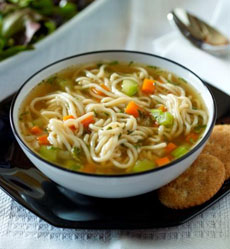
  • Chicken NoOodle Soup, prepared with chicken and fresh vegetables in a natural chicken broth
  •  


    Shirataki noodles are made in favorite cuts, from angel hair and fettuccine to spaghetti. There are even ziti and “spinach noodles.”Photo courtesy Miracle Noodle.

  • Tomato Risotto with diced tomatoes, spinach, and basil prepared in a tomato sauce
  •  
    COOKING TIPS

  • There is a fishy aroma when you open some packages, possibly from the preservatives. Once the noodles are rinsed and boiled, it is gone and there is no unpleasant taste. Be sure to follow the package directions.
  • The texture is gelatinous. Pat the noodles dry with paper towels) before adding to the recipe. If you still don’t like the texture, try this technique: Rinse 4-5 minutes, boil for 5-7 minutes, then rinse again in cold water again for a minute. If you want the noodles hotter, put them in the microwave for 10-15 seconds.
  • An easy dish: heat olive oil and a garlic in a pan and add the rinsed, blotted noodles. Add whatever proteins and vegetables you have. It’s a delicious dish. You can also toss shirataki into stir-frys.
  • Some fans say the recipes taste better the next day.
  •  
    We’re coming up on the Year Of The Horse; but this may also be the Year Of The Shirataki Noodle.


    Comments off

    FOOD FUN: Japanese-Inspired Salmon Appetizer


    Cooked salmon “roll.” Photo courtesy
    MacKnight Foods.


    First, the health benefits:

    For years, healthcare professionals have been promoting the benefits of eating more salmon for its omega 3 essential fatty acids. Omega 3s contribute to:

  • Cardiovascular health
  • Decreased cancer risk (breast, colorectal and prostate cancer)
  • Eye health—both dry eye and macular degeneration
  • Improved mood and cognition
  • Joint protection
  •  
    Beyond the well-promoted omega 3s, salmon has two equally strong health benefit components:

     
    Salmon Proteins and Amino Acids

  • Recent studies have found that salmon contains small bioactive protein molecules called bioactive peptides. They may provide help with joint cartilage, insulin effectiveness and control of inflammation in the digestive tract (e.g., ulcerative colitis).
     
    Selenium, An Antioxidant

  • Salmon is noteworthy for its high selenium content. High selenium intake is associated with decreased joint inflammation, and also with prevention of certain types of cancer, including colorectal cancer. Four ounces of salmon provide more than 60% of the Daily Value (DV) for this mineral.
  • As an antioxidant nutrient, selenium has also been shown to be especially important in cardiovascular protection through maintenance of the molecule glutathione.
  •  
    Enough seriousness; now for the fun.

    As an alternative to the conventional baked, broiled, grilled, roasted or sauteed salmon main course, here’s an idea for an appetizer or first course. You can also serve it as a salad course, plated with a green salad.


    SALMON “ROLL” APPETIZER

    This easy recipe was inspired by sashimi, but it isn’t raw. The ingredients are:

  • Salmon, cooked or smoked
  • Nori, the roasted seaweed sheets used to wrap sushi rolls
  • Optional: cucumber spears for smoked salmon roll
  • Optional: plate with Asian slaw or seaweed salad
  •  
    Then:

  • For smoked salmon: Cut cucumber to size and roll in a piece of smoked salmon; wrap with a band of nori.
  • For cooked salmon: Cut thick fingers of cooked salmon. Wrap with nori and serve.
  •  
    Smoked salmon “rolls.” Photo courtesy MacKnight Foods.
     

    NORI: ANOTHER “HEALTH FOOD”

    You can buy nori in the Asian products aisle of your market, at Asian grocers, or online. Look for a brand that has perforated sections so it can also be more easily cut.

    Store nori in an airtight container (a heavy duty storage bag with the air squeezed out will do).

    Nori is about one-third protein and one-third dietary fiber, and contains high proportions of iodine, vitamins A, B, and K, and iron.

    It has almost no calories; and the people who love it really love it. You can also use a chiffonade of nori as a garnish for noodles, soups and other dishes.

    You can also eat nori as a snack. You may have noticed the proliferation of nori snack packages—toasty, crunchy nori seasoned with sesame seeds or other flavors. We love them!
     
    BE SAVVY ABOUT SALMON

  • Types of salmon. Do you know your Coho from your Chinook?
  • Make an informed choice. Check out the difference between wild and farmed salmon.
  • Then, take our wild salmon trivia quiz.

     
    FAVORITE SALMON APPETIZERS

  • Pancakes With Smoked Salmon & Salmon Caviar
  • Smoked Salmon & Caviar Blinis
  • Seven Layer Smoked Salmon & Caviar Sandwiches
  •  
    PLUS

  • The different types of smoked salmon
  •   

    Comments off

    TIP OF THE DAY: Bitters


    The familiar bottle of Angostura Bitters.
    Photo courtesy C.L. World Brands.
      You’ve probably heard of Angostura Aromatic Bitters, but do you know what bitters are?
    THE HISTORY OF BITTERS

    According to Wikipedia, the origins of bitters can be traced back to the ancient Egyptians, who infused medicinal herbs in jars of wine. In the Middle Ages, the availability of distilled alcohol for the base led to much more concentrated preparations.

    But fast forward to the cocktail. By 1806, American publications referenced the popularity of a new alcoholic drink, the “cocktail…a stimulating liquor, composed of spirits of any kind, sugar, water, and bitters.”

    Bitters are used in the Manhattan, Old Fashioned and Whiskey Sour, among other cocktails. We enjoy them every day in a mocktail: a glass of club soda with lime. It has all the satisfaction of a cocktail, without the alcohol.

    Bitters fell out of favor along with classic cocktails in the 1960s and 1970s. They were were supplanted by wine, which became the alcohol of favor following the growth and promotion of California wines. But a few years ago, as cocktail culture became stylish again, there evolved a comeback in bitters.

     
    Like alcohol itself, bitters began as medicinal tonics; today they are still used as digestifs (drinks consumed at the end of a meal, in order to aid digestion). Each producer had a “secret formula” of herbs, fruits, roots and spices, distilled in a base liquor. The flavor is bitter or bittersweet flavor and the aroma is pronounced; hence the term “aromatic bitters.”

    The flavor of bitters is highly concentrated, and just a few dashes are enough to flavor foods and beverage. Beyond drinks, you’ll find them as an ingredient in fruit pies, marinades, seafood recipes, soups, salad dressings and so forth.

    ANGOSTURA BITTERS

    Angostura, the best-known brand, was invented in 1824 by a German physician, Johann Gottlieb Benjamin Siegert, in Angostura, Venezuela. He created a blend of tropical herbs and plants as a remedy for a variety of illnesses, especially sea sickness and stomach maladies.

    He subsequently formed the House of Angostura, and sailors were major customers. The oversized label, which covers the entire body of the bottle, is said to be a mistake—someone ordered the wrong size and no one took responsibility to correct it (hmm…some things never change).

    Today the brand is produced in Trinidad by CL World Brands.

    To us, the flavor is ginger-like: We call our club soda-Angostura drink “unsweetened ginger ale” (although ginger is also an edible root, it is no relation to gentian). The trick is to add enough bitters, until the drink becomes a deep rosy color. Keep tasting until you find your preferred intensity.
     
    *Gentian is made from the root of a flowering plant. More information.


    Peychaud’s Bitters, another 19th century brand, was developed by a New Orleans apothecary, Antoine Amédée Peychaud, a Creole from the French colony of Saint-Domingue (now Haiti) who settled in New Orleans in 1795. It became well known for its use in the Sazerac, the official cocktail of New Orleans (a combination of Cognac or rye whiskey, absinthe and bitters, which originated before the Civil War and was named after the brand of Cognac used in it).

    The gentian*-based bitters, comparable to Angostura bitters, but with a lighter body, sweeter taste and more floral aroma.

    Most American bitters producers went out of business during Prohibition; Peychaud’s is one of only two companies that managed to survive, according to the company. If you can’t find it locally, you can buy it online. Today it’s produced in Kentucky, by The Sazerac Company.
    THE BITTERS RENAISSANCE

    A popular style of bitters that emerged from the early “cocktail era” were Orange bitters, typically made from the rinds of Seville oranges plus spices. Orange bitters are commonly called for in older cocktail recipes and delicious in modern drinks. The style can range from dryly aromatic to fruity; Regan’s Orange Bitters (see below) were developed by a mixologist who wanted his own version of perfection.

     
    Peychaud’s Bitters. Photo courtesy The Sazerac Company.
     
    But orange is just the beginning. We gave up counting the different flavors of bitters on Amazon.com alone, which offers dozens of brands. Just a sampling:

  • Amargo Chuncho Bitters, made in Peru from a blend of more than 30 barks, flowers, herbs, peels and roots from the Peruvian forest, is the “official bitters” for the Pisco Sour.
  • Bittermens Xocolatl Mole Bitters is a distillation of chocolate, cinnamon and other spices that pairs well with rum and tequila drinks. Founded in San Francisco in 2007, the company now produces in New Orleans. The company also makes Hopped Grapefruit, Burlesque Bitters (hibiscus, açai, quassia), ‘Elemakule Tiki Bitters (clove, allspice, cinnamon, citrus) and Boston “Bittahs” (citrus and chamomile).
  • Dr. Adam Elmegirab’s Aphrodite Bitters are crafted in Scotland from chocolate, cacao nibs, ginger root, red chile, Arabica coffee and ginseng. The company also makes Boker’s Bitters, created in 1828 by Johann Gottlieb Boker, and reformulated it for modern drinks in 2009. It’s made with seven botanicals including cardamom, catechu, mallow flowers, orange peel and quassia bark; and Dr. Heather Duncan’s Christmas Cocktail Bitters, with a nose of freshly baked gingerbread, clove and spiced fruit.
  • El Guapo Bitters are made with chicory and pecans and recommended for Bourbon, dark rum and Tiki-style drinks.
  • Fee Brothers makes bitters in Grapefruit, Lemon, Mint, Old Fashioned Aromatic (Angostura-type bitters), Orange and Peach that can get a sampler of all flavors; as well as individual bottles in those flavors plus Aztec Chocolate, Black Walnut, Cranberry, Plum and Rhubarb, among others. The family-owned company, based in Rochester, New York, has been around since 1863.
  • Regan’s Orange Bitters were developed in 2005 by Gary Regan, a mixologist and columnist who wanted a better orange bitters than what he found in the market.
  • Scrappy’s Bitters are made in aromatic, celery, lavender and orange, plus cardamom bitters for toddy drinks.
  • Woodford Reserve Spiced Cherry Bourbon Barrel Aged Cocktail Bitters, made from gentian root, cherry and spices, are barrel-aged in Woodford Reserve bourbon barrels. Get some for your favorite Bourbon fans.
  •  
    So don’t be shy: Buy bitters and see where they take you.

    FOOD 101: WHAT’S A DASH?

    Recipes often call for a “dash” of bitters. According to Scrappy’s, 6-8 drops equals 1 dash.


    Comments off

    PRODUCT: Amoretti Sugar-Free Caramel & Chocolate Syrups


    We tried the chocolate and caramel syrups,
    in drinks desserts. Photo by Elvira Kalviste |
    THE NIBBLE.
     

    Amaretto, Butterscotch, Caramel, Dark Chocolate, Fior di Sicilia, French Vanilla, Hazelnut, Irish Cream, Lemon, Mojito Mint, Orange and Raspberry…hungry yet?

    You can have all of these flavored syrups for just 15 calories a “pump,” in Amoretti’s line of all natural syrups made without any sweetener. You can use your sweetener of choice, or none at all (other sugar-free brands tend to use Splenda).

    The company also makes conventional syrups with sugar.

    If you’re looking to cut calories or carbs in the new year but don’t want to give up that daily caramel macchiato, or if you need Valentine gifts for calorie counters, consider a bottle or two.

    Use the syrups in:

  • Cocktails
  • Coffee drinks
  • Hot chocolate
  • Cold milk, diet milkshakes, steamed milk
  • Smoothies
  • Soda, seltzer and flavored seltzer
  • Tea/iced tea
  •  

    Use them to top:

  • Ice cream or frozen yogurt (use sugar-free, fat-free ice cream for a diet sundae)
  • Pancakes or waffles
  • Shaved ice
  •  
    There are about 62 servings per bottle, $14.65. You can buy them at fine retailers and online. Amoretti is pricier than other brands, but has superior flavor. And over the course of 62 beverages, the extra cents per serving don’t amount to much.

    We mix the Fiori di Sicilia flavor with nonfat ricotta, Splenda and a few mini chocolate chips for “diet ricotta cream” (cannoli is one of our passions). Fiori di Sicilia (“Flower of Siciliy”), which may not be familiar to many Americans, is an extract used in Italian desserts that combines vanilla, orange and flower essences.

    We also add flavors to nonfat Greek yogurt, and have become very fond of raspberry iced tea. Once you have a bottle, you’re free to experiment. Be sure to let us know what your “winners” are.

    The line is certified kosher by Kehilla Kashrut.

    For more information about the Amoretti product line, visit the company website.


    Comments off

    FOOD FUN: Purple Snow Peas

    Purple snow peas are relatively new to the marketplace, and may give some people a double take. Simply, they are snow peas bred to have a deep purple skin instead of the original green one.

    The Shiraz pea variety was first developed in the United Kingdom in the early 2000s; the Midnight Snow and Sugar Magnolia varieties originated in the United States around the same time. However, there’s always a considerable lag to market, as breeders perfect the new produce and produce enough quantities for commercial introduction.

    The snow pea—purple, green or otherwise—grows in cooler climates, and has a peak season from mid-fall and throughout the winter months. Purple is a fun change from green snow peas, for recipes, salads or just plain snacking.

    Similar to their green siblings, purple snow peas have a slightly sweet flavor and a crunchy, meaty texture and are the same size as conventional snow peas—two to three inches in length. The pod encases petite, flat, green peas. Once the inner peas become visible through the skin, the snow pea is at its best eating quality.

    Purple snow peas can be used raw or cooked, in any recipe that calls for conventional snow peas:


    Fun food: purple snow peas. Photo courtesy HonestCooking.com, which used them in a colorful pasta salad.

  • Serve them as a side, along or in a vegetable medley.
  • Use them in stir-fries, curries and fried rice.
  • Showcase their vibrant color in salads and on crudité platters.
  • Turn them into hors d’oeuvre, sliced lengthwise and stuffed with crab or other salad or seasoned soft cheese.
  •  
    The purple skin will turn dark green if steamed or boiled for too long. To preserve the bright purple hue, stick to quick cooking methods such as blanching and sautéeing.


    Yes, it’s real: purple snow peas. Photo
    courtesy TorontoGardens.Blogspot.com.


    RECIPE IDEAS

    These recipes are from Melissas.com, which sells exotic produce including purple snow peas.

  • Asian Slaw (recipe)
  • Asian Vegetable Salad (recipe)
  • Baby Summer Squash & Snow Pea Stir-Fry (recipe)
  • Chinese Vegetable Medley (recipe)
  • Ginger Chicken With Snow Peas (recipe)
  • Orange Glazed Snow Peas & Carrots (recipe)
  • Portobello Mushroom & Snow Peas Stir-Fry (recipe)
  • Savoy Cabbage Asian Slaw (recipe)
  • Stir-Fried Chicken, Snow Peas & Bamboo Shoots (recipe)
  • Stir-Fry Vegetables with Snow Peas (recipe)
  • Vegetable Stir Fry (recipe)
  •  
    SNOW PEA TRIVIA

    The purple snow pea is a member of the Fabaceae family, commonly known as the legume, pea or bean family. The species is Pisum sativum, which includes all peas. The purple snow pea is Pisum sativum var. macrocarpon; the green variety is Pisum sativum var. saccharatum.

    Snow peas, along with sugar snap peas, have edible pods. By contrast, the pods of field peas and garden peas are made of inedible fiber, requiring the peas to be shelled.

    While thought of as a vegetable, botanically speaking peas are a fruit:

  • The plants blossom prior to producing a pea pod.
  • The seeds are contained within (as are the seeds within a conventional fruit, such as an apple, cherry or citrus fruit).
  •  
    Purple snow peas contain antioxidants known as anthocyanins, which are provide the vibrant coloring. Anthocyanins provide the blue, purple or red coloration in flowers, fruits, leaves, roots and stems. (For detail geeks: the color depends on the pH of the plant.)

    A member of the powerful flavonoid antioxidant group, anthocyanins been shown to have anti-inflammatory properties which boost the immune system and can help aid in the prevention of certain cancers. And they’re very low in calories.

    So: Eat up!


    Comments off

    The Nibble Webzine Of Food Adventures
    RSS
    Follow by Email


    © Copyright 2005-2026 Lifestyle Direct, Inc. All rights reserved. All images are copyrighted to their respective owners.