THE NIBBLE BLOG: Products, Recipes & Trends In Specialty Foods


Also visit our main website, TheNibble.com.

Simple Syrup Recipe, For Plain & Infused Simple Syrups

Simple Syrup
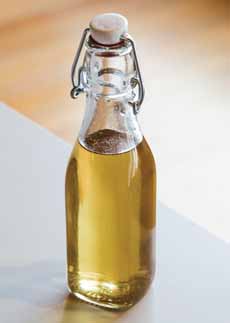
[1] While you can purchase simple syrup in a variety of flavors, you can also make it at home just by mixing sugar and water (photo © Liquor.com).
Simple Syrup Ingredients
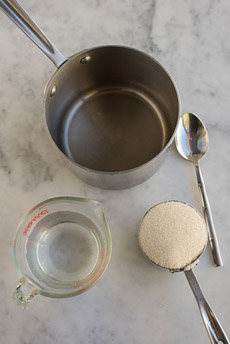
[2] If you don’t want to buy it, it’s simple to make simple syrup (photo © Zulka Sugar).
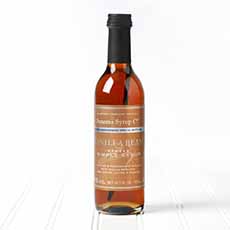

[3] Simple syrup can be infused with just about any flavor. Here, a vanilla bean is added to the bottle (photos #2 and #3 © Sonoma Syrup Co.).


[4] Add a hint of ginger, lavender, or your favorite fruit flavor to a cocktail. Here, Ginger Infused Simple Syrup from Sonoma Syrup Co.

iced-tea-230
[5] Tired of stirring and stirring your iced tea or iced coffee until the sugar dissolves? Simple syrup dissolves in a flash. That’s why it’s used for cold drinks by mixologists (photo © Kelly Cline | iStock Photo).


Granulated sugar does not dissolve easily in cold beverages. Simple syrup (also called bar syrup, sugar syrup or gomme, the French word for gum) makes it easy to add sweetness to drinks—cocktails, iced tea or iced coffee.

Some people use superfine sugar (check out this nifty flip-top package). Others buy a bottle of premade simple syrup. (There’s also a sugar-free version.)

Or, you can easily make simple syrup—and keep it on hand.

You can also flavor simple syrup with anything from chile and cinnamon to lavender and mint (there’s a Ginger Simple Syrup recipe below that you can use as a template for other flavors).

Simple syrup is made on the stove top, stirring sugar and hot water until they combine into a syrup. But you can try the “shaking” technique below: no stove necessary.

Both techniques follow “Uses For Simple Syrup.” But first:
 
> The different types of sugars and syrups.

> A brief history of sugar.
 
 
USES FOR SIMPLE SYRUP

  • Baked goods—add moisture and flavorful by brushing onto the surface.
  • Cereal, stirred into oatmeal or other porridge.
  • Cocktails.
  • Cold drinks, including iced tea and iced coffee.
  • Fruit—baked apples, marinate fruit that isn’t sweet enough.
  • Hot drinks, if you have a flavored simple syrup and want to use it instead of plain sugar.
  • Ice cream and cream sodas–drizzle flavored simple syrup.
  •  
    Simple syrup is easy to make and can be customized in many ways. The 1:1 ratio of sugar to water prevents bacteria growth and allows the syrup to store at room temperature for months
     
     
    RECIPE #1: SIMPLE SYRUP, CLASSIC TECHNIQUE

    Ingredients

  • 2 parts sugar
  • 1 part water
  • Optional flavor
  •  
    Preparation

    1. BRING the water to a boil. Dissolve the sugar into the boiling water, stirring constantly until dissolved completely. (Do not allow the syrup to boil for too long or it will be too thick.)

    2. REMOVE the pan from the heat. Allow to cool completely and thicken.

    3. ADD optional flavor. For vanilla simple syrup, add 1-1/2 teaspoons pure vanilla extract to cooled sugar syrup. If you want to infuse fresh herbs (basil, mint, rosemary), simmer them in the hot water for 20 minutes and remove before mixing the water with the sugar.

    4. STORE in an airtight container in the fridge or the pantry.
     
     
    RECIPE #2: INFUSED SIMPLE SYRUP WITH YOUR FLAVOR OF CHOICE

    This recipe employs the old-school, cook-it-on-the-stove approach to making simple syrup. Enjoy it in a cocktail or in hot or iced tea.

    Instead of the ginger specified here, you can infuse herbs like lavender and mint; fruits like berries, citrus and pomegranate; and holiday spices like pumpkin pie spice blends and vanilla bean.

    Ingredients

  • 1/2 cup fresh ginger, thinly sliced, or other ingredient (see previous sentence)
  • 1/2 cup sugar
  • 1-1/2 cups water
  •  
    Preparation

    1. COMBINE ginger, sugar and water in a saucepan and bring to a boil, stirring to dissolve the sugar.

    2. REMOVE the pan from the heat and set aside to cool. Strain the syrup and refrigerate in an airtight container.

    Boozy Variation: For “adult iced tea” or other cold drinks, add 1.5 ounces bourbon or whiskey.

    Variation: Shaken Technique. This technique makes plain simple syrup, but not flavored syrups, which require simmering the flavor item in hot water.

    1. FILL. Using the proportion of 2 parts sugar to three parts water, fill a bottle almost halfway with sugar; add hot water.

    2. SHAKE. Cover the top and shake well. Store in a cool, dry place or in the fridge.
     
     
    WHY DO THE PROPORTIONS VARY?

    Some bartenders use a 1:1 ratio of sugar and water for a thicker syrup. Others prefer a thinner syrup.

    Play around with the proportions until you hit on what’s right for you.


    CHECK OUT WHAT’S HAPPENING ON OUR HOME PAGE, THENIBBLE.COM.


    Comments off

    PRESIDENT’S DAY: Dine & Drink With George Washington & Abraham Lincoln

    steak-and-kidney-pie-chatterboxenterprises-230
    You won’t often find steak and kidney pie in
    the U.S. these days. But if you want to eat
    one of George Washington’s favorites, here’s
    the recipe. Recipe and photo courtesy
    Chatterbox Enterprises.
     

    Some of us remember life before Presidents Day. Until 1971, Abraham Lincoln’s birthday was a state holiday, celebrated in many states on the his birthday—Lincoln was born February 12, 1809 in Kentucky in that iconic one-room cabin in Hardin County, Kentucky. It was a bank, government and school holiday, not to mention a day of retail sales specials.

    George Washington had a separate holiday on his birthday, February 22nd (he was born on February 22, 1732 in Westmoreland County, Virginia, to a wealthy planter family).

    In 1971, both presidential holidays were shifted to the third Monday in February and combined as Presidents Day, to allow federal employees a three-day weekend. The private sector followed. Adieu, Lincoln’s Birthday; and yours too, George Washington’s Birthday. You holidays are now part of a vague Presidents Day celebration.

    > More favorite foods of the presidents.
     
     
    DINING WITH GEORGE WASHINGTON

    The planter and surveyor who would become the commander-in-chief of the Continental Army and one of the Founding Fathers of the United States. Washington was known for keeping a bountiful table. He was fond of fine food and enjoyed fresh fish almost daily (often for breakfast with hoe cakes).

     
    Steak and kidney pie, mashed sweet potatoes and string beans almondine were a popular dinner, served with pickles and other condiments, particularly mushroom catsup (tomato catsup came much later—see the history of ketchup). Favorite desserts included tipsy cake (trifle), Martha Washington’s whiskey cake and yes, cherry pie.

    What did Washington drink with his meals?

    Beer was a favorite drink of George Washington, as it was for many people living in 18th century America and Europe. Before municipal water supplies, the water supply was unreliable, with the water from lakes, rivers and wells carrying harmful pathogens. Even young children drank beer.

    Washington was particularly fond of porter, a dark ale, but Madiera and wine were usually present at the table as well. Beer was brewed at Mount Vernon, and hops were grown there. In addition to grain-based beer, persimmon beer and pumpkin beer were brewed in season.

    Washington’s notebooks include a recipe for small beer, which was a weak beer (lower alcohol content) consumed by servants and children. The full-alcohol beer was called strong beer.


    WHAT ABOUT THE HARD STUFF?

    In the era before cocktails*, punch was the way to combine spirits, sugar, lemon juice, spices and other ingredients.

    Washington also enjoyed eggnog. His own recipe included brandy, rum and rye, the latter of which was made on the estate. A little-known fact about the Father Of Our Country: At the time of his death, he was the country’s largest producer of rye whiskey. The restored still at Mount Vernon continues to produce un-aged rye whiskey using Washington’s original recipe.
     
    So the choice is yours: Toast to our first president with beer, eggnog, punch or a glass of rye.
     
    Thanks to MountVernon.org for this information. You can read the full article here. And if you’re in the DC area, do plan a visit to this wonderful heritage site.

      oyster-stew-wmmb-230
    Dining with Lincoln? You might be served a bowl of oyster stew. Photo courtesy Wisconsin Milk Marketing Board.
     

    DINING WITH ABRAHAM LINCOLN

    Given the choice of a good meal with George Washington or Abraham Lincoln, opt for Washington.

    Abraham Lincoln’s father, Thomas, was an illiterate farmer. Meals in the family’s one-room cabin comprised simple farm fare.

    Thus, Lincoln was not bred to be a connoisseur of fine food like Washington. His colleagues on the law circuit noted his indifference to the boardinghouse fare. As president, focused on work, he hardly remembered to eat; often, his sustenance was a nibble of apples, nuts, cheese and crackers. Chicken fricassee with biscuits and oyster stew were favorites when he took the time to for a formal meal.

    Lincoln’s favorite beverage was water. He didn’t drink alcohol and it was seldom served at the White House. He did enjoy coffee, perhaps for the energy as much as the flavor.

    A glass of water is fine, but we’d rather have a crisp white wine with our fruit and cheese.

    He also enjoyed oysters.

     
    ____________

    *Cocktails as we know them date back to the early 1800s. Here’s a brief history of cocktails and some retro cocktails.


    CHECK OUT WHAT’S HAPPENING ON OUR HOME PAGE, THENIBBLE.COM.


    Comments off

    RECIPE: Almond Butter Cookies (Chinese Almond Cookies)

    almond_butter_cookies-almondboard-230
    [1] Almond butter cookies (photo © The Almond Board).

    almonds-bowl-niederegger-230
    [2] We buy jumbo packages of raw almonds at Costco (photo © Niederegger Marzipan).


    [3] These are green almonds, harvested from the tree before shelling and roasting. They get their name from the fuzzy green coat. They can be eaten whole, and taste crunchy and tart, with a hint at unripe peaches. When the green outer layer is removed, the young almonds are delicate, milky, and subtly floral and grassy (photo © Sid Wainer & Son).


    [4] Once Again Almond Butter is organic and non-GMO (photo © Once Again Nut Butter).

    Chinese Almond Cookies
    [5] How about making Chinese almond cookies? These are much better than the ones you can buy. Here’s the recipe (photo © Andrea Skjold | Dreamstime).


    February 16th is National Almond Day. Almonds are great for snacking, roasted or raw; and are so flavorful they don’t need added salt or salted seasonings.

    Enjoy some almond trivia, then scroll down for a butter-enhanced recipe for Chinese Almond Cookies that also includes almond butter. For Americans, this is a delicious improvement on the traditional Chinatown recipe made with oil (which we also like, but trust us—these are better).

    Below:

    > The almond butter cookie recipe.

    > The history of almonds.

    > Almond nutrition.
     
     
    Elsewhere on The Nibble:

    > The year’s 8+ almond holidays.

    > The year’s 38 nut holidays.

    > 20 ways to enjoy almonds.

    > Almond health benefits.

    > More almond recipes.

    > Amaretto, Italy’s famous almond liqueur.
     
     
    RECIPE: ALMOND BUTTER COOKIES

    These almond butter cookies are a whole-wheat and almond butter version of the classic Chinese almond cookie. The recipe was developed by Ellie Krieger, author of So Easy: Luscious Healthy Recipes for Every Meal of the Week.

    You can find more almond-based recipes at the Almond Board of California’s website..
     
    Ingredients For 36 Cookies

  • Cooking spray
  • 3/4 cup all-purpose flour
  • 1/2 cup whole wheat pastry flour, or regular whole wheat flour
  • 3/4 teaspoon salt
  • 1 teaspoon baking soda
  • 1/4 cup unsalted butter, softened
  • 3/4 cup smooth, unsalted almond butter
  • 1/3 cup packed light brown sugar
  • 1/3 cup granulated sugar
  • 1/2 teaspoon vanilla extract
  • 1 egg
  • 36 raw whole almonds (a heaping 1/4 cup)
  •  
    Preparation

    1. PREHEAT the oven to 375°F. Spray two baking sheets with cooking spray.

    2. WHISK together the flours, salt, and baking soda in a large bowl. In another large bowl beat together the butter, almond butter, and sugars until fluffy.

    3. ADD the vanilla and egg and beat until well combined. Gradually stir in the flour mixture, blending well.

    4. SHAPE the dough into 3/4 inch balls, and place on the baking sheets. Place an almond in center of each cookie and press down lightly. Bake for 10-12 minutes, until lightly browned. Cool on a wire rack.
     
     
    ALMOND HISTORY & TRIVIA

  • Historians generally agree that almonds and dates, both mentioned in the Old Testament of the Bible, were among the earliest cultivated foods. The only other nut mentioned in the Bible (Genesis 43:11) is the pistachio nut.
  • Between 600 and 900 C.E., almond trees began to flourish in the Mediterranean, in Greece, Israel, Spain and Morocco. Because of their portability, explorers consumed them while traveling the Silk Road between the Mediterranean region and China.
  • Almonds are actually stone fruits related to cherries, plums and peaches. In this case, it’s the “stone” that is eaten. The botanical name of the almond tree is Prunus amygdalus.
  • California produces 80% of the world’s supply of almonds. The world’s largest almond factory is in Sacramento; it processes 2 million pounds of almonds a day. California produced 998 million pounds of almonds in 2004. The largest crop on record was in 2002: 1.084 billion pounds.
  • It takes more than 1.2 million beehives to pollinate California’s almond crop, which spans more than 550,000 acres.
  • Chocolate manufacturers use 40% of the almond crop (and 20% of the world’s peanuts).
  • It takes 1,000 pounds of almonds to make 1 pint of almond oil.
  • There are 5,639 people in the U.S. listed on Whitepages.com with the last name “Almond” (source: Mark Morton, “Gastronomica,” Fall 2010).
  • The Jordan almond, a large plump variety of almonds from Malaga, Spain, is considered to be the finest cultivated almond. It is frequently sold with a hard-colored sugar coating.
  •  
     
    ALMOND NUTRITION

  • Almonds are the most nutrient-dense tree nut. One ounce of almonds (20-25 almonds) contains 160 calories and only 1 gram of saturated fat and no cholesterol. The unsaturated fat in almonds is “good” fat, with 13 grams per one-ounce serving.
  • Almonds are also an excellent source of vitamin E and magnesium, and a good source of protein and potassium.
  • Almonds are the highest in protein and fiber of all the tree nuts.
  • The protein in almonds is more like the proteins in the human breast milk of all the seeds and nuts, which is why it is the choice of the Canadian College of Naturopathic Medicine as the base for its baby formula.
  • Almonds are known for high satiety, almonds provide the perfect pre-workout boost, are easy to keep in your office drawer stash, for snacking alone or with yogurt or fruit.
  •  
    Almond Chocolate Chip Cookies
    [6] Delicious and gluten free: almond chocolate chip cookies with flaky sea salt. Here’s the recipe (photo © King Arthur Baking).


    CHECK OUT WHAT’S HAPPENING ON OUR HOME PAGE, THENIBBLE.COM.


    Comments off

    Red Lentil Soup Recipe, Other Greek Yogurt Delights & Aleppo Pepper

    Choabani
    [1] Red lentil soup is golden and glorious, with a sprinkle of Aleppo pepper. The recipe is below (photo © Marcus Nilsson | Chobani).

    Red Lentil Soup With  Large Crouton
    [2] Creamy red lentil and carrot soup. Here’s the recipe. Find more lentil recipes at Lentils.org (photos #2, #3, and #7 © Saskatchewan Pulse Growers).

    Red, Brown, & Green Lentils Uncooked
    [3] Red, brown, and green lentils.

    Chobani Lowfat Yogurt
    [4] Chobani lowfat yogurt (photo © Chobani).

    Crushed Aleppo Pepper
    [5] Crushed Aleppo pepper is also known as halaby pepper and other names† (they’re chiles). They’re a spicier and more flavorful substitute for crushed red pepper flakes, a cross in taste between cumin and cayenne in taste. Sprinkle on chili, dips, eggs, pasta/pizza, salads, anywhere you’d like a touch of heat (photo © Savory Spice Shop).

    Lentils Growing In Field
    [6] Lentils growing in the field (photo © Island Vita | CC BY 4.0 License).

    Harvesting Lentils In The Field
    [7] Harvesting lentils.


    What do you do after your start-up Greek-style yogurt brand becomes the number one brand in the country?

    You continue to share your love of your homeland’s foods by opening a café.

    We went to the opening media reception, tasted some scrumptious recipes, and brought back our favorite: a delicious, nutritious Red Lentil & Yogurt Soup. The star on the menu, this red lentil soup is easy to make, and so luscious and comforting that you’ll be making it again and again.

    Thanks to Chobani for sharing the recipe. The recipe follows, but first:

    > The history of soup.

    > The different types of soup: a photo glossary.

    > The year’s 15 soup holidays.

    > The history of yogurt and the different types of yogurt.

    > The year’s yogurt holidays are below.

    > Also below: What is Aleppo pepper?

    > The different types of peppercorns: a photo glossary.

    > The different types of chile peppers: a photo glossary.
     
     
    RECIPE: CHOBANI RED LENTIL SOUP

    Red lentils (which range in color from yellow to orange to red) are sweeter than the green lentils typically used in American lentil soup, and the brown lentils used elsewhere.

    Ingredients

  • 3 cups lentils
  • 1 cup chopped carrots
  • 1 cup chopped onions
  • 1-1/2 tablespoon salt
  • Pinch Aleppo pepper (see substitution in *footnote)
  • 4 quarts water
  • 4 tablespoon butter
  • 1 cup plain 2% Chobani Greek yogurt
  •  
    Preparation

    1. PLACE lentils in a strainer and rinse under cold water.

    2. COMBINE all ingredients in a large pot and bring to a boil. Reduce to a simmer and simmer for 25 minutes.

    3. ADD yogurt. Use an immersion blender to blend until smooth.

    4. COOL in an ice bath and then refrigerate. Reheat before serving. Blend with immersion blender after reheating to eliminate lumps and smooth out soup.

    5. MAKE garnish: Melt ¼ pound butter in a small sauce pan until foaming. Add ½ teaspoon Aleppo pepper and remove from heat. Drizzle ½ teaspoon (for an 8-ounce portion) or ¾ teaspoon (for a 12-ounce portion). Keep butter warm and garnish with a spoon of Aleppo pepper butter before serving.
     
     
    WHAT IS ALEPPO PEPPER?

    Also called halab pepper, halaby pepper, Near Eastern pepper, and Syrian red pepper flakes, Aleppo pepper hales from Turkey and northern Syria. The town of Aleppo, a famous food mecca, is located in Syria near the Turkish border.

    Aleppo pepper is used to add heat and pungency to Middle Eastern dishes. It is not a berry, like peppercorns, but a moderately hot red chile that is sun-dried, seeded and crushed.

    (Ever since someone in the crew of Christopher Columbus came across a chile in the New World and called it “pepper,” the confusion has endured. Here’s the scoop on pepper, here’s the story on chiles.)

    The Aleppo chile’s high oil content delivers a deep, rich aroma, somewhere between coffee and smoke; it has been compared to the ancho chile.

    It has fruity notes with mild, cumin-like undertones. It is much more flavorful, complex, and less harsh than—that generic pizza staple, crushed red pepper**—and it can be used anywhere generic pepper flakes are called for.
     
     
    Uses For Aleppo Pepper

    The moderate heat of Aleppo pepper is used:

  • With proteins: fish stews, roast chicken, grilled meats (including kabobs).
  • In veggie dishes: rice pilaf, simmered beans and lentils, to add kick to green salads (it’s delicious with yogurt and cucumbers or melon and mint salad).
  • As an attractive red garnish: on deviled eggs (or with any eggs), on potato, chicken, tuna and pasta salads.
  • In any Mediterranean dish: tagines and couscous, for example.
  • In classic American dishes: chili, pizza, soup, stews.
  • As an everyday seasoning: add the flakes to olive oil to infuse for a vinaigrette, marinade, rub, or for sautéing.
  •  
    If you can’t find Aleppo pepper locally, you can buy it online. When you empty your jar of crushed red pepper flakes, replace it with Aleppo.
     
     
    THE YEAR’S 10 YOGURT HOLIDAYS

  • February 6: International Frozen Yogurt Day
  • February 22: National Tzatziki Day
  • June: National Frozen Yogurt Month
  • June, 1st Full Week: National Frozen Yogurt Week
  • June, 1st Sunday: National Frozen Yogurt Day
  • June 18: National Kefir Day
  • June 21: National Smoothie Day
  • June 20: National Plain Yogurt Day
  • October 3: Global Smoothie Day
  • November 9: National Greek Yogurt Day
  •  
     
    _________________

    *A substitute for Aleppo pepper is 4 parts sweet paprika and 1 part cayenne. See the section below on Aleppo pepper.

    Crushed red pepper flakes sold in the U.S. are typically made from cayenne chiles, which range from 30,000 to 50,000 Scoville Heat Units. To achieve a consistency of flavor and heat, commercial producers may blend in other red chile peppers, such as red jalapeños or serranos.


    CHECK OUT WHAT’S HAPPENING ON OUR HOME PAGE, THENIBBLE.COM.


    Comments off

    TIP OF THE DAY: Sneak Veggies Into The Pasta

    ravioli-brussels-fennel-redonion-giovannirana-230
    Brussels sprouts and fennel accent
    mushroom ravioli. Photo courtesy Giovanni
    Rana Pasta.
      Just about everyone likes to eat a big plate of pasta; a smaller percentage of us enjoy a big plate of vegetables. Pasta Primavera, “spring pasta,” with a complement of spring vegetables like asparagus and zucchini, has long been a way of combining both. Often, a fun shape—bowtie or corkscrew pasta is used.

    We’re still some weeks away from spring asparagus, so how about “Pasta Inverno”—a pasta recipe with winter vegetables. Think bell peppers, carrots, mushrooms, onion, winter squash and other seasonal choices.

    The winter-hearty dish below from Giovanni Rana Pasta unites their refrigerated mushroom ravioli with winter veggies that don’t naturally come to mind when you think pasta: Brussels sprouts and fennel. Try—it’s delicious.

    The second time you make it, add an even larger percentage of vegetables, with the goal of achieving a 1:1 ratio of pasta and veggies. And of course, serve with a big side salad. That’s how to get everyone to eat more vegetables!

     
    RECIPE: MUSHROOM RAVIOLI WITH ROASTED WINTER VEGETABLES

    Ingredients For 4 Servings

  • 1 package (12 ounces) refrigerated mushroom ravioli
  • 16 ounces fresh Brussels sprouts, dark green outer leaves removed
  • 1 small bulb fennel, stalks removed and cored
  • 1 small red onion or red bell pepper
  • 6 cloves garlic, slightly crushed
  • 4 whole sprigs fresh thyme
  • 3 tablespoons extra virgin olive oil
  • Kosher salt & freshly ground black pepper
  • 3 tablespoons unsalted butter
  •  

    Preparation

    1. PREHEAT oven to 425°F. Cut off the stem end of the Brussels sprouts and cut into quarters lengthwise. Place in a mixing bowl.

    2. SLICE fennel into 1/8” pieces and add to bowl. Cut both ends off the onion, peel and cut in half. Then quarter each onion half, for a total of 8 chunks. Separate the onion layers and add to the bowl, along with the garlic cloves.

    3. ADD enough extra virgin olive oil to lightly coat all pieces (about 3 tablespoons). Lay the vegetables on a sheet pan in one layer and roast without flipping for 15 minutes. Add the whole sprigs of fresh thyme and flip all pieces.

    4. CONTINUE roasting vegetables until they are tender and well browned, flipping every 5-10 minutes; about 35 minutes total. Remove garlic cloves and sprigs of thyme. Season vegetables to taste with kosher salt and freshly ground black pepper. While the vegetables are roasting…

      catskill-brussels-sprouts-230
    Who’d have thought up pairing Brussels sprouts with mushroom ravioli. It’s a yummy recipe. Photo courtesy Burpee.
     

    5. MELT butter in a sauté pan over medium heat. Prepare ravioli according to package instructions. Drain ravioli, reserving ¼ cup of cooking water. Toss ravioli in the butter along with roasted vegetables. If necessary, add enough cooking water to achieve a sauce-like consistency. Plate ravioli and vegetables together and serve.


    Comments off

    The Nibble Webzine Of Food Adventures
    RSS
    Follow by Email


    © Copyright 2005-2026 Lifestyle Direct, Inc. All rights reserved. All images are copyrighted to their respective owners.