How To Cook A Perfect Prime Rib For National Prime Rib Day
|
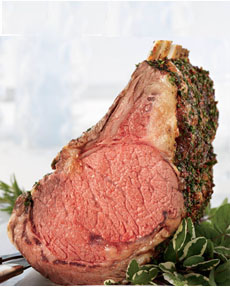
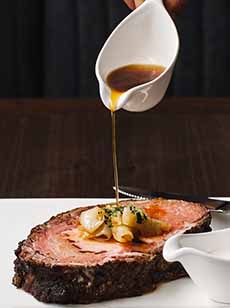
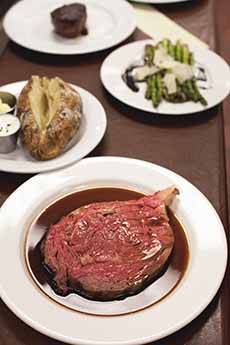
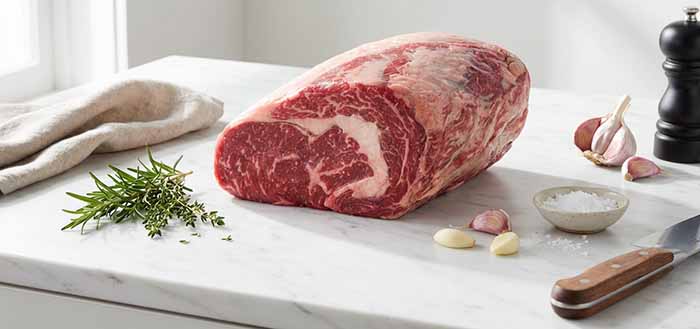
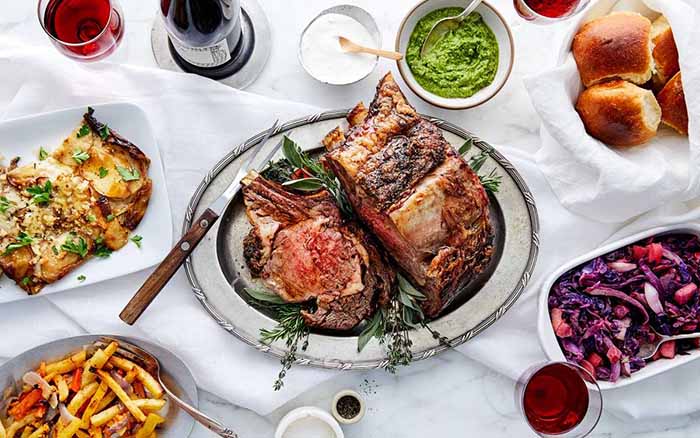
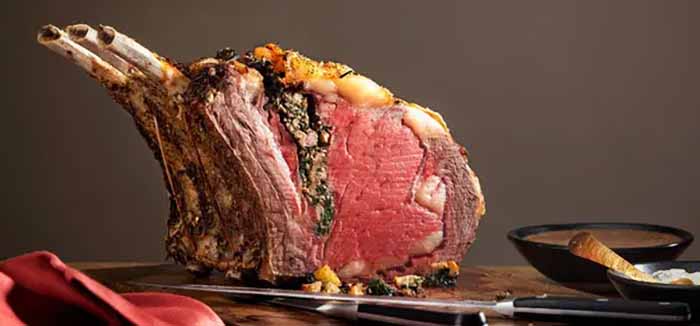
Many families enjoy prime rib for the holidays. At our mother’s house, a bone-in prime rib (a.k.a. standing rib roast) was always on the holiday table. Jan Birnbaum, Executive Chef at Epic Steak, a steakhouse on the San Francisco waterfront (great view of the Bay Bridge!), shares this advice so that you, too can cook the perfect prime rib. April 27th is National Prime Rib Day. Below: Elsewhere on The Nibble: > Do you know your cuts of beef? See them all in our Beef Glossary. > The year’s 25+ beef holidays. Frenched Ask for an 8-bone (approximately 14-18 pounds), bone-in beef rib export*, bones frenched 2 inches. This will serve about 15-20 people. (If you’re having fewer guests, discuss your needs with the butcher—or prepare for delicious roast beef sandwiches from the leftovers.) Fat Cap Ask the butcher to cut the fat cap so that it has a half-fat layer that has been cut and lifted, and only the bottom is attached to the rib. This attached fat cap will provide a perfect pocket in which to pack the aromatics. Aromatics Prepare the aromatics: In a mixing bowl, toss the following ingredients until combined: 1. PLACE the meat into the oven with the bones facing front and the meaty part of the rib facing the back of the oven. Cook for 35 minutes. 2. LOWER HEAT. Turn the oven down to 350°F and cook for 40 more minutes. 3. TEMPERATURE. Make the temperature of the meat. For accuracy, use a quick read thermometer or digital thermometer and stick the thermometer into the thickest part of the rib. 4. REMOVE PAN. When the thermometer reads 80°F, remove the rib from the oven and allow it to sit out on the counter and rest for at least 35 minutes. 5. SLICE. Move the meat to a cutting board and cut the rack of bones as close to the meat as possible to remove them from the rib. 6. SEPARATE. Separate the rack into 8 individual rib bones, leaving the meat on the end of the bone. Discard the aromatics and cut the fat cap off. 7. Place the rib onto a roasting pan with a rack with the side of the ribs that had the bones. 8. VEGGIES. Add washed vegetables to the pan: blanched creamer potatoes, carrots, baby turnips, or another favorite. 9. OVEN. Return the rib to the 350°F oven and cook until a thermometer reads 115°-125° degrees for medium-rare, 130°-135° degrees for medium, and 145° for medium-well. 1. REST. Allow the cooked meat to rest for about 20 minutes. 2. SLICE. lice the rib into slices of desired thickness. Chef Jan recommends cuts of 1-1.5 inches thick (this will yield a 14-ounce slice and will provide 12-14 cuts.) 3. SERVE. Plate with some of the vegetables. You can deglaze the pan juices for gravy (“au jus”). |
|
|
 [6] The rib portion is in bright orange (photo courtesy Hirsch’s Meats | Abacus). WHAT IS PRIME RIB? The “prime” in “prime rib” prime is mostly a traditional/marketing term meaning “the best.” It’s not a precise anatomical label—and it often refers to one (or both) of these: 1. It comes from the rib primal (the “prime” part—more about that below.) Prime rib is a roast cut from the rib section of the beef carcass (roughly 6–12 ribs). It’s naturally tender because, like the tenderloin, the muscles in that area do less work than, say, the shoulder or round. Prime rib is also sold as: A common misconception is that “prime rib” automatically means USDA Prime, the top quality grade of beef (compared to USDA Choice or USDA Select). The grade is based largely on marbling (intramuscular fat) and maturity. However, in the store, a “prime rib” roast can be Prime, Choice, Select, or ungraded—yet still be called “prime rib” because it’s from the rib section and is a classic “best roast” cut. In reality, only about 5% of beef is graded “prime,” and the limited supply is sold at only the finest butcher shops and restaurants. It will be labeled “USDA Prime Rib Roast,” not just “Prime Rib.” In butchery, a “primal” is one of the large sections of the animal that is separated during the first stage of butchering. Think of it as the “master cut.” The reason the Rib is considered one of the most valuable primals is that it sits in the middle of the back where the muscles don’t get much exercise as the animal moves. This makes it extremely tender compared to the Chuck or Round primals. There is a distinction between the “Primal” and the “Sub-Primals” found within te area: The Ribeye Roll is the “heart” of the rib primal, containing the most prized muscles in the cow. It is typically broken down into: The labels on the chart generally correspond to the 9 standard beef primals: These are the grades you will encounter at a butcher shop or supermarket: *The export is butcher lingo for a bone-in prime rib with the cap removed (exported) that is used for a standing rib roast. CHECK OUT WHAT’S HAPPENING ON OUR HOME PAGE, THENIBBLE.COM. |
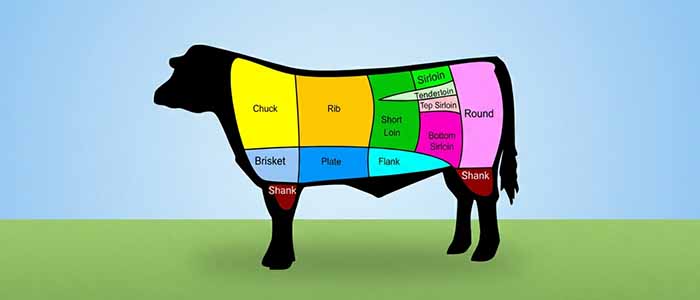
||