TIP OF THE DAY: Dig Into Some Ruby Red Grapefruit
|
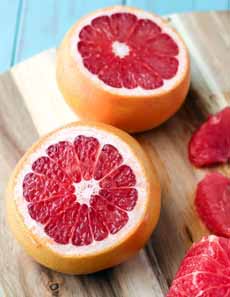
One thing we love about January is arrival of delicious Ruby Red grapefruit. January through March are the peak months for the delicious fruit from Texas. Grapefruit began life as an accidental hybrid of an orange and a pomelo, in 18th-century Barbados. For 100 years or so, the sour fruit was grown as an ornamental tree. But in the late 19th century, growers were able to make the fruit sweeter, and it became a major crop in Arizona, California, Florida and Texas. Over the years, grapefruit was bred in many varieties and in three colors: the original white flesh, plus pink and red flesh. Patented in 1929, the first Ruby Red grapefruit was an accidental mutation, a red-fleshed fruit found on a pink grapefruit tree. A hit from the start, sweeter with that alluring red flesh, Ruby Reds are marketed under the names Rio Red, Rio Star and Ruby-Sweet. (Ruby Reds are grown not only in Texas, but in Florida and elsewhere). If you aren’t already a grapefruit lover, head to the store and bring some home. They’re low in calories (42 calories per 3.5 ounces of flesh) and high in the cancer-fighting antioxidant vitamin A; the free-radical-fighting antioxidant vitamin C; the vision-friendly flavonoid antioxidants beta-carotene, lutein, naringenin and xanthin; the dietary fiber pectin (which also lowers cholesterol); and potassium, which counters the negative effects of sodium; among other nutrients such as B vitamins. Red grapefruit also contains the powerful flavonoid antioxidant, lycopene, which protects skin from damage from UV rays and fights macular degeneration and several types of cancer. It’s one of our favorite great-tasting and great-for-you foods. Here are nine pages of grapefruit recipes, from cocktails and appetizers through main courses, sides and desserts. Another favorite preparation: broiled grapefruit. It takes just three minutes: Sprinkle a half grapefruit with brown sugar, place on a cookie sheet and broil for three minutes. It’s ready when the sugar melts and gets crispy—the grapefruit version of crème brûlée. |
|
|
|
WHAT’S THE BEST WAY TO SECTION A GRAPEFRUIT? The video below demonstrates the best techniques to zest, peel, slice and section a grapefruit. A second Tip Of The Day: Don’t throw out the rind until you zest it. Citrus zest, the grated rind, is a terrific flavoring for baked goods and desserts as well as in savory dishes, such as meats and sauces. Add it to your vinaigrette, and toss it with cooked vegetables and olive oil or butter. If you don’t have a zester, here’s the one we use, from Microplane. Grapefruit was named not because it tastes like grapes (it doesn’t), but because the fruits grow on the tree in grape-like clusters.
|
||