THE NIBBLE BLOG: Products, Recipes & Trends In Specialty Foods


Also visit our main website, TheNibble.com.

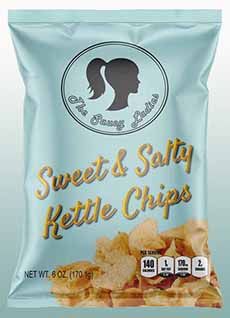
TOP PICK OF THE WEEK: The Saucy Ladies Kettle Chips

The Saucy Ladies have created a line of deliciously crunchy, old-fashioned kettle chips.

First, let’s take a minute to compare kettle chips—the original potato chips—to the modern, continuous-process chips.
 
 
WHAT ARE KETTLE CHIPS?

As their name might suggest, what we now call “small batch” potato chips were originally cooked in a large kettle.

The term “kettle” is relative.

The original kettle is a pot made for boiling or stewing food, that would be found in a home kitchen.

Over time, the kettles were made in larger sizes to feed larger audiences. For commercial production, it became a large vat.

The term cetel appears in Old English before 900 C.E., derived from the Latin catīnus, a food vessel.

Potato chips as we know them—thin slices of potato fried to a crisp crunch—were not invented until 1853—and then not intentionally (the history of potato chips).

To make chips, the potato slices were added to a kettle (vat) of boiling oil on a stove. When the batch was done cooking, the chips were removed and a new batch of potato slices was added.

The potato chips made in a pot on your own stove are also kettle chips.

The continuous fryer was invented in 1929. A continuous stream of potato slices was moved through a current of oil.

This created tremendous economies of scale and drove most of the small kettle cookers out of business. By the 1940s, automation had evolved to change much of America’s artisan food production into mass production, including potato chips.

Here’s more about the difference between kettle chips and continuous fryer chips.

Here’s how continuous processing changed potato chips:

  • In the continuous-processing method, the oil is kept consistently hot.
  • The moisture in the raw potato slices thus evaporates immediately, making the chip light, crispy and finely textured.
  • Old-fashioned batch processing creates the opposite result.
  • Because the temperature of the oil drops when each new batch of potato slices is added to the kettle, the potatoes take slightly longer to cook.
  • This gives the starch in the potatoes time to absorb moisture, resulting in a thicker and sturdier chip, with a deeper, caramelized flavor.
  •  
    We’ll take small-batch kettle chips over continuous fryer chips every time!
     
     
    THE SAUCY LADIES KETTLE CHIPS

    The Saucy Ladies kettle chips took their brand name from the first flavors, which used spices that emulated classic pasta sauces: Arrabbiata, Five Cheeses, Marinara, and Tomato Basil.

    Why? Sharon Straci, the founder of The Saucy Ladies, spent more than two decades creating pasta sauces for commercial use.

    The “sauce” flavors were joined by Old Fashioned With Sea Salt, Sweet & Salty and Truffle, for a total of eight flavors.

    We were pleasantly surprised by Sweet & Salty. The sweetness is caramel flavor—a “salted caramel” potato chip.

    In fact, we’d call it a “dessert” chip.

    Of course, you can nibble on them anytime. But serve them with a sweetened ricotta dip (like cannoli filling) for a sweet treat.
     
     
    GET YOURS!

    The chips are sold in two-ounce and six-ounce bags, and can be purchased on the website in:

  • 2-ounce size, 6 or 30 bags
  • 6-ounce size, 3 or 12 bags
  •  
    You can build your own box, selecting your flavors of choice.

    These are great gifts for chip lovers, too.

    There are also gift certificates.

    Get yours at SaucyLadiesUSA.com.
     
     
    > THE HISTORY OF POTATO CHIPS
     
     
    > THE HISTORY OF THE POTATO


    [1] Kettle chips—the original potato chips—are a bit thicker and a lot crunchier (photo © Mazza | Panther Media).


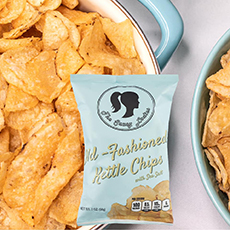
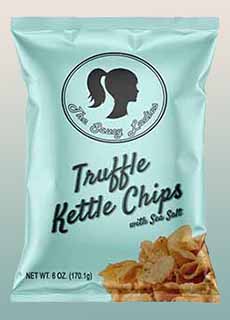
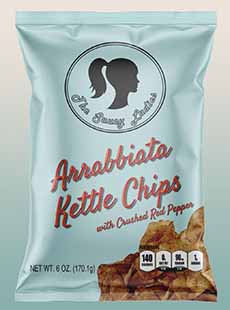
    [2] In addition to the classic, simply-salted “Old Fashioned” kettle chip, there are seven more flavors. All are available in 2-ounce (above) and 6-ounce bags (below—photos #2 through #5 © The Saucy Ladies).


    [3] The Truffle flavor is very lightly truffled—not intense like some other brands we’ve tasted.


    [4] Like heat? Try the Arrabbiata flavor, named after the pasta dish made with crushed red chili flakes.


    [5] Our idea of a “dessert” chip: It’s the chip version of salted caramel.


    Comments off

    FOOD FUN: Popcorn Peanut Brittle Recipe


    [1] Popcorn peanut brittle. The recipe is below (photo © The Popcorn Board).


    [2] Pop your own, or buy it popped and ready to mix in (photo © Hannah Kaminsky | Bittersweet Blog).


    [3] Garlic brittle from Rabbits Pickled Garlic (photo by Elvira Kalviste | © The Nibble).


    [4] Chocolate-dipped peanut brittle (photo © See’s Candies).


    [5] Smoked serrano chile and Georgia pecan brittle at Seviche Restaurant (photo © Seviche | Louisville).


    It isn’t National Popcorn Day (January 19th). It isn’t National Peanut Brittle Day (January 26th), or National Candy Day (November 4th)…

    But it is a day for a bit of food fun.

    Want to make peanut brittle even more fun? Add popcorn!

    You can substitute another nut in the brittle; for example, almonds, macadamias, pecans, or pistachios instead of peanuts.

    Or, use mixed nuts!

    > The history of peanut brittle is below.

    > The history of popcorn.

    > The history of peanuts.

    > The history of candy.

    > A recipe for peanut brittle with Irish whiskey.

    > The year’s 8 peanut holidays.

    > The year’s 60+ candy holidays.
     
     
    RECIPE: POPCORN PEANUT BRITTLE

    Thanks to the National Popcorn Board for the recipe.

    Don’t like peanuts? Substitute almonds, pistachios, or another favorite nut.

    Ingredients For 8 Servings

  • 2 cups granulated sugar
  • 1/2 cup corn syrup
  • 1/4 cup butter
  • 2 teaspoons vanilla extract
  • 1 teaspoon baking soda
  • 1 cup roasted salted peanuts
  • 4 cups popped popcorn, divided
  •  
    Preparation

    1. LINE a large baking sheet with parchment paper; spray it with cooking spray and set aside.

    2. COMBINE the sugar, corn syrup, and 1/2 cup water in a large heavy-bottomed saucepan. Cook over medium heat, stirring until sugar dissolves.

    3. INCREASE the heat to medium-high and bring to a boil, without stirring. Reduce the heat to medium. Cook, without stirring, for about 10 minutes or until golden brown and the candy thermometer reaches the hard-crack stage (300°F to 310°F)*.

    4. CAREFULLY REMOVE the pan from the heat, working quickly. Stir in the butter, vanilla, and baking soda until foamy. Stir in the peanuts and 2 cups of popped popcorn until well coated.

    5. IMMEDIATELY POUR the mixture onto the prepared pan. Using a heatproof spatula, spread the mixture as thinly as possible. Sprinkle with the remaining popcorn, pressing the popcorn into the candy with the spatula.

    6. LET COOL completely. Break into pieces and store in an airtight container.
     

    PEANUT BRITTLE HISTORY

    Different civilizations have been making sugar syrup-based candy for millennia. Cavemen raided beehives for their sweet treats.

    But the first foods that can be called candy were made around 1500 B.C.E. The ancient Egyptians used honey as a base and added dates, figs, nuts and spices [source].

    Sugar candy itself was invented in northern India, the earliest known producer of crystalline sugar, about 250 C.E. [source].

    Fast-forward 2000 years or so: Peanut brittle was invented in the American South.

    The story is that around 1890, a Southern woman created peanut brittle by mistake.

    She was making taffy when she added baking soda instead of cream of tartar. She realized her error; but not wanting to waste the ingredients, she continued to cook it.

    (Elsewhere, a similar accident created fudge instead of taffy.)

    The result: crunchy brittle instead of chewy taffy.

    The term brittle first appeared in print in 1892, along with recipes that included different nuts and seeds.

    Brittle is a mixture of sugar and water heated to the hard crack stage (300°F).

    In parts of the Middle East, brittle is made with pistachios, a local nut; while many Asian countries use their local sesame seeds and peanuts.

    Today, creative cooks have enhanced brittle with everything from smoked nuts to pumpkin seeds, bacon to cayenne to garlic. Some even add maple syrup or dip the brittle in chocolate.

     
    ________________

    *If you don’t have a thermometer, test for the hard-crack stage by dropping a teaspoonful of hot syrup into a cup of cold water. At this stage, the syrup will form hard brittle threads and crack when you bend them.
     

    CHECK OUT WHAT’S HAPPENING ON OUR HOME PAGE, THENIBBLE.COM.


    Comments off

    TIP OF THE DAY: Uses For Tahini Beyond Hummus

    If you like nutty flavors, you’ll like tahini (photo #1): a creamy, nutty paste made from ground sesame seeds. It’s familiar to every fan of hummus (photo #3).

    Most Americans buy tahini to make hummus or baba ghanoush. If you eat halvah, you’ve eaten tahini-based candy.

    Tahini is also the base of tarator sauce (the recipe is below**), a multipurpose Middle Eastern staple used for meats, vegetables and seafood, plus falafel (photo #4), shwarma and other pita sandwiches.

    The history of tahini is below.

    We were inspired by a jar of Once Again Tahini (photo #2) to experiment with uses beyond our favorite Middle Eastern dishes.

    By the way, along with tahini, Once Again makes artisan nut and seed butters, including almond, cashew, peanut, and sunflower butters. The products have just one ingredient: nuts or seeds. The company is employee owned, and dedicated to Fair Trade, Fair Labor and sustainability.

    Below:

    > What is tahini?

    > The history of tahini.

    > Tahini nutrition.

    > 16 ways to use tahini every day.
     
     
    WHAT IS TAHINI?

    Tahini paste is a Middle Eastern staple.

    In most Middle Eastern cultures, the paste is called tahina, from the Arabic tahn, meaning “ground.” Most Western countries use the Greek spelling, tahini.

    Think of tahini as sesame butter. You can substitute it for a no-nuts peanut butter. Some fans eat it from the jar, like PB.

    To make tahini, sometimes the sesame seeds are first roasted, sometimes they are raw. The flavor is an individual preference; although tahini made from raw sesame seeds is lower in fat than tahini made from roasted seeds [source].

    The seeds can be hulled or unhulled. You may prefer the hulled seeds because they have a less bitter taste. However, as with whole grains, the unhulled sesame seeds provide more fiber and other nutrition. When tahini is made from unhulled roasted seeds, it’s darker, more bitter, and called sesame butter [source].
     
    The ground paste can be mixed with a bit of oil for a consistency that’s similar to homemade peanut butter.

    Like homemade peanut butter, which lacks the the emulsifiers that keep big brand PBs from separating, some of the natural oil of the ground seeds rises to the top. Just stir it back in before measuring out what you need.

    Because of tahini’s high oil content, it should be refrigerated after opening to keep it fresher, longer. You can even freeze it.
     
    If you have a cost-effective source of sesame seeds, you can whir them in your food processor to make your own tahini—in just  
     
    TAHINI NUTRITION

    Seeds—chia, flax, hemp, pumpkin, sesame, sunflower—are good for you (more about seed nutrition). Tahini, in particular:

  • Vitamins. Is high in vitamin E and vitamins B1, B2, B3, B5 and B15 (the benefits of B vitamins).
  • Minerals. Is rich in minerals such as calcium, iron, lecithin, magnesium, phosphorus and potassium. If you need more calcium for bone strength, tahini has nine times more calcium than PB.
  • Protein. Tahini has 20% complete protein, making it a higher protein source than most nuts; and it’s easily digestible [source].
  • Fiber & Fatty Acids. Sesame is a good source of both dietary fiber and monounsaturated fats. Tahini is a source of the healthy fatty acids omega-3 and omega-6.
  •  
    > Here’s more on tahini nutrition.
     
     
    BEYOND THE MIDDLE EAST: WAYS TO USE TAHINI

    There’s so much more to do with that bottle or can of tahini paste that is a step apart from Middle Eastern cuisines.

    Use it to make fusion food: the integration of ingredients from one cuisine into another.

    Tahini can be mixed in to other foods, thinned into a sauce, and used plain or augmented in:

  • Dairy, mixed into cottage cheese, crème fraîche, sour cream or yogurt to create new flavors.
  • Dips, e.g. for crudités (try this red pepper dip and this green dip for St. Patrick’s Day; or this dip below††).
  • Dressings: as a binder in chicken salad, potato salad, etc., alone or mixed with mayo.
  • Grains, mixed in or as a garnish.
  • Marinades.
  • Noodles (we use it instead of peanut butter on sesame noodles; for everyday pasta or pasta salad, add lemon and garlic).
  • Nut butter substitute.
  • Salad dressings, for dairy-free creaminess in green salads.
  • Sandwich and burger spreads, especially on chicken, turkey and plant-based burgers
  • Sauces for chicken, fish, grains, lamb, vegetables
  • Soups (add a couple of tablespoons to thicken and enhance flavor)
  • Sweets: brownies, candies (e.g. caramels), cookies, ice cream
  • Toast spread (use it with avocado toast)
  • Vegetables: grilled, steamed (try it in a baked potato)
  • Vinaigrettes—add a splash of tahini or try the recipe below‡‡
  • World cuisines: beyond tahini with American fare, integrate it with other cuisines†
  •  
    Check out these 18 modern recipes with tahini.
     
     
    TAHINI HISTORY

    Sesame seeds grow in the pods of a flowering plant.

    The plant, Sesamum indicum, is the best-known member of the genus that includes other annual or perennial herbs with edible seeds.

    Sesame is native to sub-Saharan Africa and India. The plant is hardy, and can grow in drought conditions [source].

    Today sesame is widely grown in India and Asia. The tiny seeds can be in shades of shades of black, brown and red, depending on the cultivar; but the most common color is a pale ivory [source].

    Tahini was originally a byproduct of sesame oil production, but became a valued food in its own right. Sesame seed contains between 45% to 55% oil, and is notable for its resistance to rancidity [source].

    Sesame seed has been cultivated in Egypt since at least 2 C.E., first as a source of oil.

  • Egypt. The oldest mention of sesame is in a cuneiform document written 4,000 years ago that describes the custom of serving the gods sesame wine.
  • The addition of sesame seeds to food is shown in an ancient Egyptian tomb painting, that depicts a baker adding the seeds to bread dough [source].
  • Greece. The ancient Greeks used sesame seed as medicine as well as food. Hippocrates, the great Greek physician, is said to have recommended sesame for its nutritional value.
  • The Greek historian Herodotus wrote about the cultivation of sesame 3,500 years ago, in the region of the Tigris and Euphrates in Mesopotamia. It was mainly used as a source of oil.
  • India. The ayurvedic medicine of India, which dates back to 3300–1300 B.C.E, recommends sesame seeds to nourish and keep the body healthy. The belief is that the seeds’ high oil content lubricates and protects the tissues.
  • Persia. The concept of sesame paste (tahini), rather than oil, came from Persia, where it was called ardeh*. Tahini next moved to Israel.
  • Baghdad (modern Iraq). Tahini is mentioned as an ingredient of hummus kasa, a recipe transcribed in an anonymous 13th-century Arabic cookbook, Kitab Wasf al-Atima al-Mutada [source].
  •  
     
    A PRICEY SEED

    For centuries, only the wealthy could obtain the sesame seeds to make tahini.

    In some cultures, the seeds were used as currency—much as the hard-to-obtain peppercorns were once used in Europe [source].

    Perhaps that’s why “Open Sesame” was chosen as the magical phrase that opened the treasure cave, in the story of Ali Baba and the Forty Thieves (although the tale was written at the beginning of the 18th century, so it may be a stretch).
     
     
    TAHINI COMES TO THE U.S.

    Tahini began to appear in the U.S. in the 1940’s, in health food stores.

    In 1965, the U.S. passed new immigration reforms, allowing new waves of Arabs, Asians and other nationalities to immigrate [source].

    They brought their cuisine with them, of course. Middle Eastern restaurants and grocers ultimately attracted other Americans into the fold.

    These days you can purchase tahini in most supermarkets. There’s even a tahini dry mix seasoning, made with toasted sesame seeds, black pepper, citric acid, garlic, sea salt and parsley.

    By the way, in the southern U.S., sesame seeds are known as benne, a name brought from Africa by enslaved people‡.

    The word “sesame” that we use is of Semitic origin, reaching the English language in the 15th century via the Greek sesamon and Latin sesamum.
     
     
    ________________

    *In addition to savory tahini/ardeh, in Iran there is halvah ardeh: a sweet, dense paste made with ground sesame or tahini, and occasionally studded with pistachios [source].

    In Indian cuisine, for example, tahini is served with breads, chicken, chickpeas, eggplant, fish, lamb, noodles, etc. It is generally added to make thick and rich gravy based curries [source]. In addition to India, tahini is found in the cuisines of Africa, Israel, Iran, Japan, Turkey, Turkey, even China, Japan, Korea and Vietnam.

    The word benne (also spelled bene, pronounced benny) means sesame in the language of the Bambara peoples of Mali, and among the Wolof of Senegal and Gambia [source].


    Bowl Of Tahini Sauce
    [1] Tahini paste (photo © Alex9500 | Panther Media).


    [2] Once Again has plain unsweetened, unsalted tahini, plus this version with lemon (photo © (photo © Once Again Nut Butters).


    [3] A Greek salad and quinoa bowl with hummus, the latter being the best-known use of tahini in the U.S. Here’s the recipe (photo © Baked Greens).


    [4] Falafel with tahini sauce, its most familiar use in the U.S. after hummus (photo © Alesia Kozik | Pexels).


    [5] Fish in tahini sauce (photo © Jennifer Pallian | Unsplash).

    Grilled Artichokes With Tahini Dressing
    [6] Add tahini or tarator sauce to grilled vegetables (photo © Once Again Nut Butters).

    Peanut Butter Soup
    [7] Tahini as a soup garnish. Here’s the recipe from Cooking Light (photo © Cooking Light).


    [8] Potato salad with a tahini-herb dressing. Here’s the recipe (photo © Blue Diamond).


    [9] Add tahini to mayo, or use by itself, in egg salad, tuna salad, etc. Here’s the recipe for this chicken salad sandwich (photo © Sara Tane | My Recipes).


    [10] Getting fancy at Kindred restaurant: scallops with whipped tahini and artichoke crisps (photo © Kindred Restaurant | Davidson, North Carolina).


    [11z] An elegant watermelon radish and avocado salad with tahini dressing (photo © Matthew Kenney Cuisine).

     
    **To make tarator sauce and add a fresh tang to almost any dish, just combine 1/2 cup tahini, 1/2 cup lemon juice, 4 cloves minced garlic and 1/4 cup chopped parsley. Pulse in a food processor until combined.

    ††For an easy dip, add lemon juice, salt and a dash of pepper or hot sauce to the tahini. A recipe for lemon tahini dressing: Combine 1/4 cup tahini, 3 tablespoons lemon juice, 1 clove pressed garlic, 1 tablespoon chopped cilantro, 4 tablespoons water (or enough to reach desired consistency), and salt and pepper to taste.

    ‡‡An easy tahini dressing recipe: Combine in a blender or food processor 1/2 cup tahini and 1/2 cup olive oil with 2 teaspoons apple cider vinegar, 2 teaspoons of lemon juice, and 2 teaspoons of grated ginger. Pulse and serve.
     

    CHECK OUT WHAT’S HAPPENING ON OUR HOME PAGE, THENIBBLE.COM.


    Comments off


    © Copyright 2005-2026 Lifestyle Direct, Inc. All rights reserved. All images are copyrighted to their respective owners.