THE NIBBLE BLOG: Products, Recipes & Trends In Specialty Foods


Also visit our main website, TheNibble.com.

A Beef Stroganoff Recipe & Other Stroganoffs For National Beef Stroganoff Day

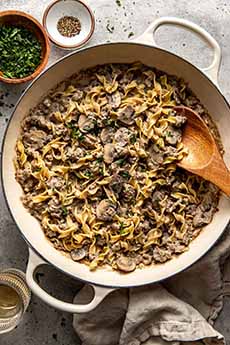
A Bowl Of Beef Stroganoff
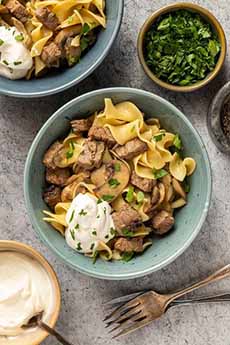
[1] A super-easy version of Beef Stroganoff. The recipe is below (unless otherwise indicated, photos are © Taste Of Home).

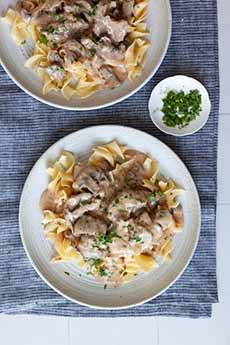
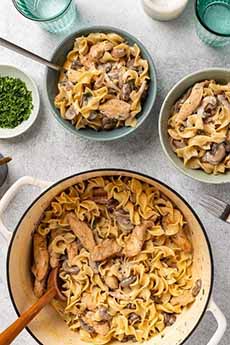
A Pot Beef Stroganoff
[2] In this version, the beef and noodles are mixed together in the pot. Here’s the recipe (photo © The Real Food Dieticians).

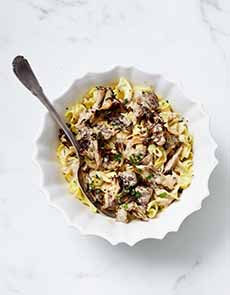
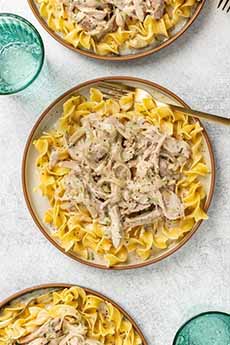
A Bowl of Crockpot Beef Stroganoff
[3] You can make Beef Stroganoff in a crockpot or Instant Pot. Here’s the recipe.

Tenderloin Beef Stroganoff
[4] Very classy: This version is made with beef tenderloin (the cut that yields filet mignon). Here’s the recipe (photo © Bon Appetit).

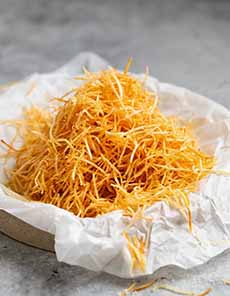
Pommes Paille (Straw Potatoes)
[5] The thinnest fries possible are pommes paille, translated literally as straw potatoes. As you can tell, it’s a lot easier to cook noodles Here’s a recipe (photo © Recipe Tin Eats).

Portrait Of Count Pavel Stroganoff
[6] Count Pavel Stroganoff (1772-1817), portrait by Jean-Laurent-Mosnier, 1808 (age 34). Here’s more about him (Public Domain image).

A Pot Of Chicken Stroganoff
[7] It doesn’t have to be beef. This is Chicken Stroganoff. Here’s the recipe.

Plates Of Turkey Stroganoff
[8] And Turkey Stroganoff (the recipe).

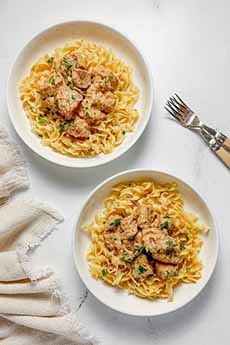
Plates Of Pork Stroganoff
[9] And Pork Stroganoff (the recipe).

A glass of Pinot Noir at a vineyard.
[10] Pinot Noir, a perfect red for Beef Stroganoff (photo © Kym Ellis | Unsplash).

Glass & Carafe Of White Wine
[11] Prefer a white wine? Chardonnay is one of four excellent choices (photo © Zwiesel Glas).

Champagne In Tulip Glasses
[12] Want to feel festive? Open a bottle of Champagne or other sparkling wine (photo © Champagne Bureau).


September 21st is National Beef Stroganoff Day. We can’t believe that in all the years of publishing The Nibble, we’ve never included a recipe. After all, when we graduated from the college dorm long ago, it was one of our go-to recipes for entertaining. It sounded so sophisticated and after all, it came from the kitchens of Russian aristocracy.

Before we get to the recipe we’ll begin with a bit of Stroganoff history (the name is also transliterated from Cyrillic as Stroganov). But first:

> The year’s 25+ beef holidays.

> The different cuts of beef: a photo glossary.

Below:

> The easy recipe.

> More Stroganoff recipes.

> Wine pairings with Beef Stroganoff.

> Popular Russian dishes served in the U.S.

> The short list of Russian food holidays celebrated in the U.S.
 
 
THE HISTORY OF BEEF STROGANOFF

While the exact inventor is debated, the dish likely emerged in the 1850s-1860s from the kitchens of the Stroganoff/Stroganov family‡, influential nobles who were prominent from the 16th through 19th centuries. One account credits French chef Charles Brière, who worked for Count Pavel Aleksandrovich Stroganov (photo #6), with creating the recipe around 1861.

Russian aristocrats would often hire French cooks but retain their palate for the tastes of the homeland. According to the cookbook A Taste of Russia, the original beef Stroganoff recipe derived from a basic French recipe using mustard to season beef. The chef incorporated Russian sour cream and named the creation after his employer.

That original Russian Beef Stroganoff was quite different from most recipes of today. It consisted of thin strips of beef sautéed with mustard and served in a sauce made with bouillon and sour cream—but notably without the mushrooms or onions which were integrated into later recipes.

Plus, the creamy beef was often served alongside fried potato straws (pommes paille—photo #5) rather than over noodles or rice, as is done today.

The dish gained international recognition when it was featured in cookbooks of the late 19th century. A recipe appeared in “A Gift to Young Housewives” by Elena Molokhovets in 1871, helping to establish it in Russian culinary tradition.

The spread of the recipe to other countries accelerated during the 20th century, particularly after Russian émigrés fled during the Revolution and both World Wars, bringing their culinary traditions with them.

American and European cooks began to add mushrooms, onions, and various seasonings that weren’t part of the original recipe.

In the U.S., the dish became especially popular in the 1950s and 1960s, served over egg noodles rather than the difficult-to-make straw potatoes.

Another time-saver was a can of condensed mushroom soup, an ingredient which became a staple in American home recipes to make quick sauces†.

Today, Beef Stroganoff exists in countless variations worldwide, from elegant French-influenced versions to hearty American casseroles made with yes, Campbell’s Cream Of Mushroom Soup.

Personally, we prefer a fine recipe like this one, with a few tablespoons of Cognac or wine. But we took it up a notch with morels instead of button mushrooms.

There’s more about the Stroganoff family in the ‡footnote.
 
 
RECIPE: EASY BEEF STROGANOFF

This is a super-quick recipe that takes shortcuts, yet delivers the basic flavors. Essentially, you save time cooking the beef by purchasing a chunk of cooked roast beef from the deli and cubing it yourself. (You can also use any other meat you have on hand—chicken, pork, etc.).

Plus, the sour cream is not mixed into the sauce but used as a garnish, so people can stir in as much or as little as they like.

There are numerous Stroganoff recipes and variations below if you prefer something more classic.

Ingredients For 2 Servings

If you prefer, you can substitute a pound of ground beef and cook it prior to adding it in step 3.

Prep time is 10 minutes and cook time is 15 minutes.

  • 2-1/2 cups uncooked egg noodles (substitute egg-free)
  • 1/3 cup sliced fresh mushrooms
  • 1/3 cup chopped onion
  • 1 tablespoon olive oil
  • 1/2 to 1 teaspoon minced garlic
  • 1-1/4 cups reduced-sodium beef broth
  • 6 ounces unsliced deli roast beef, cubed
  • 1/2 teaspoon each dried thyme and marjoram
  • 1 tablespoon soy sauce
  • 1/8 teaspoon pepper
  • Garnish: sour cream and minced fresh parsley
  •  
    Preparation

    1. COOK noodles according to package directions.

    2. SAUTÉ the mushrooms, onion, and garlic in oil in a large skillet until tender.

    3. ADD the broth, roast beef, herbs, soy sauce, and pepper and bring to a boil. Reduce the heat and simmer, uncovered, for 10 minutes.

    4. DRAIN the noodles; stir into skillet. Top with sour cream and parsley and pass a bowl of sour cream for those who want more.
     
     
    MORE STROGANOFF RECIPES

  • Barley Risotto & Beef Stroganoff
  • Beef Stroganoff Sandwiches
  • Broccoli & Ham Stroganoff
  • Crockpot Beef Stroganoff (photo #3)
  • Ground Beef Stroganoff (photo #2)
  • Hamburger Stroganoff
  • Meatball Beef Stroganoff
  • Paprika Chicken Stroganoff
  • Pork Stroganoff (photo #9)
  • Pressure Cooker/Instapot Ground Beef Stroganoff
  • Round Steak Stroganoff
  • Sausage Stroganoff
  • Slow Cooker Ground Beef Stroganoff
  • Slow Cooker Chicken Stroganoff (photo #7)
  • Slow Cooker Turkey Stroganoff (photo #8)
  • Spaghetti & Meatballs Stroganoff
  • Stroganoff Soup
  • Tenderloin Beef Stroganoff (photo #4)
  •  
     
    WINE PAIRINGS WITH BEEF STROGANOFF

    The key to pairing wine with Beef Stroganoff is balancing the cream sauce’s richness with wines that have good acidity and complementary rather than competing flavors. Although Beef Stroganoff is rich, its flavors can be delicate.
     
    Red Wine Pairings

  • Côtes du Rhône & Other Rhône Blends: The earthy, herbaceous notes of these wines work wonderfully with mushrooms and providing plenty of body to stand up to the beef.
  • Chianti Classico: Moderate tannins and brings good acidity complements the dish.
  • Pinot Noir: The most elegant choice, its medium body and bright acidity cut through the cream sauce while complementing the beef (photo #10).
  •  
    White Wine Pairings

  • Champagne or Crémant: The bubbles and acidity cleanse the palate beautifully between rich bites (photo #12).
  • Chardonnay (Oaked): These wines have richness that matches the beef. A white Burgundy or quality California Chardonnay works especially well (photo #11).
  • Grüner Veltliner: This classic from Austria provides herbal, peppery notes that complement the dish while its crisp acidity cuts through the richness.
  • Viognier: Often little known in the U.S., this French white delivers aromatic complexity with a fuller body that can handle a rich cream sauce. The floral notes of the grape add to the experience.
  •  
     
    RUSSIAN DISHES IN THE U.S.

    While Beef Stroganoff is the most popular Russian dish embraced by Americans (and vodka the main beverage), other Russian dishes have found fond fans in the U.S.

  • Blini, pancakes originally made with buckwheat. Smaller sizes were served with caviar, smoked fish, or pickled herring, and standard sizes served as wrappers for minced meat, mushrooms, cabbage, onions, or leftover stews. Blini have been Americanized into versions made with regular wheat, and also used with sweet toppings like berries and cream. Like French crêpes, they can be filled with sweet or savory fillings and in Russia, eaten simply with sour cream.
  • Blintzes, are thin crepes that are filled with sweetened cottage cheese or fruit, or savory fillings such as meat or potato.
  • Borscht, beet soup, with versions for summer (typically vegetarian) and winter (typically with beef).
  • Caviar, black roe from sturgeon, red from salmon. In earlier centuries, caviar was cheaper than fish, the same price as butter, and affordable by common people. By the end of the 19th century, as demand grew, it became affordable only by the wealthy.
  • Chicken Kiev (although some claim it’s actually French or Ukrainian), a breaded chicken breast with butter rolled inside so that hot butter sauce spills out when it’s cut.
  • Olivier Salad, a potato salad dressed in mayonnaise, with carrots, peas, hard-boiled eggs, onion, and often, chicken. The most popular salad in Russia and a tradition food for New Year’s Eve. It was created by the Belgian chef Lucien Olivier who owned the Hermitage Restaurant in Moscow in the early 1860s.
  • Pelmeni, small meat-filled dumplings, boiled and served with butter or sour cream.
  • Pirozhki, small, savory or sweet pies with a variety of fillings, and are baked or fried.
  • Russian Dressing, originally a mayonnaise-based sauces that has become more American than Russian in the U.S. as a condiment for salads and sandwiches.
  • Russian Tea Cakes, also called Snowball Cookies, balls of butter, flour, nuts, and powdered sugar, very similar to Mexican Wedding Cookies. They’re popular holiday cookies in the U.S.
  • Schi, cabbage soup, is like borscht made with cabbage rather that beet.
  • Vinegret, a beet and potato salad with carrots, onions, and gherkins, with a festive red color from the beets. The original dressing was vinaigrette, but Americans often use mayonnaise.
  •  
    To round out the buffet, have lots of dark rye bread, sour cream, fresh dill for garnish, pickled gherkins/

    > Here are more dishes popular in modern Russian cuisine.
     
     
    THE YEAR’S RUSSIAN FOOD HOLIDAYS

    It’s a short list. We need someone to petition for more Russian food holidays—at least for blini, blintzes, borscht, and chicken Kiev (anyone can register a food holiday).

  • January 14: Novy God (Russian New Year)
  • July 14: National Caviar Day
  • September 21: National Beef Stroganoff Day
  • October 5: National Vodka Day
  •  
    If you want a reason to have a Russian-themed dinner, there are also:

  • February 2: Ayn Rand Day
  • May 9: Russian Victory Day (over Germany in World War II)
  • June 6: Russian Language Day
  • June 12: Russia Day (commemorates the end of the Soviet Union)
  • July 7: Mark Chagall’s Birthday
  • August 22: Russian Flag Day
  • August 28: Leo Tolstoy’s Birthday
  •  
    As of this writing, Russia isn’t the most popular place to celebrate. But consider all the great Russians who have contributed to the advancement of modern civilization: Sholem Aleichem, Milhail Baryshnikov, Joseph Brodsky, Yul Brynner, Catherine the Great, Marc Chagall, Anton Chekhov, Sergei Diaghilev, Fyodor Dostoevsky, Sergei Eisenstein, Peter Carl Fabergé, Michel Fokine, Nikolai Gogol, Maxim Gorky, Vladimir Horowitz, Mikhail Lermontov, Natalia Makarova, Dmitri Mendeleev, Modest Mussorgsky, Vladimir Nabokov, Vaslav Nijinsky, Rudoph Nureyev, Boris Pasternak, Ivan Pavlov, Anna Pavlova, Peter the Great, Alexander Pushkin, Ayn Rand, Sviatoslav Richter, Nikolai Rimsky-Korsakov, Mstislav Rostropovich, Alexander Scriabin, Dmitri Shostakovich, Aleksandr Solzhenitsyn, Konstantin Stanislavski, Igor Stravinsky, Pyotr Ilyich Tchaikovsky, Leo Tolstoy, Ivan Turgenev, and so many others.

     
    ________________
     
    *Fried potato straws, called pommes paille (“potato straws”) in French cuisine, are extremely thin julienned potatoes that are deep-fried until crispy and golden. They’re much thinner than regular julienne French fries, cut to about 1/8 inch thick or even thinner so that they resemble blades of actual straw. They were typically served alongside the Stroganoff as a bed or on top as a garnish. The crispy texture was a perfect contrast to the creamy sauce and tender beef.

    †Canned soup became a common cooking ingredient, particularly for sauces and casseroles, beginning in the 1940s and 1950s. In the 1930s, companies like Campbell’s which had introduced condensed canned soups in 1897, began publishing recipe booklets and ad showing how their soups could be used in other recipes. By the 1950s, casseroles had become a staple of American home cooking, often using cream of mushroom, cream of chicken, tomato soup, or other condensed soups as a base for sauces.

    In 1955, Dorcas Reilly, a Campbell’s test kitchen employee, created the now-classic green bean casserole using cream of mushroom soup. By the 1960s, canned soup was firmly established as a go-to ingredient for home cooks seeking quick and reliable ways to add flavor to their meals.

    ‡The Stroganoff/Stroganov clan’s fortune was the result of salt mining, trade, and land acquisition. The family’s origin is not known with absolute certainty, but the leading theory, based on genealogical research by historian Andrey Vvedensky, is that they likely descended from affluent Pomor peasants—Russian settlers inhabiting the subarctic White Sea region of Russia. Other sources say they were well-do-do merchants in the Novgorod region of medieval Russia in the late 14th and early 15th centuries [source].

    What we know reliably is that the documented Stroganovf dynasty began with Anikey Fyodorovich Stroganov (1488-1570), who is considered the true founder of the family’s wealth and prominence. He established their salt-mining empire in the Perm region, on the western slopes of the Ural Mountains [source].

    The strategic move to salt mining transformed them from regional merchants into one of Russia’s wealthiest and most influential families. In addition to salt production, wealth came from fur trading, iron mining, and later cultural patronage. By the 16th century, the Stroganovs had become so powerful that they were granted extensive privileges by the Russian tsars, including the right to maintain private armies and govern vast territories in Siberia.

    By the 17th century, the family was part of the Europe-hopping Russian aristocracy—which is why Count Pavel Stroganoff (1774–1817) was born in Paris. The count (1774–1817) was a Lieutenant General and Adjutant General to Alexander I, and a key figure in the Government reforms of Alexander I. He took part in the Napoleonic Wars, commanding an infantry division. Alas, he died of consumption at just 42 years of age. Were it not for Beef Strognoff, he would be a footnote in history.

    They were one of the most prominent noble families in Russian history, their influence lasting until the Russian Revolution. Their grand estate, the Stroganoff Palace in St. Petersburg, and a vast art collection part of the State Russian Museum, which is the world’s largest depository of Russian fine art, is open to visitors.

    The Stroganoff Palace
    [13] The Stroganoff Palace in St. Petersburg. See more photos of the palace here (this photo A.I. generated).


    CHECK OUT WHAT’S HAPPENING ON OUR HOME PAGE, THENIBBLE.COM.


    Comments off

    Pairing Wine With Sushi, Sashimi, Poke, & Any Raw Fish Dish

    We at a lot of sushi, and typically default to sake or beer to accompany it. That’s because we’re fussy about wine, and most neighborhood places around us tend to have generic jug wines.

    But the number of upscale sushi emporia is mushrooming in our town, with omakase dinners from $150 to the Hinoki Counter Experience at Masa, where a seat at the sushi counter costs $950 per person, beverages extra.

    Omakase restaurants tend to have nice wine lists, which begets the question: What wines should you pair with sushi?

    Pairing wine with sushi and sashimi is a fun exercise. The delicacy of raw fish and seafood, the tang of rice vinegar, and the hit of wasabi invite the suggestions that follow.

    But first:

    > The year’s sushi holidays and other Japanese food holidays.

    > Sushi Glossary: a photo glossary of the different types of sushi and sashimi.

    > The history of sushi.

    > The year’s 25+ red wine holidays.

    > The year’s 22+ white wine holidays.

    You can always find beer and sake and a wine options, but some of the wines we see are not as sagely listed as they could be.

    > The year’s 6 sushi holidays plus 10 more Japanese food holidays.
     
     
    WINES FOR SUSHI, SASHIMI, POKE, & OTHER RAW FISH & SEAFOOD DISHES

    Before we drill down into Western wines, we must give sake its due. It’s often called rice wine, although it’s actually a brewed alcoholic like beer (see more in the †footnote). Like beer, it’s brewed in different styles from dry to sweet, and sold in different qualities, from average to excellent.

    Do if you don’t like sake, do try some of the good stuff. It goes with any type of raw fish or seafood dish.

    Onto the wines: Delicate flavors like raw require wines that will not overwhelm—wines that are balanced and refreshing. Here are five categories that work, depending on your palate preference and what you’re consuming.
     
     
    1. Sparkling Wines

  • Champagne, Crémant, or Cava: Bubbles cut through the richness of fatty tuna or salmon. Brut styles work best, but an extra brut or zero dosage are also delicious.
  • Prosecco: Lighter and fruitier, a good choice for rolls with sweeter sauces (e.g., eel sauce).
  •  
    Dry sparkling wines are perfect palate cleansers, so if you like to sip between each different fish, head for the bubbles.
     
    2. Crisp Whites

  • Albariño or Verdejo: Bright, saline-driven whites that echo the freshness of the sea.
  • Chablis or Chardonnay (unoaked): Mineral, clean, and crisp — excellent for sashimi purists.
  • Chenin Blanc: The wine’s bright acidity makes it a great partner for oily, rich, or spicy fish: mackerel, tuna, spicy rolls, and tempura rolls. Drier styles are excellent choices for tuna and tempura, while off-dry or sweet Chenin is delightful with spicy sushi.
  • Pinot Grigio: Pinot Grigio has citrus flavors that will balance any sushi or sashimi dish. It also pairs beautifully with California rolls.
  • Sauvignon Blanc: We especially like those from the Loire (Sancerre, Pouilly-Fumé) or New Zealand. They’re grassy, citrusy, and crisp—perfect for sushi with shiso leaf or vegetable rolls. Also pair it with a shrimp tempura roll.
  •  
     
    3. Aromatic Whites

  • Gewürztraminer: The “exotic” floral and lychee notes of these wines are wonderful to balance bold flavors (spicy rolls, eel) and the saltiness of soy sauce.
  • Grüner Veltliner: If you like a good amount of wasabi, the citrus notes (lemon, lime, grapefruit) and hints of white pepper make Grüner a match.
  • Riesling: Dry to off-dry Riesling is another good choice for spicy rolls and wasabi.
  •  
     
    4. Rosé

  • Provençal Rosé: Versatile dry rosé complements a wide range of fish and seafood—from fatty fish like salmon and tuna, scallops, white-fleshed fish, vegetarian sushi, and California rolls.
  • Sparkling Rosé: The fruitiness of rosé sparklers works nicely with spicy rolls or sauces and other robust flavors.
  •  
     
    5. Light Reds

    Yes, you can have red wine with sushi and sashimi! But select low-tannin wines, high acid wines like the two varietals here, and serve them slightly chilled. Heavy oak, bold tannins, and very high alcohol will overpower delicate fish flavors.

    In general, drink high-acid wines with fish that are heartier, fatty, and buttery like amberjack, eel, mackerel, salmon, tuna (especially toro, fatty tuna belly), yellowtail, even sea urchin (uni).

  • Beaujolais (Gamay): Fruity and low in tannin, the Gamay grape makes wines that work well with sushi. They’re a slam-dunk with grilled eel or mushroom rolls.
  • Pinot Noir: A light-bodied version offers red fruits and acidity. Especially good with tuna and other dark-fleshed fish like mackerel. Interestingly, we also enjoy it with a Philadelphia roll (salmon and cream cheese)
  •  

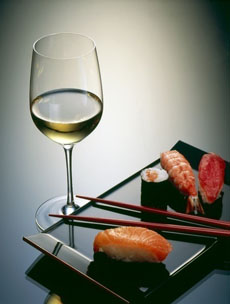
    Wine & Sushi
    [1] Chablis, an unoaked Chardonnay-based wine, or other unoaked Chardonnay, is crisp and universally compatible with sushi (photo © Lognetic | Dreamstime).

    Sushi & White Wine
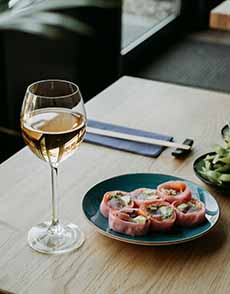
    [2] Sauvignon Blanc with a sakura (cherry blossom) roll, pink beancurd (soy paper) wrapper. This one is vegetarian, with shiitake mushrooms, asparagus, and cucumber (photo © Marta Filipczyk | Unsplash).

    Eel Nigiri Sushi With A Glass Of Prosecco
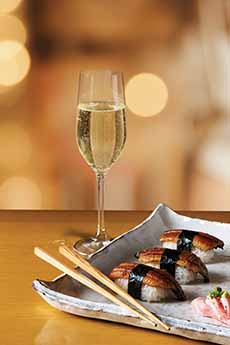
    [3] Sparkling wine is also versatile, but a glass of Prosecco complements sweet sauces, such as eel sauce* (A.I. photo).

    Tuna Poke With Beaujolais
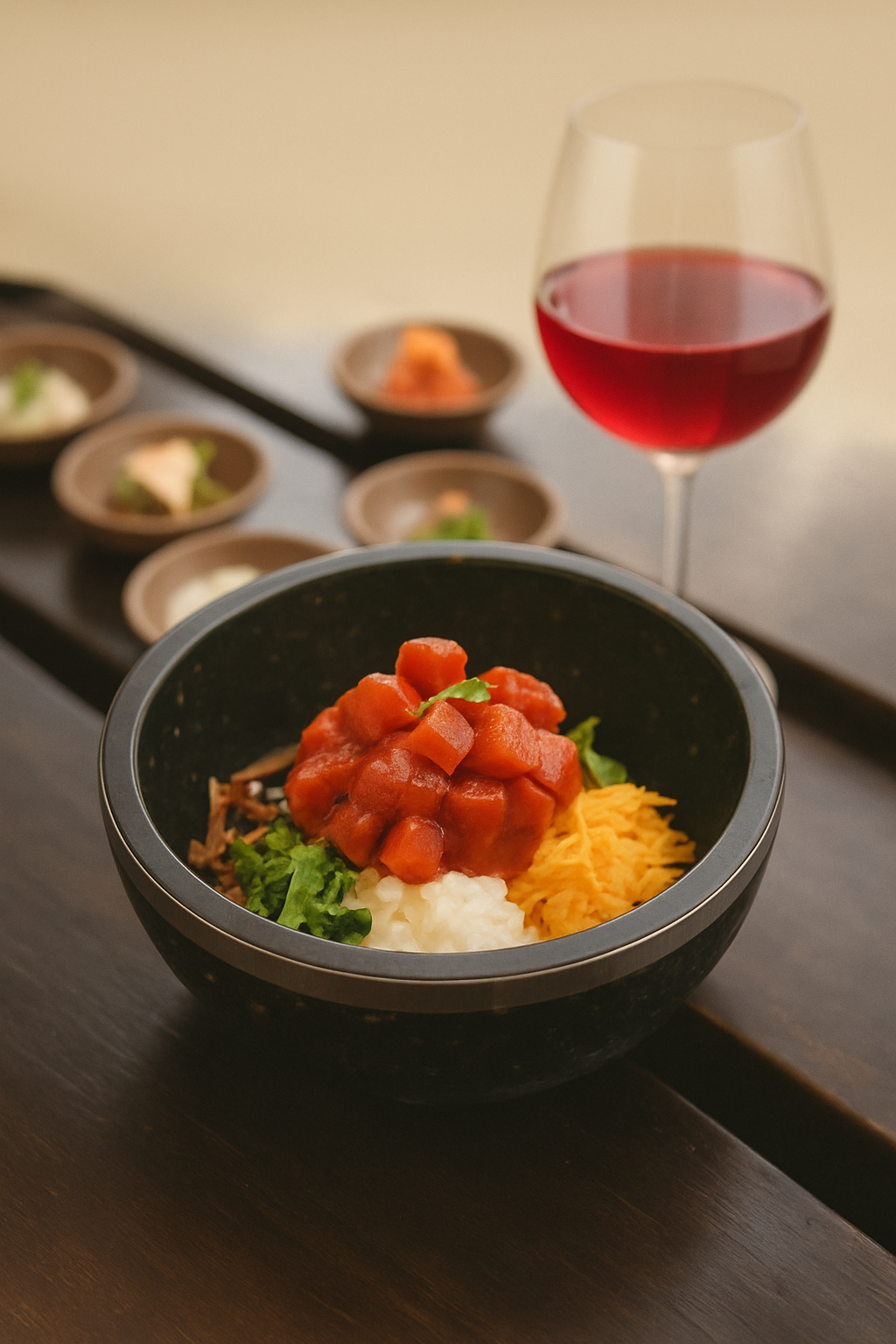
    [4] Red wine enthusiasts: Enjoy Beaujolais with tuna and heartier fish like eel, mackerel, and salmon (photo © Dons Bogam | NYC).

    Mackerel Sashimi With Pinot Noir
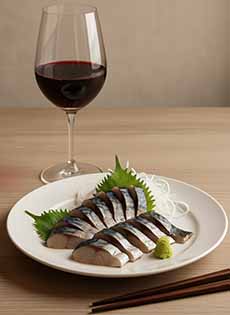
    [5] Mackerel sashimi with Pinot Noir (A.I. photo).

     
    ________________
     
    *Eel sauce, also known as unagi sauce and kabayaki sauce, eel sauce is a thick, sweet-and-savory glaze made from soy sauce, mirin, and sugar, reduced to a syrupy consistency. Despite its name, it does not contain eel; the name refers to its traditional use as a glaze for grilled freshwater eel (unagi). It is a popular condiment in Japanese cuisine, served not just with sushi, but with rice bowls, grilled meats, and vegetables.

    †Sake is made from rice, water, koji mold, and yeast. Like beer, it is made from grain, and its brewing process is similar to that of beer, involving the conversion of starch to sugar. Wine, on the other hand, is a process of fermenting fruit sugar into alcohol (even wines made from flowers, such as dandelion, elderflower, or rose hips, are considered fruit).


    CHECK OUT WHAT’S HAPPENING ON OUR HOME PAGE, THENIBBLE.COM.


    Comments off

    Chicken Poke Bowls: A Recipe & Poke Bowl History

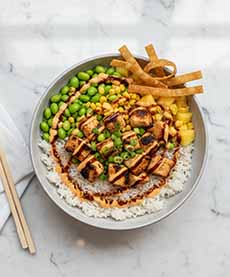
    National Poke Day, which celebrates the traditional Hawaiian dish, takes place on September 28th*. And, September is both National Chicken Month and National Rice Month. So how about something different: chicken poke bowls!

    If you don’t already know poke, it’s a dish of diced, marinated raw fish that’s considered a local comfort food in Hawaii. Customizable at fast-casual restaurants and available as grab-and-go from food stores, poke is well-connected to the Aloha spirit**.

    For National Poke Day, spread the Aloha spirit. Head to a poke restaurant or make poke bowls at home.

    And yes, you can include chicken poke bowel recipe below for your celebration (with our thanks to Island Fin Poke for inspiring us to create it).

    Below you’ll find:

    > The Chicken Poke Bowl recipe.

    > The history of poke.

    > The year’s 15+ rice holidays.

    > More ways to use wonton strips.

    Elsewhere on The Nibble:

    > The history of rice and the different types of rice: a photo glossary.

    > The 56 fish and seafood holidays.

    > The year’s 48 poultry holidays: chicken, turkey, and duck.

    > The year’s 40+ salad holidays.
     
     
    RECIPE: CHICKEN POKE BOWL

    Island Fin poke offers two Chicken Pokes Bowl:

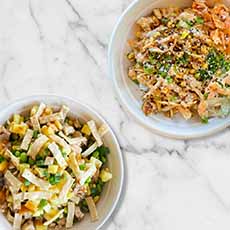
  • Chicken: with corn, edamame, pineapple, scallions, wonton strips, and two sauces.
  • Korean BBQ Chicken: with corn, kimchi, scallions, sweet onions, spicy pickled vegetables (oshinko), and topped with spicy togarashi sauce***.
     
    Recipe Overview: From Island Fin’s stated ingredients, we crafted our own recipe. If you want the Korean BBQ version, you can get the kimchi, pickled vegetables, and togarashi sauce at an Asian market or online.

    However, unless you can find take-out Korean BBQ chicken, it’s a time-consuming process to make at home (see the ‡footnote).

    About The Dressings: Island Fin uses heavier sauces that follow the preference of many Americans for creamy or otherwise thick dressings. We’ve listed their Wicked Wahini† sauce and Ono Ono†† sauce in the ingredients.

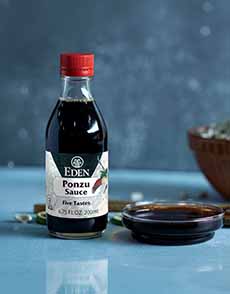
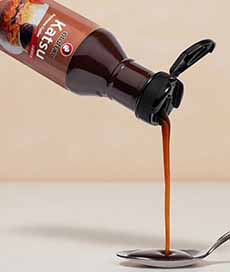
    We personally prefer lighter dressings (e.g., vinaigrette on green salads). When testing our chicken bowl recipe, we’ve used plain ponzu sauce (photo #6), katsu sauce††† (photo #7) a Japanese BBQ sauce used on tonkasu, breaded pork cutlet) thinned/diluted with ponzu, spicy mayo thinned with rice vinegar or vegetable/canola, a lemon vinaigrette, and even Russian dressing.

    Every option tasted good!

    Prep time is 20 minutes plus cook time for the rice and the chicken.
     
    Ingredients 2 Servings

    For The Chicken & Marinade

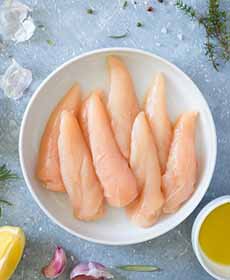
  • 1 pound boneless, skinless chicken thighs or breasts, cut into 1-inch cubes
  • 2 tablespoons soy sauce
  • 1 tablespoon sesame oil
  • 1 teaspoon garlic powder
  • 1 teaspoon ginger powder (or fresh grated ginger)
  •  
    For The Base

  • 2 cups cooked white rice
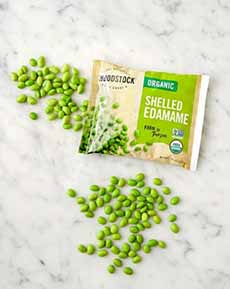
  • 1 cup shelled edamame (pre-cooked—photo #4)
  • 1/2 cup corn kernels (fresh, frozen, or canned)
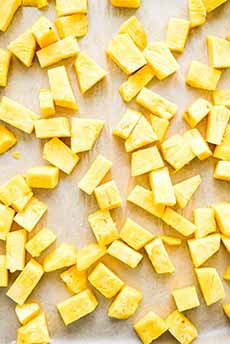
  • 1/2 cup fresh pineapple, diced (photo #5-substitute diced/canned in its juice)
  • Garnish: 2-3 scallions (green onions), thinly sliced
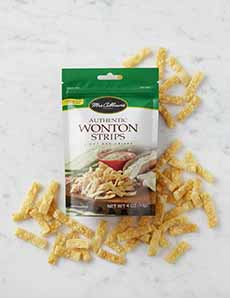
  • Garnish: wonton strips (photo #8)
  • Wicked Wahine sauce†, ponzu or substitute per note above
  • Ono Ono†† sauce‡
  •  
    Preparation

    1. COOK the edamame according to package directions. If using frozen corn, thaw and pat dry.

    2. MARINATE the chicken cubes for 15-30 minutes in the marinade: soy sauce, sesame oil, garlic powder, and ginger.

    3. COOK the chicken in a heated skillet or grill pan over medium-high heat for 6-8 minutes. Turn occasionally, until the chicken is golden brown and cooked through (internal temperature 165°F).

    4. ASSEMBLE: Divide the rice into two bowls. Arrange the cooked chicken, edamame, corn, and diced pineapple in sections over the rice (like a Cobb salad). Garnish with the scallions and wonton strips.

    5. SERVE with sauces for drizzling.

    Note: We like to toss our ingredients together for eating, and use bowls deep enough to enable tossing.
     
     
    THE HISTORY OF POKE

    Poke, pronounced POE-kay (note that there is no accent mark over the “e”), is a traditional Hawaiian dish that consists of cubed raw fish, typically ahi tuna, that’s been seasoned and marinated. The word comes from the Hawaiian verb meaning to slice or to cut.

    In a poke bowl, the seasoned raw fish is served over rice and topped with various ingredients like seaweed, avocado, cucumber, edamame, pickled vegetables, and different sauces. Today, the fish is usually marinated in ingredients like soy sauce, sesame oil, sea salt, onions, and sometimes spicy mayo or other flavorings.

    The original, traditional Hawaiian poke was much simpler: just fresh fish seasoned with sea salt, seaweed, and onions. The modern poke bowl trend has expanded to include many more toppings and variations, making it popular as a healthy, customizable meal option worldwide.

    The Beginning

    While traditional poke had been available in Hawaiian grocery stores since the 1990s, the poke bowl as we know it today began to gain popularity in the mainland U.S. in the 2010s.

    But the growth was dramatic during the mid-2010s. Poke moved to mainland in the early to mid-2010s, with poke becoming increasingly popular in North America starting in 2012 [source: Wikipedia].

    The trend first took off, not surprisingly, in California. By the summer of 2015, the dish had become so trendy that dozens of places with names like Pokinometry and Wiki Wiki Poke (wiki means quick in Hawaiian), could be found from Santa Monica and throughout Los Angeles.

  • Health-conscious dining trends aligned with poke’s fresh, raw fish format.
  • The customizable bowl format appealed to American fast-casual dining preferences.
  • Between 2014 and 2016 alone, the amount of poke restaurants nearly doubled, growing from 342 venues to 700.
  •  
    Island Fin Poke (which put an accent over the é, presumably so people would pronounce it correctly), began operating in Winter Springs, Florida in 2017, and has 17 franchise locations in 11 states (if you’re interested, head here).

    They inspired the following recipe, after we learned that the chain had switched up their protein options by offering chicken alongside traditional seafood options. And next…beef? Lamb? Pork? Tofu?

    We can’t wait to experiment with these.

    (Some information provided by Chat GPT.)
     
     
    WAYS TO USE WONTON CRISPS

    This crunchy snack and salad garnish have quite a few additional uses.
     

  • Breakfast: On cottage cheese, oatmeal, Greek yogurt.
  • Dessert: Toss with honey and cinnamon for a dessert sauce, use as a savory fondue dipper.
  • Grain bowls: Add crunch to rice and other grain bowls.
  • Pasta: A fusion garnish for creamy pasta dishes.
  • Salads: Not just for Asian chicken salad, but any green salad.
  • Soups: Garnish Asian broths, ramen, wonton soup, or creamy Western soups including tomato soup.
  • More: Garnish Asian-fusion tacos and other fusion dishes.
  •  
    In Main Courses

  • Breading: Crush and use to coat chicken or fish.
  • Casseroles: Layer for added crunch.
  • Crumbs: Crush and use as a breadcrumb substitute for gratins, savory pies/quiche.
  • Fried rice: Mix in during the last minute of cooking.
  • Stir fries: Toss in right before serving.
  •  
    As Snacks

  • Dips/Asian: cChili sauce, duck sauce, plum sauce sweet and sour sauce.
  • Dips/Western: Hummus, guacamole, spicy mayo, or your favorite dip.
  • Entertaining Boards: Charcuterie, cheese, veggie, and other boards.
  • Snack mixes: Mix into Chex mix, trail mix, or party mix.
  •  
     
    THE YEAR’S 15+ RICE HOLIDAYS

  • January 11: National Risotto Day
  • March 27: National Spanish Paella Day
  • April 19: National Rice Ball Day
  • June 18: National/International Sushi Day
  • July 6: National Handroll Day
  • August 8: National Mochi Day
  • August 9: National Rice Pudding Day
  • August 15: National Fresh Ahi Poke Day*
  • September: National Rice Month
  • September: Whole Grains Month
  • September 18: National Rice Krispie Treats Day
  • September 20: National Fried Rice Day
  • September 24: National Horchata Day
  • September, 4th Full Week: National Wild Rice Week
  • September 28: International Poke Day
  • October 1: World Sake Day‡‡‡
  • November: National Rice Awareness Month
  • November 29: National Rice Cake Day
  •  
    Plus:

  • April: Panagyaman Rice Festival (Philippines)‡
  •  

    Chicken Poke Bowl
    [1] Taking a license with poke: cooked chicken instead of raw fish (A.I. photo).

    2 Flavors Of Chicken Poke Bowls
    [2] Two offerings at Island Fin Poke: Korean BBQ Chicken Poke (lower left) and Classic Grilled Chicken (upper right—photo © Island Fin Poke).

    A Plate Of Raw Chicken Tenders
    [3] We use chicken tenders because cubing them is much faster than cutting up breasts. These beauties are from John Henry’s Meats, “grazed right, raised right, taste right” (photo © John Henry’s Meats).

    A bag of frozen edamame Edamame[/caption]
    [4] Edamame are a delicious garnish on any salad or grain bowl. Look in the freezer section to find them already shelled (photo © Good Eggs).

    Chunks Of Fresh Pineapple
    [5] Don’t let cutting a pineapple intimidate you. Here’s an easy way to do it from Fed And Fit (photo © Fed And Fit).

    Bottle & Dish Of Eden Foods Ponzu Sauce
    [6] Ponzu is a good light sauce for the recipe. You can buy it anywhere Asian foods are sold, or make your own with this recipe. We prefer it to the thicker sauces used by many poke shops (photo © Eden Foods).

    Bottle Of Katsu BBQ Sauce
    [7] If you prefer a thick sauce, katsu sauce, a Japanese BBQ sauce, isavailable at Asian markets, is your go-to. An easy recipe to make your own is in the ‡‡footnote.

    A Bag Of Wonton Strips
    [8] Wonton strips are ubiquitous these days. (photo © Mrs. Cubbison’s | Sugar Foods).

    Tuna Poke Bowl
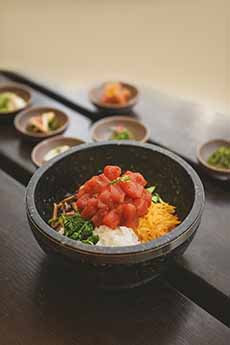
    [9] A classic tuna poke bowl (photo © Dons Bogam | NYC).

    Mixed Shellfish Poke Bowl
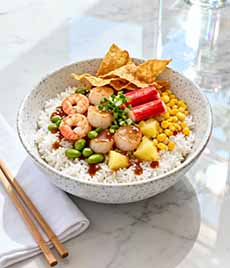
    [10] If you don’t eat raw fish, make your poke bowl with cooked fish (A.I. photo).

     
    ________________

    *There is also a National Fresh Ahi Poke Day on August 15th, emphasizing fresh-to-order poke with freshly-sliced fish, a superior preparation to all of the grab-and-go poke bowls.

    **The Aloha Spirit is a not only a philosophy but a part of Hawaii’s state law, representing a Hawaiian way of life that embodies love, kindness, compassion, and respect for people and nature. It is defined as a coordination of mind and heart within each person, expressed through the Hawaiian words akahai (kindness), lōkahi (unity), ʻoluʻolu (agreeable), haʻahaʻa (humility), and ahonui (patience).

    ***Togarashi is a spicy sauce based on shichimi togarashi, a traditional seven-spice blend called Japanese Seven Spice in the U.S. The seven spices are blak sesame seeds, ginger, nori (or poppyseed) orange peel, red chile peppers, sansho (Japanese pepper), and white sesame seeds.

    The spice blend is mixed with one or more of these liquids to form a sauce: mirin (sweet rice wine), rice vinegar, sesame oil, and soy sauce or tamari. Garlic or ginger paste can be added.

    The result is a sauce that’s citrusy from the orange peel, nutty from the sesame seeds, with a bit of tingle from the sansho pepper. It has less heat but more complex flavors than sriracha.

    You can buy it bottled in Asian grocery stores. It can be used as a dipping sauce for dumplings or tempura, on noodles (ramen, noodles, even pasta) or rice/other grains, with grilled meats or vegetables. You can add it to mayonnaise, sour cream, or yogurt for a spicy dip or spread.

    †Wicked Wahini sauce is a proprietary recipe used by Island Fin Poke. You can create a similar sauce by mixing sriracha or chili garlic sauce, lime juice, a touch of honey or brown sugar for sweetness, and an optional splash of soy sauce.

    ††Ono Ono sauce was named after the Hawaiian word for delicious, ono. It refers to a variety of sauces used in Hawaiian cuisine. The specific ingredients can vary widely depending on the type of sauce and whether it is used for meat, fish, etc. An easily acquired version is katsu sauce. If you want to make your own:

    †††Katsu sauce recipe: 1/2 cup ketchup, 2 tablespoons soy sauce, 1 tablespoons mirin, 1 tablespoons brown sugar, 1-1/2 teaspoons Worcestershire sauce, 1/2 teaspoon powdered ginger, and 1 clove minced garlic. Whisk all ingredients in a bowl and until thoroughly combined.

    ‡Korean BBQ chicken is a complex dish: a sticky, caramelized exterior with slightly charred edges and meat that’s sweet, spicy, and garlicky. It starts with marinating for several hours or overnight, then is grilled or cooked on high heat.

    The marinade includes rice wine, sesame oil and soy sauce plus brown sugar/honey, garlic, and ginger. Grated Korean pear or apple is added for additional sweetness and is considered important for its tenderizing enzymes. Heat comes by way of gochujang (Korean chili paste), gochugaru (Korean chili flakes), and black pepper. Additional flavor enhancers include grated or minced onion, scallions, and toasted sesame seeds. Sometimes, cola is added for extra sweetness and caramelization!

    It’s delicious, but requires time and lots of ingredients.

    ‡‡Duck sauce, plum sauce, sweet and sour sauce: the differences. Duck sauce is typically a translucent, amber-colored sauce that’s sweet and mild. It’s often made with apricots, peaches, or a mix of fruits (or fruit flavorings). It’s commonly served with Chinese-American dishes like egg rolls and has a fruity base (often apricot or plum). Sweet and sour sauce is usually more vibrant—a red/orange color—and tangier due to a stronger vinegar component, which also gives it a bit of a sour bite to balance the sweetness. It’s also thicker than duck sauce. A quality version may have visible chunks of pineapple or peppers.

    Plum sauce is a traditional Chinese condiment made primarily from plums, sugar, vinegar, and spices. It has a more complex flavor with a stronger fruit taste and slight tartness. Duck sauce is the American-Chinese restaurant version. It’s typically sweeter, milder, the Americanized, simplified cousin of traditional plum sauce..

    ‡‡‡Sake is a fermented rice drink, as wine is fermented grape juice.

    ‡‡‡‡Panagyaman is an Ilocano term (people inhabiting northwestern Luzon in the Philippines) meaning thanksgiving or gratitude, often used to describe a celebration of a successful harvest. The festival aims to express gratitude for the successful rice harvest and recognize the vital contribution of small farmers to national food security.


    CHECK OUT WHAT’S HAPPENING ON OUR HOME PAGE, THENIBBLE.COM.


    Comments off


    © Copyright 2005-2026 Lifestyle Direct, Inc. All rights reserved. All images are copyrighted to their respective owners.