THE NIBBLE BLOG: Products, Recipes & Trends In Specialty Foods
Also visit our main website, TheNibble.com.
|
October 1, 2010 at 7:57 am
· Filed under Breakfast & Brunch
|
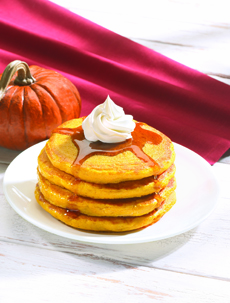
Bring the flavor of fall to breakfast with
pumpkin pancakes. Photo courtesy IHOP. |
|
Throughout October, IHOP is serving pumpkin pancakes. Although the company won’t divulge its secret recipe, they have shared their tips for making perfect pumpkin pancakes.
- Canned Pumpkin: Start with your favorite pancake batter recipe and simply add canned pumpkin pie mix (seasoned pumpkin purée).
- Water Temperature: When preparing dry pancake mix, it is essential that the water is chilled to less than 50°F. Use ice water from the fridge, or use ice cubes to bring down the temperature of tap water.
- Keep The Lumps. Lumps are good—small lumps of flour are what make pancakes tall and fluffy. Don’t over mix the pancake batter.
- Grill Temperature: Use a 350°F grill. Make sure that there are no hot or cold spots that can lead to uneven cooking.
- Cooking Time: Judge when a pancake is ready by its appearance. It should be golden with a light browning at the edges.
|
| As a Halloween special, IHOP will offer free Scary Face Pancakes to trick-or-treaters aged 12 and under, on Friday, October 29th from 7:00 a.m. to 10:00 p.m.
Find an IHOP restaurant near you at IHOP.com.
See our review of the best wholegrain pancake mixes, and get more pancake tips. |
|
|
Permalink
|
|
October 1, 2010 at 7:22 am
· Filed under Cookies-Cake-Pastry, Tip Of The Day
|
| We love cake but it doesn’t love us. With a whole cake in front of us, we can’t resist slicing another “little piece”…then another. That’s why we’ve looked for ways to serve smaller portions.
Cakelet or mini-cake pans have saved the day. Instead of baking a standard cake, we make cakelets.
In addition to looking oh-so-charming, these mini cakes create a sense of portion control. We can restrain ourselves to two or three cakelets at a time, saving calories, carbs and fat.
They’re also easy to make: Just pour cake batter into a pan. No frosting required; although you can serve optional whipped cream or dessert sauce.
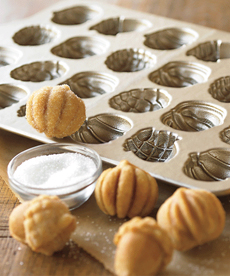
This fall-themed baking pan from Williams-Sonoma creates acorn, pumpkin, pine cone and walnut cakelets.
Willliams-Sonoma also has a pumpkin and maple leaf whoopie pie pan.
Find more of our favorite cakes and cake recipes in our Cakes, Cookies & Pastry Section. |
|

Bake cakelets for fall entertaining and
family fun. Pan exclusive at Williams-Sonoma. |
|
|
|
Permalink
|
|
September 30, 2010 at 8:36 am
· Filed under Entertaining
|
|
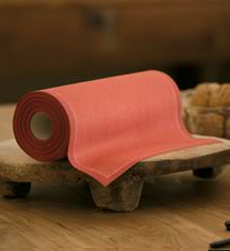
Rolls of colorful cloth napkins and place-
mats create instant table décor. Photo
courtesy MYdrap. |
|
Here’s something new: Elegant cloth cocktail napkins and dinner napkins, placemats and table runners that are manufactured in a roll and separated like paper towels. When you need to set the table, tear off what you need. No one but you will know that the table linens came on a roll.
The elegant cloth napkins and placemats, made of cotton or linen, provide fashionable table-setting options: an instant fine-dining experience. The rolls are easy to store.
MYdrap is the first single-use napkin and placemat made of cloth (a choice of 100% cotton or linen). While the concept was developed for the hospitality industry—one-time-use, recyclable place settings that save on laundry bills—you don’t have to throw them away after dinner. They can be washed and re-used up to five times (some ironing is needed). |
| Why not just buy permanent cloth napkins and placemats?
1. Variety is the spice of life. You can switch and combine colors with ease, to match different sets of dishes, seasons or holidays (there are 14 colors in cotton and 7 colors in linen). We don’t need red and green table linens year-round; MYdrap is a relatively inexpensive way to set a holiday table. The same goes special events like baby showers: Use pink and blue napkins and mats.
2. No fuss. For people who like table linens but not washing and ironing them, they’re a boon.
MYdrap is available in the U.S. at Bloomingdale’s, and online at CasaMyDrap.com. There are 50 napkins per roll. The cost per standard dinner napkin is 60 cents.
|
|
|
Permalink
|
© Copyright 2005-2026 Lifestyle Direct, Inc. All rights reserved. All images are copyrighted to their respective owners.