|
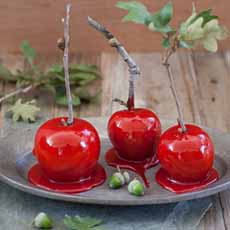
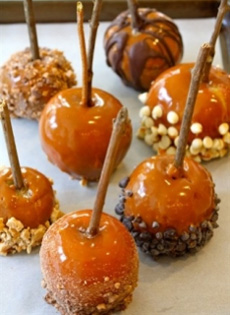
Here’s a different approach to caramel apples (also called toffee apples*): Use pretty twigs instead of the same old predictable wood popsicle/craft sticks.
The recipe comes from the book Sugar, Sugar: Every Recipe Has a Story, by Kimberly “Momma” Reiner and Jenna Sanz-Agero. The book will be published on October 25th, but you can order it now.
First, send the kids to the backyard or the park in search of twigs. Look for twigs that are about five inches long, although anything from four to six inches will do.
Note that this is a quick recipe for busy mommas. If you make caramel from scratch, you’ll notice the superior taste.
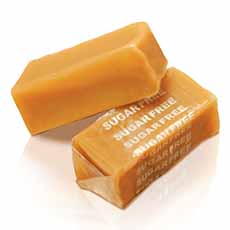
And if you prefer sugar-free treats, get sugar-free caramels. Here’s a recipe.
> There are more caramel apple recipes below.
> The year’s 19 apple holidays are below.
> The history of caramels.
> The history of apples.
> The history of candy apples and caramel apples.
> The history of Halloween.
CARAMEL APPLE RECIPE
Ingredients
5 medium-size tart apples (such as Granny Smith or Pippin)
Assortment of twigs
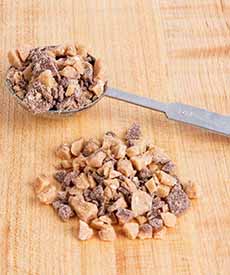
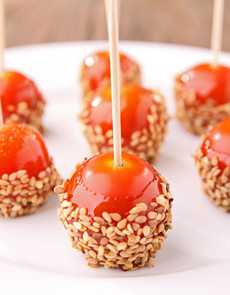
Toppings such as Oreo cookie crumbs, graham cracker crumbs, Heath Bar or Skor bits, chopped pecans and mini chocolate chips
1 package (11 ounces) Kraft Premium Caramel Bits† or other caramels
2 tablespoons water
Wax paper or parchment paper
Preparation
1. DE-STEM the apples, wash and drop into boiling water for 10 seconds. This removes any wax from the apples and helps the coating adhere. Alternatively, you can soak the apples for a few minutes in a bowl of hot tap water with a splash of vinegar (known as a “vinegar wash”) or clean them with a produce wash such as Veggie Wash, a spray solution that removes the wax from fruits and vegetables.
2. REMOVE and polish the apples dry with a soft cloth. You may also wish to let the apples air dry for an hour, to be sure all the moisture is gone. (Moisture hinders the coating from adhering properly.)
3. RINSE the twigs under water and set aside to dry.
4. LINE a baking sheet with wax paper or parchment paper.
5. CRUSH the toppings and put them in separate bowls.
6. USE a sharp paring knife to cut a small “X” in the top of each apple where the stem was. Gently push the twig down into the center of the apple.
7. PLACE the Caramel Bits and the water in a medium glass bowl or other microwave-safe dish. Microwave on high for 2 minutes. Remove the bowl from the microwave (be careful not to burn yourself—it will be hot).
8. STIR the caramel with a wooden spoon until all the bits are melted. If necessary, heat in additional 30-second increments until caramel is thoroughly melted and smooth. Let the caramel sit 1 to 2 minutes, until it is thick enough to coat an apple. If it is runny like water, the coating will drip off the apple.
9. CAREFULLY SWIRL the apple in the caramel, making sure it is completely coated. Tilt the bowl as needed. You may need to spoon the caramel around the top rim. Let the caramel drip off the bottom of the apple onto wax paper. Then…
10. ROLL the apples in the desired topping(s). Once coated, place the apples on wax paper to set for a minimum of 30 minutes to one hour. Enjoy your twiggy treat or store it in the refrigerator.
MORE CARAMEL & CHOCOLATE APPLE RECIPES
Bourbon Caramel Apples
Matcha White Chocolate Granny Smith Apples
Modern Art Chocolate Apples
THE YEAR’S 19 APPLE HOLIDAYS
January 1: Apple Gifting Day
January 6: National Apple Tree Day
March 12: National Johnny Appleseed Day
May 13: National Apple Pie Day
May 20: National Sugarbee® Apple Day
June 6: National Applesauce Cake Day
June 17: National Apple Strudel Day
July 5: National Apple Turnover Day
September, 3rd Saturday: International Eat An Apple Day
September 17: National Apple Dumpling Day
October: National Applejack Month
October: National Apple Month
October 5: National Apple Betty Day
October 21: National Apple Day
October 31: National Candy Apple Day
October 31: National Caramel Apple Day
November 18: National Apple Cider Day
December 1: National Eat A Red Apple Day
December 9: National Opal Apples Day
|

![[ ] .](https://blog.thenibble.com/wp-content/uploads/granny-smith-lisasolonynko-morguefile-230low.jpg)