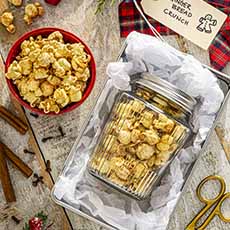
You can substitute as you like:
Low carb: use granulated sugar substitute and plain pecan halves, eliminate the gingersnaps.
Less spicy: Substitute the chili powder in recipe #2 with 1 teasoiin ground ginger.
Ingredients For 3 Quarts
2 quarts popped popcorn
Butter flavored cooking spray
1/3 cup granulated sugar
2 teaspoons ground ginger
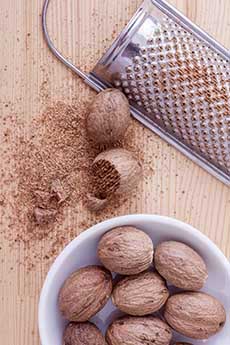
1/2 teaspoon freshly ground nutmeg
1/4 teaspoon cinnamon
1/4 teaspoon ground cloves
1/8 teaspoon freshly ground black or white pepper
2 cups chopped gingersnaps (the same size or slightly smaller than the popped kernels)
1 cup spiced pecan halves or candied pecans (recipe below)
Preparation
1. PREHEAT the oven to 325°F.
2. SPREAD the popcorn on a baking sheet and spray lightly with the cooking spray.
3. COMBINE the remaining ingredients in a small bowl and sprinkle evenly over the popcorn. Spray again with cooking spray and toss to coat evenly.
4. BAKE for 7 minutes. Cool and toss with gingersnaps and pecans.
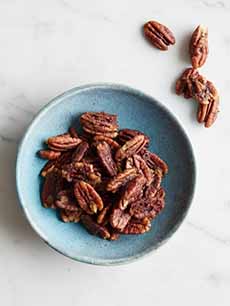
RECIPE #2: SPICED PECANS
You can eliminate the heat of the chili powder and substitute 2 teaspoons of ground ginger if you prefer.
Ingredients For 4 Cups
3/4 cup granulated sugar
1 tablespoon kosher salt
1 tablespoon chili powder
2 teaspoons ground cinnamon
2 teaspoons cayenne pepper
1 large egg white
4 cups raw pecan halves or other nuts
Preparation
1. PREHEAT the oven to 300°F. Coat a rimmed baking sheet with nonstick cooking spray.
2. WHISK together the sugar with the salt, chile powder, cinnamon, and cayenne pepper in a small bowl. In a large bowl, beat the egg white until frothy.
3. ADD the nuts and spiced sugar to the egg whites and toss. Spread the nuts on the prepared baking sheet and bake for about 45 minutes, stirring once, until browned.
4. LET the nuts cool on the baking sheet, stirring occasionally.
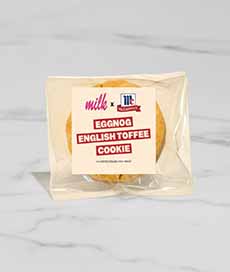
December 4th is National Cookie Day, and McCormick® has teamed up with Milk Bar® and its award-winning chef, Christina Tosi, to create a special cookie recipe for the holiday season.
Milk Bar, with six locations in New York City plus bakeries in Chicago, D.C., Las Vegas, and Los Angeles, also ships nationwide.
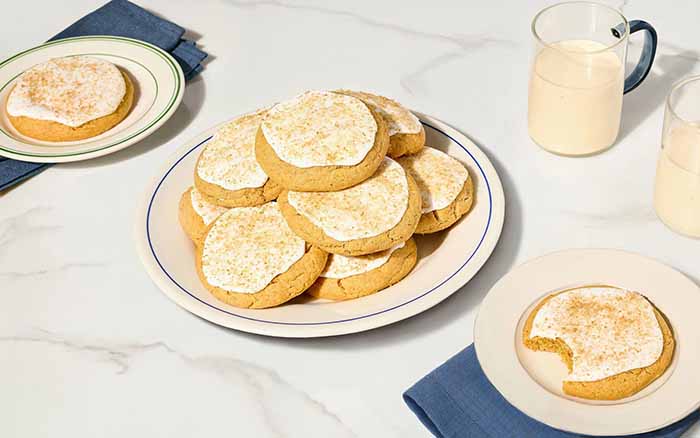
The limited-edition Eggnog & English Toffee Cookies are The Nibble’s Gift Of The Day. They’re simply terrific.
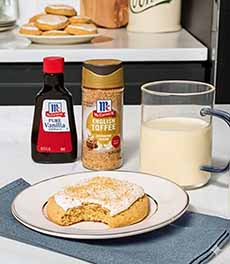
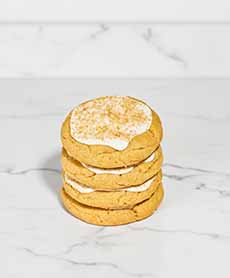
We can’t imagine any cookie lover who wouldn’t enjoy a tin of six cookies (photos #2, #3, and #4). Here’s the link to order them online.
They’re available through the end of the month at participating Milk Bar locations from November 28 to December 31, 2025.
To celebrate National Cookie Day on December 4th, Milk Bar and McCormick share the recipe with you (below).
GREAT FOR GIFTING
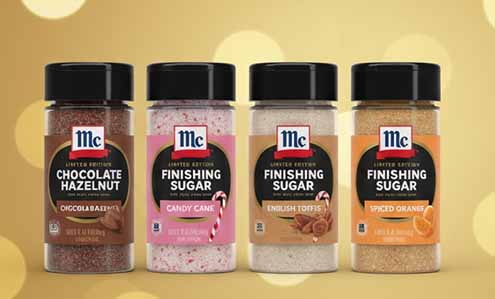
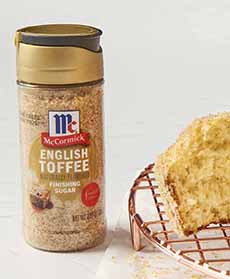
The the special ingredient in the recipe is McCormick® English Toffee Naturally Flavored Finishing Sugar (photo #5), a one of four limited-edition flavors for the holidays (photo #7).
You can send the cookies in a gift tin from to any cookie lover from Milk Bar
limited-edition flavors for the holidays (photo #3).
Send a set of McCormick’s 8 finishing sugars to anyone who loves to bake.
RECIPE #1: McCORMICK x MILK BAR EGGNOG ENGLISH TOFFEE COOKIES
This holiday season, add a little magic to your desserts and snacks with this extra-special cookie recipe created by McCormick and Milk Bar.
The traditionally rich, sweet taste of eggnog is the perfect complement to toffee, and in this recipe, the flavor of McCormick English Toffee Finishing Sugar (photo #5) provides a wonderfully flavorful garnish.
It’s one of four limited-time holiday finishing sugars, along with Candy Cane, Chocolate Hazelnut, and Spiced Orange finishing sugars (photo #7), for which there are many uses including rimming coffee and hot chocolate cups and cocktail and mocktail glasses, to garnishing baked goods, popcorn, and so much more.
In fact, the finishing sugars make great stocking stuffers for your favorite bakers and mixologists.
1. PREHEAT the oven to 350°F. Line 2 large baking sheets with parchment; set aside. Mix the flour, pudding mix, cinnamon, salt, baking powder, baking soda, and nutmeg in medium bowl; set aside.
2. BEAT the butter and the granulated and brown sugars in a large bowl with an electric mixer on medium-high speed, 2 to 3 minutes or until light and fluffy. Add the egg, egg yolk, and vanilla; beat 2 to 3 minutes longer or well blended, scraping the sides of the bowl, as needed.
3. GRADUALLY ADD the flour mixture, beating on low speed just until the dough comes together, up to 1 minute. Stir in the English Toffee Finishing Sugar, mixing just until combined. Scoop the dough in 1/3-cup portions onto the prepared baking sheets, placing the scoops about 2-inches apart.
4. BAKE 15 to 20 minutes until the cookies have spread and the edges are golden brown. Cool on the pans for 1 minute. Transfer to wire racks to cool for at least 10 minutes.
5. MAKE the icing. Whisk the confectioners’ sugar and milk in small bowl until smooth (add additional milk or confectioners’ sugar, 1 tablespoon at a time, to reach your desired consistency). Spread the icing on the cooled cookies and sprinkle with additional English Toffee Finishing Sugar. Let stand 5 minutes to allow the icing to set.
Variations
A touch of rum: Substitute 1 teaspoon Rum Extract + 1/2 teaspoon McCormick Pure Vanilla Extract in place of the 1-1/2 teaspoons of vanilla.
A little extra texture/crunch: Substitute turbinado sugar (e.g. Sugar in the Raw) in place of the light brown sugar.
No vanilla pudding mix? No problem! Add an additional 1/4 cup flour in place of the pudding mix.
[9] Want a rim to make your Espresso Martini more festive? See the options below (Abacus Photo).
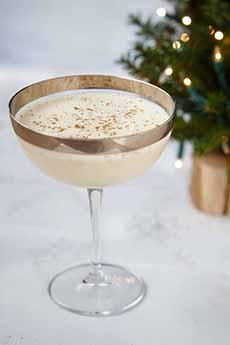
RECIPE #2: EGGNOG MARTINI COCKTAIL OR MOCKTAIL
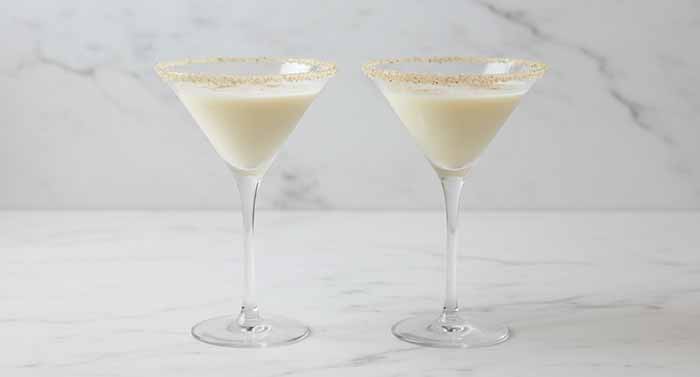
This Eggnog Martini (photo #6) can be served with the cookies. For a mocktail version, use a carton of eggnog from the store, and add the garnishes. If you want a less-rich drink, switch the light cream for half-and-half (the different types of cream).
> National Eggnog Day is December 24th, and National Martini Day is June 19th.
Ingredients For 1 Drink
4 ounces light cream
2 ounces white chocolate liqueur (e.g. Godiva, Mozart)
1/4 teaspoon McCormick ground nutmeg
1/4 teaspoon McCormick rum extract; substitute a scant 4 teaspoons light rum or 1-1/2 teaspoons dark rum
Optional garnish: chocolate shavings, whipped cream, plus rim (see below)
Preparation
1. FILL a cocktail shaker two-thirds full with ice. Add the cream, white chocolate liqueur, nutmeg and rum flavor; shake until well mixed and chilled.
2. STRAIN into a martini glass. Garnish as desired. Serve immediately.
To Add A Rim To An Eggnog Martini
Rim the glasses before you make the cocktails so the rims have time to set (photo #9). You want flavors that complement the creamy spiced flavors of the Eggnog Martini. For example:
Caramel and Brown Sugar: Use caramel syrup to rim the glass, then dip it in brown sugar.
Caramel and Cinnamon: Spread caramel sauce on a plate, sprinkle cinnamon on top, and roll the glass rim in the mixture.
Cinnamon Sugar: Mix granulated sugar with ground cinnamon and rim the glass using vodka, simple syrup, or maple syrup to make it stick.
Cinnamon and Brown Sugar: Combine ground cinnamon with brown or Demerara sugar and use maple syrup to fix it to the rim.
Gold or Silver Sparkling Sugar.
Nutmeg Sugar: Mix granulated sugar with ground nutmeg, as with cinnamon sugar.
Sparkly Cinnamon Sugar: Add gold or silver sparkling sugar to cinnamon sugar.
THE YEAR’S 4 EGGNOG HOLIDAYS
Plus, there are four eggnog holidays just waiting for a plate of the eggnog cookies:
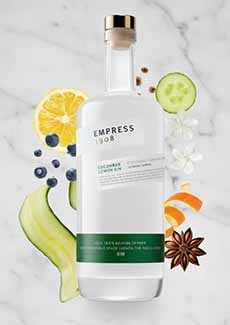
If the aroma wafting from the bottle of Empress 1908 Cucumber Lemon Gin doesn’t grab you, the delight when it hits your tongue will.
Handcrafted in small batches by Victoria Distillers in British Columbia, any gin lover lucky enough to receive a bottle is in for a treat that extends far beyond the shot glass or the cocktail shaker.
This beautifully balanced spirit, our third experience with the brand’s great flavored gins (Indigo Gin and Elderflower Gin preceded it), presents exciting possibilities both in the glass and in the kitchen.
As with the first two gin expressions, Cucumber Lemon has a botanical complexity that reveals itself in layers. On the nose, you’ll encounter zesty citrus notes, followed by a cucumber freshness that grows more pronounced with each inhale.
The palate delivers vegetal brightness from the cucumber, balanced by juicy citrus and resinous juniper, with just enough peppery spice to keep things interesting.
At 85 proof, it carries enough strength to stand up in cocktails and cooking applications alike.
We drink all three expressions straight or on the rocks, which is how we enjoy any top spirit. We pour a shot into a small snifter and alternate passes of inhaling and sniffing.
But others may prefer a mixed drink.
Because there are many cocktails on the brand’s website with some linked photos in this article, we’re going to turn our attention to the joys of using Cucumber Lemon Gin in cooking.
GET YOUR CUCUMBER LEMON GIN NOW!
Last year we purchased a case of Indigo Gin, gave some as holiday gifts, and had the rest on hand when we needed something special for the rest of the year.
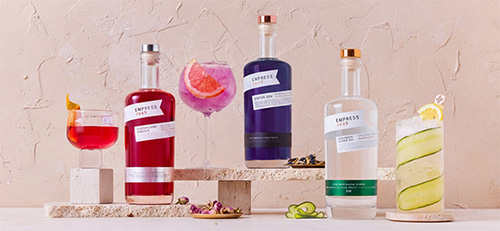
[7] Elderflower Rose, Original Indigo, and Cucumber Lemon: Each expression is wonderful and a great gift for a gin lover.
BEYOND COCKTAILS: GIN IN THE KITCHEN
While Empress Cucumber Lemon Gin makes spectacular drinks from elevated gin and tonics to refreshing Collins variations (there are numerous recipes on the website), its distinctive flavor profile makes it an intriguing ingredient for creative home cooks.
Cooking with gin isn’t a new concept, but unlike brandy, liqueur, or wine, it doesn’t get much attention.
Lets remedy that: other alcohol products, gin can add depth, complexity, and aromatic interest to both savory and sweet dishes.
The key to cooking with gin is understanding its strength. Unlike wine, gin is a concentrated spirit with bold flavors that can easily overwhelm a dish if used too liberally.
A little goes a long way. Start conservatively: a tablespoon or two for quick-cooking dishes, up to a quarter cup for long-simmering sauces or stews.
While much of the alcohol content will cook off during simmering, some residual alcohol always remains. If you’re serving to children or anyone avoiding alcohol for health or religious reasons, keep this in mind.
The cucumber and lemon notes in Empress 1908’s Cucumber & Lemon Gin make it especially well-suited for seafood, poultry, and lighter sauces where those flavors can complement rather than compete.
For dessert, we’ve—so far—poured the gin over lemon sorbet and mixed a teaspoon into the powdered sugar glaze atop a lemon pound cake.
Finally, the best gin for cooking is one you’d enjoy drinking. If you don’t like a particular spirit or brand as a drink, it won’t taste better when it’s cooked.
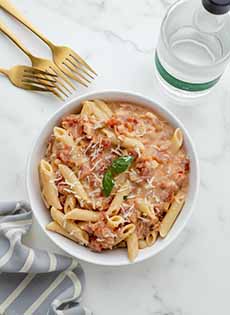
Gin-Spiked Pasta Sauce
Just as vodka sauce became a restaurant staple, gin is an even more flavorful alternative for pasta dishes.
The botanical complexity of gin, particularly one with bright citrus and herbal notes like Cucumber Lemon Gin, adds genuine flavor to the sauce—not just the alcohol of vodka.
You can substitute gin for vodka in a vodka sauce recipe, or make this gin-tomato cream sauce, which is delish:
SAUTÉ diced onions and minced garlic in olive oil with red pepper flakes until softened.
ADD canned crushed tomatoes and a pinch of sugar to balance the acidity. Remove from heat and blend until smooth, then return to the pan and add a generous splash of gin—about a quarter cup for a recipe serving four to six.
SIMMER for 15-20 minutes, allowing the alcohol to cook off while the botanical flavors meld with the tomatoes. You’ll know it’s ready when you can no longer smell strong alcohol fumes. Finish by stirring in heavy cream, grated Parmesan, and fresh basil. The cucumber and lemon notes in the gin will add an unexpected brightness that elevates this beyond traditional vodka sauce.
Pan Sauce for Poultry and Seafood
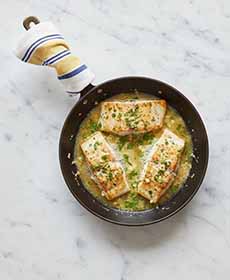
Pan sauces are where gin truly shines in the kitchen. After searing chicken breasts, fish fillets, or scallops, use gin to deglaze the pan—this means adding liquid to the hot pan to lift all those flavorful browned bits stuck to the bottom. The alcohol dissolves these fond particles while adding its own aromatic contribution.
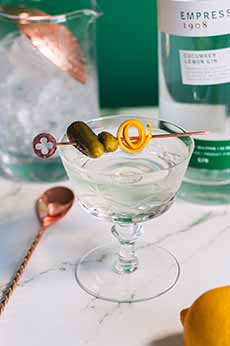
[2] A Gherkin Martini, because gherkins are cousins to cucumbers. Here’s the recipe. We used one sweet gherkin and one dill pickle chip, but our guests wanted an extra bowl of pickle nibbles.
[3] Penne with creamy tomato-gin sauce. The recipe is below (Abacus Photo).
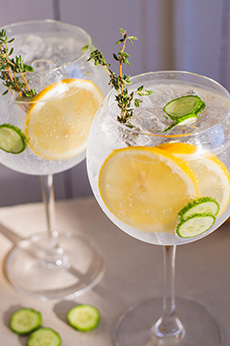
[4] A Cucumber Tonic is really more interesting than a regular G&T. Here’s the recipe.
[5] When you make a pan sauce for chicken or fish, substitute Cucumber Lemon Gin for half of the wine. If you’d like it stronger, use a 1:2 proportion next time. Here’s how to deglaze the pan (Abacus Photo).
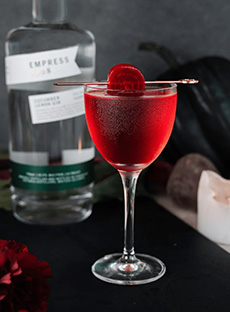
[6] A Beet Martini: bright red for the holidays, Valentine’s Day, or any day when you need a shot of color. You can garnish with a pickled beet. Here’s the recipe.
For a simple but elegant chicken pan sauce, substitute half of the wine for Lemon Cucumber gin. Or follow these steps:
REMOVE the cooked chicken from the pan and add sliced shallots and mushrooms to the fat that remains. Sauté until softened, then add a few tablespoons of gin, scraping the pan bottom vigorously. Let this reduce by about two-thirds—the sauce will become more concentrated and the alcohol edge will mellow.
ADD chicken stock, reduce again until slightly thickened, then finish with a pat of cold butter, a squeeze of lemon juice, and fresh herbs, especially fresh dill and/or tarragon.
The sauce comes together in minutes while the chicken rests.
This same technique works wonderfully for pan-seared salmon or white fish. The gin’s cucumber and citrus flavors are natural partners for seafood.
Marinades
The botanical oils in gin make it an excellent base for marinades, helping to tenderize proteins while infusing them with flavor.
COMBINE Empress 1908 Cucumber Lemon Gin with olive oil, minced garlic, lemon zest, and fresh herbs for a marinade that works beautifully with chicken, pork, or firm white fish.
MARINATE the protein for at least four hours or overnight. The alcohol and acids will begin breaking down proteins, resulting in more tender meat, while the cucumber and citrus notes will permeate throughout.
Glazes
For glazes, gin can add sophistication to sweet-savory combinations. For a glaze that caramelizes beautifully on roasted salmon or grilled chicken, reduce the gin with honey, Dijon mustard, and a splash of soy sauce.
The slight bitterness from the juniper balances the sweetness, while the cucumber and lemon keep everything bright and lively.