THE NIBBLE BLOG: Products, Recipes & Trends In Specialty Foods


Also visit our main website, TheNibble.com.

GIFT: Bien Fait Tea Cakes


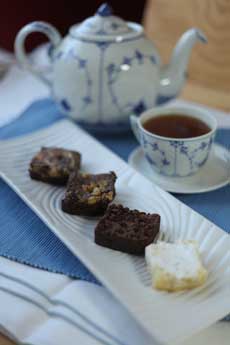
Maple Pecan Teacake, dense, moist and
yummy. Photo courtesy Bien Fait Cakes.
  Bien Fait Tea Cakes are made with “only the finest fruits, nuts, grains and natural ingredients,” says the Greensboro, Vermont-based company, proudly.

The ingredients are organic and local, from family farms. The maple syrup is tapped from trees a mile from the bakery, the apple cider is made in Greensboro, the butter arrives from nearby Cabot Creamery in Cabot, the eggs from Hardwick, the honey from Ferrisburg and the cranberries from East Fairfield.

That’s locavore!

The cakes are all natural: no artificial flavors, corn syrup solids, food color, high fructose corn syrup, hydrogenated soybean oil or invert sugars.

Bien fait means well done in French and these certainly are!

 
The fruit cakes are small loaves: 4″ x 2-1/2″ x 1-1/2″. The tops are garnished with candied nuts and citrus peel.

The loaves are so dense, they can easily be split between two cake fans, or cut into four or five smaller slices to serve with a cup of tea.


We tried three flavors: Chocolate, Cranberry Almond and Maple Pecan, our favorite of the three—although we hasten to add, all three disappeared pretty quickly. We look forward to trying the other two varieties, Honey Berry and Signature Bourbon Fruitcake.

The one-pound tea cakes are $15.00 each, from BienFaitCakes.com.

For the holiday season, they’re a delicious gift. And for year-round, too. They can be frozen and sliced whenever you feel a cake attack coming on.

 
Each cake is gift-boxed. Photo by Elvira Kalviste | THE NIBBLE.


Comments off

TIP OF THE DAY: Thanksgiving Seltzer


Lime seltzer garnished with whole
cranberries. Photo courtesy Polar Seltzer.
 

As you’re lining up your ducks for Thanksgiving (or should that be, lining up your turkeys?), here’s a beverage that can be a cocktail, mocktail or simply a replacement for water at the table.

We were inspired by these ideas from Polar Seltzer, a Massachusetts seltzer specialist that makes dozens of zero-calorie flavored seltzers, including seasonal specialties.

Cranberry Lime is a year-round Polar Seltzer flavor that’s a perfect fit with Thanksgiving and Christmas. If you can’t find a cranberry or cranberry-lime flavor in your local store, default to lime seltzer/club soda (the difference between seltzer and club soda is below).

IN THE WATER GLASS

Garnish the seltzer with some whole cranberries: simple and elegant.

For Christmas, add a mint leaf or lime wheel for a red-and-green effect.

 
AS A COCKTAIL OR MOCKTAIL

Ingredients Per Drink

  • 1/2 cup cranberry juice
  • 3-4 fresh mint Leaves
  • 1-1/2 ounces vodka
  • Ice
  • 1/2 cup cranberry or lime seltzer/club soda
  • Fresh cranberries, as garnish
  • For Christmas: add a mint leaf or lime wheel for a red-and-green effect
  •  
    Preparation

    1. MUDDLE cranberry juice, mint and vodka in a cocktail shaker. Shake with ice.

    2. STRAIN into a glass, top with seltzer and garnish with fresh mint.


    COCKTAIL OR MOCKTAIL #2

    Ingredients Per Drink

  • Pomegranate syrup or grenadine
  • Ice cubes
  • Cranberry or lime seltzer/club soda
  • Optional: 1-1/2 ounces vodka
  • Fresh cranberries, as garnish
  • For Christmas: add a mint leaf or lime wheel for a red-and-green effect
  •  
    Preparation

    1. ADD a tablespoon or more of syrup to a rocks glass or Collins glass. Add ice cubes.

    2. TOP with seltzer. Garnish as desired.

     
    Cocktail or mocktail with pomegranate syrup or grenadine. Photo courtesy Polar Seltzer.
     

    CLUB SODA, SELTZER & SPARKLING WATER: WHAT’S THE DIFFERENCE

    The overall category is carbonated water, also called soda water: water into which carbon dioxide gas under pressure has been dissolved, causing the water to become effervescent.

    Carbonated Water: In the U.S., carbonated water was known as soda water until after World War II, due to the sodium salts it contained. While today we think of “soda” as a carbonated beverage, the word originally refers to a chemical salts, also called carbonate of soda (sodium carbonate, sodium hydroxide, sodium monoxide).

    The salts were added as flavoring and acidity regulator, to mimic the taste of a natural mineral water. After the war, terms such as sparkling water and seltzer water gained favor. Except for sparkling mineral water, all carbonated water/soda water is made from municipal water supplies (tap water).

    Carbonated water was invented in Leeds, England in 1767 by British chemist Joseph Priestley, who discovered how to infuse water with carbon dioxide by suspending a bowl of water above a beer vat at a local brewery. Carbonated water changed the way people drank liquor, which had been neat, providing a “mixer” to dilute the alcohol.

    Club Soda: Like the original carbonated water, club soda is enhanced with some sodium salts.

    Fizzy Water: Another term for carbonated water.

    Seltzer or Seltzer Water: Seltzer is carbonated water with no sodium salts added. The term derives from the town of Selters in central Germany, which is renowned for its mineral springs. The naturally carbonated water—which contains naturally dissolved salts—has been commercially bottled and shipped around the world since at least the 18th century.

    Sparkling Water: Another term for carbonated water/soda water. It can also refer to sparkling mineral water, which is pumped from underground aquifers. Note that not all sparkling mineral waters are naturally effervescent. Many are actually carbonated from still mineral water. Some are lightly carbonated by nature, but have extra carbonation added at bottling to meet consumer preferences.

    Two Cents Plain: Another word for soda water, coined during the Great Depression, when plain soda water was the cheapest drink at the soda fountain.

    FOOD TRIVIA

    Of all the fruit that is commercially grown in the U.S., only the blueberry, cranberry and Concord grape are native to North America.


    Comments off

    PRODUCT: Ian’s Sausage Pancrepes


    Really tasty: Ian’s Sausage Pancrepes. Photo
    courtesy Elevation Brands.
     

    More than 10 years ago, a concerned dad learned that his son, Ian, had multiple food allergies. He set off on a journey to develop a line of kids’ favorites, so Ian and other children with allergies wouldn’t have to miss out.

    “Can you imagine going through life unable to eat pizza or onion rings or a chocolate chip cookie?” says Chuck Marble, CEO of Elevation Brands? “Imagine sitting down at the dinner table and everyone else gets to eat chicken tenders or fish sticks except you.”

    If the rest of the line is as delicious as the Sausage Pancrepes we just demolished, everyone will be scrambling to enjoy the products. Nothing in the very tasty pancakes gave any hint of a dietary restriction. The box front told a different story: NO wheat or gluten, NO milk or casein, NO nuts, NO soy.


    But NO here means YES, it’s delicious. The box of four small sausages wrapped in pancakes (9 ounces net weight) was an instant hit, without the need for maple syrup or any other seasoning. They went quickly, and we could only wish for a few dozen more boxes.

    Ian’s manufactures approximately 40 allergy-friendly foods for every time of the day: breakfast, entrées, desserts, snacks and sides. There are gluten-, dairy- and soy-free Mac & No Cheese; gluten-free chicken patties and tenders; onion rings and more.

    There’s a store locator on the website, and if there’s no store near you, you can email your local retailer’s information to their sales team.

    For more information, visit IansNaturalFoods.com.


    Comments off


    © Copyright 2005-2026 Lifestyle Direct, Inc. All rights reserved. All images are copyrighted to their respective owners.