|
The recipe for Hummingbird Cake, a southern tradition like Red Velvet Cake, was first submitted by a reader to Southern Living magazine and published in the February 1978 issue. Here’s that first printed recipe for Hummingbird Cake.
There was no explanation of the name (we have it below), but Food Timeline cites a 1985 article in the Arkansas Gazette that says the cake also was called Cake That Doesn’t Last, Cake That Won’t Last, Granny’s Best Cake and Never Ending Cake. (We’re down with Hummingbird Cake.)
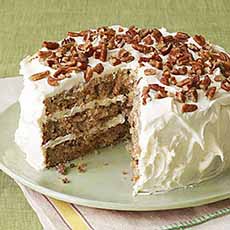
Originally made as a layer cake (but also made into cupcakes), the batter includes bananas, crushed pineapple, and pecans or walnuts. The cake is filled and frosted with cream cheese frosting and typically topped with more chopped nuts. Think banana nut cake with pineapple and cinnamon.
It’s popular for Mother’s Day, but why not make one for Dad?
> The history of Hummingbird Cake is below.
> The history of cake.
> The different types of cake, in our Cake Glossary.
RECIPE: HUMMINGBIRD COFFEE CAKE
This recipe is by Annie for GoBoldWithButter.com. She adapted the layer cake into a brunch coffee cake.
Annie writes: “This year I decided to put a brunch-worthy spin on this classic Mother’s Day cake. The banana, pineapple, and yogurt all ensure that this cake stays moist and tender. This cake is very simple to put together and is a lovely contribution for any brunch, Mother’s Day or otherwise.”
She incorporated better-for-you ingredients, including whole wheat flour and low-fat yogurt. (It’s not a healthy recipe, but every little bit helps!)
Ingredients For 1 Cake/16 Servings
For The Cake
8 tablespoons (1/2 cup or 1 stick) unsalted butter, at room temperature, plus more for preparing the pan
1 cup all-purpose flour, plus more for preparing the pan
1 cup whole wheat flour
1 teaspoon baking powder
1 teaspoon baking soda
3/4 teaspoon salt
1/2 teaspoon ground cinnamon
1 cup sugar
2 large eggs
1 teaspoon vanilla extract
1 teaspoon coconut extract (optional)
1 cup low-fat plain Greek yogurt
2 mashed bananas (about a scant 1 cup)
2/3 cup shredded coconut
1 cup finely chopped pineapple
For The Glaze
2 ounces cream cheese, softened
2 tablespoons milk
1/2 teaspoon vanilla extract
3/4 cup confectioners’ sugar, plus more as needed
For The Garnish
1/3 cup shredded coconut
1/3 cup coarsely chopped walnuts, macadamia nuts, or pecans
Preparation
1. PREHEAT the oven to 350°F. Thoroughly butter a bundt pan. Coat the inside with flour, tapping out the excess.
2. COMBINE 1 cup all-purpose flour, 1 cup whole wheat flour, baking powder, baking soda, salt, and cinnamon in a small bowl. Whisk to blend; set aside.
3. COMBINE butter and sugar in the bowl of an electric mixer. Beat on medium-high speed until light and fluffy, about 2-3 minutes. Mix in the eggs one at a time, blending well after each addition. Blend in the vanilla and coconut extracts. Beat in the yogurt until well incorporated.
4. TURN the mixer to low speed and beat in half of the dry ingredients, mixing just until incorporated. Beat in the mashed bananas and then the remaining dry ingredients, again mixing just until incorporated. With a silicone spatula, gently fold in the coconut and chopped pineapple.
5. TRANSFER the batter to the prepared Bundt pan and smooth it into an even layer. Bake, rotating halfway through baking until a toothpick inserted in the cake comes out clean, about 50-55 minutes. Let it cool for 20-30 minutes in the pan placed on a wire rack. Gently loosen the cake from the sides of the pan with a knife, and carefully turn it out onto the cooling rack. Allow the cake to cool completely.
6. MAKE the glaze: Whisk together all ingredients in a small bowl. If the glaze is too thin, whisk in more confectioners’ sugar. If the glaze is too thick, whisk in additional milk 1 teaspoon at a time. Drizzle the glaze over the top of the cooled cake. Sprinkle with shredded coconut and chopped nuts for garnish. Let glaze set before slicing and serving.
THE HISTORY OF HUMMINGBIRD CAKE
Many people think of Hummingbird Cake as an invention of the southern U.S. But according to chef Jamie Oliver, “The giveaway to the Hummingbird cake’s birthplace…is in the key ingredients: bananas and pineapple.”
|
|
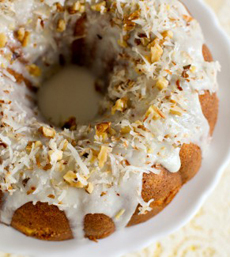
[1] Hummingbird Cake, a traditional southern layer cake, is reinterpreted as a coffee bundt cake. The recipe is below (photo © Go Bold With Butter).

[2] A classic Hummingbird Cake (photo © Allen Brothers).
[3] Whether you put them on top, around the side, and/or in the filling, pecans are a must. Here’s the recipe (photo © Southern Living).
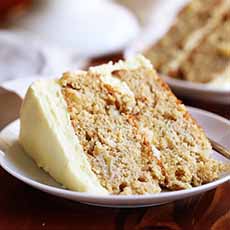
[4] You can make a simple two-layer cake. Here’s the recipe (photo © McCormick).
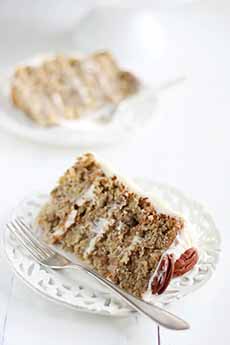
[5] Or go fancy with four layers. Here are different ways to enjoy the flavors of Hummingbird Cake (photo © Southern Weddings).
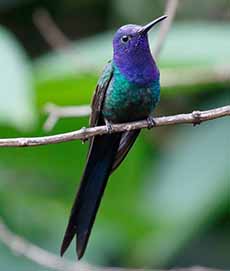
[5] The swallow-tailed hummingbird, for whom Hummingbird Cake was named (photo © Dave Curtis | eBird | Macaulay Library).
|
That says “Caribbean,” and the Humminbird Cake is believed to have been created in Jamaica, probably in the late 1960s.
Originally, it was called the “Doctor Bird Cake,”, a nickname for a Jamaican variety of hummingbird called swallow-tailed hummingbird*.
Why Doctor Bird? The bird probes flowers with its long beak, which inspired the original namer who thought it resembled a doctor inspecting a patient.
In 1968, the Jamaican Tourist Board launched a marketing campaign to attract U.S. tourists. The press kits contained a few recipes from the island, including one for the Doctor Bird Cake.
Over the next few years, similar recipes appeared in local papers and community cookbooks across the South under various different names, including “Cake That Doesn’t Last” (presumably because it’s so good, it quickly gets consumed.
Most food historians agree the first printed recipe for Hummingbird cake was by one Mrs. L. H. Wiggin, who sent the recipe to Southern Living magazine, which published it in February 1978.
But even before then, there are countless references to Hummingbird Cake in county fair reports and baking competitions across southern America.
So who turned the doctor bird into the hummingbird? We have yet to uncover that tidbit of culinary history.
________________
*The swallow tail hummingbird (Trochilus Polytmus and Eupetomena macroura), is one of the largest of the 320 species of hummingbirds. It lives only in Jamaica. [source].
CHECK OUT WHAT’S HAPPENING ON OUR HOME PAGE, THENIBBLE.COM.
|