THE NIBBLE BLOG: Products, Recipes & Trends In Specialty Foods


Also visit our main website, TheNibble.com.

Celebrate Ginuary: A Whole Month Devoted To Gin

A Bottle Of Isolation Proof Original Gin
[1] Isolation Proof Original Small Batch Gin (all photos © Isolation Proof | Gentl & Hyers, except as noted).

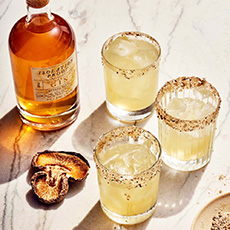
Isolation Proof Mushroom Gin & Mushroom Margaritas
[2] Isolation Proof Mushroom Gin with [perhaps] the world’s first Mushroom Margaritas.

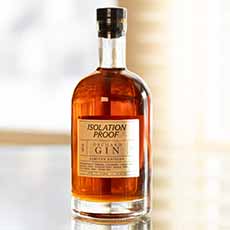
Isolation Proof Orchard Gin
[3] Isolation Proof Orchard Gin, infused with wild apples.

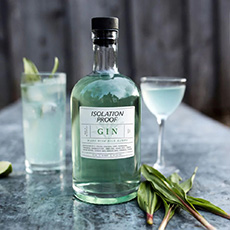
Isolation Proof Ramp Gin
[4] Isolation Proof Ramp Gin, infused with wild ramps.

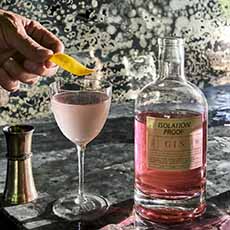
Isolation Proof Strawberry Rhubarb Gin
[5] Isolation Proof Strawberry Rhubarb Gin.

Cubeb a.k.a. Tailed Pepper
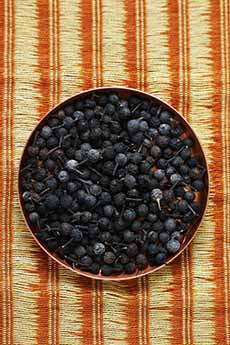
[6] Cubeb (Piper cubeba) is the berry of a tropical vine, is also known as “tailed pepper” for the small stalk attached to its dried berry (similar to Szechuan peppercorns) and Java pepper. It has a complex, slightly bitter, peppery flavor with hints of allspice, mint, and eucalyptus (photos #6 and #7 © Silk Road Spices).

A small bowl of juniper berries
[7] Juniper berries, the basis of all gin.


A whole month devoted to gin! We’ve been keeping our Top Pick Of The Week, Isolation Proof Gin, on ice (as it were), just waiting for Ginuary.

We tried it last spring at a gin tasting of 20 or so artisan brands. It was the clear standout for us (understanding that everyone’s palate may seek a different experience). Our accolade follows.

> The history of Ginuary is below, along with a Freezer Martini tip.

> The history of gin.

> The different types (expressions) of gin.

> The year’s 14 gin holidays.
 
 
ISOLATION PROOF GIN, OUR TOP PICK OF THE WEEK

Isolation Proof Gin is a small distillery, its spirits crafted by Jake Sherry, a gifted artisan.

He is dedicated not to churning out the identical gin year after year, but to capturing the essence of each season (not unlike how each vintage of wine reflects the unique qualities of that season).

As a result, he creates limited-edition releases that showcase the unique botanicals flourishing in the Western Catskill Mountains* in New York State.

The brand was born in 2020 in a wooden barn in the Catskills, from a desire to make sustainable spirits using local ingredient. It began during the pandemic, and the isolation of quarantine.

A stylistic cross between London Dry and New American style gin‡ (the different styles of gin), Isolation Proof Original Gin is earthy and spicy.

It has a backbone of sweetness from licorice and orange peel, and a signature peppery finish from the cubeb berry, a spice from a tropical vine (photo #6). It’s versatile in cocktails and extraordinarily sippable by itself.

With its other expressions, the line also pushes the boundaries of flavored gin: not gimmicky, but profound.

Just a single distillation with botanicals. We love the natural minerality that comes through in our spring water, and the temperature fluctuations that occur across all four seasons. The result of working with

For people concerned with sustainability, As a farm distillery, we source 80%+ of our raw ingredients from New York State, including our base spirit which is made from 100% up-cycled whey, dairy by-product that would otherwise be thrown away. The whey is converted to sugar, which is converted to alcohol, which we convert to sustainable and delicious gin.

From Isolation Proof’s own description, the name is tied to the idea of isolation—they started during the pandemic and the name is “a nod to the solitariness of quarantine.”

> Get your Isolation Proof Gin here!
 
 
THE EXPRESSIONS OF ISOLATION PROOF GIN

All of the brand’s expressions begin with signature seven core botanicals: juniper berries (photo #7) plus angelica root, cassia bark, coriander, cubeb*, licorice root, and orange peel.

We sipped all of them straight, but the brand offers cocktail advice plus (with recipes on the website).
 
Original Small Batch Gin

Original expression (photo #1) is a cross between London Dry and American style gins‡. Its earthy and spicy tones, join a backbone of sweetness from organic licorice and orange peel and a signature peppery finish from cubeb berries (photo #6). This complex yet sprightly botanical profile makes Original our current favorite gin for straight sipping (or for cocktails, of course—but do try it straight).

Mushroom Gin

Don’t be surprised; it’s a very special, beguiling gin for mushroom lovers (photo #2). Earthy and savory, the distillation includes maitake and shiitake mushrooms, along with chamomile and green coriander. It’s an umami gin.

Orchard Gin

The orchard is an apple orchard; the gin is a malty, full-bodied, modernized Old Tom gin† with hints of apple, pear, cocoa and spice (photo #3). Macerated wild apples are picked from the distillery’s own property, with diced dried pears added post distillation. The final step is a brief steep in loose leaf Assam tea.

Ramp Gin

The distiller calls it “our wildest gin yet…zany, yet refined…sagacious…beguiling. The embodiment of earthiness and vernal flavor, it sizzles with freshly-picked wild ramps.” As you can see in photo #4, it’s a beautiful shade of pale green. It’s a must-try for Dirty Martini fans. Feel free to add some orange bitters, which layer on complexity without fighting with the olive juice.

Strawberry Rhubarb Gin

The beautiful pink hue (photo #5) results from adding local strawberries and rhubarb to the still, followed by pink peppercorn, grapefruit peel, blood orange peel, and a touch of cardamom. In addition to straight sipping, use this expression with citrus-forward cocktails and summery classics like the Gin & Tonic, Gimlet, and White Negroni‡‡.
 
 
GET YOUR ISOLATION PROOF GIN

We adore the Original Small Batch. It’s become our favorite sipping gin—and that says a lot, given the different fine brands we’ve enjoyed.

It’s a perfect gin-lover’s gift, something truly special. In addition to Original, consider:

  • Valentine’s Day is upcoming, and Strawberry Rhubarb is the perfect hue.
  • For St. Patrick’s Day and Easter, pale green Ramp Gin.
  • While Mushroom Gin and Orchard Gin are part of our fall and winter sipping, all of the expressions are wonderful at any time of the year.
  • Coming up: Mother’s Day and Father’s Day and summer hostess gifts.
  •  
    > Head to Isolation Proof.

    Below: The history of Ginuary and Freezer Martinis.

     
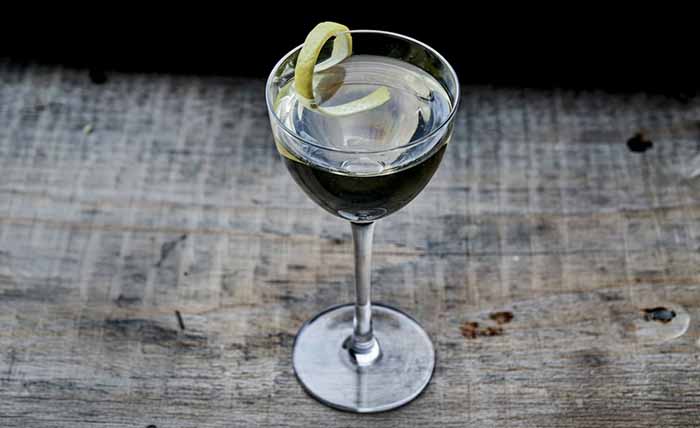
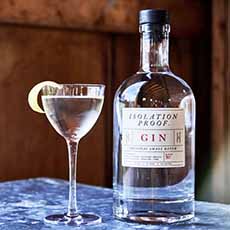
    Martini With A Lemon Twist
     
     
    THE HISTORY OF GINUARY

    Ginuary traces its roots to 2012. It began as a social media experiment by “Miss Ginuary,” the pseudonym of an Australian blogger who committed to trying a new gin drink recipe every day throughout the month of January.

    “Ginuary” is a playful portmanteau of “gin” and “January.”

    Her act, which spawned a global movement, was created as the counterpoint to Dry January, when some people choose to abstain from drinking.

    Instead of abstaining from alcohol, Ginuary encourages enthusiasts to explore the history, different styles, and botanical varieties of gin.

    Ginuary has become a month-long celebration featuring festivals, tastings, new cocktails, brand promotions, and other celebrations.
     
     
    FREEZER MARTINIS

    Some people drink gin at room temperature, others prefer it chilled.

    For the chilled crowd, Isolation Proof suggests making a bottle of Freezer Martinis: 2 parts gin, 1 part vermouth, 0.5 parts water.

    You can grab the bottle from the freezer whenever you decide to call “Martini time!” and enjoy a very chilled drink.

    > Here’s more about Freezer Martinis.
     
    ________________
     
    *While the Eastern Catskills are known for the Hudson River, the Hudson River School Of Art, and Rip Van Winkle’s fictional village (the real-life hamlet of Palenville), the Western Catskills—primarily encompassing Delaware County—are known for a more rugged, agricultural, and “off-the-beaten-path” charm. The region is famous as the birthplace of American fly fishing. It’s also known for, among other things, the “book village” of Hobart and the Pakatakan Farmers Market, one of the most famous farmers’ markets in the state.

    †Old Tom gin is a historical style that’s typically sweeter and rounder than London Dry gin. It was the bridge between the older Dutch Genever style and the modern dry gins.

    ‡American style gin refers to a movement led by U.S. craft distillers (like Aviation in Portland (Oregon), Bluecoat in Philadelphia, and St. George in California). It implies a “New World” botanical-forward (citrus, floral, or spice) approach, with juniper as a supporting or equal parter. One can find a variety of different notes—citrus, cucumber, lavender, rose, sarsaparilla, and even apples, grapes, or honey.

    London Dry gin, on the other hand, is juniper-forward (piney, resinous notes), with well-defined notes of angelica root, black pepper, and pine.

    ‡‡The White Negroni is a modern variation of a classic cocktail that replaces the Campari and sweet vermouth of a Negroni with French-inspired, paler alternatives: a bittersweet gentian liqueur (typically Suze) and a floral, wine-based apéritif (typically Lillet Blanc). The result is a lighter, brighter, more herbaceous, and subtly bitter drink.
     

    CHECK OUT WHAT’S HAPPENING ON OUR HOME PAGE, THENIBBLE.COM.


    Comments off

    It’s National Gluten Free Day. What’s A Gluten-Free Diet?

     
    National Gluten Free Day is January 13th. If you don’t have gluten sensitivities or celiac disease, are there benefits to a gluten-free diet?

    The claimed benefits of the diet are improved health, weight loss and more energy. But this is anecdotal; more research is needed before anything is confirmed or negated.

    In fact, the current scientific thinking is that for people not sensitive to gluten, a gluten-free diet (GFD) generally offers no proven health benefits. It can even lead to nutritional deficiencies (iron, fiber, B vitamins) and a higher intake of sugar/fat if one consumes enough processed GF products.

    Plus, research shows no improvement in heart health with a gluten-free diet. And going gluten-free can be more expensive.

    A gluten-free diet completely cuts out products made with wheat and some other grains (the list is below).

    These can be hidden ingredients; e.g., soy sauce contains wheat although plain soybeans and tofu do not. If you’re buying processed edamame, check the label. Tamari is the gluten-free version of soy sauce.

    The benefit of going gluten-free for those who aren’t sensitive is that it often encourages eating more whole, unprocessed foods, which is healthy. But the benefit comes from those foods themselves, not the absence of gluten.

    Here’s what the Mayo Clinic has to say about it, plus their parameters for a gluten-free diet.

    Below:

    > The symptoms of gluten sensitivity.

    > Who discovered gluten sensitivity.
     
     
    WHAT IS GLUTEN

    Gluten is a protein that helps foods keep their shape (e.g., a loaf of bread, a strand of spaghetti). It’s found in grains such as wheat, barley and rye as well as crosses of these grains, such as triticale (a highly-nutritious mix of wheat and rye).

    People who are sensitive to gluten have discomfort (see the symptoms below). Celiac disease is a serious autoimmune disorder where even a microscopic crumb of gluten can trigger internal damage.

    There is also wheat allergy, a classic food allergy, similar to a peanut or shellfish allergy. The symptoms are milder (hives, skin rashes, swelling, nasal congestion) and people with a wheat allergy, while avoiding wheat, can usually safely eat barley and rye.
     
     
    THE GLUTEN FREE DIET

    Many naturally gluten-free foods can be a part of a healthy diet:

  • Fresh fruits and vegetables are gluten free; but dried, frozen and canned versions may have ingredients with gluten in them, including those in sauces.
  • Beans, seeds, legumes, and nuts in their natural, unprocessed forms.
  • Eggs.
  • Lean, non-processed meats, fish, and poultry without seasoning.
  • Dairy products including plain milk, plain yogurt and unprocessed cheese (low-fat versions are healthier).
     
     
    Gluten Free Grains, Flours, And Starches

    Because of cross-contamination in fields and processing plants, some naturally gluten-free foods require a careful check of the label to it says “gluten free.”

  • Amaranth
  • Arrowroot
  • Buckwheat
  • Corn, including cornmeal, grits and polenta that are labeled gluten-free
  • Flax
  • Gluten-free flours such as rice, soy, corn, potato and bean flours
  • Hominy (corn)
  • Millet
  • Quinoa
  • Rice, including wild rice
  • Sorghum
  • Soy
  • Tapioca (cassava root)
  • Teff
  •  
     
    Prohibited Grains

    Grains that can’t be consumed:

  • Barley
  • Oats, unless the label says they’re gluten-free*
  • Rye
  • Triticale
  • Wheat and its varieties†
  •  
     
    SYMPTOMS & WHAT TO DO

    While The Nibble is not qualified to provide healthcare advice, we pass this along from the Mayo Clinic:

    If you suspect you have a sensitivity, it is generally recommended to consult a doctor to test you, before removing gluten from your diet. If you stop eating gluten before being tested, the results may come back as a false negative.

    Consult your healthcare provider if you experience the following, which are the most frequent signs and usually occur shortly after consuming gluten:
     
     
    Gastrointestinal Symptoms

  • Abdominal Pain: Cramping or general discomfort in the stomach area.
  • Bloating and Gas: A persistent feeling of fullness or swelling in the abdomen.
  • Diarrhea or Constipation: Significant changes in bowel habits, often alternating between the two.
  • Nausea: Feeling sick to the stomach after meals containing wheat, barley, or rye.
  •  
     
    Non-Digestive (Systemic) Symptoms

    These are known as “extraintestinal” symptoms that affect the rest of the body:

  • Brain Fog: A feeling of mental fatigue, difficulty concentrating, or a “cloudy” mind.
  • Fatigue: Chronic tiredness or a significant drop in energy levels after eating gluten.
  • Headaches: Frequent migraines or tension-type headaches.
  • Joint and Muscle Pain: Unexplained aches or inflammation in the joints, often described as feeling “flu-like.”
  • Skin Issues: Unexplained rashes, eczema, or “chicken skin” (keratosis pilaris) on the backs of the arms.
  • Numbness or Tingling: A pins and needles sensation in the hands or feet (peripheral neuropathy).
  •  
     
    Psychological Indicators

    There is an increasing amount of research linking gluten sensitivity to mood-related changes:

  • Anxiety and Depression: Increased feelings of nervousness or low mood that improve when gluten is removed from the diet.
  • Irritability: Sudden shifts in mood or a low tolerance for stress following gluten consumption.
  •    
    Plate of gluten free waffles
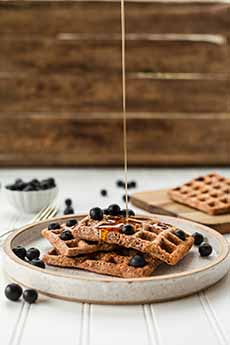
    [1] There are plenty of good gluten-free pancake and waffle mixes (photo © Lindsay Moe | Unsplash).

    Macadami Bread Loaf Cake
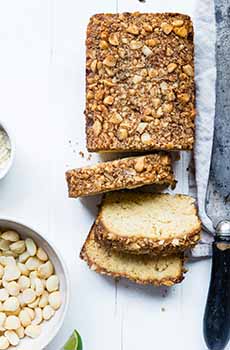
    [2] There are countless gluten-free recipes, plus good mixes, for bread, cakes, cookies, pastries and pies (photo © Taylor Kiser | Unsplash).

    A Dish Of Gluten Free Pasta
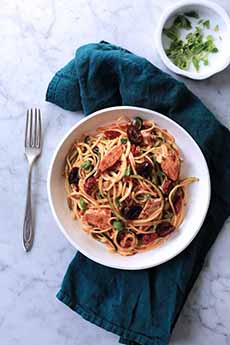
    [3] There are many shapes of gluten-free pasta. Here’s the recipe for this dish (photo © DeLallo).

    Oatmeal With Nuts Topping
    [4] A tasty breakfast: oatmeal, sliced almonds, and maple syrup. Be sure the oats are gluten-free (photo © K8 | Unsplash).

    A jar of mixed nuts and dried fruits
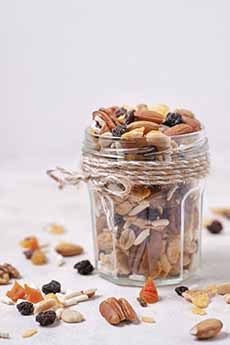
    [5] A mix of nuts and dried fruits is a yummy—and better-for-you—snack (Freepik Photo).

    A plate of macarons
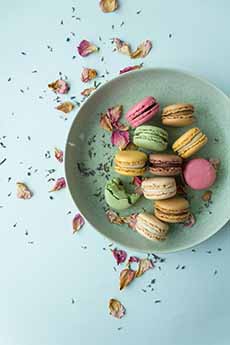
    [6] Macarons, made with almond flour, are always gluten-free (photo © Keila Hotzel | Unsplash).

    Dr. William Karel Dicke
    [7] Dr. Willem Karel Dicke of the Netherlands is widely credited with identifying that wheat (and specifically what we now know as gluten) was the key dietary trigger. There’s more about him below (photo © Utrecht University/Catalogus Professorum).


    WHO DISCOVED GLUTEN SENSITIVITY?

    2nd Century: Aretaeus of Cappadocia, one of the most celebrated of the ancient Greek physicians, described a condition consistent with celiac disease (“koiliakos”), 18 centuries before gluten was identified. Little is known of his life but that he was ethnically Greek, born in the Roman province of Cappadocia, Asia Minor (modern day Turkey), and most likely lived in the second half of the second century C.E.

    19th Century: Samuel Jones Gee (1839-1911), an English physician and pediatrician, gave a classic modern clinical description of celiac disease in 1888, and noted that diet mattered—even though the specific culprit was not yet known.

    20th Century: Willem Karel Dicke (1905-1962) a Dutch physician (photo #7), is widely credited with identifying that wheat (and specifically the protein we now know as gluten) was the key dietary trigger. As early as 1936, he noticed that children with celiac syndrome improved when wheat was removed from their diet, and he was the first to develop the gluten-free diet. He was considered for the 1962 Nobel Prize in Medicine, but his untimely death that year made the discussion moot as the prize is not awarded posthumously.
     
    A tray of gluten-free ingredients
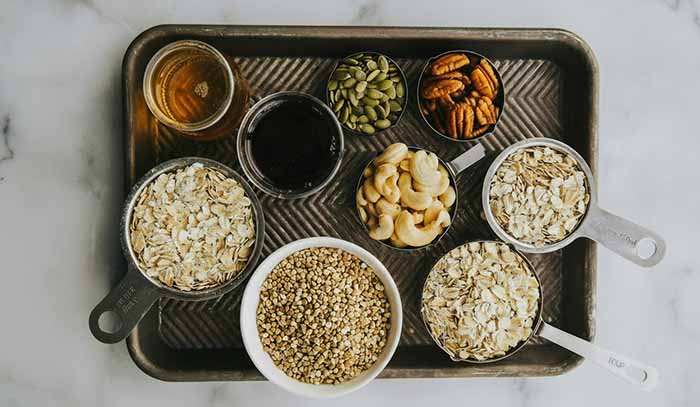
    [8] Most ingredients are gluten free (photo © Khloe Arledge | Unsplash).
    ________________
     
    *Oats are naturally gluten-free. But they may become tainted during production with wheat, barley or rye. This is known as cross-contamination. Oats and oat products labeled gluten-free have not been cross-contaminated. But there’s another protein in oats called avenin that people with celiac disease may have a reaction to. Consult your healthcare professional.

    †There are different varieties of wheat, all of which contain wheat gluten: couscous, durum, einkorn, emmer, farro, graham, kamut, spelt, wheat bran, and wheat germ.

    Wheat flours have different names based on how the wheat is milled or the flour is processed. All of these contain gluten:
    > Enriched flour with added vitamins and minerals.
    > Farina, milled wheat usually used in hot cereals.
    > Graham flour, a coarse whole-wheat flour.
    > Self-rising flour, also called phosphate flour.
    > Semolina, the part of milled wheat used in pasta and couscous.


    CHECK OUT WHAT’S HAPPENING ON OUR HOME PAGE, THENIBBLE.COM.


    Comments off

    New Zero Sugar Oreo Cookies: They Taste Just As Delish

    A Package Of Zero Sugar Oreos
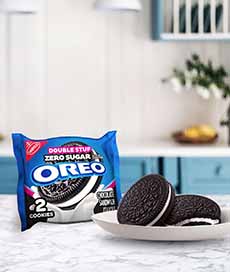
    [1] If you’ve given up your beloved Oreos to cut back on sugar, there’s a new Zero Sugar Oreo waiting for you (all photos © Mondelez except as noted).

    An Oreo Zero Sugar Cookie
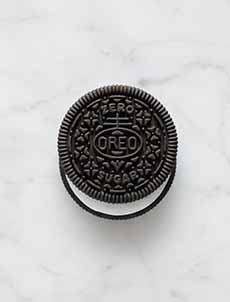
    [3] Look closely: The cookie says “Zero Sugar.”

    Oreos With Peanut Butter
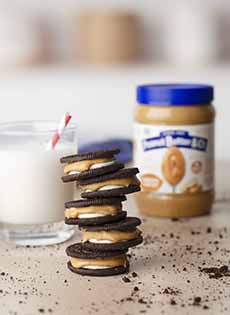
    [3] Add some protein to your snack: Spread a layer of peanut butter on top of the creme center (photo © Peanut Butter & Co).

    Chocolate Layer Cake With Oreo Filling
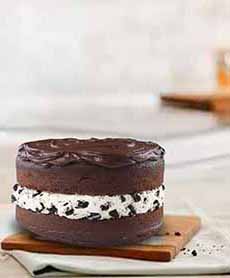
    [4] With a sugar-free cake mix, you can make this Oreo layer cake. Or, mix big chunks of crushed Oreos into sugar-free ice cream for an Oreo ice cream cake. Here’s the recipe (Abacus Photo).

    Zero Sugar Oreos With A Glass Of Milk
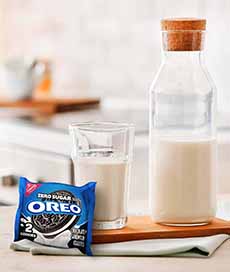
    [5] Grab a glass of milk and take a break.

    A glass of Oreo milk with Oreo cookies
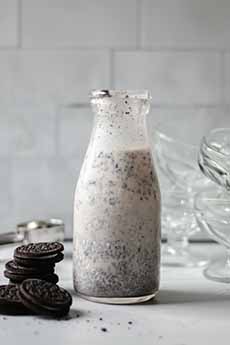
    [6] Oreo milk. Drink it, or use it to make the best Oreo ice cream. Here’s the recipe (photo © Kate The Baker).


    Oreos, the most popular packaged cookie in America, has innovated often with special flavors and the ability to design your own Oreos. But we’re most excited about this innovation:

    After four years in development, Mondelez, the parent company of Oreos, has just launched Zero Sugar Oreos.

    In both Original and Double Stuf Zero Sugar varieties, they will be available permanently nationwide.

    Finally!

    Current food trends point to consumers’ desire for “mindful indulgence”:

  • 66% of Americans are reportedly trying to limit sugars in their diet in 2024 [source: Statista].
  • 75% say they are trying to limit or avoid sugars in their diet [source: International Food Information Council].
  • Only 25% say they are not trying to limit or avoid sugar in their diet.
  •  
    Details follow; but first, elsewhere on The Nibble:

    > The history of Oreos.

    > The history of cookies.

    > The year’s 44 cookie holidays. (National Oreo Day is March 6th.)

    > The 10 basic styles of cookies (Oreo is a sandwich cookie).

    > The different varieties of of cookies: a photo glossary.

    > Recipes with Oreos.
     
     
    THE SKINNY ON ZERO SUGAR OREOS
     
    Or, as Oreo says, here’s “a quick dunk in the details.”

    Oreo Zero Sugar Cookies:

  • Taste just as good as the originals. Most people won’t notice a difference‡.
  • The non-caloric sweetener blend is a skillful combination of maltitol, polydextrose, sucralose, and acesulfame potassium (Ace-K). It’s aspartame free (see the different types of non-caloric sweeteners).
  • They’re individually packaged for grab and go and portion control. There are two cookies in a packet (total 90 calories).
  • A bag of 20 cookies, 10 packets, has a MSRP of $5.29.
  •  
    Calorie Comparison

  • One sugar-free Oreo has about 45 calories and zero sugar.
  • A regular Oreo cookie is about 53 calories but 4.6 grams of sugar, about the equivalent of a teaspoon.
  •  
    > If you can’t find Zero Sugar locally, you can order them online.
     
     
    THE U.S. COOKIE MARKETPLACE

    Oreos are by far the most popular packaged cookie in the U.S., with 19% of the cookie market share. That equates to more than $675 million in annual revenue. And it doesn’t include sales in the rest of the world!

    Americans consume a staggering amount of cookies—billions of pounds annually. Cookies are one of the most popular snack foods in the U.S.

    According to Virtue Market Research, Americans consume more 2 billion cookies annually—that’s roughly 300 cookies per person!

    How can that be? Well…according to Mintel, more than 1 in 10 Americans consume cookies multiple times daily.

    The average American eats 26 cookies during the holiday season alone [source].

    Top 10 brands or brand groups in the U.S. based on market share and sales:

  • Oreo: 19% market share (Nabisco/Mondelēz International)
  • Chips Ahoy: 11% market share (Mondelēz International)
  • Milano (Pepperidge Farm/The Campbell Soup Company)
  • Nutter Butter (Nabisco/Mondelēz International)
  • Nilla Wafers (Nabisco/Mondelēz International)
  • Fudge Stripes (Keebler/The Ferrero Group)
  • Famous Amos (Kellogg’s/The Ferrero Group
  • Chewy Chips Ahoy (counted separately, Mondelēz International)
  • Little Debbie (McKee Foods)
  • Keebler Sandies (Keebler/The Ferrero Group)
  •  
    Runners up include:

  • Girl Scout Cookies* (Girl Scouts USA), Pepperidge Farm Chessmen (Pepperidge Farm/The Campbell Soup Company), Vienna Fingers (Keebler/The Ferrero Group, and Lorna Doone (Nabisco/Mondelēz International).
  •  
    Despite the dominance of big brands like these, homemade cookies (especially chocolate chip) remain deeply tied to American cookie culture.
     
     
    What About Homemade Cookies?

    According to the American Baking Association, 9 in 10 Americans—nearly 300 million people—bake cookies at Christmastime, and 83% make homemade cookies† throughout the year. And those who bake don’t consume more cookies:

    Research has found that people who bake cookies from scratch consume 10% fewer cookies throughout the day than those who did not bake any, but were offered the already-baked cookies [source].
     
     
    Cookie Triva
     
    The American English word “cookie” comes from the Dutch “koekje” (KOOK-ya), meaning “little cake.”

  • The British use the term “biscuits” (derived from Latin) for what Americans call cookies.
  • What Americans call biscuits, Brits call scones—which are not equivalent to American biscuits.
  • Brits don’t serve a basket of biscuits, rolls, or other breads with meals. Rather, bread and butter or plain rolls are served with appropriate foods (e.g. a bowl of soup, meat with gravy), and there’s toast with butter and jam for breakfast.
  • The rich variety of American biscuits developed outside of the British culinary tradition. The different types of American biscuits.
  •  
    Oreos & A Cup Of Coffee
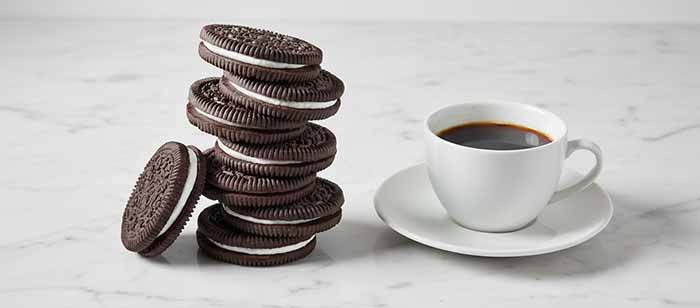
    [7] You can’t eat the whole stack, but a two-cookie packet with black coffee is a 90-calorie snack. Add a shot of milk for another 18 calories.
    ________________

    *Girl Scout Cookies collectively generate about $800 million annually, but are only sold January through April. They are owned by the Girl Scouts of the USA (GSUSA), a non-profit organization, but are commercially produced under license by two main baking companies. The Girl Scout cookie program is uniquely American and has become a cultural institution, with people having fierce loyalty to specific varieties and waiting eagerly for cookie season to arrive each year.

    †Baked-from-scratch cookies are a lower percentage than more convenient options like prepared cookie doughs and mixes.

    ‡Die-hard Oreo consumers: Don’t quibble over this if you do taste a difference. We taste food for a living, have a wine writer’s palate, and detected nothing artificial with Zero Sugar vis-a-vis standard Oreos.


    CHECK OUT WHAT’S HAPPENING ON OUR HOME PAGE, THENIBBLE.COM.


    Comments off


    © Copyright 2005-2026 Lifestyle Direct, Inc. All rights reserved. All images are copyrighted to their respective owners.