THE NIBBLE BLOG: Products, Recipes & Trends In Specialty Foods


Also visit our main website, TheNibble.com.

Salted Cod Recipe With Tomatoes, Capers and Olives

A pot of baccala--salted code.
[1] Delicious salted cod with tomatoes, capers, olives, and red pepper flakes (photos #1, #2, #5, #8, and #9 © DeLallo).

A wood box of salted cod fillets (baccala)
[2] A box of salt cod, ready for soaking.

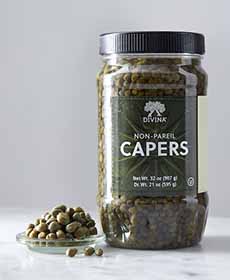
A jar of Divina brand capers
[3] Non-pareil capers are the smallest and most delicate in flavor (photos #3 and #6 © Good Eggs).

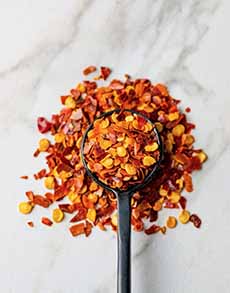
A Spoon Of Crushed Red Pepper Flakes
[4] Crushed red pepper flakes (photo © Savory Spice Shop).

A dish of crushed San Marzano tomatoes
[5] Crushed San Marzano tomatoes.

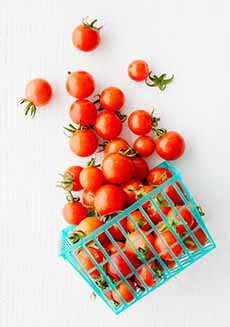
Carton of Cherry Tomatoes
[6] Whole cherry tomatoes will burst in the oven, adding their juices to the sauce..

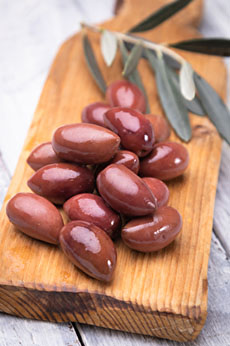
Kalamata Olives On A Cutting Board
[7] Pitted Kalamata olives (photo Igor Dutina | Panther Media).

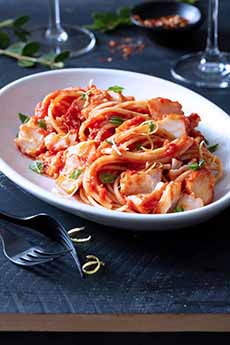
Baccala In Tomato Sauce With Linguine Baccala With Linguine[/caption]
[8] Baccalà In Tomato Sauce With Linguine Here’s the recipe.

Soda Battered Baccalà With Sour Cream & Caper Sauce
[9] Soda Battered Baccalà With Sour Cream & Caper Sauce.


If you’re not Italian-American, you may not know the tradition of the Feast Of The Seven Fishes.

But there’s no time like Christmas Eve to begin the tradition: a dinner consisting of seven seafood dishes. (Some ambitious families go for eight, nine or more dishes).

> We’re starting you off with a heritage salt cod recipe, below.

> Also below, instead of Italian fare you can serve an all-American seafood menu.

> After you’ve gotten the hang of salted cod, here are more recipes.
 
 
THE HISTORY OF THE FEAST OF THE SEVEN FISHES

The Feast of the Seven Fishes (in Italian, Festa Dei Sette Pesci) is an Italian-American celebration on Christmas Eve: a feast with dishes of fish and other seafood.

In Southern Italian tradition, Christmas Eve is a vigil or fasting day that is known as La Vigilia (The Vigil). An all-seafood meal reflects the observance of abstinence from meat until the feast of Christmas Day.

The celebration commemorates the wait, the Vigilia di Natale, for the midnight birth of the baby Jesus [source].

The long-standing practice of eating seafood on Christmas Eve dates from the Roman Catholic tradition of abstaining from eating meat on Fridays and specific holy days, including the eve of a feast day (e.g., Christmas).

It dates to medieval times. Since no meat or animal fat could be used on abstinance days, observant Catholics ate fish, typically fried in oil.

Among Italian-Americans, the Christmas Eve observation turned into a grand dinner with seven or more traditional Italian fish dishes.

It’s definitely an American custom: The name “seven fishes” and the presentation of seven dishes as both a concept and a name is unknown in Italy.

However, the fare comprises traditional dishes from the old country: baccalà (salted cod fish), calamari, and fried fish and seafood (oysters, scallops, shrimp, smelts).

There is no historical agreement as to the origin of the number seven. It may come from the seven Sacraments of the Catholic Church. We may have to wait for the next Dan Brown novel to uncover the mystery.
 
 
HOW YOU CAN CELEBRATE OF THE FEAST OF THE SEVEN FISHES

It you’d like to try creating your own seven fish dishes on Christmas Eve, you don’t have to adhere to Italian specialties or make a full dinner out of it. See our suggestions below.

You can even do it as a potluck, or as an appetizer plate with, for example, calamari salad, cocktail shrimp, crab cakes, crab dip with crudités, tuna-olive tapenade, seafood paté and smoked salmon or gravlax.

Have we convinced you yet to make the Feast Of The Seven Fishes a holiday tradition in your home?

Below is a classic recipe to get you started, featuring baccalà (salted cod), a traditional Italian ingredient [photo #2].

The salted cod is sautéed with crushed tomatoes, capers, olives, and lemon juice before roasting it in the oven with whole tomatoes until the tomatoes start to burst.
 
 
WHAT YOU NEED TO KNOW ABOUT SALTED COD

Says Italian food specialist DeLallo, who provided us with the following recipe:

“Baccalà comes mostly from the coasts of Labrador and Newfoundland, where it’s fished, salted [to preserve it] and exported all over the world.

[While] dried and salted fish doesn’t sound like something to get too excited about…if you ask an Italian about [it] you’ll see their eyes light up.

“Salt-dried cod has been used in Mediterranean recipes for thousands of years and it has become a Christmas Eve favorite for many traditional Italian families.

“Salt-dried cod is delicious when prepared correctly. It’s slightly firm and mild in flavor, and it pairs well with acidic flavors, such as tomatoes, marinated artichokes, and capers.”
 
 
RECIPE: SALTED COD WITH TOMATOES, CAPERS, & OLIVES

Preparation includes soaking the cod for three days in advance of cooking, to remove the salt. Here’s how.

Soaking time is 3 days, prep time is 10-15 minutes, cook time is 50 minutes.
 
Ingredients

  • 2 pounds center-cut skinless boneless salt cod (baccalà), prepared (directions below)
  • 3 tablespoons extra virgin olive oil
  • 1 medium onion, diced
  • 1 (4-ounce) jar non-pareil* capers, drained**
  • 4½ teaspoons red pepper flakes
  • 1 (28-ounce) can San Marzano-style crushed tomatoes‡
  • 1 teaspoon salt
  • 20 cherry tomatoes
  • ½ pound pitted Kalamata olives
  • 1 lemon, halved
  • Bunch fresh basil, chopped
  •  
    Preparation

    1. PREPARE and soak the baccalà at least 3 days prior cooking. Here’s how to do it.

    2. HEAT the oven to 375°F.

    3. HEAT 3 tablespoons of olive oil over medium heat in a cast iron or oven-safe skillet, until hot but not smoking. Add the onion and sauté until golden, 3 to 4 minutes.

    4. ADD the red pepper flakes, capers, San Marzano tomatoes and salt. Bring to a boil and simmer for 20 minutes.

    5. ADD the cod, olives, cherry tomatoes, juice from lemon halves and the lemon. Transfer to the oven and roast until fish becomes brown and tomatoes start to blister, about 20 to 25 minutes.

    6. REMOVE from the oven and serve.
     
     
    ALL-AMERICAN GOURMET SEVEN FISHES MENU

    For a gourmet Feast Of The Seven Fishes, consider this seven-course dinner:

  • Oyster shooters, oysters on the half shell, or Oysters Rockefeller.
  • Salmon or tuna tartare or ceviche.
  • Seafood chowder.
  • Marinated seafood salad (calamari, octopus, shrimp, green and black olives, onion) over greens.
  • Angel hair pasta with lobster in a tomato cream sauce or squid ink pasta with scallops and red caviar.
  • Your favorite salmon dish.
  • Your favorite shrimp recipe or lobster dish.
  •  
    Last year, as a starter with cocktails we served salmon, tuna, and eel sushi rolls from our neighborhood sushi bar.
     
     
    MORE RECIPES WITH SALTED COD (BACCALÀ)

  • Baccalà In Tomato Sauce With Linguine
  • Fried Baccalà
  • Mrs. DeLallo’s Baccalà Salad
  • Oven-Roasted Baccalà With Potatoes
  • Soda Battered Baccalà With Sour Cream & Caper Sauce
  •  
     
    ________________
     
    *Non-pareil is a French term meaning “has no equal.” Non-pareil capers are the smallest caper buds, measuring under 7mm. They are considered the most delicate with a tighter, firmer texture, and the most elegant in appearance.

    **You can repurpose the liquid in a vinaigrette.
     
    †Each caper type is determined by when the caper is picked. Nonpareils are the most popular and only grow to 7 millimeters. Surfines grow between 7 to 9 millimeters, Capucines grow 9 to 11 millimeters, Capotes grow 9 to 11 millimeters, Fine grow 11 to 14 millimeters, and Grusas grow anything over 14 millimeters [source]. While non-pareil capers are often advertised as the highest quality, the flavor profiles of various caper sizes are a matter of personal taste. Smaller buds have a more subdued flavor than those that are later in the blooming stage [source].

    ‡Roma tomatoes, also known as plum tomatoes, are oblong and have few seeds. Kumato tomatoes have a stronger, harder skin than a regular tomato that resists bruising. A hybrid variety, it ripens to a deep greenish brown.


    CHECK OUT WHAT’S HAPPENING ON OUR HOME PAGE, THENIBBLE.COM.


    Comments off

    Easy Christmas Risotto Recipe & The Types Of Risotto Rice

    Most of us would not consider risotto to be an “easy” recipe. It requires constant observation and stirring.

    But Dole created this recipe as a multi-cooker risotto. The rice practically makes itself!

    And the bright holiday colors have great eye appeal in what is often a “beige” dish.

    The recipe follows below, but first:

    > The history of risotto.

    > The history of rice.

    > The different types of rice: a photo glossary.

    There are links to more risotto recipes below.

    > There is no Risotto Day, but September is National Rice Month.
     
     
    WHAT TYPES OF RICE ARE USED FOR RISOTTO?

    A bit of history: The first evidence of rice cultivation in Italy dates to 1468 in Florence. In the late 1400s rice cultivation spread to northern Italy, to Lombardy and Piedmont.

    An advantage there was the Po Valley, a flat and fertile plain that is watered by the Po River and its tributaries. Frequent flooding of the Po River enabled the rice to be grown in paddies. The Po Valley is an ideal environment for rice cultivation [source].

    From those beginnings, many types of rice were bred and cultivated.

    On to risotto.

    To create the signature creaminess of risotto, the type of rice used must contain a just-right amount of starch to create its creamy texture and sauce.

    The creaminess is the result of slowly coaxing the starch out of the rice as it is cooked and stirred every 30 seconds or so for 20 to 30 minutes.

    The rices tend to be Japonica cultivars, from the same genus that produces the other “sticky rices,” including mochi, sushi, and sweet rice varieties.

    Italy grows four main varieties of superfino rice (the highest grade of Italian rice) for risotto: Arborio, Baldo, Carnaroli, and Vialone Nano.

    These differ in length and vary slightly in starch content and texture. Usually chefs have a particular preference, and there are regional preferences as well, e.g. for a drier versus a soupier risotto. You can experiment to see which type you like best.

    The following four rice varieties are grown in Northern Italy’s Po Valley, which stretches across several regions including Emilia-Romagna, Lombardy, Piedmont, and Veneto.
     
    Arborio rice is a medium-length, round-grained rice. It is named for the town of Arborio, where it was first cultivated in the 19th century, primarily for use in risotto [source]. The grains have a more tan color with a characteristic white dot at the center of the grain.

    Arborio rice develops a creamy texture around a chewy center and has exceptional ability to absorb flavors.

    Arborio is more widely available and less expensive, but it’s not as starchy as Baldo, Carnaroli, or Vialone Nano and thus absorbs the broth liquid—which provides the creaminess—a little less well.

    Still, its availability and price make it the most popular rice for making risotto. It produces a relatively creamy risotto with a hearty texture.
     
    Baldo rice is the newest, and least well known, risotto rice, introduced in 1977. It’s a hybrid of Aborio and a variety known Stirpe 136.

    Baldo has medium-sized grains that are slightly longer and more slender than those of Arborio rice. The grains are not as round as Vialone Nano and maintain their texture during cooking

    The rice has a rich flavor and typically requires a shorter cooking time compared to some other rice varieties.
     
    Carnaroli rice dates to about 1945, and is a cross between Vialone and Lencino varieties. It is superior to both of these ancestors, due to its higher amylose content (the crystallizable form of starch).

    The variety was named after Professor Emiliano Carnaroli, President of the Ente Nazionale Risi (National Rice Body) at that time.

    Carnaroli is a plumper, larger grain of rice that’s preferred by many chefs for producing a very creamy risotto with a nice bite.

    Highly prized, it is the most widely used rice in overall Italian cuisine [source].
     
    Vialone Nano rice is a short-grain rice introduced in 1937. It’s a cross between Vialone and Nano rice varieties.

    The grains are thick and stubby in comparison to other types of superfino rice, with a wide central core known as the “pearl.” The variety is named “Nano” because of its small size.

    It’s widely considered the archetype of the Italian risotto rice [source].

    It’s the risotto rice of choice in the Veneto region of Northern Italy, particularly around Verona.

    Vialone Nano absorbs liquid well and is commonly used for soupy-style risottos, especially those with added seafood.

    Compared to other three varieties, it’s considered to absorb flavors more effectively while retaining a firm, al dente, texture. It cooks relatively quickly while still releasing enough starch to create a creamy dish [source].
     
     
    RECIPE: ASPARAGUS RISOTTO WITH SPINACH-BROCCOLI PESTO

    Prep time is 20 Minutes, cook time is 10 minutes.
     
    Ingredients For 6 Servings

  • 4 garlic cloves, coarsely chopped
  • ½ small head broccoli, chopped
  • 4 cups packed spinach
  • ½ cup pine nuts
  • ¼ cup fresh lemon juice (from 1 lemon)
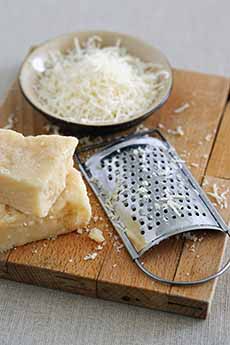
  • ¼ cup shredded Parmesan cheese plus additional for garnish
  • ¼ cup olive oil
  • 2 teaspoons lemon zest (from 1 lemon)
  • 1 teaspoon kosher salt
  • ½ teaspoon fresh ground black pepper
  • 1 bunch asparagus, trimmed, cut crosswise into 1-inch pieces (about 1 pound)
  • 2 red bell peppers, chopped
  • 2 cups Arborio rice
  • Garnish: shredded Parmesan cheese
     
    Preparation

    1. PURÉE the garlic, broccoli, spinach, pine nuts, lemon juice, parmesan cheese, 3 tablespoons oil, lemon zest, salt, black pepper and 1/3 cup water in a food processor (makes about 1¾ cups).

    2. COOK the asparagus, bell peppers and remaining 1 tablespoon oil in a multi-cooker on sauté setting 5 minutes or until the vegetables are tender, stirring occasionally. Transfer to a plate with a slotted spoon (makes about 4 cups).

    3. ADD the rice to the multi-cooker; cook for 3 minutes or until toasted, stirring occasionally.

    4. STIR in 4 cups of hot water; cover, seal vent and cook for 2 minutes on high pressure. Quick release the pressure and remove the lid; stir in the pesto (makes about 7 cups).

    5. SERVE the risotto topped with the asparagus and peppers. Garnish with cheese before serving, or pass the extra Parmesan cheese in a bowl or ramekin so people can add their own.

    Also pass a pepper mill so they can add fresh pepper to taste.
     
     
    MORE RISOTTO RECIPES

  • Asparagus Risotto
  • Barley “Risotto” Stuffed Cabbage
  • Butternut Squash Risotto
  • Cauliflower Risotto
  • 15 Minute Risotto
  • Pumpkin, Sausage & Sage Risotto
  •  

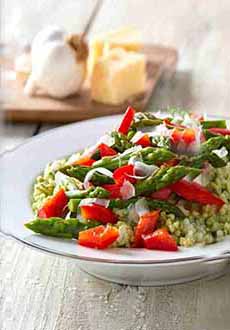
    A plate of Christmas Risotto with red bell pepper and green asparagus
    [1] A festive risotto with the red and green colors of Christmas (photos # 1, #3, and #4 © Dole).

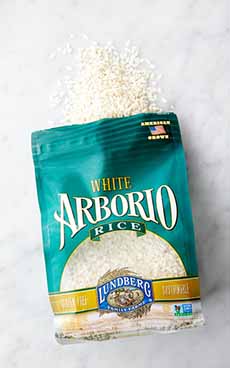
    A Bag Of Arborio Rice For Risotto
    [2] Arborio, the most popular rice for risotto (photo © Lundberg Family Farms).

    2 Stalks Of Dole Broccoli
    [3] Grab a head of broccoli…

    A Bag Of Dole Spinach
    [4] A bag of spinach….

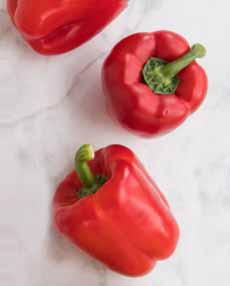
    Three Red Bell Peppers, ready to slice
    [5] Some red bell peppers… (photo © Girl On The Range).

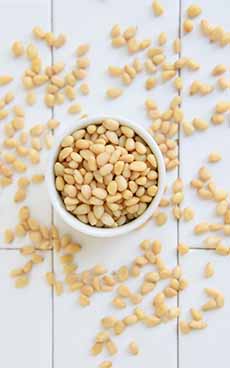
    Bowl Of Pine Nuts
    [6] And some pine nuts (photo © Good Eggs).

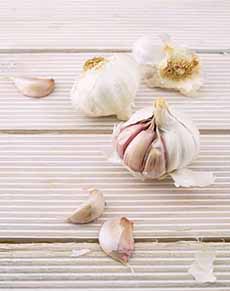
    Garlic Bulbs & Cloves
    [7] Don’t forget the garlic (photo © Wesual Click | Public Domain.

    Grated Parmigiano Reggiano Cheese & Grater
    [8] Parmesan cheese is an ingredient and a garnish (photo © London Deposit | Panther Media).


    CHECK OUT WHAT’S HAPPENING ON OUR HOME PAGE, THENIBBLE.COM.


    Comments off

    Food Fun: A Cranberry SPAM Musubi Recipe For The Holidays

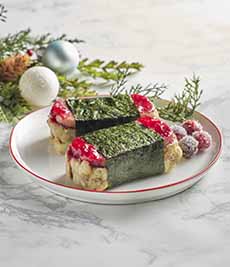
    2 slices of Holiday Cranberry Spam on a plate with Christmas decorations
    [1] Holiday SPAM Musubi (photos © Hormel Foods).

    Can Of Spam For National Spam Day
    [2] Classic SPAM.

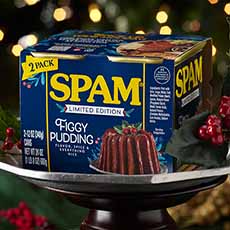
    Can Of Figgy Pudding Spam
    [3] Figgy Pudding SPAM for the holidays.

    A Dutch Baby Pancake With Figgy Pudding SPAM
    [4] A spiced Dutch Baby pancake with Figgy Pudding SPAM and cranberry butter. Here’s the recipe.


    Fans of SPAM will get a kick out of this holiday SPAM® Musubi recipe.

    For the uninitiated: What is SPAM?

    It’s brand of luncheon meat from Hormel Foods, a combination of ground pork and ham mixed with water, salt, sugar, and sodium nitrite (for the pink color).

    During the Great Depression (1929-1939), SPAM helped to fill the need for inexpensive meat products, which added protein to the diet (and yes, fat, salt, and sugar).

    Today, SPAM is often used in place of bacon or ham in everything from breakfast meat, sandwiches, and stir-fries to tacos and quesadillas. Search online for “SPAM recipes” and you’ll find mac and cheese with SPAM, spaghetti and meatballs (the latter made from puréed SPAM), loaded baked potatoes, and international dishes like pad Thai.

    For the holidays, SPAM enthusiasts will relish the following recipe: SPAM glazed in cranberry sauce and served in a bed of leftover stuffing wrapped in nori.

    You may want to double or triple the recipe. One slice per person is hardly enough (so say we).

    There are more SPAM holiday recipes below.
     
     
    RECIPE: HOLIDAY SPAM MUSUBI

    You can make this recipe with leftover cranberry sauce and stuffing, or start anew.
    Prep time is 10 minutes, and cook time is 20 minutes.
     
    Ingredients For 8 Servings

  • 1 (12-ounce) can SPAM® Classic cut into 8 slices
  • 1 cup cranberry sauce
  • 4 cups stuffing, warmed
  • 2 sheets nori, cut into 8 strips
  • Optional dipping sauce: see note below
  •  
    Preparation

    1. COOK the SPAM slices in a large skillet over medium-high heat, for 3 to 5 minutes or until browned.

    2. ADD the cranberry sauce and cook 1 to 2 minutes, frequently basting with cranberry sauce, until the slices are glazed. Remove from the skillet.

    3. PLACE 1/3 cup stuffing into a musubi press or plastic lined SPAM can on top of nori strip; press down. Place a glazed SPAM slice on top of the stuffing. Remove from the press or can.

    4. PRESS a sheet nori around each slice. Moisten one end slightly to fasten together.
     
    Optional Dipping Sauce

    While not part of SPAM’s recipe, we created a dipping sauce from the extra cranberry sauce.

    Simply mix cranberry sauce with Greek yogurt, mayonnaise, or sour cream, to taste.
     
     
    MORE ABOUT SPAM

    > July 31st is National SPAM Day.

    > August 8th is National SPAM Musubi Day.

    > The history of SPAM Musubi.

    > The history of SPAM and SPAM trivia.

    > The original SPAM Musubi recipe.

    > 25 more SPAM Musubi recipes.
     
     
    MORE SPAM HOLIDAY RECIPES

    These recipes are made with limited edition flavor SPAM Figgy Pudding (photo #3).

  • SPAM Figgy Pudding Holiday Charcuterie Board
  • SPAM Figgy Pudding Holiday Skewers
  • Spiced Dutch Baby Pancake with SPAM Figgy Pudding and Cranberry Butter
  •  


    CHECK OUT WHAT’S HAPPENING ON OUR HOME PAGE, THENIBBLE.COM.


    Comments off


    © Copyright 2005-2026 Lifestyle Direct, Inc. All rights reserved. All images are copyrighted to their respective owners.