THE NIBBLE BLOG: Products, Recipes & Trends In Specialty Foods


Also visit our main website, TheNibble.com.

RECIPE: Broccoli & Cauliflower Salad with Crisp Prosciutto & Mustard Dressing

Looking for something crisp and cruciferous?

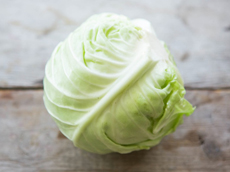
The cruciferous vegetables family—arugula, bok choy, broccoli, Brussels sprouts, cabbage, cauliflower, collard greens, horseradish, kale, kohlrabi, mizuna, mustard greens, radish, rapini (broccoli rabe), rutabaga, tatsoi, turnip and wasabi—contains powerful anti-carcinogen antioxidants, and powerfully good flavor.

This recipe, from Pom Wonderful, combines two of the group, broccoli and cauliflower, into a crisp summer salad—the veggies are not cooked. TIP: Cut large florets into small, bite-size pieces.

BROCCOLI & CAULIFLOWER SALAD

Ingredients

  • Juice from 2-3 pomegranates or 1 cup 100% pomegranate juice
  • 1 cup arils from 1-2 large pomegranates
  •  


    Broccoli and cauliflower salad. Photo
    courtesy Pom Wonderful.

     
  • 1/2 pound broccoli (2 cups cut into florets)
  • 1/2 pound cauliflower (2 cups cut into florets)
  • 1/2 cup red onion, chopped
  • 1 cup seedless grapes, halved
  • 1/2 cup raisins
  • 3 tablespoons fresh basil, cut into strips
  • 1/2 cup plain yogurt
  • 1/2 cup light mayonnaise
  • 2 tablespoons whole-grain Dijon mustard
  • 1 tablespoon granulated sugar (optional; or you can substitute a noncaloric sweetener)
  • salt and pepper to taste
  • 4 oz. prosciutto, cut into 1/2-inch strips
  •  


    Arils are the seeds surrounded by juice sacs. Photo by Kelly Cline | IST.
     

    Preparation

    1. SCORE 1-2 fresh pomegranates and place in a bowl of water. Break open the pomegranate underwater to free the arils (seed sacs). The arils will sink to the bottom of the bowl and the membrane will float to the top. Sieve and put the arils in a separate bowl. Reserve 1 cup of the arils from fruit and set aside. Refrigerate or freeze remaining arils for another use.

    2. COOK prosciutto strips in a nonstick skillet over moderate heat and stir until crisp.

    3. TOSS together in a bowl: broccoli, cauliflower, red onion, grapes, raisins and fresh basil.

    4. MAKE dressing: In a small bowl, whisk together yogurt, mayonnaise, mustard, sugar and pomegranate juice. Add salt and pepper to taste.
    5. TOSS dressing with salad; add pomegranate arils and prosciutto.


    How To Juice A Pomegranate

    Instead of buying pomegranate juice, you can juice the fruit itself. For 1 cup of juice, cut 2-3 large pomegranates in half and juice them with a citrus reamer or juicer. Pour the mixture through a cheesecloth-lined strainer or sieve. Set the juice aside.

    Find more delicious recipes at PomWonderful.com.


    Comments off

    National Piña Colada Day & The Original Piña Colada Recipe

    Updated July 2026

    July 10th is National Piña Colada Day—and it’s our favorite tropical cocktail. It’s also the national drink of Puerto Rico, where it was invented.

    Piña is Spanish for pineapple, and colada means strained: The drink is usually served blended with ice and strained into the glass. Join us for a taste of Caribbean bliss.

    > The history of the Piña Colada.

    > The original Piña Colada recipe.

    > More Piña Colada recipes.

    > Food to serve with Piña Coladas.

    > How to turn a fresh pineapple into a vessel for a drink.

    Elsewhere on The Nibble:

    > The year’s 49 cocktail holidays.

    > The year’s 10 pineapple holidays.

    > The year’s 11 coconut holidays.

    > The history of cocktails.

    > The history of coconut.

    > The history of pineapple.
     
     
    PIÑA COLADA HISTORY

    There would be no Piña Colada without Coco Lopez (photo #4), the coconut cream used to make it.

    Coco López is a brand of cream of coconut, invented in 1954 by Ramón López Irizarry, a professor of agriculture at the University of Puerto Rico.

    The ingredients on the can include coconut milk, sugar, water, emulsifiers, stabilizers and thickeners (guar gum, locust bean gum, mono- and diglycerides, polysorb 60, sorbitan monostearate, Propylene glycol alginate) and preservative (citric acid).

    The creamy heart of the coconut fruit had long been used in Caribbean desserts. But separating it from from the coconut pulp was an arduous process.

    With funds from the government, Professor Irizarry worked on a solution. He found it!

    He ultimately left teaching to produce and sell his product, which was adopted not just by cooks but by bartenders.

    According to the book “La Gran Cocina Del Caribe” by José L. Díaz de Villega, the Piña Colada made its debut on August 16, 1954 at the Caribe Hilton’s Beachcomber Bar in San Juan, Puerto Rico, a watering hole for a star-studded clientele.

    The hotel management had requested that bartender Ramón “Monchito” Marrero create a new signature cocktail. Marrero (photo #5) worked for three months on the recipe, blending rum, coconut cream, and pineapple juice.

    Both the regular and frozen versions debuted in 1954 at the Caribe Hilton.

  • The regular Piña Colada was shaken or stirred with ice and served over ice or strained.
  • The frozen Piña Colada: blended with crushed ice into a slushy, frothy texture.
     
    Its Popularity Today

    In bars and restaurants, the Piña Colada has ranked among America’s top 10 cocktails by sales. A CGA tracker study from 2022 placed the Piña Colada at No. 9 among the 30 most popular cocktails in the U.S., up from No. 17.

    The year prior, the Piña Colada was the most searched-for cocktail overall in America, reflecting interest.

    In terms of the frozen version, a 2022 nationwide survey revealed that the frozen Piña Colada (photo #6) ranked second only to the frozen Margarita among America’s favorite alcoholic slushies.
     
     
    RECIPE: THE ORIGINAL PIÑA COLADA

    Ingredients Per Drink

  • 2 ounces white rum
  • 1 ounce coconut cream (e.g., Coco Lopez)
  • 1 ounce heavy cream
  • 6 ounces fresh pineapple juice*
  • ½ cup crushed ice
  • Garnishes: pineapple wedge and maraschino cherry
  •  
    Preparation

    1. COMBINE the rum, coconut cream, heavy cream and pineapple juice in a blender. Add the ice and blend for about 15 seconds or until smooth.

    2. POUR into a 12-ounce glass. Garnish with a fresh pineapple wedge and a maraschino cherry.
     
    ____________

    *The difference between a good and great Piña Colada is the difference between canned and fresh pineapple juice.
     
     
    MORE PIÑA COLADA RECIPES

  • Baileys Colada
  • Beer Piña Colada
  • Chanukah (Blue) Piña Colada
  • Golden Piña Colada
  • Low Calorie Piña Colada)
  • Piña Colada Cake
  • Piña Colada Cheesecake
  • Piña Colada Cheesecake With Gluten-Free Crust
  • Piña Colada Jell-O Shots
  • Piña Colada Mousse)
  • Piña Colada Pizza)
  • Piña Colada Shooters
  • Piña Colada Sorbet
  • Piña Colada Fish Bowl
  •  

    Pina Colada
    [1] Piña Colada is the national drink of Puerto Rico. This photo shows the OG, which debuted at the Caribe Hilton in San Juan in 1954 (photos #1 and #5 © Caribe Hilton).

    Pina Colada With Coconut Rim
    [2] This modern presentation with a coconut rim eliminates the banal maraschino cherry (photo © Pinnacle).

    Pina Colada With A Toasted Coconut Rim
    [3] Our favorite touch: Rim the drink with toasted—or untoasted—coconut (photo: The Nibble).

    Can Of Coco Lopez
    [4] Coco Lopez was invented in 1954 by a professor of agriculture (photos #3 and #4 © Coco Lopez).

    Ramon Marrero, Creator Of The Pina Colada
    [5] Ramon “Monchito” Marrero, a bartender at the Hilton Caribe’s Beachcomber Bar, is given credit as inventor of the Piña Colada (photo: Caribe Hilton).

    Frozen Pina Colada Drinks
    [6] A frozen Piña Colada. Here’s the recipe (photo © QVC).

     
    Pina Colada With Food Pairings
    [7] A light dinner for a Piña Colada party: coconut shrimp, jerk chicken skewers with pineapple salsa, fish tacos, ceviche (photo: The Nibble).
     
     
    FOOD TO SERVE WITH PIÑA COLADAS

    Piña Coladas—creamy and sweet—are best paired with nibbles that have acidity, crunch, salt, and/or spice.

    For our get-together, our neighbors brought coconut shrimp and jerk chicken skewers, turning our “cocktail invitation” into a light dinner.

    The coconut shrimp were served with a sweet-hot chile sauce, and the jerk chicken with a mango-pineapple chutney, to which we added a second, spicy pineapple salsa, from The Nibble’s larder.

    For Simple Nibbles

  • Cheese board: aged Cheddar, Manchego, roasted nuts, salty crackers.
  • Plantain chips and/or tortilla chips with mango or pineapple salsa.
  • Salted cashews, macadamias, or spiced mixed nuts.
  •  
    For A Light Dinner

  • Ceviche, shrimp cocktail or other seafood cocktail or seafood salad.
  • Coconut shrimp with a tangy pineapple-chile or other sweet-hot sauce.
  • Cuban-style sliders with pork, ham, Swiss cheese, pickles, and mustard.
  • Crispy calamari with lime aïoli*.
  • Empanadillas / empanadas filled with beef, chicken, or cheese.
  • Fish tacos with white taco sauce†, red cabbage slaw, lime, and a bit of heat.
  • Jerk chicken skewers or jerk-seasoned wings.
  • Tostones with garlic-cilantro or spicy mayo dipping sauce.
  •  
    Do include a dish of lime wedges: A squeeze of fresh lime juice goes with everything.
     
    Pina Colada Served In A Fresh Pineapple
    [8] Here’s a video showing how easy it is to turn a pineapple into a beverage cup with a $10 corer. Here’s how do it with kitchen knives (photo © Tiffanie Barriere | Don Q Rum).
    ________________
     
    *Lime aïoli hack: Mix lime zest and a bit of fresh lime juice into mayonnaise.

    White taco sauce recipe: Whisk together 1/2 cup sour cream/crema, 1/2 cup mayonnaise/Greek yogurt, 1 tablespoon fresh lime juice, 1 teaspoon garlic powder, 1 teaspoon hot sauce, pinch of salt.


    CHECK OUT WHAT’S HAPPENING ON OUR HOME PAGE, THENIBBLE.COM.


    Comments off

    PRODUCT: Pillsbury Summer Flavors

    Pillsbury recently sent us two new mixes: Orangesicle Premium Cake Mix and Key Lime Premium Cookie Mix, both with matching frostings.

    The jury is in: We love the Orangesicle cake and frosting. The flavor profile presents both the vibrant orange and the vanilla counterpoint of a Creamsicle® (which is a trademarked brand of Unilever—here’s the history of the Creamsicle).

    For a killer dessert, serve the cake with scoops of orange sorbet and vanilla ice cream. It’s double Creamsicle/Orangesicle heaven.

    The Key Lime cookies were tasty, but not something we’d make again. While the orange and vanilla flavors were prominent in the cake, the cookies lacked the sprightly tartness we’d like from something called “key lime.”

    The mixes are available at retailers nationwide. For sure, we’ll be serving Orangesicle again soon.

    The mixes are certified kosher (dairy) by OU.

     
    Creamsicle lovers will love this new cake mix. Photo by Elvira Kalviste | THE NIBBLE.


    Comments off

    TIP OF THE DAY: Corn On The Cob Toppings


    You can trade the butter for healthful olive
    oil. Photo courtesy CornTater.com.
      If you’re like most people, you spread butter on corn on the cob. It’s a tradition.

    But traditions can be updated. If you like butter, consider adding flavor with a compound butter: chipotle butter, herb butter and numerous others (recipes).

    What if you want to avoid the calories and cholesterol? You’ve got tasty options:

  • Fresh chopped herbs: basil, parsley, rosemary, sage, etc., sprinkled on straight or mixed into olive oil
  • Crumbled cotija or feta cheese, or grated parmesan
  • Flavored salt or seasoning: Cajun spice mix, garlic salt, Mrs. Dash, Old Bay, etc.
  • Olive oil flavored with chipotle, cumin, curry or other spice
  • Pepper and lime—black pepper or cayenne
  • Pesto
  • Salsa
  • Vinaigrette
  •  
    Would you like to add something to this list?

    IF IT’S FRESH, TRY IT PLAIN

    Immediately after harvesting, the sweet sugars that make corn so appealing begin to convert to starch. If the corn is several days old, there may not be much flavor left. So people pile on the condiments to add flavor.

    If the corn is fresh and sweet, it needs absolutely no topping. Try it: You may discover that nothing beats the pure, farm-fresh sweetness of a plain ear of corn. You can even eat it raw—something we do while waiting for the rest of the ears to cook.

    You can boil or microwave corn, but grilling enhances its sweetness. The heat caramelizes the sugar in the kernels. You can brush it with olive oil and then add the seasonings prior to grilling, or hold the seasonings altogether.


    SHOPPING FOR CORN

    Many of us were taught by Mom to pull back the husk of the corn and look for….well, what are you actually looking for? There’s nothing to see but the size and color of the kernels (white, yellow, mixed), and that’s not going to impact your purchase decision. At worst, you’ll notice that a few kernels are missing at the very top of the ear. That’s not a defect: It’s how nature grew that particular ear.

    Pulling back the husks is the worst thing you can do. Exposing the kernels to air makes them dry out, and worse, spurs the conversion of the sugar to starch. You shouldn’t husk corn until right before cooking it. So forget what Mom said—she was only passing along bad information.

    Instead:

     
    You should never peel back the husk—it speeds the conversion of the sugar to starch. The silk peeking out it is an indication of freshness. Photo courtesy eHow.
     

    Check the husks and the exposed corn silk (the tassel) for freshness. The more straw-colored/lighter the silk that peeks out from the husk, the fresher the corn. The exposed silk is the first thing to dry out and show age, as it turns to brown and black.

    That doesn’t mean an ear with black silk won’t be sweet—we’ve had plenty of delicious corn where the silk had turned black. It’s just an indicator: If you have a choice between ears with pale silk and those with dark silk, go for the pale. But if the tassel is missing, beware: It’s probably older corn, and the seller has peeled the outer husk leaves and removed the tassel to make it look better.

    Then, look at the husks. Are they bright green, or do they look drier and blotchy? Pale silk and bright husks are the answer to which ears you should pick.

    Now the big “however”: Chances are, all the corn you’re looking at in a store was harvested at the same time. The real choice lies at farmers markets or roadside stands, where you can compare the corn from different growers.


    Comments off

    PRODUCT: Mingo’s Sweet Hot Mustard & Pepper Butter


    Mingo’s: mysterious but delicious. Photo by
    Elvira Kalvise | THE NIBBLE.
     

    Several products arrive at THE NIBBLE offices each week, over the transom*.

    Of these surprise deliveries, some contain a business card, some have a letter and some have nothing. Most of the products are just O.K.; some are quite good and we want to write about them.

    And some of the latter become mysteries, because there’s no card, no website on the bottle, and our ability to track down more information is limited.

    That’s the case with Mingo’s, a brand about which there is precious little online information. We were able to discern that:

  • It is made by S & S Foods of Mustang, Oklahoma (we did find an address and a phone number).
  • It is available from three or so e-tailers.
  •  
    That‘s it.

     
    While there are several companies named S & S Foods in the country, we could find nothing further about the one in Mustang, Oklahoma. No website, no product reviews. Who Mingo is, we have no idea.

    What we can tell you is that, we really like the products.

  • Mingo’s Sweet Hot Mustard Sauce combines the tang of mustard and vinegar, the heat of jalapeño and a blend of sugar and spices. It has become a favorite condiment on sandwiches and hot dogs. The mustard is listed on Amazon but is out of stock. This Oklahoma e-tailer sells it.
  • Mingo‘s Pepper Butter, is a delightfully different spread in Mild, with the jalapeño seeds removed; Medium, with the heat-containing seeds left in the jalapeños; and Hot, with jalapeño and serrano chiles, including the seeds.
  •  

    Like the mustard, the Pepper Butter has a touch of sweetness. As with apple butter, there is no butter in the product; “butter” refers to the smooth spreadability. Use it:

  • As a general condiment and a hot alternative to pickle relish.
  • As a spread on sandwiches, burgers, hot dogs, wraps, etc.
  • As a dip, straight or combined with cream cheese, mayonnaise or yogurt, with chips, pretzels and raw vegetables.
  • Mixed in with the mayo or other dressing for chicken, tuna and other salads.
  • As a meat and poultry rub, or added to meat loaf and other recipes where you’d like a more refined kick than mere hot sauce.
  •  
    Pepper butter on a wrap sandwich. Photo courtesy DairyMax.
     
    Mingo’s is worth tracking down. Give it with impunity to food-loving friends. Buy it for stocking stuffers. And tell us how else you’d use it.
     
    *This charming publishing industry term means, “arrives unsolicited or without prior knowledge.” It dates to the days before centralized building ventilation systems, when the transom—a small, horizontal window above a door—was opened to circulate air. Some would-be authors, who could not get their manuscripts past the assistant or the mail room, would toss unsolicited manuscripts over the transom, directly into an editor’s office.


    Comments off

    The Nibble Webzine Of Food Adventures


    © Copyright 2005-2026 Lifestyle Direct, Inc. All rights reserved. All images are copyrighted to their respective owners.