TIP OF THE DAY: Brown Butter, Black Butter & How To Use Them - The Nibble Webzine Of Food Adventures Brown Butter Black Butter Difference | The Nibble Webzine Of Food Adventures


THE NIBBLE BLOG: Products, Recipes & Trends In Specialty Foods


Also visit our main website, TheNibble.com.

TIP OF THE DAY: Brown Butter, Black Butter & How To Use Them


[1] Chocolate chip cookies are even better with brown butter (photo © Bella Baker).


[2] Brown Butter Parmesan Pasta. Here’s the recipe (photo Joe Lingeman | © The Kitchn).


[3] Brown butter can be used as an ingredient, for sautéeing, or as a sauce (photos #3 and #4 © Go Bold With Butter).

The photos that follow show the process of making brown butter.


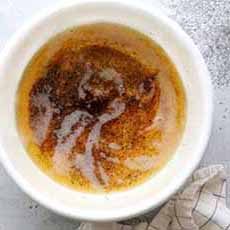
[5] It’s easy to make brown butter. When it’s light golden brown, it’s ready.

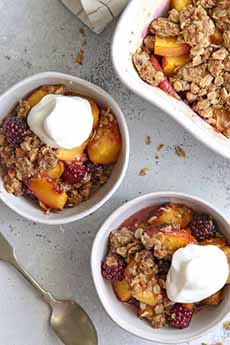
Brown Butter Peach & Blackberry Crisp
[6] A brown butter peach and blackberry crisp. Here’s the recipe (photo © Go Bold With Butter).


Brown butter, or beurre noisette, meaning hazelnut butter in French, is a butter sauce used in French cuisine.

It is used to give a dish a deeper, richer, more intense flavor than is provided by simpled melted or clarified butter.

Butter is heated until it reaches a deep yellow, almost brown color, and develops a nutty scent (hence, “hazelnut butter,” even though no nuts are involved).

  • It is a popular way to sauté and sauce fish, meat, omelets, pasta, poultry, vegetables; and on the sweet side, fruit.
  • It is also used in making French pastry like financiers and madeleines.
  •  
    > Instructions to make brown butter are below.

    >The history of brown butter is also below.

    > The different types of butter: a photo glossary.

    > The history of butter.

    > September 22nd is National Brown Butter Day.

    > The year’s 5+ butter holidays are below.
     
     
    BROWN BUTTER VS. BLACK BUTTER

    Black butter is actually dark brown, and brown butter is actually deep yellow, almost brown.

    The color and flavor chemistry behind it involves the Maillard reaction and caramelization of the milk proteins and sugars, transforming simple butter into something much more complex and aromatic.

    Both brown and black variations are cooked over low heat. The difference between brown butter and black butter is how long the butter is cooked.

    For the cook, the question is: How deep do you want the nutty/toasty flavors?

    Both are made by cooking unsalted butter long enough to caramelize the milk solids and turn them brown. The process also cooks out the water present in the butter, to concentrate the flavor.

    As the butter melts, it separates into yellow butterfat and white milk solids. The heavier milk solids sink to the bottom of the pan.

    As the butter cooks, the milk solids begin to brown. When they reach the color desired by the cook, the pan is removed from the heat.

    > There’s also beurre rouge (red butter), which substitutes red wine and vinegar for the white wine and vinegar.
     
     
    EVERYDAY WAYS TO USE BROWN BUTTER

    If butter makes everything taste better, then brown butter makes everything taste even better than that. You get more richness without added calories.

    Add richer flavor to:

  • Baking: especially blondies, cookies, pound cake, tart pastry.
  • Bread spread: biscuits, toast.
  • Caper and/or anchovy sauce: blend in lemon juice and parsley to sauce eggs, fish and vegetables. A great brown butter sauce!
  • Crumble topping: Mix it in to crumbs or granola
  • Eggs: omelets, scrambles (we also use it for blintzes and crêpes).
  • Greens: substitute for olive oil when sautéeing chard, kale, spinach, etc.
  • Pancakes and waffles: add a bit to the batter, cook the pancakes in the butter.
  • Pan-toasted sandwiches: grilled cheese, croque monsieur
  • Pasta and rice for sauce, garnished with fresh herb, peas, bacon, whatever.
  • Popcorn.
  • Poultry and seafood: sautéed in brown butter or poured over as a sauce.
  • Potatoes: baked, boiled, mashed, roasted.
  • Rice and other grains: garnish.
  • Roasted vegetables: toss in brown butter before roasting.
  • Sautéed vegetables: beyond greens, memorable mushrooms and onions.
  • Shellfish: so much better than clarified butter for dipping.
  • Soup: drizzled garnish.
  •  
     
    EVERYDAY WAYS TO USE BLACK BUTTER

    Black butter is usually flavored with tarragon vinegar or lemon juice, capers and parsley and served as a sauce with:

  • Eggs: omelettes or scrambled eggs.
  • Calves’ brains: a dish, alas, that is not served much these days since the spread of Mad Cow Disease, but try it with lambs’ brains.
  • Skate: plus cod and other seafood.
  •  
    To look for black butter recipes online, search under the French term, beurre noir. There is a British spiced apple jam called black butter.
     
     
    HOW TO MAKE BROWN BUTTER

    Thanks to Go Bold With Butter for these easy steps.

    All you need is a unsalted butter and a skillet.

    Why not salted butter? Salted butter tends to foam more than unsalted butter, making it difficult to judge the color change.

    To watch the color change, see photo the strip of photos at the left.

    Preparation

    1. MELT the butter over medium heat. As the butter melts, gently swirl the pan to ensure the butter doesn’t burn.

    2. WATCH for the butter to splutter as the water cooks off. Stir frequently at this stage, when the butter begins to turn a light golden color.

    (The difference between splutter and sputter: Splutter means to spray droplets, while sputter refers to “spraying” when speaking.)

    3. TURN down the heat as the sputtering subsides and the butter will turn into a light foam.

    4. WATCH as the color begins to deepen into a golden color. Notice the small brown bits of milk solids developing at the bottom. You’re almost done!

    5. WATCH for the butter to turn a toasted brown color (photo #4). You’ll smell the nutty aroma. Remove the pan from the heat and transfer the butter to a heat-proof bowl.

    6. COOL before adding to a recipe. Store in a tightly-lidded container in the fridge.
     
     
    THE HISTORY OF BROWN BUTTER

    The technique of making brown butter, or beurre noisette (hazelnut butter in French, so-called for its nutty aroma and color), has a fascinating culinary history rooted in French cooking tradition.

    It likely emerged in French cuisine during the 18th or 19th century as chefs explored different ways to prepare and use butter.

    The French have long been masters of butter-based sauces, and brown butter became part of the classical French chef’s repertoire, particularly in haute cuisine.

     
    The process of cooking butter until the milk solids caramelize, creating a complex, nutty flavor and golden-brown color, was formalized in classical French cooking. It became one of the foundational preparations taught to culinary students.

    Historically, brown butter featured prominently in classic French dishes like:

  • As a sauce for various fish preparations, and vegetables like asparagus or green beans.
  • In raie au beurre noir (skate in black butter) although beurre noir is even more cooked beurre noisette.
  • As a finishing sauce for pastas, including gnocchi.
  •  
    In modern cooking, brown butter has experienced a renaissance, particularly in American baking and cuisine. It’s commonly used in cookies, cakes, and bar cookies like blondies.

    The technique has moved beyond French cuisine into global cooking, where cooks worldwide appreciate the depth of flavor it adds compared to regular melted butter.
     
     
    THE YEAR’S 5+ BUTTER HOLIDAYS

    So many famous foods exist because of butter. A sampling:

  • Baked Goods: butter cakes and cookies, croissants, pastries, puff pastry.
  • Breakfast Foods: biscuits, pancakes, waffles.
  • Desserts & Sweets: buttercream frosting, butterscotch, caramel, fudge, toffee/buttercrunch.
  • Savory Dishes: butter chicken, chicken Kiev, escargot, garlic bread, lobster with drawn butter, mashed potatoes, sauces.
  •  
    Trying to determine what should be celebrated as a “butter holiday” took some thought. There are five holidays in the U.S. where butter is the focus:

  • January 18: National Hot Buttered Rum Day
  • August 23: National Buttered Corn Day
  • September 22: National Brown Butter Day
  • September 25: German Butterbrot Day (Buttered Bread Day)
  • November 17: National Butter Day
  •  
    Additionally, here’s our list of food holidays where another fat simply cannot be substituted for butter without compromising the flavor:

  • January 6: National Shortbread Day
  • January 8: National English Toffee Day
  • January 19: National Popcorn Day
  • January 20: National Buttercrunch Day*
  • January 30: National Croissant Day
  • February 15: National I Want Butterscotch Day
  • March 4: National Pound Cake Day
  • March, 2nd Thursday: Popcorn Lover’s Day
  • May 24: National Escargot Day
  • June 29: National Almond Buttercrunch Day*
  •  
    A Related Day

  • December 8: National Lard Day
  •  
    To quote Julia Child, “With enough butter, anything is good.”
     
    ________________
     
    *Why are there two National Buttercrunch Days? The individuals who established them can’t be identified, so there’s no one to ask. We can theorize that National Buttercrunch Day (January 20th) celebrates the diversity of buttercrunch recipes, including those with other nuts or no nuts at all. We’ve found recipes online that use most of the popular nuts, from pecans and pistachios to macadamias and walnuts. In fact, Brown & Haley, the company that popularized almond buttercrunch with its Almond Roca, also sells Macadamia Roca. National Almond Buttercrunch Day (June 29th) focuses on the classic almond version, which is the most widely recognized.

    The Almond Roca brand was created in 1923 by Harry Brown and J.C. Haley of the Brown & Haley company in Tacoma, Washington. They created a buttercrunch toffee coated in milk chocolate and encrusted with chopped almonds. The name roca, meaning rock in Spanish, was inspired by its crunchy texture and the fact that almonds were often imported from Spain at the time. Almond Roca became widely popular, especially during World War II, when it was shipped to American soldiers overseas. This earned it the nickname “The Candy That Travels,” due to its long shelf life and durable packaging in airtight tins.


    CHECK OUT WHAT’S HAPPENING ON OUR HOME PAGE, THENIBBLE.COM.


    Please follow and like us:
    Pin Share


    Comments are closed.

    The Nibble Webzine Of Food Adventures
    RSS
    Follow by Email


    © Copyright 2005-2025 Lifestyle Direct, Inc. All rights reserved. All images are copyrighted to their respective owners.