Tahini Coffee Recipe: A Middle Eastern Twist On Espresso Or Coffee
|
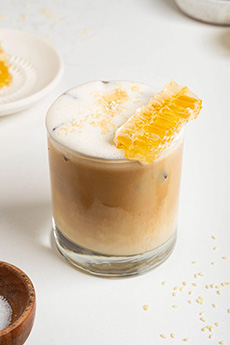
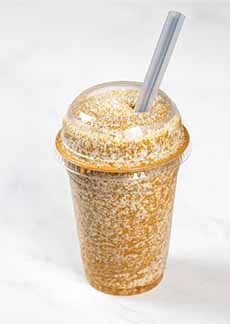
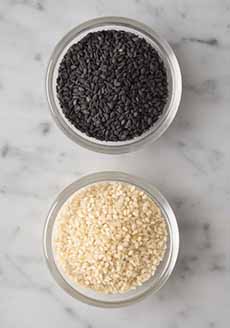
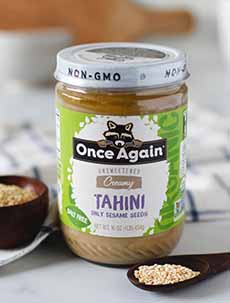
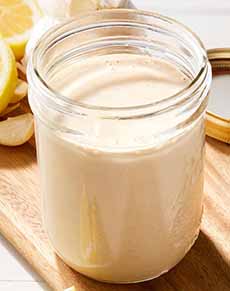
September 29th is National Coffee Day, one of the year’s 25 coffee holidays. We wanted to share this recipe for tahini coffee in advance, so that you might enjoy a cup of the latest trending coffee: tahini coffee (or espresso, or latte, or whatever form you prefer). Tahini coffee was popularized by a New York City bakery-cafe this spring, Maman. Their Salted Tahini Honeycomb Latte went viral and inspired many copycat recipes. Here’s one of them (photo #3). There’s a different take over in Brooklyn at the Iced Café at Edith’s (photo #). It’s a slushie of tahini, oat milk, and cold brew (photo #4). And no doubt, many more variations as the trend spread. At Maman, the drink—hot or cold—combines espresso with a house-made tahini-honey blend and fleur de sel and topped with sweet-and-salty sesame crumbs (photo #1). The result: a Middle Eastern-inspired coffee that’s creamy, nutty, and slightly sweet with complex flavors from the sesame paste. Why tahini? Tahini has been key in Middle Eastern cuisine for thousands of years, and coffee culture is deeply rooted in that region as well. It’s a key ingredient in the ever-popular hummus, that took America by storm in 1986 with the founding of the Sabra brand by entrepreneur Zohar Norman. The explosion in popularity due to taste and nutrition created the new, mainstream hummus category**. Yet, the specific pairing of two seems to have happened in New York City, from whence it went viral on Tik-Tok. It’s not just trendy: The drink adds protein to a cup of Joe. The protein from the tahini turns the coffee into a functional or nutrient-dense food, in the manner of other enhanced coffee drinks like bulletproof coffee‡ and turmeric lattes. Could you use peanut butter (or other nut butter) instead? In theory, yes—we certainly have added PB to hot chocolate (delish). But: > Who thought to put tahini paste in coffee? See below, along with more unconventional additives. > The history of tahini is also below. > The different types of coffee: a photo glossary. > The year’s 25 coffee holidays. > Three tahini dip and sauce recipes. There are so many versions of this recipe. Ours is a bit different in that it’s coffee instead of latte. A latte is usually 1/3 espresso (usually 1-2 shots) and 2/3 steamed milk. Whether you prefer regular coffee or espresso, here’s how to prepare rich, nutty, and creamy tahini coffee. The nutty notes of tahini are more pronounced in hot coffee, and also helps the paste blend better into the beverage. Tips: 1. PREPARE the tahini mixture. In a small bowl, whisk together the tahini, honey/maple syrup, and salt until smooth. If it’s too thick, add a tablespoon of the hot coffee to thin it out. 2. POUR the hot coffee into a tall glass or mug, then add the tahini mixture. Stir vigorously until well combined. The tahini should create a creamy, slightly frothy texture. 3. ADD the milk. You can either stir it in directly or froth it first for a more latte-like experience. 4. GARNISH. Dust with a pinch of cinnamon or nutmeg desired. Tahini, a cornerstone ingredient in Middle Eastern and Mediterranean cuisines, is a paste made from ground sesame seeds. It’s an essential ingredient in dishes like hummus, baba ganoush, and halva. It’s similar in consistency to peanut butter but with a distinctly nutty, slightly bitter flavor. Tahini is an ancient food. Sesame seeds are among man’s oldest-known oil-bearing crops, with evidence of cultivation dating back more than 4,000 years in the Indus Valley (primarily in what is now Pakistan and northwest India) and Mesopotamia, the Fertile Crescent (in southwest Asia, specifically within the Tigris and Euphrates river, an area that encompasses much of modern-day Iraq, parts of Syria, Turkey, and Iran). While wild sesame seeds were used in food preparation, the practice of grinding sesame seeds into paste likely developed soon after cultivation began, in areas that are now Iraq, Iran, and the Levant (the word tahina is Arabic, from the verb for “to grind”). From there, cultivation of sesame and the preparation of tahini spread throughout the Mediterranean region, North Africa, and eventually globally through trade routes. While tahini was traditionally made by grinding seeds with stone mills, modern tahini is produced using steel mills. Artisanal producers still use stone mills for superior flavor and texture. (Want to grind your own sesame paste? You can get a mill at Walmart and elsewhere.) It’s all cultural, depending on where you grew up. In the U.S., milk and sugar is the standard. Warm spices such as cardamom, cinnamon, cloves, ginger, and nutmeg, are found in holiday blends (and are popular everyday additions in Morocco). But some Americans get quite creative with their coffee additives. Beyond tahini, here are a few of them: Sesame seeds have a black hull when harvested. White sesame seeds (they’re actually cream-colored) have had the black hull removed. Why remove the hull, which contains additional fiber, antioxidants (anthocyanin), and minerals? The choice often comes down to the flavor intensity and visual. |
|
|
|
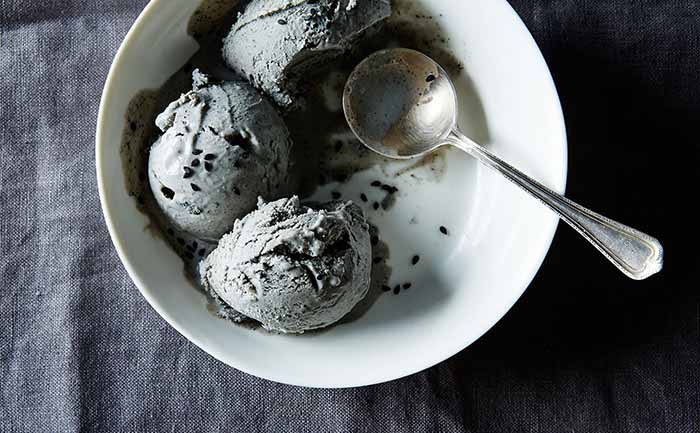
And if you come across it, definitely try black sesame ice cream. Or make your own with this recipe (photo #12, below). **Hummus became somewhat widespread in the U.S. among the young in the 1960s counterculture movement and continued to gain traction with the publication of Frances Moore Lappé’s book Diet for a Small Planet in the early 1970s. But Sabra was the first big commercial brand. †The Starbucks Oleato oil-infused coffee beverage first debuted in Italy. It came to the U.S. in February 2023, followed by Canada. But North Americans didn’t take to it and it was discontinued in North America in 2024. According to the Starbucks website, Oleato™ began in Sicily when Starbucks founder Howard Schultz was introduced to the daily Mediterranean custom of having a spoonful of olive oil. As he sipped his morning coffee, he was inspired to try the two together and discovered “coffee enhanced with lush, velvety flavor that lingers beautifully on the palate.” ‡Bulletproof coffee is a high-fat coffee drink that’s become popular in health and wellness circles, especially in ketogenic or low-carb diets. It’s made by blending hot coffee with grass-fed butter and MCT oil (a dietary supplement made from medium-chain triglycerides (MCTs), a type of saturated fat).” ‡‡How to toast sesame seeds: On the stove, heat a dry skillet over medium-low heat. Add the sesame seeds in a single layer and stir frequently for 3-5 minutes until they become fragrant and start to pop slightly.They’re ready when you hear little popping sounds. In the oven, spread the seeds on a baking sheet and toast at 350°F (175°C) for 5-8 minutes, stirring once halfway through. CHECK OUT WHAT’S HAPPENING ON OUR HOME PAGE, THENIBBLE.COM. |
||