Food Fun, Food Beauty: Decorated Goat Cheese Logs
|
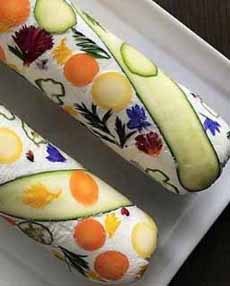
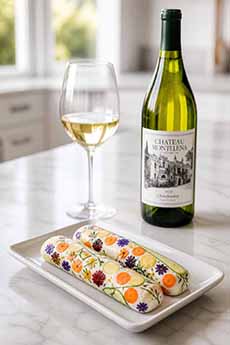
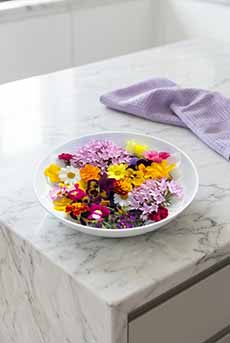
Updated August 2026 August is National Goat Cheese Month. All you need is a sharp knife and a peeler or mandoline to decorate goat cheese logs the way John Karangis does. Karangis is the executive chef at Union Square Events, and his job is to present dazzling foods. Yet, this particular dazzler does not require culinary school. Below: > Make this beautiful goat cheese log. > Garnishing with dill and other “feathery” herbs. Elsewhere on The Nibble: > The different types of cheese: a photo glossary. > 10 different ways to use goat cheese. > A goat cheese crottin for dessert. > Recipe: goat cheese ice cream. It’s delicious. > The year’s 30 goat cheese holidays. > The history of edible flowers and the different types you can eat. Ingredients For the holidays, you can create a seasonal look with strips of pimento or minced peppadew, rosemary leaves, golden raisins (sultanas) and pink and green peppercorns. See the seasonal variations below. 1. SLICE the vegetables as thinly as possible, ideally using a mandoline. The zucchini or summer squash should be sliced into vertical ribbons; leave the peel on. Slice everything else in circles, horizontally. 2. SNIP the herbs as shown in the photo. Pull the petals off the flowers. 3. CREATE your own piece of edible art. To adhere the vegetables on top of the ribbons, use water to moisten. |
|
|
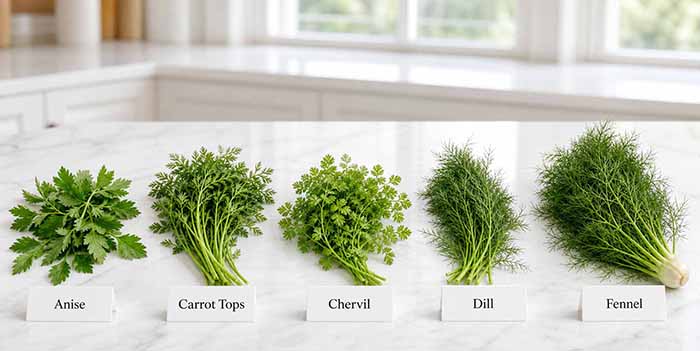
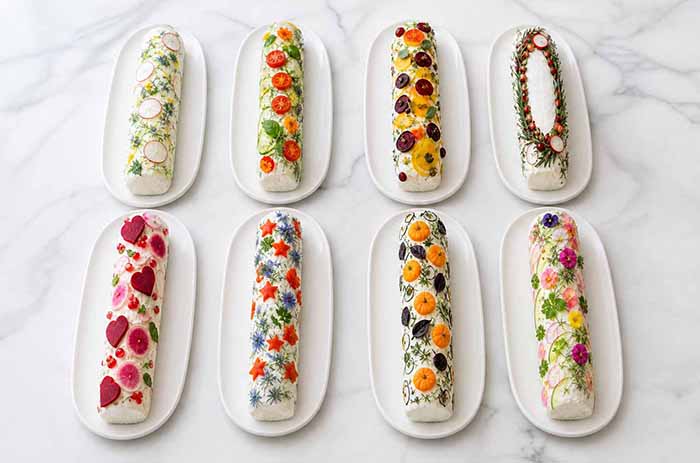 [4] Decorations for every season (photo © The Nibble). SEASONAL DECORATIONS A goat cheese log is an especially good canvas for seasonal decoration. Use very thin slices of vegetables, tender herb leaves, edible flowers, and finely grated citrus zest; gently press them into the softened cheese before chilling. It’s that simple! Spring/Easter You could create a wreath effect by clustering rosemary, thyme, and sage along the edges, with pomegranate “berries” scattered throughout. Whatever you choose, make it a classic red, green, and white combination. For a palette of blue, white, gold, and green: “Feathery” dill is a popular herb for decorating. Here are some others: Fennel. The most feathery herb after dill is fennel. Fennel fronds look nearly identical to dill: fine, delicate, and bright green. They flavor is distinctly anise or licorice, rather than the tangy, grassy profile of dill. TIP: If you’re using the fennel bulb in a recipe, save the fronds to decorate anything else at the meal—or tomorrow’s meal. While fennel is the first-choice substitute, the second runner-up is something that most people throw away: Carrot tops: While technically a vegetable byproduct, the leafy tops of carrots are very feathery and edible. They have a flavor profile that sits somewhere between parsley and celery. Check out these 10 delicious uses for carrot tops. Other feathery or lacy herbs to consider: Anise: The leaves of the anise plant are quite feathery and pinnate, though the plant is more famous for its seeds. Chervil: Often described as a more delicate cousin of parsley, it has lacy, fern-like leaves. It’s a staple in French cuisine (one of the fines herbes*, along with chives, Italian [flat] parsley, and tarragon) and has a faint taste of anise and parsley. Yes, there’s always parsley, but as a garnish, it’s been done to death. ________________ †To create the tiny “pumpkins”: Round the edges of a 1″ or thinner carrot coin with a paring knife and hand-carve little notches into the top to give it a pumpkin silhouette. For the stem use a tiny snippet of a fresh parsley stem or a snippet of chive. CHECK OUT WHAT’S HAPPENING ON OUR HOME PAGE, THENIBBLE.COM. |
||