Uses For Extra Shallots & A Recipe For Shallot Vinaigrette - The Nibble Webzine Of Food Adventures Uses For Extra Shallots, Types Of Shallots, Shallot Recipes


THE NIBBLE BLOG: Products, Recipes & Trends In Specialty Foods


Also visit our main website, TheNibble.com.

Uses For Extra Shallots & A Recipe For Shallot Vinaigrette

Shallot Vinaigrette Recipe
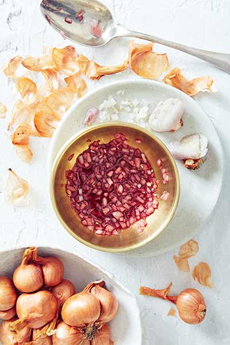
[1] Shallot vinaigrette, a French classic, shown with Dutch yellow shallots. The recipe is below (photo © Good Eggs).

Shallots
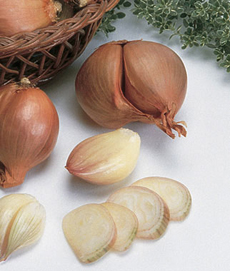
[2] Shallot bulbs have individual cloves, which are peeled and sliced like garlic bulbs (photo © Burpee).

Oysters With Mignonette Sauce
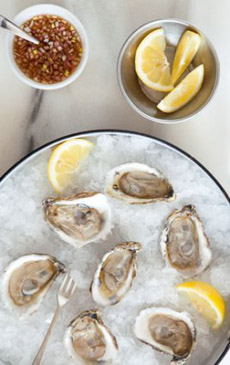
[3] Mignonette sauce for oysters is shallot vinaigrette without the oil (photo © Whole Foods Market).

A basket of red French shallots
[4] French red shallots (photo © The Fresh Direct).

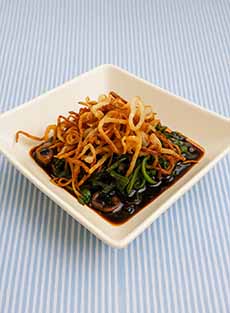
A dish of crispy fried shallots
[5] A crispy fried shallot garnish tops sautéed baby greens. Here’s the recipe (photo © It’s Not Easy Eating Green).

A plate of uncooked banana shallots
[6] Banana shallots (photo © Tesselaar).

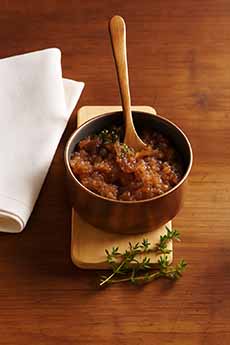
An Pot Of Shallot Confit
[7] Shallot confit. The recipe is above (photo © Eat Smarter).

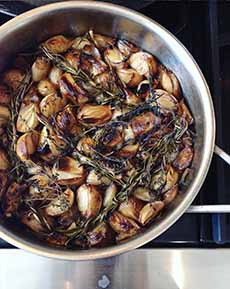
A Pot Of Sauteed Shallots
[8] Shallots sautéed with rosemary, thyme and Pedro Ximénez sherry (photo © Botanica Magazine).

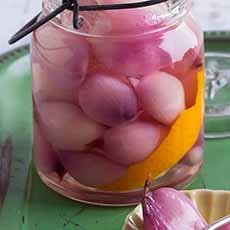
Jar Of Asian Pickled Shallots
[9] Pickled Asian shallots, small and round. Here’s the recipe (photo © Karen Solomon | Asian Pickles: China).

Shallots Growing
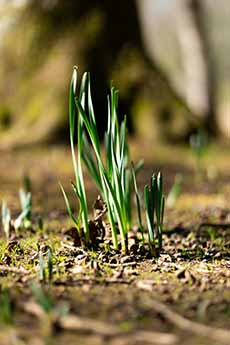
[10] Shallots peeping up from the earth (photo © Harley Lin | Unsplash).


While they are a staple in France, most Americans don’t keep a store of shallots in the kitchen. Shallots tend to be that specialty onion you purchase for a particular recipe.

If you buy them for a particular recipe and have a extra shallots, what should you do with them?

  • Milder than onions, they are easy to add to salads, omelets, roasted vegetables and other recipes.
  • You can caramelize them or fry them into a crispy shallot garnish.
  • Use them to top a burger, bruschetta or a pizza, raw or sautéed.
  • Two classic French recipes are shallot vinaigrette and mignonette sauce for oysters. The difference: mignonette sauce has no oil.
  •  
     
    > What exactly are shallots? See below.

    > Also below: the history shallots.

    > Mignonette sauce recipe.

    > The different types of onions: a photo glossary.

    > The history of onions.
     
     
    RECIPE #1: SHALLOT VINAIGRETTE

    Prep time is 5 minutes, active time is 20 minutes (photo #1)

    You can double or triple the recipe and keep the extra in the fridge.
     
    Ingredients

  • 2 small shallots, minced (tiny dice, 2-3 tablespoons)
  • 2-3 tablespoons red wine vinegar
  • 8 tablespoons olive oil
  • Salt and pepper
  •  
    Preparation

    A shallot is different from other onions in that the bulb is made up of individual cloves like a bulb of garlic, its close cousin.

    The technique for dicing shallots and onions is to leave the root end of the bulb or clove intact while you cut. This keeps the bulb together so you can cut pieces that are uniform in size. Here’s a video showing how to peel, slice, dice and chop shallots.

    1. COMBINE the vinegar and minced shallots in a small bowl and set aside for at least 15 minutes.

    2. ADD the olive oil and a pinch of salt, and whisk together until well-combined.

    3. TASTE and add another pinch of salt and pepper as desired.
     
     
    RECIPE #2: CRISPY FRIED SHALLOT GARNISH

    Use these (photo #5) to garnish anything savory. We add them as a garnish to plain grilled fish, meat and poultry for a bit of visual and flavor pizzazz.

    Ingredients

  • ½ pound shallots (about 6), peeled and very thinly sliced
  • 1 cup canola oil
  • 1/4 teaspoon salt
  •  
    Preparation

    1. LINE a large plate with paper towels. In a small saucepan, heat the oil over medium-high heat until it begins to shimmer and lightly smoke.

    2. ADD the shallots and cook, stirring often, until light golden brown, about 7-9 minutes. Using a slotted spoon, transfer the shallots to the paper towel-lined plate. Sprinkle lightly with salt.
     
     
    RECIPE #3: SHALLOT CONFIT

    You can make shallot confit (photo #7), by placing peeled shallots in a small dice (best for spreading, or cut into slices if you want larger pieces) in a small saucepan covered with olive oil or butter. You can add aromatics† if you like.

    Then, simply simmer gently on very low heat for 30–60 minutes, until soft and golden (not browned). When cool, store them in a jar submerged in the cooking fat.

    The confit will keep refrigerated for up to 2 weeks. Then, enjoy it:

  • Spread on toast or crostini (with optional goat cheese or ricotta).
  • Swirled into mashed potatoes or risotto.
  • Spooned over grilled steak, chicken, or fish.
  • Added to pasta, pizza, or grain bowls.
  • Added to vinaigrettes and sauces.
  • As a sandwich spread, alone or mixed with mayonnaise.
  •  
    How does shallot confit differ from caramelized onions?

    Shallot confit is a slow-poached preserve: mild, luxurious, and subtly sweet. Caramelized onions are pan-browned: bold, rich, and deeply savory-sweet.

  • Use shallot confit as noted above.
  • Use caramelized onions when you want a stronger onion flavor: as a burger and sandwich topping, mixed into French onion soup or quiche, or stirred into dips, pastas, and savory tarts.
  •  
    WHAT ARE SHALLOTS

    Shallots are an allium, a member of the same botanic species as chives, garlic, leeks, onions and scallions/green onions. Prized for their delicate, sweet, and complex flavor, shallots have long been a staple in European, Middle Eastern, and Southeast Asian cuisines.

    They are a milder type of onion, imparting a subtle flavor to recipes.

    Shallots are preferred to onions by French chefs, because their mild flavor doesn’t overpower the other delicate flavors.

    Shallots differ from other alliums in that they grow in clusters or clumps, like garlic—with individual cloves as well. Traditional varieties include:

  • French Grey Shallot (griselle): considered the finest, though difficult to find outside France.
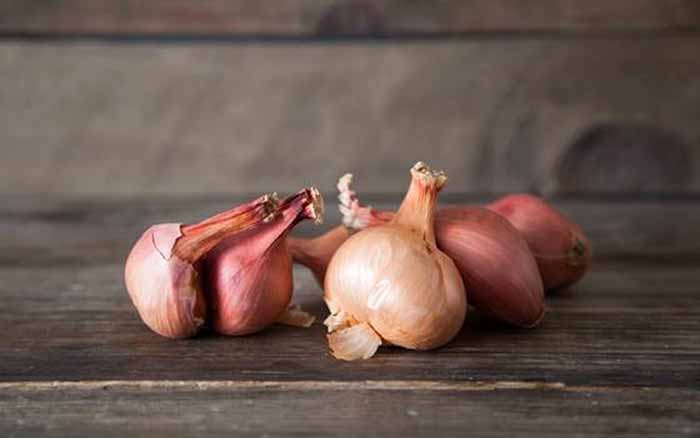
  • French Red shallot (Jersey shallot): can be red or pink in color (photos #4 and #12).
  • Dutch Yellow Shallot: a little sharper than red shallots, sometimes found at farmers markets and from seed suppliers (photo #11).
  • Banana Shallot (echalion): larger and milder; a modern cross between shallot and onion (photo #6).
  • Asian Shallot (Thai or Filipino Shallot): small, round, reddish or purplish bulbs commonly found in Asian markets (photo #9). They are essential in Southeast Asian cooking, often fried crispy or pounded into spice pastes.
  •  
    Dutch Yellow Shallots
    [11] Dutch yellow shallots (photo © Good Eggs).
     
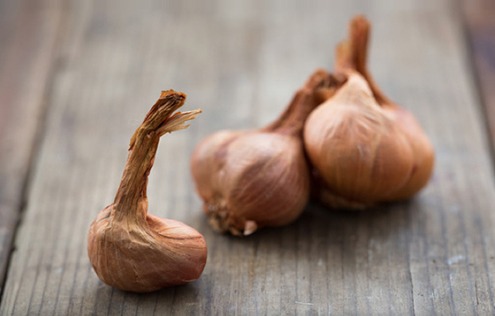
    Terminology can get confusing. In French, shallots are called échalotes. Confusingly, in British English, spring onions* were once called “shallots” in some regions, leading to terminology overlap in older recipes. Whatever you buy should look like photo #2, although the coloring may differ.
     
    Meet The Whole Genus

    The Allium genus comprises some favorite flavor ingredients:

  • Chive: Allium schoenoprasum
  • Garlic: Allium sativum
  • Green onion/scallion: Allium cepa var. cepa
  • Leek: Allium ampeloprasum
  • Onion and spring onion*: Allium cepa
  • Shallot: Allium cepa var. aggregatum
  •  
    The botanical family is Amaryllidaceae, which contains mainly perennial flowering bulbs such as amaryllis and other lillies, daffodil and tuberose.

    Allium genus members are also bulbs and also flower, but not in the same, showy way that engenders garden and home decoration.
     
     
    THE HISTORY OF SHALLOTS

    Shallots are believed to have originated in Central or Southwest Asia, possibly around present-day Iran, Turkmenistan, or Israel, all areas known for early allium diversity and cultivation.

    The name “shallot” is thought to derive from the ancient city of Ashkelon (or Ascalon), a port city in modern-day Israel.

    Greek and Roman traders called a type of onion Ascalonia caepa (“onion from Ascalon”), although it’s questioned whether this referred to shallots or a broader category of onions.

    By the Middle Ages, shallots were cultivated in Europe, particularly in France, where they became a foundational aromatic in regional cooking.

    They were also prominent in Persian and Indian cuisines, often used raw, pickled, or fried.

    In Southeast Asia, especially in Thailand, Indonesia, and the Philippines, small red shallots became a kitchen staple—used in spice pastes, stir-fries, and condiments.

    By 17th century France, shallots had gained prestige in haute cuisine due to their nuanced flavors.

    They became essential in sauces like béarnaise and pan sauces; in vinaigrettes, compound butters, and refined sautés.

    Today, more recipes around the world call for shallots instead of onions in dishes where a gentler flavor is desired.

    In the U.S., you’ll see them in recipes for salad dressings, risottos, pastas, and even burger toppings where subtlety matters.

     
    Pink Shallots
    [12] Pink shallots (photo © Good Eggs).
    _________________

    *Spring onions are immature onions, harvested early in the season.

    Aromatics for shallot confit:
    > Thyme or clove: best for steak or chops topping, mashed potatoes, crostini.
    > Rosemary or sage: best for roasts, squash dishes, charcuterie boards.
    > Balsamic vinegar or red wine (a splash): best for cheese pairings, pork, or duck.
    > Chili flakes, Aleppo pepper or coriander seeds: best for gentle heat with Asian fusion, lamb, or glazed vegetables.


    CHECK OUT WHAT’S HAPPENING ON OUR HOME PAGE, THENIBBLE.COM.


    Please follow and like us:
    Pin Share


    Comments are closed.

    The Nibble Webzine Of Food Adventures
    RSS
    Follow by Email


    © Copyright 2005-2025 Lifestyle Direct, Inc. All rights reserved. All images are copyrighted to their respective owners.