Fresh Peach Bellini Cocktail Recipe & The History Of The Bellini
|
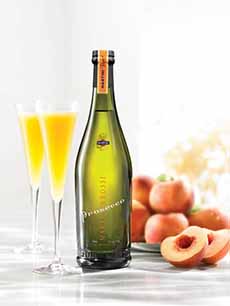
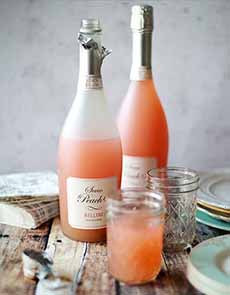
Peaches and Prosecco: What could be more refreshing? For National Bellini Day, June 23rd, we were inspired to look for the ripest peaches we could find, even though peak peach season is not yet upon us. In the off-season, you can buy frozen peach purée or (surprise!) baby food puréed peaches. Fresh or frozen, you can make the peach purée a day or two in advance of your brunch or cocktail party. Well-chilled purée from the fridge is ideal. Elsewhere on The Nibble: > The different types of sparkling wine. > Why you should have a Champagne re-corker. > The year’s 100+ cocktail and spirit holidays. > The year’s 9+ Champagne and other sparkling wine holidays. > The history of individual cocktails, spirits, and other foods. Ingredients Per Drinks Plan on two peaches for the cocktail. Cut a wedge from one peach, unpeeled, for the garnish. Peel and purée the remainder of the two peaches. The riper the peaches, the better they are for the purée; but you need a ripe-but-firm peach to slice and notch for the garnish. 1. POUR 2 ounces of the purée into a flute, tulip or other stemmed glass. Increase the amount of purée for a sweeter and less alcoholic drink. 2. ADD a squeeze of fresh lemon. 3. TOP with chilled Prosecco. You don’t need to stir, but if you want to, do it just once, very gently, so you don’t break the bubbles. 4. GARNISH with a peach wedge. While many people use Champagne to make a Bellini, the original recipe, created in 1948 by Giuseppe Cipriani, head bartender at Harry’s Bar in Venice, is made with Prosecco. The dry, sparkling Italian wine is lighter than Champagne—and much less expensive. Even if money isn’t an issue, save the Champagne and its complex, yeasty, toasty and mineral-chalky flavors, for sipping straight. The peachy color of the cocktail reminded Cipriani of the color of the robe of St. Francis of Assisi in a painting, “St. Francis In The Desert” (sometimes called “St. Francis In Ecstasy”) by Giovanni Bellini, commissioned in 1525. Cipriani named the drink in Bellini’s honor. If you’re a Bellini lover and in New York City, the painting is in the collection of the Frick Museum. Some sources report that the original Bellini was made with white peach purée. White peaches were plentiful in the area and were often marinated in wine as a dessert. If you can’t find white peaches, don’t worry. When mixed with the Prosecco, the flavor difference between white and yellow peaches is indistinguishable. And yellow peaches provide more of the color for which the drink was named. |
|
|
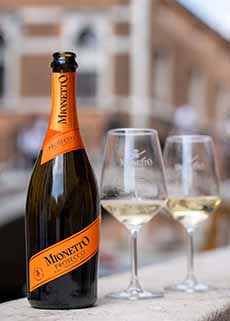
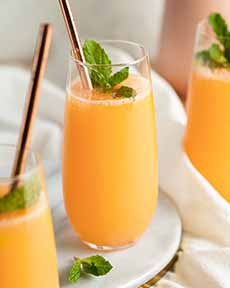
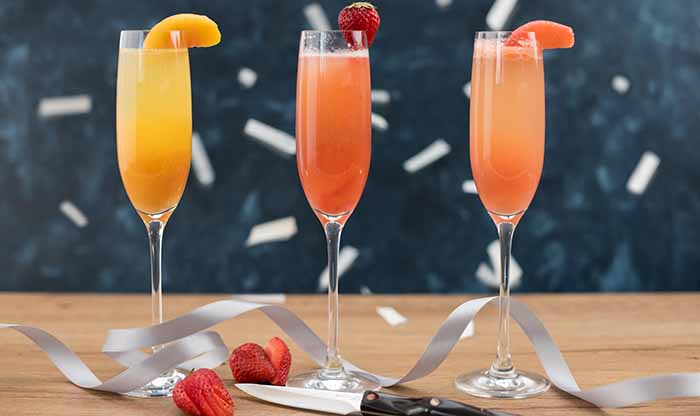 [5] The Bellini has been adapted to other fruits, like mango, strawberry, and grapefruit. You simply substitute the fruit purée (photo © Cutco). ABOUT PROSECCO & ITS HISTORY Prosecco is the quintessential summer sparkler: light-bodied for hot weather drinking and sufficiently affordable—most bottles are $10 to $12—to enjoy regularly. Hailing from the Veneto region of northeast Italy, Prosecco is the name of the village where the Prosecco grape—now known as the Glera grape—originated. Other local white grape varieties, such as Bianchetta Trevigiana, can be included in the blend. The wine can be frizzante—just slightly fizzy, sometimes bottled with a regular cork to be opened with a corkscrew—or spumante—very fizzy, bottled with the mushroom-shap cork and wire cage* used on Champagne bottles. The wine is often labeled Prosecco di Conegliano Valdobbiadene, after its appellation. The history of Prosecco is not well documented. Until recently, there were different theories about its origin. Now, it is believed that the first Prosecco was created in 1868 by Antonio Carpene, who subjected still white wine of the area to a second fermentation, which produced the bubbles. In general, the wine of Prosecco has been linked to a wine made at the time of Roman Empire, in a town called Pucino. It, like Prosecco, was located in the hills that surround the Gulf of Trieste [source]. (The town no longer exists, but the surname Pucino, indicating a person from Pucino, is still going strong.) Using grape DNA and archaeological evidence, it was more recently established that the grape called Prosecco was very similar to the older grape from the Pucino area, Glera. The grape called Prosecco is now called Glera. *Dom Perignon created an early version of wire caging on the cork. Manyt of bottles were lost during production because the cork on the bottle was unable to withstand the pressure of the effervescent Champagne. The added strength. In 1844, Adolphe Jacqueson made the cage (called a muselet in French) in the shape we know today. Here’s a further discussion. CHECK OUT WHAT’S HAPPENING ON OUR HOME PAGE, THENIBBLE.COM. |
||