TIP OF THE DAY: Make The Best French Fries
|
|
July 10th is National French Fry Day, the perfect day to explore how to make the best French fries.
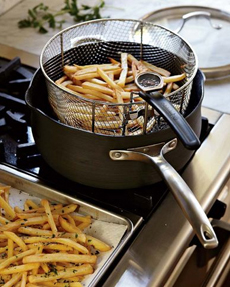
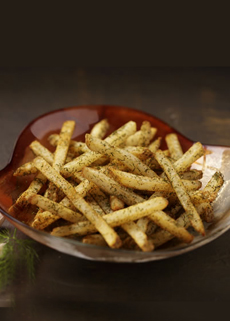
We contacted our friends at the Idaho Potato Commission, a website with tons of tips and recipes. They start by advising you to buy Idaho potatoes, which are branded russet potatoes that reflect the unique growing conditions of the state. Depending on where potatoes are grown, they will have more or less moisture. Idaho russets have less moisture, which is desirable for crisper fries. (By the way, all agricultural products reflect their terroir, pronounced tur-WAH, a French agricultural term referring to the unique set of environmental factors in a specific habitat that affect a crop’s qualities. It includes climate, elevation, proximity to a body of water, slant of the land, soil type and amount of sun. These environmental characteristics gives a fruit or vegetable its unique character.) > The 27 different types of French fries. > The history of French fries is below. > 16 yummy French fries recipes. > How to ceate your signature French fries recipe. > The history of potatoes and the different types of potatoes: a photo glossary. > The year’s 30 potato holidays. 1. WASH and scrub the potato skins well, and allow to air-dry in a single layer on a sheet pan. 2. USE a French fry cutter to cut the potatoes into the desired size and shape, leaving the skins on. RINSE thoroughly so the excess starches and sugars are removed. At this point, you can leave the sliced potatoes covered with water in the fridge up to 24 hours in advance of cooking. 3. SPIN the potatoes dry with a salad spinner or drain on a drip screen (i.e., cooling rack) before frying. 4. BLANCH or partially cook the fries to keep the potatoes from oxidizing/darkening, in a 250°F fryer for 2-3 minutes. Remove from the fryer and drain. Allow the fries to cool to room temperature before the final fry. Fries should be bendable. Then, chill in the fridge before the final fry. 5. FINISH the fries in the fryer at 350°F for 3-4 minutes until golden brown and fully cooked. Remove and drain well. TIP: Fill the fry basket only half full. Better oil circulation results in crisper fries. 6. After draining on a screen, season with salt. Do not season over the hot oil! Consider seasoning with dried herbs as well—rosemary or thyme, for example—or substituting garlic salt. It begins with the potato, of course. Potatoes originated in Peru and spread to other parts of Latin America. Fried potatoes—cooking potatoes in fat over a fire—is a practice that’s thousands of years old. |
|
|
Potatoes were “discovered” and brought back to Europe by the Spanish conquistadors—where they were uses as hog feed! The French were convinced that potatoes caused leprosy, and French Parliament banned the cultivation of potatoes in 1748. A French army medical officer, Antoine-Augustine Parmentier, was forced to eat potatoes as a prisoner of war, and discovered their culinary potential. Through his efforts, in 1772, the Paris Faculty of Medicine finally proclaimed that potatoes were edible for humans—though it took a famine in 1785 for the French to start eating them in earnest. In 1802, Thomas Jefferson’s White House chef, Honoré Julien, a Frenchman, prepared “potatoes served in the French manner” for a state dinner. The potatoes were “deep-fried while raw, in small cuttings.” French fries had arrived! By the early 20th century, the term “French fried,” meaning “deep fried,” was being used for other foods as well (onion rings and zucchini sticks, anyone?). CHECK OUT WHAT’S HAPPENING ON OUR HOME PAGE, THENIBBLE.COM. |
||