Spicy Chocolate Fondue Recipe With Churros & The History Of Churrros
|
|
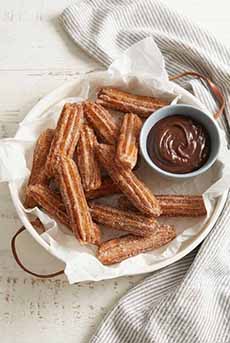
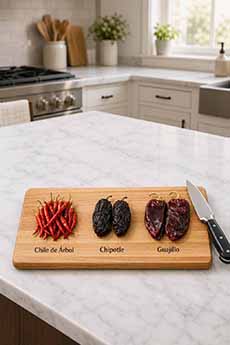
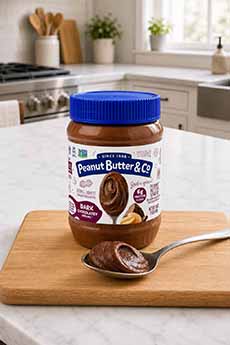
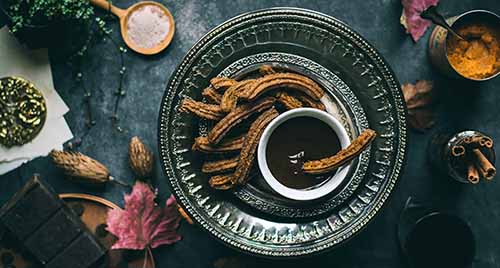
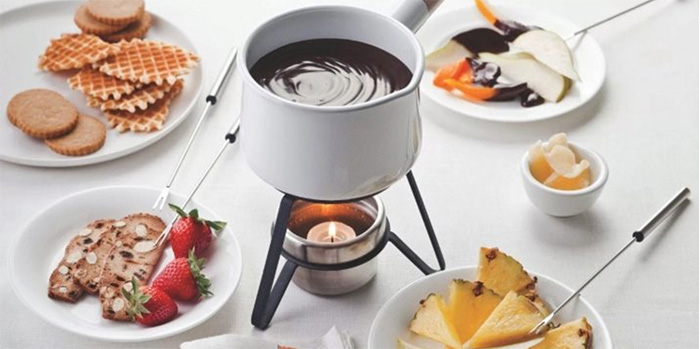
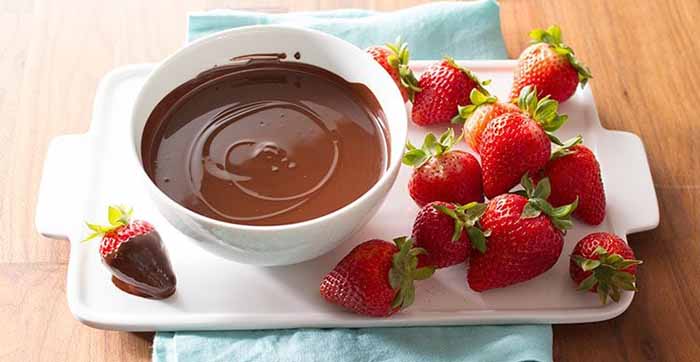
Updated June 2026 National Churro Day is June 6th. And there’s Día de los Muertos, celebrated October 31st and November 1st. And 363 days in-between where you can make a spicy chile mole fondue. Use it to dip churros! If you’re not familiar with them, a churro is a sweet, fried-dough pastry that originated in Spain and Portugal and is popular in Mexico. Choux pastry dough is piped to create a long, ridged stick, which is then deep-fried until crispy on the outside and soft on the inside. It’s then generously dusted with cinnamon sugar. While they’re enjoyed as a grab-and-go snack, they’re a delicious dessert, served with chocolate sauce, ice cream, or both. You can buy them in Latin American grocery stores, make them, or use “churro substitutes.” > Recipe: Three-chile spicy fondue for dipping churros. > Easy-to-make-or-buy substitutes for churros. > The history of El Día de los Muertos. Elsewhere on The Nibble: > More chocolate fondue dippers. > The year’s 25+ Mexican and Tex-Mex food holidays. > The year’s 30+ pie and pastry holidays. This recipe, from McCormick, uses three types of chilies—guajillo, chile de árbol and chipotle—to give this Mexican-inspired dessert fondue a smoky kick. Bittersweet and semisweet chocolate, nutty peanut butter and warm cinnamon make it a luscious complement to churros. The dip is also delicious with fresh fruit, shortbread or other cookies. You can also try pumpkin tortilla chips, which have matching spices and a touch of sweetness. Note that the serving size in this recipe is 2 tablespoons—enough for a mouse! If you want a larger portion, double the recipe. Tips 1. HEAT a medium saucepan on medium-high heat for 2 minutes. Add the chiles; toast 30 seconds per side or until they begin to blister and change color slightly. 2. LET the saucepan cool slightly. Add 2 cups water to cover the chiles and bring to boil. Reduce the heat to low; simmer 30 minutes until the chiles soften. 3. REMOVE the chiles with kitchen tongs to a blender container. Add 1/2 cup chile soaking liquid from the saucepan; cover. Blend on high speed until smooth. Discard the remaining soaking liquid in the saucepan. 4. STRAIN the chile purée through a large mesh strainer into the saucepan. Stir in the cream and corn syrup. Bring just to boil on medium heat, stirring occasionally. Remove from heat. 5. ADD the remaining ingredients; stir until the chocolate is melted and mixture is smooth. Garnish with toasted sesame seeds. Making churros from scratch, with star-tipped piped pastry fried in hot oil, may be too much for most of us. Here are easier alternatives to dip in that delicious sauce, that deliver the same warm, cinnamon-sugar flavors. |
|
|
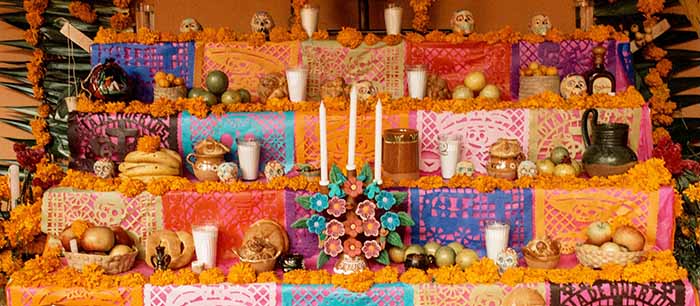
The churro is often thought to have originated in Spain, but it may, in fact, have come from China. It is similar to a savory Chinese pastry (no sugar), dough sticks called youtiao, which are fried in oil. The result is a crispy outside and tender crumb. Here’s a recipe. Portuguese explorers, who traded with China as early as 1514, may have brought youtiao back to Portugal. From there, it hopped the border to Spain, where it evolved into the sweet, cinnamon-accented pastry we know today. Churros were introduced to Mexico and South America during the Spanish exploration and conquest in the mid-1500s. This was about the same time that the Spanish returned to Europe from Mexico with cacao…and ultimately, Spanish cooks turned that turned into hot chocolate and chocolate sauce. In Spain, the pastry got its from being piped through a churrera, a syringe-like utensil that features that unique shape. Churros can either be straight or spiral-shaped. The churrera (an inexpensive tool) comes with different attachments, so choose whatever you like! (You can use the churrera to make cookies as well. Its design is similar to a spritz cookie press.) After frying or baking, our modern churros are rolled in cinnamon sugar. While churros are served as a dessert in Mexican-American restaurants, café con leche and churros are popular breakfast items in Latin America. While traveling from country to country, the churro was enhanced, from guava-filled churros in Cuba, the dulce de leche-filled churros in Mexico, and cheese-filled churros in Uruguay. Dulce de leche, a popular sauce for churros, was invented in Argentina in the 19th century. The first historical reference to the Argentinian dessert comes from a peace meeting between military leaders in 1829. According to legend, dulce de leche was produced by accident when the maid was cooking some milk and sugar and was unexpectedly called away. Upon her return, the mixture had transformed into a thick, brown consistency (not very different from caramel sauce, which is made with sugar, cream, and butter). The “new dessert” was called dulce de leche, a sweet milk confection. Today it is usually made with sweetened condensed milk (which did not exist at the time). Contemporary creative churro bakers have made churros in different flavors, made them hollow to be stuffed with different fillings, made them into jumbo-sized loops, made them mini-bite size, and continue to work their magic on an already-magical magical pastry. Check out these rainbow-colored churros for Pride Week. Since pre-Colombian times, Mexicans have celebrated El Día de los Muertos, a ritual in which the living remember their departed relatives. The roots of the celebration go back some 3,000 years. According to tradition, the gates of heaven are opened at midnight on October 31st and the spirits of children can rejoin their families for 24 hours. The spirits of adults can do the same on November 2nd. Graves are tended and decorated with ofrendas (offerings), and families expect a visit from loved ones who have passed. Elaborately decorated altars are created in homes, with candles, photos, chocolate, sugar skull heads (calaveritas), and even favorite foods of the deceased. Although El Día de los Muertos overlaps Halloween, and share some traditions like costumes, parades, and chocolate—the two holidays are not related. CHECK OUT WHAT’S HAPPENING ON OUR HOME PAGE, THENIBBLE.COM. |
||