Ponzu Sauce: Uses, History, & A Recipe To Make Your Own
|
|
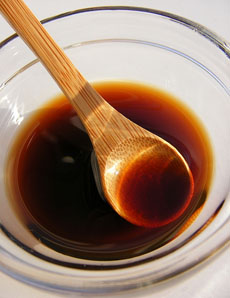
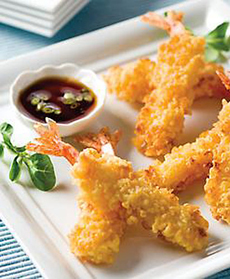
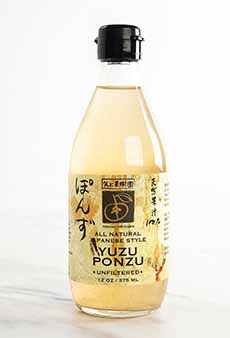
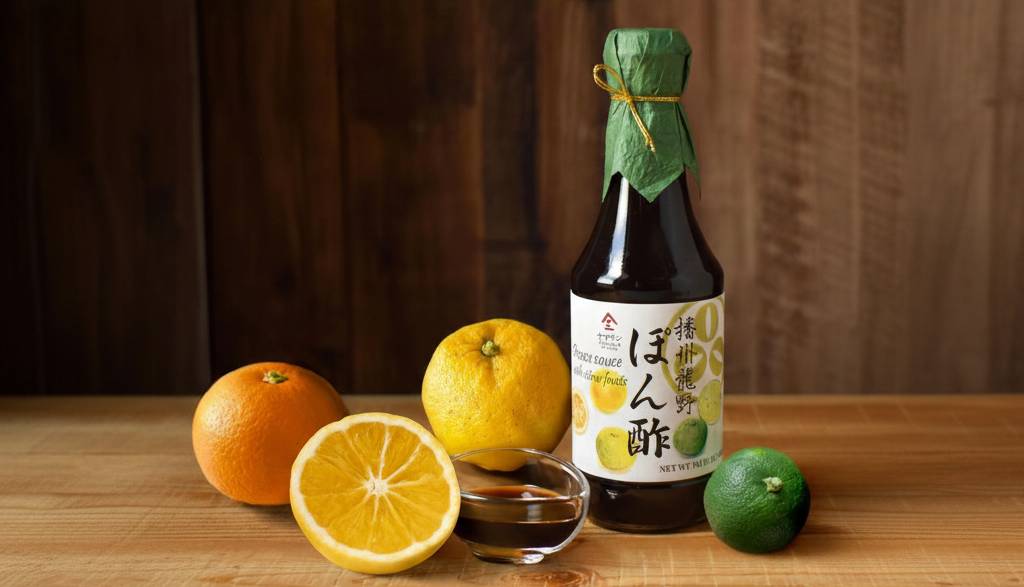
Following our recent endorsement of rice vinegar as an everyday condiment is this one for ponzu sauce. Ponzu is a thin, dark brown citrus-based sauce commonly used in Japanese cuisine. Often mixed with soy sauce (shoyu), it is a popular all-purpose condiment and dipping sauce. If you’ve ordered tempura in a Japanese restaurant, it was likely served with a small dish of ponzu. Ponzu sauce is traditionally made with rice vinegar, mirin (rice wine), katsuobushi (bonito tuna flakes) and konbu (seaweed). Some recipes use saké, a less sweet rice wine with a higher alcohol content. The ingredients are simmered and strained, and then citrus is added, typically yuzu, a bitter orange, or sudachi, a mandarin. (You can use lemon if you’re making it at home.) > The recipe follows, along with: > Uses for ponzu in Japanese cuisine. Ways to enjoy ponzu on American foods. > The difference between ponzu and chirizu. > The year’s 11 Japanese food holidays (plus 6 sushi holidays). > The year’s 18 dip, dressing, and sauce holidays. Mark Bittman of The New York Times calls ponzu “the rough equivalent of vinaigrette.” Ponzu is an attractive condiment with both Western cuisine and its native Eastern cuisine. We recently substituted it for malt vinegar with French fries, and instead of mignonette sauce with oysters on the half shell. Here are more ways to enjoy ponzu sauce: This recipe is adapted from Mark Bittman. It presumes you won’t have access to yuzu juice and uses commonly-available citrus. But in many cities, bottled yuzu juice (another of our favorite condiments) is readily available at specialty food stores and Asian markets. Ingredients For 2-1/2 Cups 1. COMBINE all ingredients in a bowl. Let sit for 2 hours or overnight to let flavors meld. 2. STRAIN before using. Refrigerated in an airtight container, ponzu will keep for at several days. |
|
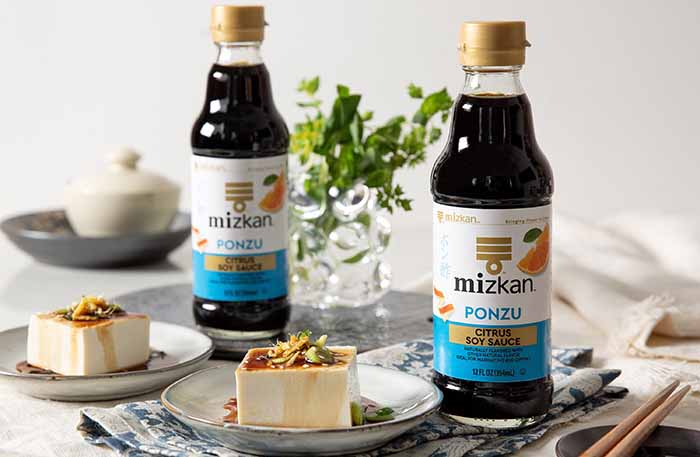 [4] Tofu with ponzu sauce: light, protein-packed, and delicious Here’s the recipe (photo © Emeals). PONZU VS. CHIRIZU SAUCE Chirizu is a spicier variation of ponzu, made with daikon, lemon juice, saké, scallions, soy sauce and shichimi togarashi, a table spice made of seven ingredients, including red pepper (togarishi) and sansho pepper pods (which provide heat). It can be served with stronger-flavored sashimi that hold up to the heat (mackerel instead of fluke, for example); as well as with fried fish. Here’s a recipe if you’d like to make your own. While we know ponzu as a delicious staple Japanese condiment, its development is an example of 17th-century global fusion. What’s more, this idea for this savory condiment began as a European alcoholic fruit punch. The name “ponzu” actually derives from the Dutch word “pons,” which referred to a citrus-based punch drink. Dutch traders brought this beverage with them to Japan during the Edo period (1603-1868), when the Netherlands was one of the few Western countries allowed to trade with Japan through the port of Nagasaki. The Japanese adopted the name, but over time, they dropped the alcohol and focused on the tart, acidic base. By adding the Japanese word for vinegar (zu), “pons” became ponzu, using the juice from native citrus fruits like yuzu, sudachi, or kabosu instead of the Western citrus. First, the citrus juice as mixed with vinegar—a preservation method that kept the juice fresh for longer. Early ponzu was a light yellowish (from the citrus juice) product used to preserve other foods and in marinades. The shift toward the modern condiment began in the Kansai region, around Kyoto and Osaka. Chefs and home cooks began to combine the tart citrus mixture with soy sauce and dashi at the table, to create a more complex dipping sauce. It was especially popular with mizutaki (chicken hot pot). For a long time, this was a fresh preparation made right before the meal. As Japan modernized in the Meiji Period (1868–1912), ponzu began to appear a dressing for tataki (seared meat or fish). During this era, the addition of soy sauce became the standard preparation at restaurants, and it was called ponzu shoyu to distinguish it from the clear citrus-vinegar juice. It evolved into a dipping sauce and dressing: The dark, savory version we use today is technically ponzu shoyu, created when chefs began mixing the acidic juice base with other ingredients: shoyu (soy sauce), mirin (sweet rice wine), katsuobushi (bonito flakes), and kombu (kelp). Bright, tangy, and umami-rich, ponzu became a staple of Japanese cuisine, particularly popular as: In 1964, Mizkan, a major vinegar producer, noticed that while people in the Kansai region loved mixing citrus and soy for their hot pots, people in Tokyo (the Kanto region) hardly knew it existed. Mizkan decided to do the mixing for the consumer and launched bottled Ajipon (aji-tsuke ponzu, seasoned ponzu). Other Japanese companies began to bottle and mass-market it as well. Ponzu became the go-to condiment for shabu-shabu and nabemono (hot pot dishes), and the more people who discover it, the more pleasure it will provide. Ponzu’s bright, tangy profile works beautifully with many Western dishes! The key is thinking of ponzu anywhere you’d want acidity, umami, and a bit of complexity—basically where you might use lemon juice, vinaigrette, or even hot sauce! (And you can certainly add chili flakes or a splash of hot sauce to ponzu). Here are just some of them:
CHECK OUT WHAT’S HAPPENING ON OUR HOME PAGE, THENIBBLE.COM. |
||