White Chocolate Is REAL Chocolate (And Candy Melts Aren’t)
|
|
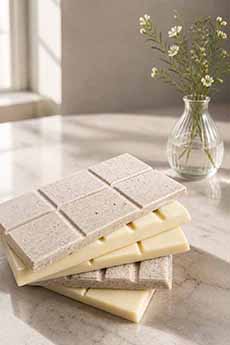
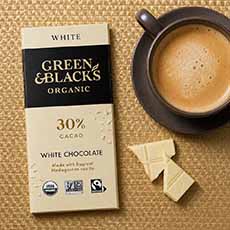
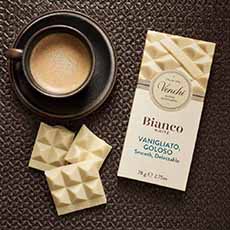
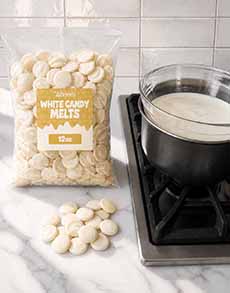
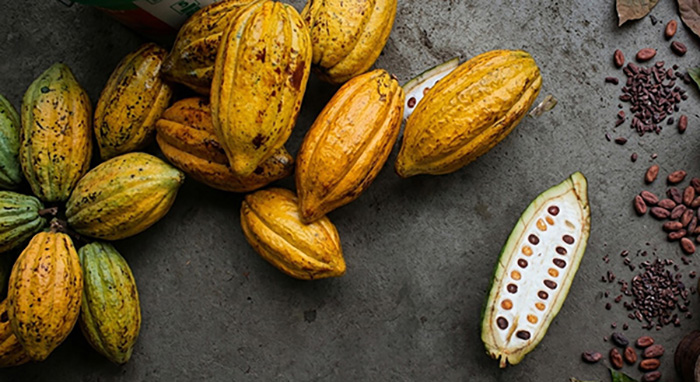
Updated August 2026 September 23rd celebrates one of our favorite holidays, National White Chocolate Day. White chocolate is one of those foods, like anchovies, avocado, blue cheese, cilantro, liver, and quite a few others* that people either love or hate. To add insult to injury, many people, including food professionals and the media, perpetuate the way-out-of-date news that “white chocolate isn’t real chocolate.” But it is! White chocolate was once not classified as chocolate by the FDA, because it has no cocoa solids (which make chocolate brown). That’s changed. In 2002 the FDA agreed that the cocoa butter qualified it as true chocolate, and classified this ivory delight as chocolate. The other components are milk, sweetener such as sugar, vanilla and a drop of lecithin as an emulsifier. There’s more about this below. White chocolate used to be classified with the chalk-white product called “confectionery coating” in the industry, and “candy melts” among consumers (photo #4). This product, which is made with cheaper vegetable oil, milk and sugar, has no relation to chocolate—no cocoa butter, no cocoa solids—and in our opinion, doesn’t taste so terrific. In fact, if you think you don’t like white chocolate, you may have been eating confectionery coating. We explain what it is below. What it isn’t is chocolate. Below: > The components of real chocolate. > The 411 on confectionery coating and candy melts. > The difference between “cocoa” and “cacao.” Elsewhere on The Nibble: > Our reviews of the world’s best white chocolate brands. > The history of white chocolate. > The different types of chocolate: a photo glossary. > The year’s 69 chocolate holidays. > Pairing wine with chocolate. > How to care for your chocolate in warm weather. > The best Dubai chocolate. Government standards require a product called chocolate must contain: 1. Cocoa butter, the natural fat in the cacao bean. In real chocolate, this is the only fat allowed. If a manufacturer replaces this with vegetable oil or palm oil, it can no longer be called chocolate and must be labeled as confectionery coating or compound chocolate. 2. Cocoa solids, also called chocolate liquor. For dark and milk chocolate, the product must contain cocoa solids, also called chocolate liquor or cocoa mass (there is no alcohol in chocolate liquor—see the †footnote). Dark chocolate generally must contain at least 35% total cacao (solids/liquor + cocoa butter), while milk chocolate must contain at least 10% chocolate liquor. 3. Sweeteners. Nearly all real chocolate contains sugar or another sweetener (apart from 100% cacao chocolate, or baking chocolate). In addition to turning the chocolate into candy, it to offset the natural bitterness of the cacao. 4. Milk Solids. Milk chocolate must contain at least 12% milk solids. White chocolate must contain at least 14% milk solids. There is no milk in dark chocolate. Manufacturers are also able to add vanilla extract and a drop of lecithin as an emulsifier. |
|
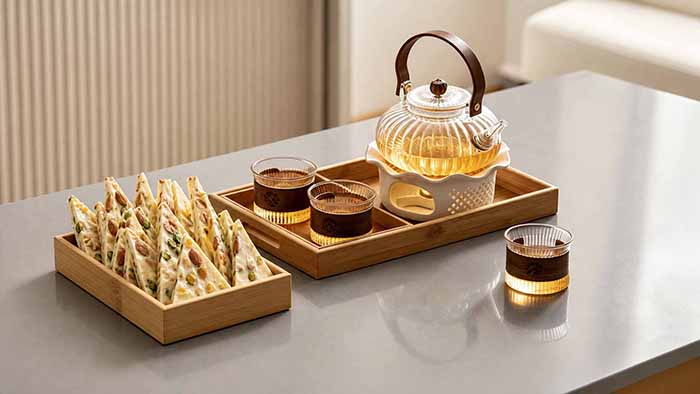 [5] Exquisite white chocolate bark from Laderach is a fan favorite: caramelized almonds and pistachios with candied orange pieces. The tea set is from Awaken Tea Studio. 3. CONFECTIONERY COATING & CANDY MELTS Confectionery coating and candy melts are essentially the same product, used in different contexts. They both belong to the category of “compound chocolate” and are often sold as “compound coating wafers” (photo #4) The key reason they are called “coatings” or “melts” rather than chocolate is the fat content. They are much easier to work with when dipping cake pops, making molded candies, or drizzling over cookies because they set quickly and are very stable. The negative, though, is a big one. Because they lack cocoa butter and often contain artificial flavorings—not to mention more sugar—they don’t have the same rich mouthfeel or complex flavor as real chocolate. Let’s be honest: They taste waxy…and that’s why many people who have tried “white chocolate” and disliked it, probably were eating confectionery coating. Why spend your sugar calories on them when there are so many other sweets to eat? Around 1519, the Spanish conquistadors in what is now Mexico encounted were introduced to kakawa, pronounced kah-KAH-wa. For whatever reason, the Spanish pronounced it ka-KAH-oh, and spelled it cacao. And cacao it was for another 200 years or so, until a ship’s manifest bringing cacao to the Colonies transposed the letters a and o. Thus, we ended up with cocoa instead of cacao. So, the English-speaking world had its cocoa, and every other place had cacao.
*There’s quite a list of disliked foods. Here’s a sampling: anchovies, avocado, blue cheese, Brussels sprouts, capers, cilantro, coconut, goat cheese, kale, lima beans, liver, Marmite/Vegemite, mushrooms, oysters, raisins, raw tomatoes, sardines, tofu, and (drum roll) white chocolate. †The term “liquor” in chocolate liquor comes from an older, more general definition of the word that simply means “liquid” or “essence.” It derives from the Latin liquere, to be fluid. In the 18th and 19th centuries, many substances that were ground into a paste or liquid were called liquors. In chocolate production, it refers to the liquid state of the cacao bean after it has been roasted and ground. Because cacao beans are about 50% fat (cocoa butter), the grinding process creates enough heat to melt that fat, turning the solid nibs into a thick, smooth, dark liquid. Confusion: Chocolate liquor is pure, ground-up cocoa beans. It has zero alcohol. Chocolate liqueur is a neutral spirit (like vodka) that has been flavored with chocolate and sweetened with sugar. It does contain alcohol, from 40 to 60 proof, or 30 proof for a cream liqueur. To help avoid this confusion among customers, many gourmet chocolate makers now use the more literal terms cocoa mass, cocoa paste, or 100% cacao. ‡Chocolate beans: To be precise, you may encounter molded chocolate candy “beans.” CHECK OUT WHAT’S HAPPENING ON OUR HOME PAGE, THENIBBLE.COM. |
||