THE NIBBLE BLOG: Products, Recipes & Trends In Specialty Foods


Also visit our main website, TheNibble.com.

Make A Side Salad With Leftover Orzo, Rice, Or Other Grain: The Recipe, Plus What Is White Balsamic Vinegar

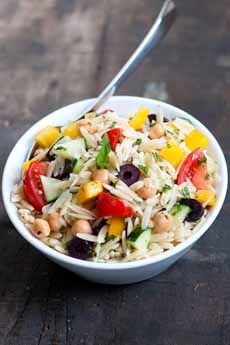
Orzo Pasta Salad with Greek Salad Toppers
[1] Make this tasty side salad from scratch, or with leftover orzo or grains (all photos © DeLallo).

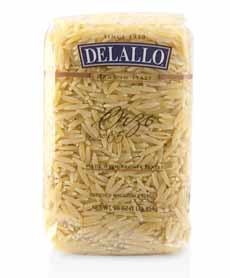
DeLallo Orzo
[2] It’s easy to mistake this bag of DeLallo orzo for some type of rice.

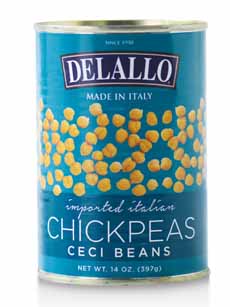
DeLallo Chickpeas
[3] Chickpeas, meaty legumes from the Mediterranean, are packed with protein and fiber. These premium chickpeas

are available from DeLallo.

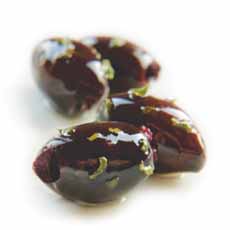
Seasoned Kalamata Olives
[4] These pitted, seasoned Kalamata olives (DeLallo spells it Calamata) are available from DeLallo. The seasoning adds zing to the tartness.


Here’s a tasty idea from DeLallo to turn leftover orzo or grains into something much more appealing.

The producer of premium packaged foods adds color and flavor, including tart Kalamata olives and a golden/white balsamic vinegar-based (see below) vinaigrette. If you’re using darker grains, you can use a regular balsamic.

With a Greek flair, this combination of crunchy, sweet, and tart will make you want a larger portion than a side.
 
 
WHAT IS ORZO?

Orzo is a shape of pasta that is extruded (shaped through metal plates) to look like grains of rice, about 1/3-inch long (photos #1 and #2).

It is made of the same durum wheat as other Italian pasta. The durum is milled into semolina flour and then blended with spring water. The dough is then extruded and allowed to dry.

  • Orzo is actually the Italian word for barley, which it also resembles (an unprocessed grain of barley looks similar to a grain of rice).
  • In Greece, the word is kritharáki, meaning “little barley.”
  • In Italy, it’s also called risoni, Italian for large grains of rice. A similar shape in Spain is called piñones, which is also the Spanish word for pine nuts.
  • In Turkey, orzo is called arpa şehriye, which translates, poetically, as “songbird tongue.”
  •  
    In addition to plain semolina orzo, varieties are available flavored with black bean, red chile, and sweet potato, among others.

    Orzo is frequently used as a substitute for rice and can be used instead of, or combined with, rice to make pilafs and risottos. It is also used like rice or barley in soups, salads, and sides.

    See more types of pasta in our Pasta Glossary.
     
     
    RECIPE: GARDEN GREEK ORZO SALAD

    Ingredients For 6-8 Sides
     
    For The Dressing

  • 3 tablespoons DeLallo Golden Balsamic-Style Vinegar (substitute white balsamic, white wine vinegar or rice vinegar)
  • 1 tablespoon lemon juice
  • Coarse sea salt or kosher salt, to taste
  • Freshly-ground black pepper
  • 1/4 cup extra virgin olive oil
  •  
    For The Salad

  • 1 can (15.5 ounces) chickpeas, drained
  • 1/2 cup pitted seasoned Kalamata olives, chopped
  • 1 large yellow bell pepper, cut into 1/2-inch pieces
  • 2 large tomatoes, chopped
  • 1 cucumber, quartered lengthwise then sliced
  • 2 tablespoons chopped fresh parsley
  • 2 tablespoons chopped fresh oregano or dill
  • 1 (1-pound) package orzo, cooked, room temperature
  •  
    Preparation

    1. MAKE the dressing: Combine the vinegar, lemon juice, salt and pepper in a mixing bowl. Whisk together to incorporate. Introduce the oil in a steady stream while whisking. Set aside.

    2. COMBINE the chickpeas, olives, bell pepper, tomatoes, cucumbers, and fresh herbs in a large serving bowl. Toss with the orzo or grain.

    3. ADD the dressing and mix well to coat. Season with salt and pepper to taste. Serve at room temperature or lightly chilled.


    WHAT IS WHITE BALSAMIC VINEGAR / GOLDEN BALSAMIC VINEGAR?

    Golden or white balsamic vinegar is made in the balsamic style, with Trebbiano, a white grape, but without the dark grapes that contribute to the dark color of regular balsamic. It is blended with white wine vinegar.

     
    It was created in the same area of Italy (Modena) as traditional balsamic vinegar, developed to have a lighter color for use in light-colored sauces and vinaigrettes.

    In addition to vinaigrettes and sauces, use it to deglaze a pan and to dress roasted vegetables.

    Although it was introduced as white balsamic, it has a golden color. More recently, producers have been calling it golden balsamic: It’s the same thing.

    White/golden balsamic vinegar has a sweet-and-tart flavor profile like the conventional product, but it tends to be sweeter than conventional balsamic.

    As with dark balsamic, the grape must (the freshly-crushed grape juice that contains the skins, seeds, and stems of the fruit) is simmered, but avoids the caramelization that turns the must dark. The result is also aged for less time, in oak or stainless steel barrels.

    And as with traditional balsamics, there are all levels of quality and price, and “factory made” balsamics that are white vinegar doctored to look and taste like an authentically-produced balsamic.

    Here’s more about balsamic vinegar.


    CHECK OUT WHAT’S HAPPENING ON OUR HOME PAGE, THENIBBLE.COM.


    Comments off

    FOOD HOLIDAY: Make Some Strudel For National Strudel Day

    June 17th is National Strudel Day. While most people tend to think “apple strudel,” strudels can be sweet or savory.

    While seasonal fruits are popular fillings, some sweet strudels are fruit-free, filled instead with soft, sweetened cheese (quark), poppy seeds, or nuts.

    Savory strudels are filled with cheeses, meats, seafood, or vegetables. We have some great recipes for your perusal,  below.

    While sweet strudels are served as a breakfast pastry, a nibble with a cup of tea or coffee, or dessert, savory strudels are served as a luncheon main with a salad, or as a first course with dinner.

    > The history of strudel follows.

    > Check out the 15 strudel recipes below, both savory and sweet.

    > The difference between puff pastry and phyllo (filo).

    Elsewhere on The Nibble:

    > The year’s 15+ pastry holidays.

    > The history of pastry.

    > The different types of pastry: a photo glossary.

    > The 16 types of pastry dough.
     
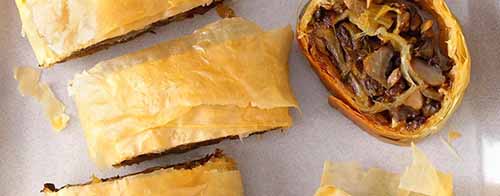
    Mushroom-Leek Strudel
    [5] A savory mushroom-leek strudel. Here’s the recipe (photo © Taste Of Home).
     
     
    STRUDEL HISTORY

    Strudel is an Austro-Hungarian pastry made with a thin, layered dough. Originally that dough was the almost-transparent sheets of Turkish phyllo. Subsequent cultures employed the much-easier-to-use puff pastry (see the difference below).

    The recipe for baklava is said to date to the Assyrian court in the 8th century B.C.E.

    The tissue-thin phyllo dough we know today was probably developed by the Ottoman Sultan’s chefs in the Topkapi Palace in 15th-century Constantinople. The idea was, “the thinner the better.” One chef instructed that the sheets be so transparent, that one should be able to read a love letter through them.

    The oldest written strudel recipes date from 1696. They include a sweet, milk cream-filled strudel (like pastry cream), and a savory turnip strudel (source).

    Food historians believe that the Turkish baklava pastry, made from phyllo, was introduced into the Hapsburg/Austrian Empire around the 15th century* (some sources say as late as the 17th century). It, and the baklava that was made from it, served as the evolution point for strudel.

    (history continues below)


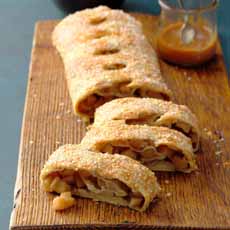
    Caramel Apple Strudel
    [1] Caramel Apple Strudel. Here’s the recipe from Taste Of Home (photos #1 through #5 © Taste Of Home).

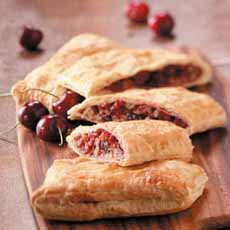
    Cherry Strudel
    [2] Cherry Strudel. Here’s the recipe from Taste Of Home.

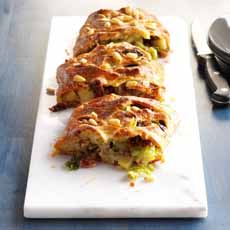
    Roasted Vegetable Strudel
    [3] Roasted Vegetable Strudel. Here’s the recipe from Taste Of Home.

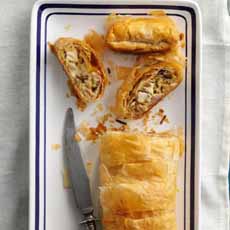
    Chicken & Wild Rice Strudel
    [4] Chicken and Wild Rice Strudel. Here’s the recipe from Taste of Home.

     
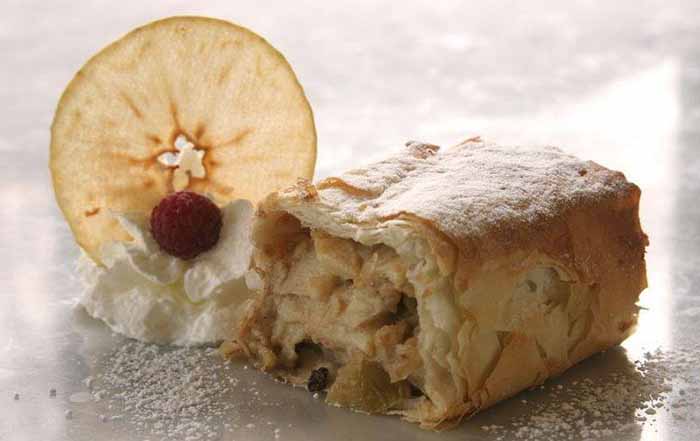
    A Slice Of Apple Strudel With Whipped Cream
    [6] A simple yet elegant presentation of apple strudel (photo © Wallse | New York City).
     
    In Hungary, the chopped nuts and honey filling of baklava was adapted to different flavors, including dried fruits like raisins, and jams‡ (source). Puff pastry was substituted for phyllo.

    Soon after Hungary became part of the Austrian Empire in 1699, these rolled puff pastries arrived in Vienna, where they were called strudel.

    The word strudel (STROO-dull) derives from the German word Strudel, which means “whirlpool” or “eddy” in Middle High German. The image comes from rolling the dough in concentric circles.

    Toward the close of the Ottoman-Hapsburg Wars† in the 18th-century Hapsburg Empire, strudels became popular in Hapsburg Monarchy/Austrian Empire, the capitals of which were variously Vienna and Prague.
     
    Modern Strudel Emerges

    From 1800 onwards recipes were created incorporating every type of ingredient.

  • Dairy: milk-cream-strudel Parmesan strudel, quark strudel
  • Fruits & Spices: apple strudel, apricot strudel, cherry strudel, cinnamon strudel, damson strudel, grape strudel, pear strudel
  • Grains: semolina strudel, rice strudel
  • Nuts & Seeds: almond strudel, poppy strudel, walnut, and walnut/raisin strudel
  • Proteins: beef strudel, chicken strudel, ham strudel
  • Vegetables: cabbage strudel, herb strudel, mushroom strudel, potato strudel, pumpkin strudel, sauerkraut strudel, spinach strudel (source)
  •  
    Strudel is one of the national dishes of Austria; and oddly, it’s the official state pastry of Texas (along with the sopaipilla).
     
     
    15 SAVORY & SWEET STRUDEL RECIPES

    Savory Strudels

  • Artichoke & Spinach Strudel
  • Asparagus Strudel
  • Broccoli & Cheese Strudel
  • Chicken & Wild Rice Strudel
  • Chicken Vegetable Strudel
  • Crab & Brie Strudel
  • French Onion – Beef Strudel
  • Mushroom & Leek Strudel
  • Oktoberfest Strudel (brats, cheese, sauerkraut)
  • Roasted Vegetable Strudel
  •  
    Sweet Strudels

  • Blue Cheese Apple Strudel
  • Caramel Apple Strudel
  • Cherry Strudel
  • German Apple Strudel
  • Hazelnut Apricot Strudel
  •  
     
    PUFF PASTRY VS. PHYLLO (FILO): THE DIFFERENCE

    Two doughs are very different. Per Taste Of Home:

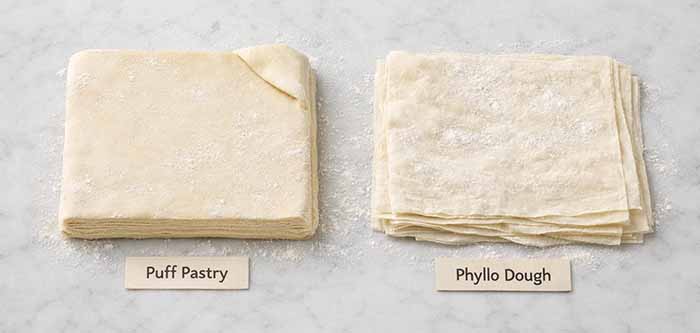
  • Puff pastry dough is a rich dough made by placing chilled butter between layers of pastry dough. It is then rolled out, folded into thirds, and allowed to rest. This process is repeated six to eight times, producing a pastry with many layers of dough and butter. It may be best known as the dough of croissant. Like phyllo, it is used for sweet and savory pastries. Unlike phyllo, it is soft rather than crisp.
  • Phyllo dough (also spelled filo) is tissue-thin pastry dough that bakes up into a crisp texture. Although it can be made by home cooks, it isn’t easy to do. Commercially prepared phyllo dough, available frozen, is a convenient alternative that results in a product that is “as good as homemade.” Phyllo dough, best known to Americans in baklava and other Greek pastries, can be used as a substitute for strudel dough or for other pastry wrappers, such as turnovers.
  •  
    Puff Pastry vs. Phyllo Dough
    [7] Puff pastry vs. phyllo dough (Abacus Photo).
     
    ________________

    *We have found the “official” date of 1453, but this seems wrong. This is the date that the Ottomans captured Byzantium, an ancient Greek colony that later became Constantinople, and then Istanbul.

    †The Ottoman–Habsburg wars, from the 16th century through the 18th century, were fought by the Ottoman Empire (modern Turkey) and the Habsburg Monarchy (Austria, Czechoslovakia, Hungary, and other areas). In the early modern period in Europe, Ottoman Turkey was arguably the strongest military and political power. The Ottoman Sultan ruled an Empire from Persia to Central Europe. It is widely accepted that if the Muslims Empire had been successful at the Battle or Siege of Vienna in 1683 that it could have gone on and dominated Europe and changed not only European history but also world history (source). During this time, different Turkish influences were introduced to Europe.

    ‡The same approach was used to make rugelach.


    CHECK OUT WHAT’S HAPPENING ON OUR HOME PAGE, THENIBBLE.COM.


    Comments off

    TIP OF THE DAY: Grilled Potato Skewers Instead Of Fries

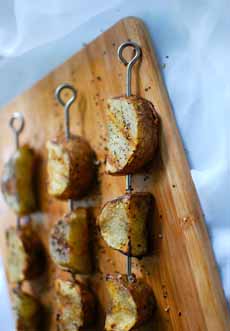
    Grilled Potato Skewers
    [1] Better than French fries! (photo by Lauren Kurella © Idaho Potato Commission.

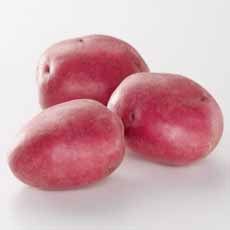
    Cal Red Potato
    [2] The Cal Red variety of Idaho® potatoes (photo courtesy Idaho Potato Commission).


    Wanting to contribute something delicious-but-easy to a Father’s Day cookout, we made these Crispy Grilled Potatoes.

    Truth to tell, we could have eaten the whole batch ourselves. We like them even better than wedge fries because of the hint of smoke from the grill and:

  • No need to deep fry (or eat fried food).
  • Delicious as is, no need for condiments.
  • Delicious with condiments anyway.
  • Skewers are fun.
  •  
    Thanks to the Idaho® Potato Commission for the recipe. We can’t wait to make it again—and to make twice as many, because they disappeared in the blink of an eye.
     
     
    RECIPE: CRISPY GRILLED POTATO SKEWERS

    We added a bit more flavor after they came off the heat, by sprinkling the potatoes with a pinch of dried herbs. (You don’t want to shake dry herbs while food is on the fire: They will be burned.)

    While we like good old ketchup with these crispy potatoes, you can offer anything from blue cheese dip to salsa.

    Ingredients For 4 To 6 Side Servings

  • 2 pounds Idaho® red jacket or Yukon gold potatoes, skin on, well scrubbed
  • 3 tablespoons olive oil
  • 1 medium garlic clove, peeled
  • 1/4 teaspoon salt
  • 1/8 teaspoon black pepper
  • Optional garnish: oregano, thyme or dried herb(s) of choice
  • Condiments as desired
  •  
    Preparation

     
    1. IMMERSE the potatoes in a large saucepan of boiling salted water, reduce heat and cook for 20 minutes (depending on their size) or until the potatoes are still slightly firm. Drain and cool.

    2. SLICE the potatoes in half lengthwise and then cut the potato halves into quarters or 1-inch slices, depending on size. Carefully place the potato pieces onto metal or soaked wood skewers.

    3. COMBINE the olive oil and garlic clove in a small saucepan and bring to a simmer over medium heat. Remove the garlic clove and add salt and pepper to taste and. When ready to grill…

    4. PREPARE the barbecue for medium heat grilling. Place the potato skewers on the grill and baste with the olive oil mixture. Grill about 8-10 minutes on each side or until the potatoes are brown and crisp on the outside and tender throughout. (For us, it’s the crisper the better [without burning].)

    5. REMOVE from the heat and sprinkle with the optional herbs. Serve with salt, pepper and condiments as desired.
     
     
    THE DIFFERENT TYPES OF POTATOES

    THE HISTORY OF POTATOES


    Comments off


    © Copyright 2005-2026 Lifestyle Direct, Inc. All rights reserved. All images are copyrighted to their respective owners.