|
Do you love to cook?
According to Flavor & The Menu, which advises professional chefs on culinary trends, there are five herbs you may not have tried that are waiting to become the next hot flavor trends.
Chervil, hyssop, lemon balm, lovage and nettles: Look for them the next time you’re at a farmer’s market or a specialty produce store.
The first four herbs are native to Europe. The fifth, nettles, originated in the Americas. All began as medicinal herbs before they made their way into the kitchen.
As a general definition:
Herbs are plants with savory or aromatic properties that are used for flavoring and garnishing food (as well as for fragrances and medicinal purposes).
Herbs are the green, leafy part of the plant. They are used in small amounts to provide flavor rather than substance to food.
Vegetables and other plants consumed for dietary nutrients are not herbs.
Spices come from different parts of the plant: bark, flower, fruit, root, seed or stem.
The same plant can yield both herbs (cilantro, the leaf) and spices (coriander, the seed).
1. CHERVIL
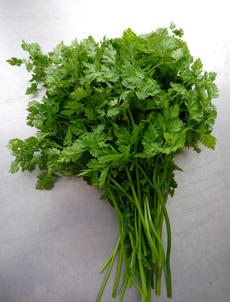
The best-known of the five, chervil, sometimes called garden chervil or French parsley, is an annual herb. It is related to parsley, but has the delicate taste of licorice or anise seed, combined with mint, tarragon and parsley.
Chervil is one of the four key herbs that make up the chopped herb blend called fines herbes (FEEN AIRB), a mainstay of French haute cuisine that also includes chives, parsley and tarragon (the word for chervil in French is cerfeuil, sir-FOEY).
It is one of the four ingredients of the French herb mixture fines herbes (feen-erb): chervil, chives, parsley and tarragon, used to season poultry, seafood, young spring vegetables, soups and sauces.
These herbs are called fine (delicate) as opposed to the stronger flavors of the bouquet garni (garnished bouquet), which incorporates “hardy” herbs—more pungent and/or resinous.
In everyday cuisine:
Use it in eggs, sauces and salads: Eggs Benedict, omelets and scrambles; rémoulade sauce; beet salads and snipped into green salads.
As a garnish on appetizers, such as bruschetta and crostini.
Pair it with poultry, seafood and vegetable dishes.
Chervil is also a cocktail herb. Try this chervil sour recipe.
Chervil, Anthriscus cerefolium is a member of the the Apiaceae family (also known as the carrot, celery and parsley family). It is native to the Caucasus, and was spread by the Romans through most of Europe.
2. HYSSOP
Hyssop (HIH-sup), Hyssopus officinalis, is native to Europe and is commonly used in Middle Eastern cuisine.
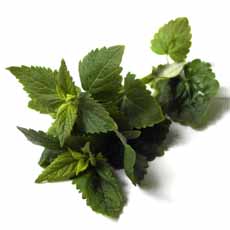
Only the leaves are edible. They have a bitter, but intensely minty flavor. In addition to use in the spice blend za’atar, cooks are beginning to incorporate hyssop into kombucha, salads, seafood dishes, tartare and teas. The edible flowers are variously blue, pink and purple.
Anise hyssop (Agastache foeniculum) a relative, is native to North America. It looks and tastes similar, but is of a different genus.
Both varieties are members of the Lamiaceae family, a family of flowering plants commonly known as the mint or sage family. Other family members include basil, lavender, marjoram, mint, oregano, perilla (shisho), rosemary, sage, savory and thyme.
It’s not the Biblical hyssop. A plant called hyssop has been used antiquity and appears in the Exodus, Hebrews, John, Kings, Leviticus, Matthew, Mark and Numbers (more).
But researchers suggest that this mention refers not to modern hyssop, but rather to a different herb (source). Capers and marjoram are the leading contenders.
Hyssop was long a medicinal herb, used for digestive and intestinal problems, loss of appetite and respiratory problems.
For centuries now, a culinary herb, cooks use the fresh leaves like other delicate herbs, in pastas, salads and soups. The colorful flowers can be used for garnishes.
You’re more likely to find hyssop in dried form. Don’t use these rough dried herbs in pastas or salads, but to infuse flavor into sauces and soups (place them in a spice ball/tea ball).
3. LEMON BALM
|
|

[1] Chervil (photo © Herbal Table [website closed]).
[2] Hyssop leaves (photo © Herbs Unlimited).
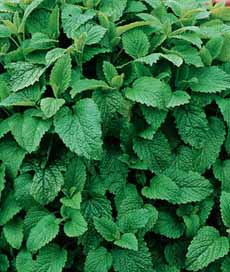
[3] Lemon balm (photo © Burpee).
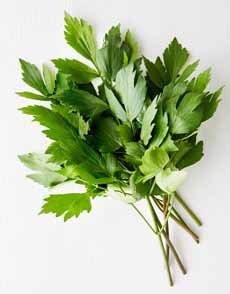
[4] Lovage (photo courtesy Good Eggs).
[5] Nettles (photo © Good Eggs).
|
Lemon balm (Melissa officinalis) has intense notes of lemon, but with greener notes associated with grass or mint.
The herb is a member of the mint family, Lamiaceae (as are hyssop and lovage). It is delicious in:
Beverages: cocktails, garnishes, hot or iced teas
Desserts: baking, cobblers, fitters, ice creams, syrups
Lemon balm is also a popular scent in beauty products, and is frequently added to potpourri.
As a medicinal herb, lemon balm has mild sedative properties. It has long been used to reduce stress and anxiety, encourage sleep, improve appetite, and ease discomfort from indigestion.
Sources date the medicinal use of lemon balm back some 2000 years, with the ancient Greeks and Romans. It was introduced into Spain in the 7th century, and was subsequently planted throughout Europe.
4. LOVAGE
Levisticum officinale, a member of the the Apiaceae family (also known as the carrot, celery and parsley family), is native to Southern Europe and the mountainous regions of the Mediterranean.
Little known in the U.S., lovage was standard in medieval herb gardens. As with the other herbs here, it was used medicinally before it moved into the kitchen.
Lovage dates back to ancient Greece, where the leaves were chewed to aid with digestion and gas (source).
As a culinary herb, lovage is sometimes called sea parsley for its slightly saline flavor. The leaves and stems have a refreshing vegetal flavor: They’re often described as a cross between celery and parsley. The seeds have a flavor similar to fennel. The flowers and roots are edible.
Add lovage to soups, stews, and stocks.
Chop it as a garnish for potato dishes, roast vegetables and salads, and salads.
Use it with egg dishes, fish, risottos, and in cream sauces.
5. NETTLES
Nettles are slightly bitter green herbs that taste a bit like spinach with a cucumber accent.
Some species have stinging (prickly) hairs, in which case they are called stinging nettles (Urtica dioica)—and are the source of the word “nettlesome.”
They are plants in the genus Urtica in the family Urticaceae (not surprisingly called the nettle family). One needs to pick them with gloves.
The word “urticate” derives from medieval Latin for “stung.” The chemicals in the stinging hairs are neutralized by soaking in water, blanching or cooking.
Indigenous to North America and a key ingredient in Native American cuisine and medicine, nettles grow wild and are foraged in the countryside.
Have them for breakfast, in omelets or scrambled eggs.
Add to soup stocks or stews, they contribute a rich earthy/briny flavor.
Steam and add to enchiladas.
Make nettle pesto or risotto; add to lasagna; top a pizza.
Purée into a sauce for chicken, fish and seafood.
Make soup: nettle potato, nettle garlic, nettle sorrel, or just nettle by itself.
Combine with spinach and/or mushrooms as a side, in a goat cheese tart, spanakopita, quiche, etc.
Try in meatballs, salads, späetzle, smoothies and teas.
Medicinally, stinging nettle has been used for to treat anemia, arthritis, eczema, gout, painful muscles and joints, and urinary problems.
Here’s more about nettles.
We hope you have the opportunity to get to know these herbs. Perhaps they’ll become as common in your repertoire as basil and parsley.
|