THE NIBBLE BLOG: Products, Recipes & Trends In Specialty Foods


Also visit our main website, TheNibble.com.

FOOD HISTORY: The History Of Happy Hour

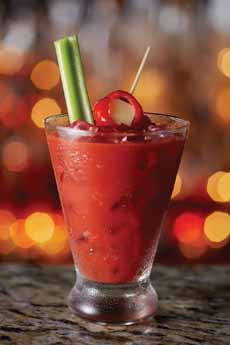
Bloody Mary With Peppadew
[1] Among the most popular cocktails in the U.S. are the Bloody Mary (photo © Bonefish Grill)…


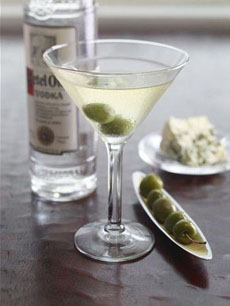
[2] The Martini (photo © Ruths Chris Steak House)…


[3] The Cosmopolitan (photo © Inspired By Charm)…

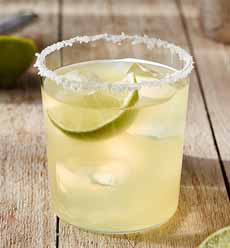
Classic Margarita
[4] The Margarita (photo © Casa Noble Tequila)…

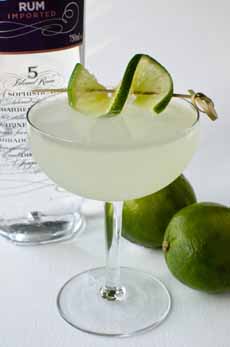
Classic Daiquiri
[5] The Daiquiri (photo © Tempered Spirits)…and…

A Moscow Mule in a copper mug
[6] The Moscow Mule (photo © Smirnoff).

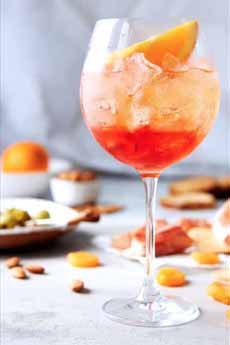
Aperol Spritz
[7] Aperol Spritz (photo © DeLallo).


November 12th is National Happy Hour Day.

If you work anywhere near a bar or lounge, you’ve probably seen a sign for Happy Hour.

Happy hour is a marketing term for a time when venue (such as a restaurant, bar, bowling alley, stadium, state fair, or county fair) offers discounts on alcoholic drinks.

Free appetizers and discounted menu items are often served during happy hour.

But it hasn’t always been that way.

While the words “happy hour” have appeared for centuries to describe enjoyable times, its use to refer to a scheduled period of camaraderie is of much more recent vintage.

Below:

> The history of Happy Hour.

> How to celebrate National Happy Hour Day.

> Favorite cocktails.

Elsewhere on The Nibble:

> The history of cocktails.

> The year’s 49 cocktail holidays.
 
 
THE HISTORY OF HAPPY HOUR
 
 
In The Beginning, Happy Hour Without The Booze

Since at least the early 1880s, the terms Happy Hour Social, Happy Hour Club, Happy Hour Social Club and similar names, had been in use as the names of women’s social clubs [source].

They did not include alcohol, nor did the Navy’s version.

In 1913, the crew of the U.S.S. Arkansas had started to refer to their regularly scheduled “smokers” as “Happy Hours.”

There was no alcohol allowed onboard. Instead, these Happy Hours were a weekly entertainment for bored sailors at sea.

They included boxing and wrestling matches, movies and music. By the end of World War I, these “Happy Hours” had spread throughout the entire Navy [source] and “dr.

But alcohol was not restricted offshore, as evidenced by the “Drunken Sailor” song and “drunk as a sailor” anecdotes.

A 1959 article on military life in the Saturday Evening Post referred to “those who spend too much ‘happy hour’ at the bar.” Other sources—mostly from places near Naval bases in California—refer to this cocktail time as early as 1951.
 
 
Prohibition Launches The Modern Happy Hour

It wasn’t until Prohibition that “Happy Hour” began to mean drinking alcohol [source].

People would host “cocktail hours,” also known as “happy hours,” at a speakeasy, prior to eating at alcohol-free restaurants.

“Happy Hour” became a euphemism for that time.

Following Prohibition, cocktail lounges continued the trend of drinking before dinner, and the term “Happy Hour” continued.

In the 1960s, some bars and lounges began the promotion of discounted drinks during “Happy Hours.”

These took place immediately after the standard work day, from 4 p.m. to 6 p.m. or 5 p.m. to 7 p.m. on weekdays.

A buffet of nibbles—pigs in blankets, mozzarella sticks, crudités, mini pizzas, etc.—were usually served free, to accompany the drinks.
 
 
Bans On Happy Hours

Some Happy Hours got too happy, with resulting legislation to curtail the half-price drinking and its related car accidents.

In 1984, Massachusetts was one of the first U.S. states to implement a statewide ban on happy hours. Other states followed, including Alaska, Indiana, North Carolina, Oklahoma, Rhode Island, Utah and Vermont.

The reasons for the bans included the prevention of drunk driving, the elimination of nuisance noise to neighbors, and drunken behavior in the neighborhood.

  • In 1984, the U.S. military itself abolished happy hours at military base clubs.
  • In 2011, Pennsylvania mandated the expansion of the Happy Hour period from two hours to four hours, so customers would not down too many drinks in a short period of time.
  • Some flexibility ensued: In 2012, happy hour became legal in Kansas after a 26-year ban; and in 2015, a 25-year happy hour ban ended in Illinois.
  •  
     
    HOW TO CELEBRATE NATIONAL HAPPY HOUR DAY

    It may be too late for this year, but mark your calendar for next year.

  • Get a group together and head for a favorite bar or lounge.
  • If you can’t think of where, just search online for “Best Happy Hour.”
  • Or, consider inviting friends to a Happy Hour Cocktail Party. You can make it a potluck, asking each participant to bring the ingredients to prepare their favorite cocktail.
  •  
    For today, find a colleague or friend to join you after work at the nearest Happy Hour.

    And be happy, responsibly.
     
     
    FAVORITE COCKTAILS

    While each survey differs—and preferences vary by region, age group, etc.—a 2019 survey of bartenders published on MSN.com listed the 10 most popular cocktails as (in alphabetical order):

  • Aperol Spritz
  • Daiquiri
  • Dry Martini
  • Espresso Martini
  • Margarita
  • Manhattan
  • Moscow Mule
  • Negroni
  • Old Fashioned
  • Whiskey Sour
  •  
     
    Bottoms up!*

     
    ________________
     
    *The phrase “Bottoms up! is believed to come from the British Royal Navy in the 17th and 18th centuries. The story goes that naval press gangs—who forcibly recruited men into the navy—would sometimes drop a shilling into an unsuspecting man’s beer tankard. Accepting the shilling, even unknowingly, was considered legally binding enlistment. To check whether a coin had been slipped into your drink, you would lift the bottom of your tankard up to look through the glass base, hence “bottoms up” was a warning to check before drinking.

    However, this colorful story is treated with skepticism by food and language historians. It has “the hallmarks of a folk etymology,” i.e., a charming story invented to explain a phrase after the fact. The practicality is that “bottoms up” simply describes the physical act of tilting a glass upward to drink from it. It’s the likely explanation, per Occam’s Razor†.

    What we know for certain is that the phrase appears in written English by the early 20th century, even though the drinking custom it describes goes way back in time.

    †Occam’s Razor, attributed to the 14th century English friar and philosopher William of Ockham (also spelled Occam), is most commonly summarized as: “The simplest explanation is usually the correct one.” The more precise original saying is closer to, “Entities should not be multiplied beyond necessity,” i.e., don’t add unnecessary complexity to an explanation when a simpler one will suffice.
     

    CHECK OUT WHAT’S HAPPENING ON OUR HOME PAGE, THENIBBLE.COM.


    Comments off

    STOCKING STUFFER: MatchDaddy Beautiful Table Matches

    We spend so much time appointing our table for guests: different porcelain plates for every course, fine linens, silver, stemware and of course, candles.

    One day as we were lighting the candles, we noticed how out of place our box of Diamond Matches was.

    So when we discovered MatchDaddy, we knew that we had not only matches for our own table, but as:

  • Stocking stuffers for people who like to entertain with flair.
  • An add in gift for people who like candles.
  •  
    Aside from the beautiful letterpress embossing on the boxes, the matches are available in three sizes: from cigarettes (2″) to candles (4″) to fireplace (8″).

    MatchDaddy imports the highest quality matches from Hungary, which are produced by the oldest automated match factory in the world.

    Top production techniques there enable a one-time strike and maximum flame, longer burn time and reduced charring (see: you can get geeky about matches).

    The only challenge is deciding which of the clever designs and vibrant colors to choose.

    From snarky sayings to George Washington, from old-fashioned watch faces to whimsical animals (butterly, donkey, elephant, fish, octopus) to cultural (marijuana plants, robots) to seasonal (pine cones),

    Take a look at the available designs. It’s a pleasure just going from page to page looking at them all.

    While mother said never to play with matches, you’ll get great aesthetic pleasure looking at these.

    So who’s your MatchDaddy?
     
     
    WHERE TO FIND MATCHDADDY MATCHES

    MatchDaddy is mainly available in fine stores, but these particular retailers also carry them online:

  • Belle And Blush
  • Bespoke Designs
  • Fancy & Staple
  • Goldfinch
  • Heartshake Studios
  • Kitson
  • Slant
  •  


    [1] Two designs in the 2019 catalog (photos © MatchDaddy).


    A BRIEF HISTORY OF MATCHES

    The first mention of matchsticks is in China, in 1270. A 1366 document describes a sulfur match: small sticks of pinewood impregnated with sulfur.

    …An ingenious man devised the system of impregnating little sticks of pinewood with sulfur and storing them ready for use. At the slightest touch of fire, they burst into flame. One gets a little flame like an ear of corn. This marvelous thing was formerly called a “light-bringing slave,” but afterward when it became an article of commerce its name was changed to “fire inch-stick” [source].

    Prior to the use of matches, fires were sometimes lit using a burning glass (a lens) to focus the sun on tinder—a method that could only work outdoors on sunny days. A more common method was striking flint and steel to produce sparks that ignited tinder.

    Many other techniques were created, that were either too expensive for most people, or too dangerously ignitable. You can read all about it here.

    The first successful friction match was invented centuries later in 1826 in England. Safety matches—using a specially designed striking surface—were developed in 1844.

    But the striking surface was not yet joined with the matches; and when it was, it was put inside with the matches!

    The development of a specialized matchbook with both matches and a striking surface on the outside of the box, the box, was created in the 1890s by an American, Joshua Pusey. He sold his patent to the Diamond Match Company—and the matchbooks are still going strong.

    Imagine life before matches (and for that matter, before electricity).

    FUN FACT: The hobby of collecting match-related items, such as matchcovers and matchbox labels, is known as phillumeny!
      

    Comments off

    THANKSGIVING RECIPE: Sweet Potato Dip

    This sweet potato dip has asian ingredients: rice wine vinegar and white miso. We like the fusion feature that welcomes people from beyond European cultures to Thanksgiving.

    The recipe was created for the North Carolina Sweet Potato Commission by Domino Ireland of Raleigh.

    You can also thin it with oil and serve it as a salad dressing. Toss in some dried cranberries and pecans for a holiday touch.
     
     
    Ingredients For 6-8 Servings (1 Pint)

  • 1½ cups fresh sweet potatoes, cubed to 1 inch
  • ¼ cup rice wine vinegar
  • ¼ cup avocado oil (substitute olive oil)
  • 2 tablespoons honey
  • 2 tablespoons shallots, chopped
  • 1 tablespoon white miso
  • 1 tablespoon fresh ginger, chopped
  • 1 tablespoon soy sauce
  • Pinch each of salt and pepper
  • ½ cup cold water
  •  
    For Dipping

  • Apple slices
  • Endive leaves
  • Triscuits or Wheat Thins (we prefer them to the bread in the photo)
  •  
    Preparation

    1. PLACE the sweet potatoes in a microwave-proof container and microwave on high for 7 minutes. Let cool.

    2. PLACE the sweet potatoes in a food processor, add the other ingredients and blend, adding the cold water slowly until you get a smooth consistency.

    3. REFRIGERATE until ready to serve, up to one week.
     
     
    HERE’S HOW TO PREVENT SLICED APPLES FROM BROWNING
     
     
    THE DIFFERENT TYPES OF POTATOES


    [1] A fall-inspired sweet potato dip to serve with cocktails (photo © North Carolina Sweet Potato Commission).


    [2] It’s easy to slice apples with an apple wedger (photo © Pampered Chef).


    Comments off


    © Copyright 2005-2026 Lifestyle Direct, Inc. All rights reserved. All images are copyrighted to their respective owners.