THE NIBBLE BLOG: Products, Recipes & Trends In Specialty Foods


Also visit our main website, TheNibble.com.

Baskin-Robbins New Ice Cream Cakes: Good-Looking, Fun, Delicious!

If you love ice cream cake (and seriously, who doesn’t?), a delightful new treat has arrived at Baskin-Robbins stores nationwide. It’s a permanent addition, we couldn’t happier, and it’s our Top Pick Of The Week.

Baskin-Robbins’ new Cake in a Box is a line of festive ice cream cakes: layers of cake, ice cream, ice cream toppings, and whipped frosting, designed for convenience, sharing, and any occasion.

You don’t even need an occasion! Be like Mame Dennis and declare, It’s Today!

Cake in a Box is a most welcome addition to grab-and-go festive desserts, and far more interesting (and tasty!) than the usual ice cream cakes on offer.

The easy to cut-and-serve rectangular cakes are currently available two flavors: M&M’S with Cookie Dough & Cookie Crave.

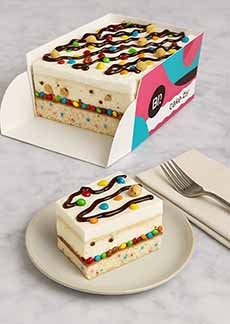
  • M&M’S® with Cookie Dough has layers of confetti cake and BR’s Chocolate Chip Cookie Dough ice cream, loaded with mini M&M’S® and nuggets of cookie dough. It’s covered with whipped frosting, a fudge drizzle, and a garnish of more M&Ms and cookie dough.
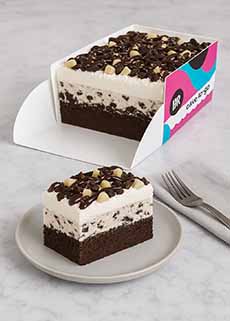
  • Cookie Crave is chocolate lover’s dream: layers of chocolate cake and BR’s OREO® Cookies ‘n Cream ice cream, packed with cookie dough and crushed OREO® pieces. It’s finished with whipped frosting and a generous drizzle of fudge.
  •  
    Trust us—we who have reviewed 50+ brands of artisan ice cream—Cake In A Box is heavenly.
     
     
    SO CONVENIENT & EASY

    You don’t need to plan ahead: You can get Cake In A Box when you need it.

  • Pre-order in the Baskin-Robbins App for pickup in as little as 15 minutes.
  • Have it delivered through your preferred third-party food delivery app.
  • You can also have one delivered as a gift.
  • &nbps;
    The cake is festively packaged in a resealable box that is very portable, travels well, and stores easily. The sides of the box fold down perfectly, so it’s easy to slice and serve.

    Save the leftovers in the same box (as if there will be any left over…however, on second thought, we’re going to keep one in the freezer and have a small slice every now and then [mostly now]).
     
    When the cake shows up, the festiveness begins.

    In fact, Cake In A box is as worthy for celebrating a birthday or other celebration as it is for everyday, whether you feel like a special dessert or happy about finishing a project.

    Why wait? Get one and add something special to your day.

    Below:

    > Beverage pairings for ice cream cake (and other ice cream desserts).

    > Sparkling wine pairings.

    > The history of ice cream cake.

    > > The different types of ice cream and frozen desserts: a photo glossary.

    > The history of ice cream.

    > The history of cakes and the different types of cake: a photo glossary.

    > Easy ice cream cake recipes.

    > The year’s 50+ ice cream holidays.

    > National Ice Cream Cake Day is celebrated on June 27th.
     
     
    BEVERAGE PAIRINGS WITH ICE CREAM

    The best non-alcoholic pairings either complement the cake’s flavors or provide a refreshing contrast to cleanse the palate between bites.

    The key is balancing sweetness levels. You generally want the drink to be as sweet or slightly less sweet than the cake to avoid overwhelming either flavor.

    You can put out a “beverage buffet” with small glasses and let guests have fun with pairings.

    Along with the beverages are explanations of why they pair with ice cream cake.
     
    Cold Beverages

  • Chai or black iced tea (refreshing and complementary)
  • Cold brew iced coffee (less acidic than regular iced coffee, smoother flavor)
  • Chocolate milk (rich and creamy, like the ice cream cake)
  • Milk, whole or 2% (a great palate cleanser)
  • Flavored milk (coffee, strawberry, or vanilla milk to complement matching cake flavors)
  •  
    Hot Beverages

  • Chai tea (warm spices complement vanilla or spiced flavors like pumpkin)
  • Black tea (Earl Grey or English Breakfast)
  • Cold brew coffee (Less acidic than regular iced coffee, smoother flavor)
  • Espresso or strong coffee (the bitter notes balance the sweetness)
  • Hot chocolate (especially with chocolate ice cream cake)
  •  
    Sparkling Beverages

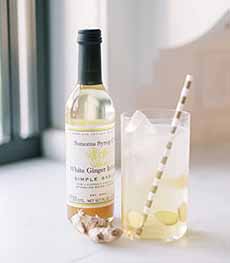
  • Ginger ale or ginger beer (the spice and bubbles cut through richness)
  • Italian sodas (less sweet than American sodas)
  • Lemonade (the acidity balances the sweet, creaminess)
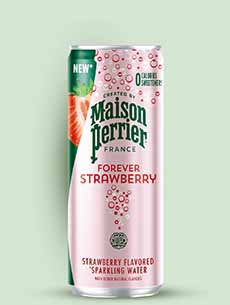
  • Sparkling water with fruit (berry, lemon, or lime adds brightness)
  •  
    Other Beverages

  • Horchata (cinnamon-flavor pairs nicely with vanilla)
  • Fruit spritzes (cranberry, orange, or pomegranate for contrasting tartness)
  •  
    ALCOHOL BEVERAGE PAIRINGS

    Beer & Cider

  • Stout or porter (coffee and chocolate notes complement those ice cream flavors)
  • Fruit lambics (for cake or ice cream with berry flavors)
  • Sparkling cider (apple-based, naturally sweet)
  •  
    Dessert Wines & Fortified Wines

  • Late-harvest Riesling (sweetness and acidity balance the creaminess)
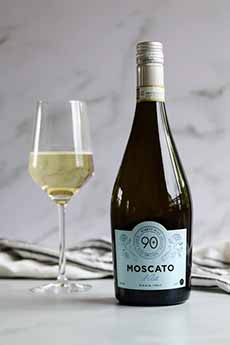
  • Moscato (light, bubbly, and sweet, works especially well with fruit flavors)
  • Sherry, cream or Pedro Ximénez (nutty, caramel notes pair with chocolate and coffee)
  • Tawny Port (nutty, caramel, and toffee that complement chocolate, coffee, or vanilla)
  •  
    Spirits & Liqueurs

  • Amaretto (with almond or vanilla flavors)
  • Bourbon (the vanilla and caramel notes work well with vanilla ice cream)
  • Coffee liqueur (a great match with coffee or chocolate ice cream cakes)
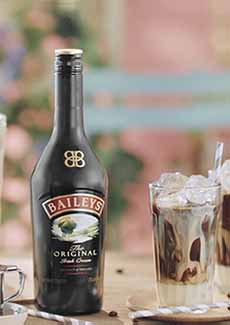
  • Irish Cream liqueur (can be drizzled over the cake or served alongside)
  • Orange liqueur (the orange notes pair well with chocolate or citrus cakes)
  •  
     
    SPARKLING WINE PAIRINGS

    We particularly love sparkling wines on the sweeter side with ice cream and cake. There are sparklers in white, red, and rosé.
     
    White Sweet Sparkling Wines

  • Asti Spumante (fuller-bodied than Moscato d’Asti, sweet and fruity, from Italy)
  • Cava Semi-Seco (sweet sparkling wine from Spain)
  • Demi-Sec or Sec Champagne (sweeter styles of Champagne, with 32-50g/L residual sugar, from France)
  • Doux Champagne (sweetest Champagne style, with 50+ g/L residual sugar, from France)
  • Moscato d’Asti (light, low-alcohol, very sweet with floral and peach notes, from Italy)
  • Prosecco Extra Dry (despite the name, it’s sweeter than Brut)
  • Riesling Sekt (German sparkling Riesling, often sweet, from Germany)
  •  
    Red Sweet Sparkling Wines

  • Brachetto d’Acqui (Italy) – Light, sweet, low-alcohol red sparkling wine with strawberry flavors
  • Lambrusco Dolce (Italy) – Sweet style of this Italian red sparkling wine
  • Red Moscato – Sweet, fruity, often with berry flavors
  • Sparkling Red Dessert Wines – Various producers make sweet sparkling reds
  • Sparkling Shiraz (Australia) – Rich, full-bodied, often with residual sugar
  •  
    Rosé Sweet Sparkling Wines

  • Demi-Sec Rosé Champagne (sweet and festively pink Sweet)
  • Moscato Rosé (a pink version of Moscato, sweet and fruity
  •  
    California Sparkling Wines To Pair

    There are numerous options, but we find that the Schramsberg Cremant Demi-Sec or Domaine Chandon Demi-Sec offer the ideal balance of quality, sweetness level, and food-friendly acidity to complement without overwhelming the dessert.

    Premium Sparklers

  • Iron Horse Wedding Cuvée (slightly sweeter blend from Sonoma County)
  • Domaine Chandon Demi-Sec (Moët & Chandon’s California venture, elegant and slightly sweet, from Napa Valley)
  • Roederer Estate L’Ermitage Demi-Sec (from the makers of Cristal, refined sweetness, Anderson Valley)
  • Schramsberg Cremant Demi-Sec (off-dry style with touch of sweetness, perfect balance, Napa Valley)
     
  • Lower-Price Options

  • Korbel Sweet Rosé (pink, fruity, and sweet for berry ice cream cakes, Sonoma County)
  • Korbel Sweet Cuvée (white, affordable, reliably sweet, Sonoma County)
  •  
    Other California Dessert Wines

  • Bonny Doon Moscato (not sparkling but often lightly fizzy, very sweet, Central Coast)
  • Quady Electra Orange Muscat (orange blossom notes, slightly sparkling, Central Valley)
  • Pacific Echo Demi-Sec (crisp with balanced sweetness, Mendocino)
  •  

    Baskin Robbins M&Ms Ice Cream Cake
    [1] Our heart beats for this simply scrumptious ice cream cake, packed with mini M&Ms and cookie dough balls and topped with more, plus a fudge drizzle (photos #1 and #2 A.I. via Baskin-Robbins).

    Baskin-Robbins Oreo Ice Cream Cake
    [2] Prefer chocolate? The Cookie Crave option layers chocolate cake and Oreo ice cream with a topping of cookie dough balls and a fudge drizzle.

    Iced Coffee
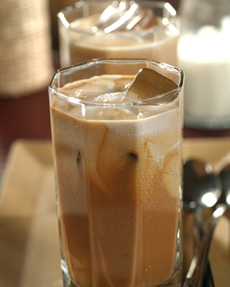
    [3] Popular year-round, an iced cold brew pairs with any flavor of ice cream cake (photo © Nescafe).

    Chai Iced Tea
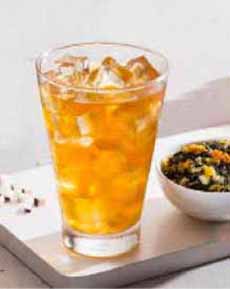
    [4] For something refreshing with a bit of spice, serve chai iced tea (photo © Vadham Teas).

    Cup Of Espresso
    [5] For something hot, make espresso (photo © Andres Vera | Unsplash).

    Can Of Perrier Forever Strawberry
    [6] For something chilled, plain or flavored sparkling water (photo © Maison Perrier).

    Homemade Ginger Ale
    [7] The spice of ginger ale adds festive flavors. You can make your own quickly by stirring Sonoma Syrup’s white ginger syrup into club soda (photo © Sonoma Syrup).

    Glasses Of Port & Sherry
    [8] For a sophisticated wine pairing, try a fortified wine like Tawny Port or Pedro Ximénez Sherry (photo © Gordon Ramsay Group).

    A bottle and glass of Moscato d'Asti
    [9] A dry sparkling wine won’t do. Look for a sweeter style. See our list > below (photo © Ninety Plus Cellars) .

    Baileys Irish Cream With Iced Coffee
    [10] Irish cream liqueur is delicious by itself, and also in iced or hot coffee (photo © Diageo).


    CHECK OUT WHAT’S HAPPENING ON OUR HOME PAGE, THENIBBLE.COM.


    Comments off

    6 Menu Tricks Could Be Costing You Hundreds Per Year

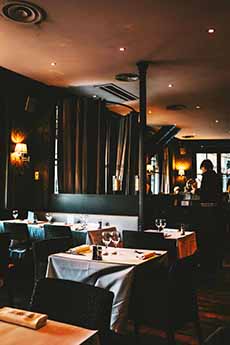
    The interior of a nice restaurant
    [1] These tips could save you money the next time you dine out (photo © Adrien Olichon | Unsplash).

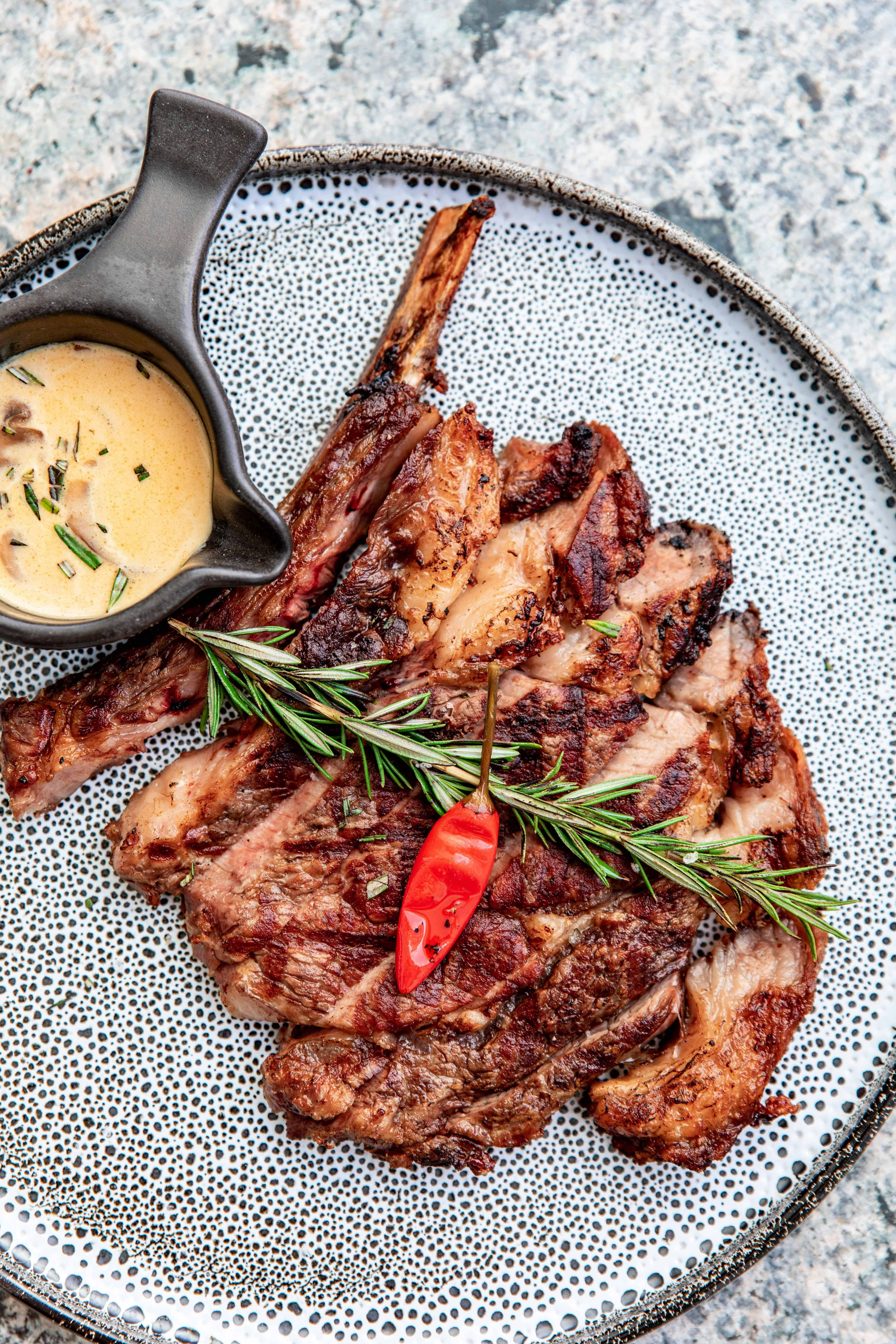
    Grilled Ribeye Steak
    [2] Tip #2: If the menu shows three different cuts of steak at $28, $42, and $65, you’re more likely to trade up to the middle price when you might have chosen the lowest (photo © Team Picfast | Pexels).

    Deconstructed Lobster
    [3] Tip #3: Some menu items exist purely to make other dishes seem like bargains (photo © Restaurant Revolution | NOLA).

    Roast Chicken Dinner
    [4] Tip #5: Instead of “Roast Chicken,” you’ll see the same, pricier, dish named “Herb-Crusted Free-Range Chicken with Roasted Seasonal Vegetables and Garlic Aïoli” (photo © Good Eggs).


    Every business has techniques to get you to spend more money, and restaurants are no different. According to one personal finance expert, a lot of establishments use carefully crafted tricks to guide your eyes toward the most expensive items, often without you realizing it.

    Now, we’re the first to believe that restaurants—which operate on slim margins—deserve to make as much money as they can. After all, why own a business if you can’t put money in the bank?

    Yet, we found this information interesting and pass it to you. It comes from Fred Harrington, CEO of Proxy Coupons, a discount platform specializing in online deals.

    He has spent years studying consumer behavior and pricing psychology. His expertise in identifying how businesses influence spending decisions goes far beyond the digital world into everyday experiences like dining out.

    First, a summary; details follow.

  • If you’re watching your expenditures, the key is to go in with a price range in mind and stick to it, regardless of how the menu tries to influence you. If you’re comfortable spending $25 on an entree, ignore everything above that threshold.
  • Don’t let your eyes get trapped by the strategic placement on the menu. Look for simpler dishes that might be tucked away in less prominent spots – they’re often better value and just as delicious.
     
    Now, on to the tips from Harrington. Note that they mostly apply to better restaurants, as opposed to contemporary casual places.
     
     
    1. The No-Dollar-Sign Hack

    You may have noticed that upscale restaurants list prices as “10” instead of “$10.00.” This isn’t simply for aesthetics. Research shows that removing dollar signs reduces what psychologists call “payment pain,” the mental discomfort we feel when spending money.

    “When you see ‘$10.00,’ your brain immediately processes that as money leaving your wallet,” says Harrington. “But when it’s just ‘10’, it feels more like a number than a price. This simple trick can increase spending.”
     
     
    2. The “Goldilocks” Pricing Rule

    Most menus strategically place three similar items at different price points. The middle option usually offers the best profit margin for the restaurant, and it’s exactly where most diners gravitate.

    “They’ll show you a $28 sirloin, a $42 ribeye, and a $65 wagyu,” Harrington explains. “Suddenly, that $42 option looks reasonable, even though it might be” more than you intended to spend.
     
     
    3. Decoy Dishes

    Some menu items exist purely to make other dishes seem like bargains. That $95 lobster special isn’t meant to be ordered frequently. Rather, it’s there to make the $55 salmon look affordable.

    “Restaurants will include one ridiculously expensive item that makes everything else seem reasonable by comparison,” notes Harrington. “It’s anchoring at its finest.”
     
     
    4. Eye-Path Placement

    Menus are designed based on how our eyes naturally move across a page. The most profitable items get placed in the upper right corner, the first place most people look after scanning the center.

    “Your eyes typically hit the center of the menu first, then move to the upper right,” says Harrington. “That’s premium real estate, and restaurants use it for their highest-margin dishes.”
     
     
    5. The Power of Descriptions

    Long, descriptive names make dishes seem more valuable. “Grilled Chicken” becomes “Herb-Crusted Free-Range Chicken Breast with Roasted Seasonal Vegetables and Garlic Aïoli.”

    “The more words they use, the more you’re usually willing to pay,” Harrington observes. “Each adjective adds perceived value, even if the actual dish is quite simple.”
     
     
    6. Strategic Typography

    High-profit items get visual emphasis through bold fonts, boxes, or different colors. These design elements draw attention without being obvious about it.

    “If something stands out visually, there’s usually a financial reason behind it,” Harrington points out. “Restaurants highlight what they want you to order, not necessarily what’s best for your wallet.”

  •  
    About Proxy Coupons

    Proxy Coupons is a website that specializes in offering discount codes, promo deals, and coupons for a variety of proxy service providers. The platform caters to users looking to save on services like data center proxies, residential proxies, VPNs, and other digital privacy tools. It aggregates exclusive offers and verifies working codes to ensure users get the best possible deals from popular proxy vendors. Additionally, Proxy Coupons covers various categories such as scraping tools, privacy software, and streaming services, making it a comprehensive resource for individuals and businesses seeking cost-effective solutions for their online needs.


    CHECK OUT WHAT’S HAPPENING ON OUR HOME PAGE, THENIBBLE.COM.


    Comments off

    5 Summer Red Wines To Try For National Red Wine Day

    Why is National Red Wine Day on August 28th? Isn’t red wine for cooler weather?

    Not all red wine!

    If you prefer red wines, there’s no reason to reach for a chilled white or rosé just because the thermometer has risen. You just need to look for styles that are light- to medium-bodied, fruit-forward, and lower in tannins.

    California’s diverse selection of red wines prove that wonderful reds that know no season, ready for summer pours. You can even serve summer reds slightly chilled (about 15–20 minutes in the fridge).

    Here are five California reds for summer sipping, with food pairings to bring out the best in the particular grape. We present them in alphabetical order.

    Party time? You’ve time to plan a tasting of all five wines for August 28th.

    Thanks to Discover California Wines for the recommendations.

    > The history of wine.

    > The year’s 25 red wine holidays.

    > The year’s 22 white wine holidays.
     
     
    1. CINSAULT WINE

    Floral, fresh and a little earthy, this lesser-known red is gaining fans fast.

    The grape originated in the south of France, where it’s used in rosé production in Provence. It traveled up to the Rhône Valley to be used in blends, and south to Italy (where it’s called Ottavianello), Lebanon, North Africa (especially Morocco, Algeria, and Tunisia), and South Africa (where it’s called Hermitage).

    In the New World, it’s planted in Australia, California, and Chile.

    In California Cinsault is also used in blends made in the Southern Rhône style. But California producers are increasingly making varietal bottlings.

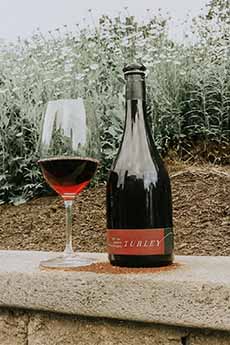
    Lodi is considered a key region for Cinsault in California, with the Bechthold Vineyard, planted in 1886, holding the distinction of being the oldest Cinsault vineyard in the country. Several producers, including Turley Wine Cellars, make varietal bottlings from this vineyard (photo #1).

    Cinsault is also grown in Paso Robles, and it’s also found in smaller amounts in other parts of California, such as Calaveras County and Dry Creek Valley.

    Cinsault wines are generally low in alcohol, high in acidity, light to medium-bodied, with bright red fruit flavors, often with smooth tannins. Great for summertime!

    Food pairing: Serve Cinsault with grilled seafood, chicken, or cuisines with spice like Indian and Thai. For fancier fare, escargot is a traditional pairing, as are stews (including boeuf bourguignon), braised and roasted pork.

    Not surprisingly, given its provenance, Cinsault takes to Mediterranean dishes like ratatouille and fish. And yes, with those all-American staples, fresh salads and pizza.

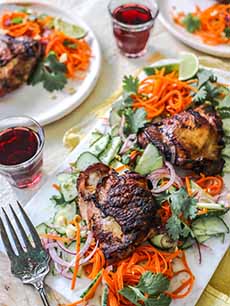
    Recipe: Try it with: Grilled Five-Spice Chicken with Cucumber Peanut Salad (photo #2).
     
     
    2. GRENACHE WINE

    Grenache, also known as Garnacha, is believed to have originated in Aragon, Spain. It’s grown all over the world now.

    A fruity wine, California Grenache is all about juicy red berries, floral aromas and a soft, spicy finish. With lower tannins, it’s very food-friendly to lighter fare yet shines with herb-heavy dishes.

    Look for Grenache wines from Paso Robles and Santa Barbara County, including Herman Story “On The Road” from Paso Robles and their “Late Bloomer” from Santa Barbara County.

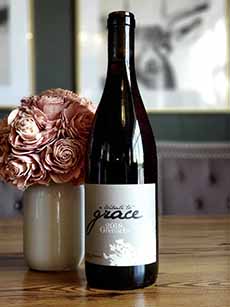
    Other fine examples include Sine Qua Non, a Rhône blend from Santa Rita Hills in Santa Barbara County, and A Tribute to Grace (photo #3—it’s named after the winemaker’s grandmother) from the Santa Barbara Highlands Vineyard.

    Food pairings: Anything grilled, any lamb dish, smoky barbecue sauces, anything dressed with olive oil and fresh herbs. When winter rolls around, it has enough boldness to favor rich flavors and textures: hearty stews, slow-cooked meats, game, and flavorful tagines.

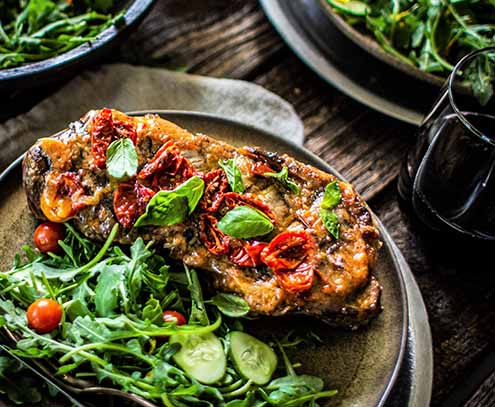
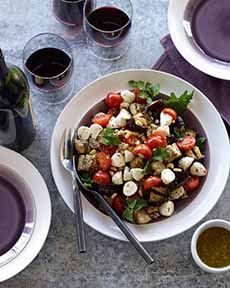
    Recipe: Grilled Eggplant and Tomato Salad with Parsley Parmesan Vinaigrette (photo #4).
     
     
    3. PINOT NOIR WINE

    Pinot Noir might just be California’s most flexible red. From light and floral to richer, more complex styles, there’s a Pinot for every palate and pairing.

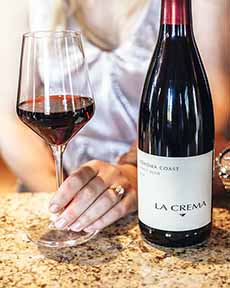
    For summer, go with lighter styles from cooler coastal regions like Sonoma Coast (photo #5), Monterey County, Carneros or Anderson Valley.

    Food pairings: Pair Pinot with roast chicken, duck, lamb, pork, and quail (especially accented with herbs like rosemary, sage, and thyme), mushroom dishes (pasta, pizza, stuffed, risotto), roasted beets, and salmon, tuna, and other grilled or baked fish.

    It also loves charcuterie and a cheese board, particularly those with a bit of tang like goat cheese, or nutty, aged cheeses like Gruyère or Gouda.

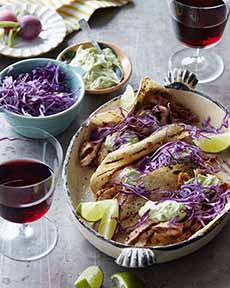
    Recipe: Pork Tacos with Garlic Grilled Tortillas and Avocado Cream (photo #6)
     
     
    4. VALDIGUIÉ WINE

    The least-known wine in this list, Valdiguié (val-dee-GYAY) is light, bright and picnic-ready. The grape is grown primarily in the Languedoc-Roussillon region of southern France, where it is also known by the name Gros Auxerrois.

    In California, the grape was misidentified for decades as some form of Gamay—and called Gamay Noir, Gamay Beaujolais, or Napa Gamay. But in the early 1990s DNA testing identified it not as a Gamay, but as Valdiguié from Languedoc-Roussillon.

    The confusion was not so surprising, since the grape makes light-bodied wines with juicy red cherry and berry notes, soft tannins and zippy acidity like Gamay-based Beaujolais—an easy-drinking wine that’s perfect for summer sipping.

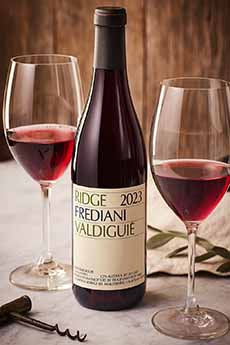
    J. Lohr is a prominent and long-standing producer. Other wineries known for Valdiguié include Ridge Vineyards (photo #7) and Broc Cellars. Various smaller producers also experimenting with the varietal, which has high yields and resistance to powdery mildew.

    In addition to a regular bottling, J. Lohr’s Wildflower Valdiguié, made from grapes grown in the Arroyo Seco appellation of Monterey County, is known for its vibrant, brambly red fruit flavors, along with notes of black pepper and hibiscus.

    Food pairings: This versatile wine can be enjoyed with appetizers, charcuterie, grilled meats, roasted vegetables, and cheese plates. Its bright acidity and low tannins make it a good match for richer dishes like barbecued chicken, glazed ham, and spicy fare. It would love a wood-fired pizza. Chill slightly before serving.

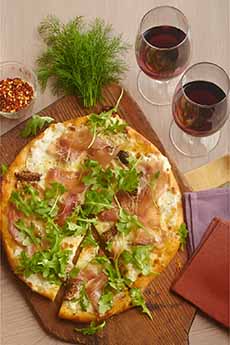
    Recipe: Homemade Pizza with Figs, Prosciutto, Arugula and Fresh Mozzarella (photo #8).
     
     
    5. ZINFANDEL WINE

    California Zinfandel’s origins are in Croatia, where the grape is known as Crljenak Kaštelanski. It was brought to the United States in the 19th century. While it was initially grown on the East Coast, it found great acclaim in California.

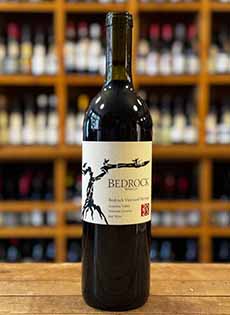
    Top-rated Zins include Ridge Vineyards (especially Geyserville), Turley Wine Cellars, Bedrock Wine Co. (photo #9), and Carlisle.

    Most people think of Zinfandel as a bold wine, and they’re correct. For summer sipping, this bold and fruity wine was born for barbecue and grilled meats in general, including burgers.

    California Zins are rich, spicy and bursting with berry flavor. The tannins stand up to grilled foods.

    Food pairings: Serve with grilled steaks, smoky brisket or anything off the barbecue.

    Recipe: Grilled Steaks with Roasted Tomato-Garlic Butter (photo #10 immediately below).
     
     
    Grilled Steaks With Tomato Garlic Butter
    [10] Enjoy grilled steak with your Zinfandel. This one is garnished with roasted tomato garlic butter Here’s the recipe.


    Turley Cinsault Wine
    [1] Turley Cinsault from the famous Bechthold Vineyard, first planted in 1885 (photo © Bin 412).

    Five Spice Chicken With Cucumber Salad
    [2] Enjoy Cinsault with this
    recipe for Grilled Five-Spice Chicken with Cucumber Peanut Salad (photos #2, #4, #6, #8, and #10 © California Wine Institute).

    Bottle Of A Tribute To Grace Grenache
    [3] Grenache from A Tribute To Grace Wine Company (photo © Vintage 38 Wine Bar & Merchant).

    Grilled Eggplant & Tomato Salad
    [4] Enjoy a glass of Grenache with this Grilled Eggplant and Tomato Salad with Parsley Parmesan Vinaigrette. The recipe.

    Bottle Of La Crema Pinot Noir
    [5] Pinot Noir, is elegant and versatile. La Crema’s Sonoma Coast bottling is a crowd pleaser (photo © La Crema Winery).

    Pork Tacos with Garlic Grilled Tortillas and Avocado Cream
    [6] Pinot noir pairs with elegant fare down to everyday pork tacos. Here’s the recipe for these Pork Tacos with Garlic Grilled Tortillas and Avocado Cream.

    A bottle of Ridge Valdiguie Wine
    [7] Valdiguié, a lesser-known grape that’s similar to Gamay (photo © Ridge Vineyards).

    Arugula & Prosciutto Pizza With Glasses Of Red Wine
    [8] An easy dinner: homemade pizza with prosciutto, arugula, figs, and mozzarella. Here’s the recipe.

    A bottle of Bedrock Heritage Zinfandel
    [9] The highly-rated Bedrock Wine Company’s Bedrock Vineyard Heritage Zinfandel focused on old-vine vineyards and heritage blends (photo © Dandelion Wine Shop).


    CHECK OUT WHAT’S HAPPENING ON OUR HOME PAGE, THENIBBLE.COM.


    Comments off


    © Copyright 2005-2026 Lifestyle Direct, Inc. All rights reserved. All images are copyrighted to their respective owners.