THE NIBBLE BLOG: Products, Recipes & Trends In Specialty Foods


Also visit our main website, TheNibble.com.

Drinkmate Beverage Carbonator For Home Or Gifting

Drinkmate Beverage Carbonator
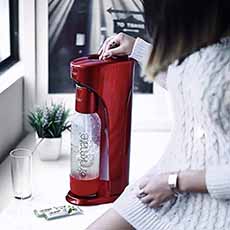
[1] Drinkmate can carbonte any beverage—not just club soda and other soft drinks, but coffee, juice, tea, and wine. It’s available in black, red, white, and Arctic blue (all photos © Drinkmate).

Carbonated Beverage Carbonator
[2] You’ll love carbonated iced tea.

Drinkmate Beverage Carbonator
[3] Carbonate cocktails or straight spirits. That’s what bartenders did in the 2021 World Cocktail Competition.

Carbonated Beverage Maker
[4] One carbon dioxide cartridge carbnates 60 liters, or 63.4 quarts.

Drinkmate Drink Carbonator
[5] Carbon wine for instant bubbly, whether red, rosé, or white.


What’s not to love about Drinkmate beverage carbonating system? You no longer have to carry heavy bottles of club soda and carbonated soft drinks—or recycle the empties.

You save money, schlepping, time, and the environment—no empty soda bottles to recycle.

The unit has a small footprint on your kitchen counter. No electricity s required.

(Read the captions in FB Photos)

And unlike other home carbonation systems, which are limited to just carbonating water (subsequently adding syrups to make soda), Drinkmate can carbonate any beverage.

So we’ve been having lots of fun carbonating:

  • Chocolate milk, coffee milk, and other milk drinks
  • Cocktails (with no dilution by club soda)
  • Iced tea and coffee
  • Sports drinks
  • Wine and more!
  •  
    A true delight is carbonating chocolate milk into an instant egg cream, and carbonating still white wine and rosé into sparkling wine. A celebration with bubbly is just a push of the button away.

    It works with red wine too—and few of us have actually experienced a sparkling red. It’s delightful.

    And Drinkmate was chosen as part of the finals in Diageo’s World Champion Cocktail Competition last year. Fifty top bartenders from 50 countries competde against one another for the title of “World’s Best Bartender.”

    Drinkmate enabled them to create exceptionally carbonated cocktails in the Johnnie Walker Hidden City Highballs Challenge.

    (Carbonating anything besides water in a SodaStream machine, for example, will void the warranty.

    You’ll want a Drinkmate for your kitchen, and if you’re lucky enough to own a boat with a galley, one for there as well.

    And Father’s Day gifting is just around the corner.
     
     
    PROPRIETARY TECHNOLOGY

    First of its kind proprietary technology* makes Drinkmate able to carbonate any liquid. Drinkmate offers carbonation lovers everyday versatility by carbonating any beverage.

    The technology uses the familiar carbon dioxide canisters that other systems use, and there’s a cartridge exchange program to recycle the empties and give you a discount on the next cartridge purchase (it’s easy via door-to-door exchange, drop ship, or brick and motor stores).

    There are four colors: black, red, white, and the new Arctic blue.
     
     
    SYRUPS FOR HIGH-END SODAS

    While other carbonating systems developed syrups for popular soft drinks—cola, ginger ale, root beer, and low-calorie versions of these and others, etc.—Drinkmate turned to the more elegant soft drink culture of Italy.

    Made in Tuscany with lower levels of pure cane sugar, the options include:

  • Ginger & Lemon
  • Italian Blood Orange
  • Pink Grapefruit
  • Sorrento Lemonade
  •  
    There’s also a Mojito Mocktail and an Energy Drink.

    You can use syrups from other brands to make other drinks, including sugar-free sodas and flavored carbonated water.
     
     
    GET YOUR DRINKMATE!

    Head to the website. It’s that easy.

    It’s also available on Amazon.

    For retail, here’s a store locator.


    [6] See how easy it is to carbonate drinks, with the push of a button.

    Drinkmate Carbonated Orange Juice
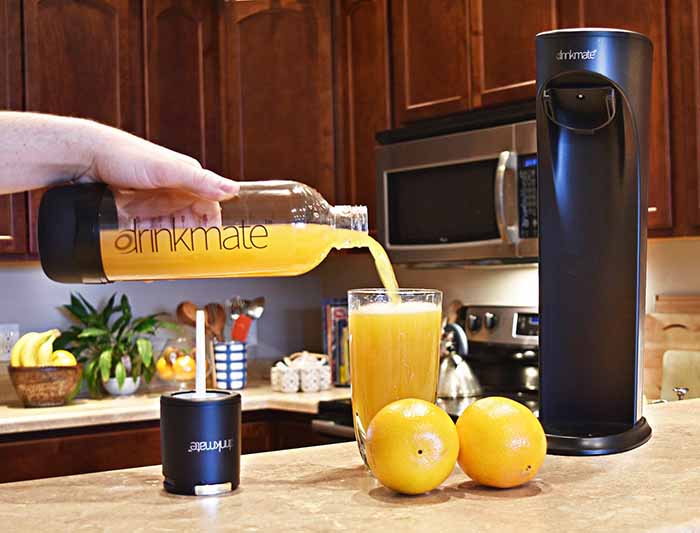
    [7] Start the day off with bubbly: carbonate your orange juice!.

    ________________

    *Drinkmate is the only home carbonator with a multi-stage pressure release valve, called the Fizz Infuser. Using the Fizz Infuser, Drinkmate safely and quickly allows the carbonation of any beverage with controlled pressure release. Other brands can only carbonate water, because their one-stage, quick pressure release cannot handle other beverages safely. The Fizz Infuser has both CO2 gas inlet and release functions integrated into a one unit, dual valve system that allows for controlled and safe pressure release.


    CHECK OUT WHAT’S HAPPENING ON OUR HOME PAGE, THENIBBLE.COM.


    Comments off

    Avocado & Orange Composed Salad Recipe For National Salad Month…& How To Structure A Salad

    Avocado Orange Salad Recipe
    [1] A composed salad of avocado and orange. The recipe is below (photo © Foods & Wines From Spain).

    Salad Recipe - Composed Salad
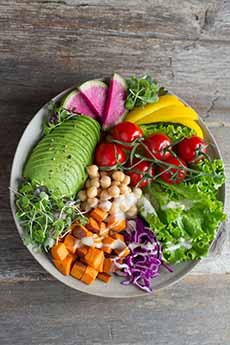
    [2] A composed salad recipe of vegetables and chickpeas. “Composed” means that the ingredients have been arranged individually in an attractive composition (photo © Anna Pelzer | Unsplash).

    Composed Salad Recipe
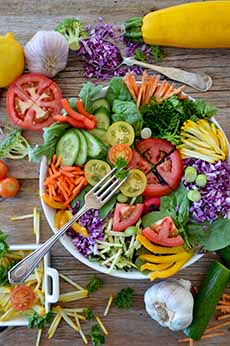
    [3] This composed salad is not as perfectly composed—the ingredients are not as neatly placed. But it’s still a composed, as opposed to tossed, salad (photo © Nadine Primeau | Unsplash).

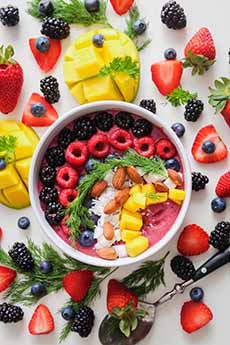
    Composed Fruit Salad Recipe
    [4] A composed fruit salad, for breakfast or dessert (photo © Trang Doan | Pexels).

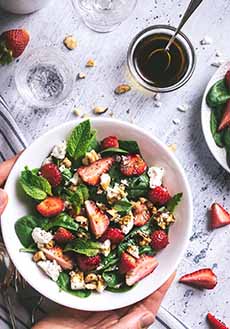
    Tossed Salad Recipe
    [5] A tossed salad of spinach, strawberries, spearmint, and goat cheese (photo © Doville Ramoskaite | Unsplash).

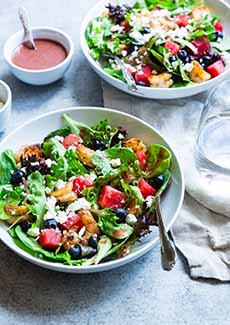
    Tossed Salad Recipe
    [6] A tossed salad of mixed lettuces, tomatoes, grilled shrimp, and blueberries (photo © Taylor Kiser | Unsplash).

    Tossed Tomato & Peach Salad Recipe
    [7] A tomato and peach tossed salad with white cheddar curds (photo © Adam Bartoszewicz | Unsplash).


    May is National Salad Month, a time to explore new recipes, as attached as you may be to your current ones. There are many types of salads, the major categories of which are:

  • Fruit salads
  • Green salads
  • Pasta, grain, and legume salads
  • Mixed salads—eggs, meat, poultry, seafood, tofu combined with vegetables
  • Vegetable salads—beet, carrot, tomato, etc.
  •  
    Most salads are traditionally served cold, although some, including grain and vegetable salads, can be served warm or hot.

    Salads can be served as appetizers/first courses, entrées, sides, and desserts. Dessert salads can be sweetened, molded, or even frozen, and can be combined with fruit gelatin, whipped cream, or sour cream.

    Salads can be composed (photos #1, #2, #3, #4) or tossed (photos #5, #6, #7).

  • Composed salads are arranged in a composition, or layered in a bowl or an individual glass dish or jar.
  • Tossed salads are usually greens and other bite-size vegetables and garnishes.
  •  
    > Check below for a delicious avocado and orange composed salad recipe (photo #1).

    > You’ll also find a template for the perfect vinaigrette.

    But first:
     
     
    THE STRUCTURE OF A SALAD

    Culinary students learn that the structure of a salad includes the Base, Body, Dressing and Garnish. Thanks to the Utah Education Network for this information.

  • The base: In a green salad, this comprises the greens plus any tomatoes and other vegetables.
  • The body: This is the protein added to the salad—chicken, ham, salmon, shrimp, tuna, etc.
  • The dressing: Dressings fall into two categories: vinaigrette (oil, vinegar, and seasonings) and mayonnaise-based dressing (a creamy, thicker emulsion of oil, vinegar, egg yolk, and seasoning).
  • The garnish: The garnish is any food used to enhance the salad: cheese (cubed, crottin, grated/shaved, sliced, etc., fresh or dried fruits, herbs, nuts, olives, etc.
  •  
    The earliest salads were wild greens and herbs seasoned with salt. They represented the first vegetables to become available in the spring in northern climes, a refreshing repast after the winter diet of roots, tubers, nuts, seeds, and meat or fish, but no fresh greens or fruits [source].
     
     
    RECIPE #1: AVOCADO & ORANGE SALAD

    You can use a standard navel orange, but the visual and palate appeal of cara cara oranges and blood oranges gives the recipe an added lift. You can also substitute red grapefruit.

    Thanks to Food & Wines From Spain for the recipe (photo #1).

    For a wine pairing, wine specialist Adrienne Smith suggests Malvasía.

    “There is something about a young and aromatic, dry Malvasía wine made in the Canary Islands that goes well with just about anything,” she says.

    “Delicate enough to not overpower the avocado, but at the same time bold enough to match the acidity of the oranges, these wines from areas like Lanzarote* are hard to beat.”

    Prep time is 30 minutes or less.

    > The history of the avocado.

    > The history of the orange.

    > The history of blood oranges.

    > The history of cara cara oranges.
     
    Ingredients For 1 Large Or 2 Small Servings

  • 2 oranges
  • 3 tablespoons Spanish extra virgin olive oil
  • 1 tablespoon white wine vinegar
  • Salt and black pepper to taste
  • Baby greens
  • 1 avocado, ripe but firm enough to slice
  • Garnish: chopped parsley
  • Optional: sliced red onion
  •  
    Preparation

    1. PREPARE the oranges. Slice off the tops and bottoms and then cut off the peel and pith, following the curve of the fruit. Next, holding each orange over a sieve placed on top of a bowl to catch the juice, cut along the membranes to release each segment. Squeeze out any juice from the pulp and discard.

    2. MAKE the dressing. Place the olive oil, vinegar, salt, and black pepper into a jar and emulsify using a hand-held stick blender. Alternatively, shake the mixture in a screw-topped jar. Add the reserved orange juice and mix again. When ready to serve:

    3. HALVE the avocado, remove the stone and peel off the skin. Cut the flesh crossways into slices. Place the greens on the plate, arrange the avocado slices and orange segments on top and drizzle the dressing. Garnish with parsley and red onion as desired.
     
     
    SALAD TIPS

  • Combine crisp textures with soft textures for contrast. Store lettuces in a plastic bag. Don’t wash them until you’re ready to use them.
  • – Keep washed and drained greens wrapped in a dry paper towel and refrigerate in a plastic container or a large plastic bag.

  • To prevent browning after cutting, tear the greens instead of using a metal knife. Tearing adds more texture, metal can cause browning at the edges of the vegetables.
  • Wilted greens can be restored by placing them in ice water for a few hours.
  • Prepare the salad dressing 2-3 hours before serving, and chill it. Do not put the dressing on a salad or salt it until just before serving.
  •  
     
    RECIPE #2: THE PERFECT VINAIGRETTE

    Vinaigrette is an emulsion of oil, vinegar, and seasoning. The seasoning can be as simple as salt and pepper but can have added citrus zest, fruits (puréed), herbs (including prepared herbs, like horseradish and wasabi), mustard, and spices.

    The classic formula for a vinaigrette is 3 parts oil to 1 part acid. The acid is typically vinegar but can be citrus juice, or a combination of both.

    Oil. Any culinary oil can be used. Olive oil is standard, but less expensive oils such as canola, corn, grapeseed, and sunflower can be substituted.

    Nut oils are especially delicious, as is sesame oil. If using dark sesame oil, which is very strong, you should blend it with olive oil or one of the other mild oils.

    Vinegar. Any kind of vinegar works, from apple cider to balsamic to red or white wine to rice vinegar. Check out the different types of vinegar.

    Seasonings. If using mustard or puréed fruit, you can substitute it for a portion of the acid. It can be just a hint, e.g. 1/8 teaspoon, or a full-out Dijon mustard or strawberry vinaigrette, made by substituting 1/3 of the vinegar/acid.

    You can also substitute citrus juice (grapefruit, lemon, lime, orange, yuzu) for 1/3 to 100% of the vinegar.

    _______________

    *Lanzarote is a Spanish Denominación de Origen Protegida (D.O.P. for wines. It encompasses the entire island of Lanzarote, in the Canary Islands. The Canaries are a Spanish region and archipelago in the Atlantic Ocean, in Macaronesia. At their closest point to the African mainland, they are 62 miles west of Morocco.


    CHECK OUT WHAT’S HAPPENING ON OUR HOME PAGE, THENIBBLE.COM.


    Comments off

    Spicy Thai Paloma Cocktail Recipe For World Paloma Day

    World Paloma Day is May 22nd. We recently featured a classic Paloma recipe for Cinco de Mayo, but you can take this popular and refreshing drink a step further—and give it a global spin.

    Like all classic cocktails, the Paloma invites you to play with the recipe and customize it—perhaps create your signature Paloma.

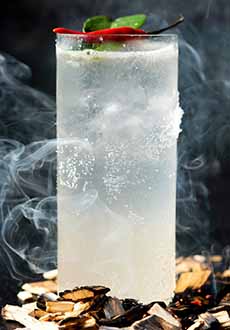
    Today’s inspiration is this Spicy Thai Paloma recipe, which brings a bit of heat to the cocktail (photo #1). It’s a natural extension for a cocktail from Mexico, where chiles infuse the cuisine.

    The recipe uses chili tincture. What’s a tincture?

    Tinctures are concentrated alcohol infusions used to season cocktails, similar to, but different than, bitters‡.

  • There’s a recipe to make your own chile tincture, below. You just need gin and chiles, and two weeks to let the chiles infuse.
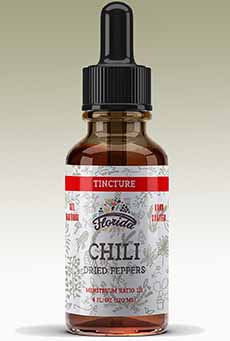
  • Or, you can buy chile tincture‡ online, like this brand from Florida Herbs (photo #4). Can you use chile bitters if you have them? Yes, but see the difference in the footnote‡.
  • Or, you can substitute two dashes of sriracha sauce. It’s not the same as a tincture, but it brings the heat.
  • Note on chile vs. chili: The spellings are interchangeable. We prefer chile because it’s the Spanish spelling, ported from the Nahuatl (Aztec) chīlli, when the Spanish first arrived in Mexico.
  •  

    Below:

    > Thai Paloma recipe.

    > Chili tincture recipe.

    Elsewhere on The Nibble:

    > Classic Paloma cocktail recipe and the history of the Paloma.

    > The different types of chiles.
     
     
    RECIPE #1: THAI CHILE PALOMA COCKTAIL

    This cocktail is a classic at the acclaimed Bluebird Restaurant in London. We thank them for the recipe.

    The original Paloma recipe from Mexico used grapefruit soda instead of grapefruit juice. At some point, some mixologist decided to try fresh-squeezed grapefruit juice instead, which makes a more elegant drink.

    The choice is yours!
     
    Ingredients Per Drink

  • 1.5 ounces blanco/silver Tequila
  • 1.5 ounces grapefruit juice, ideally fresh-squeezed
  • 1/2 ounce lime juice, fresh-squeezed
  • 1/2 ounce agave syrup (a.k.a. agave nectar)
  • 2 dashes chili tincture (recipe below)
  • Ice cubes
  • 1/2 ounce grapefruit soda*
  • Garnish: Thai chile and kaffir leaf—or a lime wedge or wheel
  • Half rim: lime wedge and coarse salt†
  •  
    Preparation

    1. PREPARE the glass with half of a salt rim. Place coarse salt in a saucer, wet half of the rim of a Tom Collins (highball) glass with a lime wedge, and roll the rim in the salt. Brush off any salt that may have adhered to the other half of the rim.

    2. COMBINE the first five ingredients in a cocktail shaker with ice. Shake and strain over fresh ice in the prepared glass.

    3. TOP OFF with the grapefruit soda. Garnish with a kaffir leaf and a Thai chile—if you can find them—or default to a lime wedge or wheel.
     
     
    RECIPE #2: THAI CHILI TINCTURE

    This recipe uses navy strength gin, a higher-proof gin (at least 57% A.B.V., 114 proof, as opposed to the 80 proof of standard gin.

    The name dates to the 18th century when the gin was stored on British Navy ships next to the gunpowder. If the gin spilled into the gunpowder, the damp gunpowder would still explode thanks to the higher proof of the gin.

    If you don’t want to buy navy strength gin, you can use regular proof gin—but let the tincture sit for an extra week or two. You can also substitute vodka.
     
    Ingredients

  • ½ bottle navy strength gin or substitute
  • 5 Thai chilws, split down the middle
  •  
    Preparation

    1. COMBINE the ingredients in a jar, seal tightly, and shake vigorously. Store at room temperature for 2 weeks.

    2. SHAKE the jar often. Shaking every day is fine—then you’ll remember to do it! After 2 weeks…

    3. STRAIN into another container and store at room temperature.


    [1] A Spicy Thai Paloma, made with some drops of Thai chile tincture (photo © Bluebird Restaurant | London).

    Thai Chile Peppers
    [2] Thai chiles (photo © Anna Nekrashevich | Pexels).

    Thai Paloma Cocktail With Fever Tree Grapefruit Soda
    [3] There are quality brands of grapefruit soda (see the footnote*), including Fever Tree (photo © Elemental Spirits).

    Chile Tincture For Spicy Thai Paloma Cocktail
    [4] You can buy chili tincture or make your own (photo © Florida Herbs).

     
    Two Paloma Cocktails
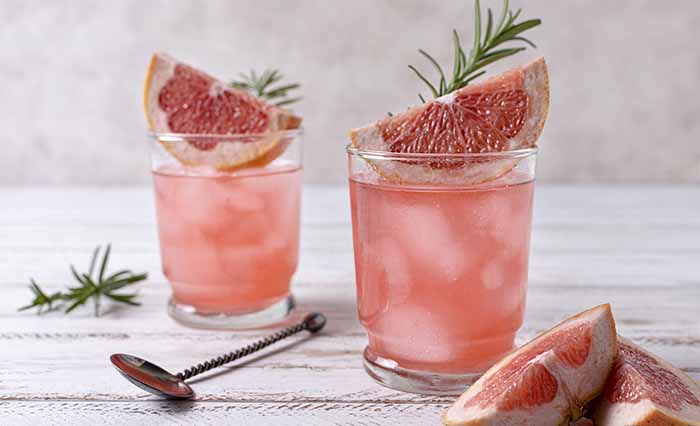
    [5] A classic Paloma made with red grapefruit juice (Freepik photo).
    ________________

    *Grapefruit soda brands: There are many brands from which to choose, including good brands like Fever Tree, Jarritos (the brand used in Mexico), Q Sparkling Grapefruit, San Pelligrino, Spindrift (no sugar added), Ting, Whole Foods Market Pink Grapefruit Sparkling Italian Soda; and as the default, Fresca.

    †Alternative salt: While most of us have coarse sea salt or kosher salt, if you have smoked salt or another flavored salt that works with the Paloma cocktail flavors, (chile or citrus, e.g.), feel free to substitute it.

    ‡The difference between tinctures and bitters: Both infuse botanicals—plants or plant parts valued for their flavor, scent, medicinal or therapeutic properties—into alcohol. However, bitters are distinctively bitter. Tinctures can be herbal, spicy, sweet, etc., without any bitterness.
     

    CHECK OUT WHAT’S HAPPENING ON OUR HOME PAGE, THENIBBLE.COM.


    Comments off


    © Copyright 2005-2026 Lifestyle Direct, Inc. All rights reserved. All images are copyrighted to their respective owners.