|

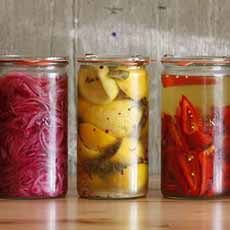
[1] Serve a beautiful pickled vegetable tray or use the veggies as plate garnishes (photo © The National | NYC).

[2] You can make quick pickles in an hour (photo © Typhoon Housewares).
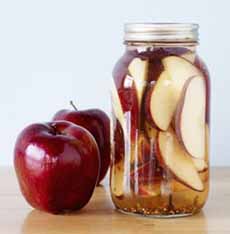
[3] Pickled apples: sweet and tangy (photo © Best Apples).
[4] Pickled radishes: zingy and tangy. Here’s the recipe (photo © Simply Delicious Food).
|
|
Have you ever made pickled vegetables? This tip isn’t about “putting up” vegetables for winter in sterilized jars.
Just a few days of aging in the fridge will give you delicious snacks and and garnishes to use on sandwiches, main dishes and cocktails.
You can even start enjoying them in about two hours’ time.
START PICKLING!
Paul Corsentino, Executive Chef at The National in New York City, is a huge fan of pickling. Here are his tips on how to pickle vegetables.
You can pickle just about any vegetable. Try anything and everything from baby carrots and cucumbers to summer squash, spring onions and jalapeños (great on burgers!). You can also pickle grapes and sliced fruits (apples, pineapple, stone fruits, etc.).
Use your favorite spices in the brine (he uses vinegar to brine; you can use half vinegar and half salted water).
Cut fresh, uncooked vegetables to the size you want, place them in a jar and make sure that the brine covers the tops.
You can add sugar and or salt to the brine; but make a batch without them first. It’s healthier, and it will let the flavor of the spices shine through.
You can pickle fruits as well, to use on sandwiches, salads, or as cheese condiments. Don’t hesitate to mix in onions or chiles.
Pickles will be ready in just two hours; although you can keep them in the fridge for a few weeks (trust us, they will eaten quickly).
Bland vegetables, such as summer squash and cucumbers, need stronger spices. Try cinnamon, coriander and garlic in a white balsamic vinegar.
Vegetables with stronger flavors, like onions and jalapeños, need more subtle spices, such as cumin, dill seed and ginger, plus lemon juice.
BE CREATIVE WITH THE BRINE
Chef Corsentino also chooses a different brining liquid depending on the vegetable. For example:
For red pearl onions, try red wine vinegar with star anise, cinnamon, sugar and salt.
For ramps and jalapeños, try rice wine vinegar, coriander and cardamom.
For summer squash, alternate the white balsamic vinegar mentioned above with oak-aged Banyuls red wine vinegar (or sherry vinegar) with cloves, star anise or other favorite spices and rings of your favorite chile.
Look at your spices for inspiration: allspice, bay leaf, crushed red peppers, dill seed, juniper berries, mace, mustard seed, and peppercorns are all contenders. Pickled vegetables never met a spice they didn’t like.
Since these pickled vegetables aren’t sterilized in a water bath, they need to go right into the fridge to age. Eat them within two weeks (more likely, they’ll be gone in two days).
CHECK OUT RECIPES
There are plenty of pickle recipes online.
But if you’re excited about pickling, pick up a book on the topic. The Joy Of Pickling, first published in 1999, is now in its second edition.
You may find yourself making classic bread-and-butter and dill pickles, pickled beets and kimchi.
> THE DIFFERENT TYPES OF PICKLES
|